










Trump’s “Stone Age” threat Is Iran the new Carthage?
Recently, U.S. President Donald Trump delivered a televised address to the nation. The timing was more than appropriate. A month had passed since the start of the U.S. and Israeli military operation against Iran, and the American leader needed to report to his people on both the preliminary results of this war and the conditions and prospects for its conclusion.
This task was all the more important because there is a growing opinion worldwide that the U.S. and its ally Israel have ceded the initiative to Iran in this war. Some of the most sceptical commentators even speculated that Trump might announce the end of the military operation in his speech, which, in their view, would constitute the White House admitting its own defeat.
This impression was reinforced by Trump himself, whose statements in recent days had been far from clear: at times he issued ultimatums to Tehran regarding the opening of the Strait of Hormuz, while at other times he claimed that the Strait was of no importance to the Americans at all. It was expected that in his address to the nation, he would clarify his vision for the development of the military operation. Trump spoke, and opinions may differ regarding just how clear his message was.
According to Trump, the U.S. military has almost completed its key objectives: Iran’s naval and air forces have been destroyed, its missile and nuclear programmes have been significantly weakened, the country’s leaders are “now dead,” and the Islamic Revolutionary Guard Corps is currently under massive attack.
One of the central themes of the address was once again the Strait of Hormuz, which Iran has effectively blocked for about a month. Trump made it clear again that the U.S. does not consider defending the Strait its responsibility and expects action from other countries that rely on oil shipments through this route. These words may seem puzzling regarding the further course of the war, but the picture becomes clearer if one recalls Trump’s recent statement that, in his view, the issue of reopening the Strait will resolve itself automatically once the conflict ends.
As for the end of the conflict, although Trump did not speak about it directly in his address, limiting himself to the usual formulation that the “objectives are nearing completion,” a particularly noteworthy phrase comes in this context: “We are going to hit them extremely hard over the next two to three weeks. We’re going to bring them back to the Stone Ages, where they belong”—which is perhaps the central point of his message.
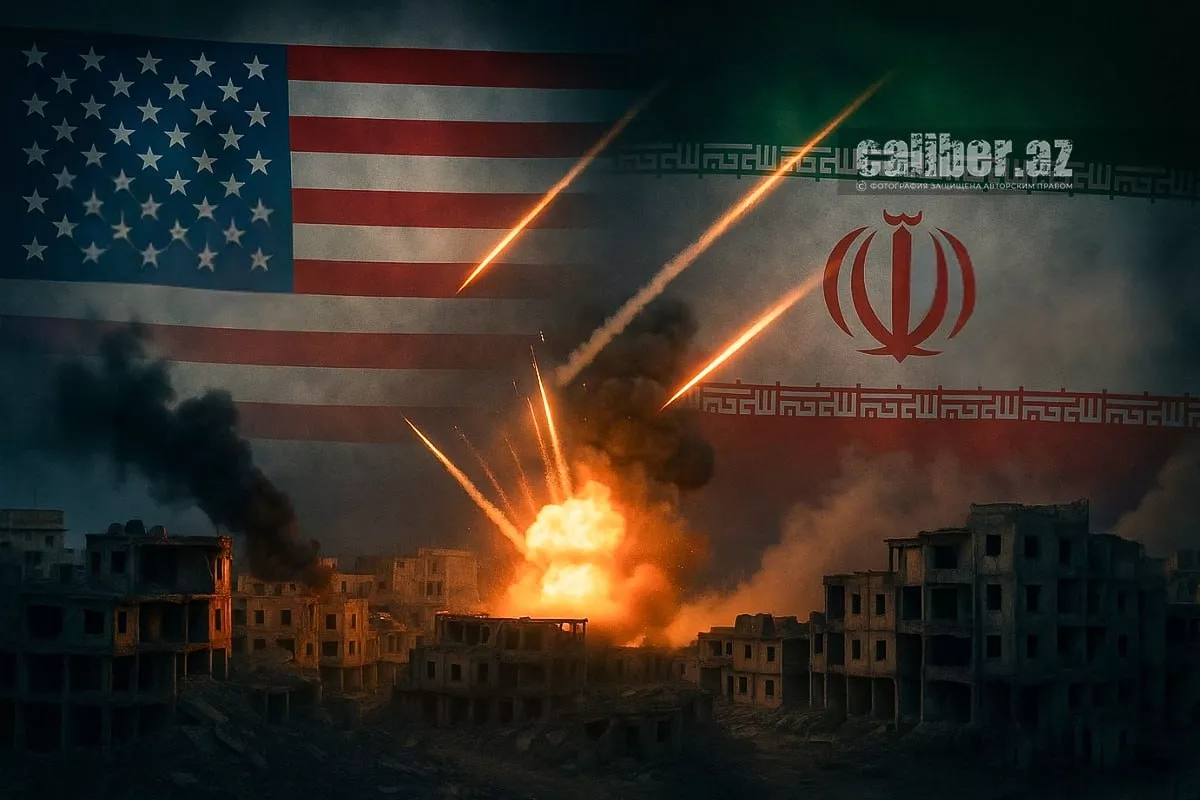
If we abstract from the moral and historical evaluation of this statement and consider it purely as Trump’s concrete plan, the picture is not very reassuring. It seems that the Americans, having failed to execute Plan A—topple the regime—are moving on to Plan B: overthrow the regime along with the entire country, destroy Iran’s infrastructure, and literally plunge the nation into chaos.
Here, they may be making a strategic mistake, and its essence is not only in the unpredictability of a vast country thrown into chaos—it also has a reputational dimension. “We’re going to bring them back to the Stone Ages” obsessively echoes the famous phrase “Carthage must be destroyed,” implying that the U.S. recognises Iran as an equal adversary, much as Carthage was to Rome. In fact, no speculation is even needed here, since Trump himself stated this explicitly in his speech: “We are in this military operation, so powerful, so brilliant against one of the most powerful countries for 32 days. And the country has been eviscerated and essentially is really no longer a threat. They were the bully of the Middle East, but they are the bully no longer. This is a true investment in your children and your grandchildren’s future,” he said.
This whole situation inevitably raises questions such as: if the U.S. has devoted so much “emotional energy” to Iran, what will it have to endure in a likely confrontation with China? If Americans consider Iran their equal, do they then regard China as superior? Doesn’t such reasoning lead different observers to conclude that the U.S. has already exhausted itself prematurely?
However, these are somewhat abstract thoughts. The real situation is that the U.S., albeit with difficulty, is nevertheless restoring its status as a global hegemon. In this process, it discards any value-based considerations or moral reflections as unnecessary ballast. If preparing for a confrontation with China requires plunging Iran into the Stone Age, then, unfortunately, they will do it. In this sense, one could disagree with most experts who argue that Trump’s vision is uncertain.







 editor@caliber.az
 +994 55 444-88-98
 Азербайджан, Баку, ул. Низами, 203, Af Business House, 5-й этаж