










2025 year-end summary in international relations Gradual acceptance of the obvious
For international relations, the outgoing year 2025 unfolded within long-term trends that have defined this entire decade and will very likely continue beyond it.
The main trend under which 2025 passed—something we have been writing about throughout the year—is the increasingly tangible transition of the international system from the old unipolar structure to a new state. This transition process is inevitably accompanied by soaring turbulence and heightened conflict almost everywhere in the world.
Gradual acceptance of the obvious
The struggle for a new world order is gaining momentum. This is happening for the simple reason that the old order, which dominated the previous three decades, at some point ceased to correspond to global realities. Attitudes toward this shift vary: some mourn and express outrage over what is happening, while others, on the contrary, welcome the rapid changes with great enthusiasm. Yet the transformational processes that have already gathered significant pace are an undeniable fact of contemporary life. As a result, even those who oppose them have little choice but to begin acknowledging these changes and taking them into account when adapting their policies to the new reality.
Such acceptance has indeed begun, even if it has followed the well-known psychological stages of denial, anger, bargaining, and depression. This evolution has become one of the defining features of international relations in the outgoing year of 2025.
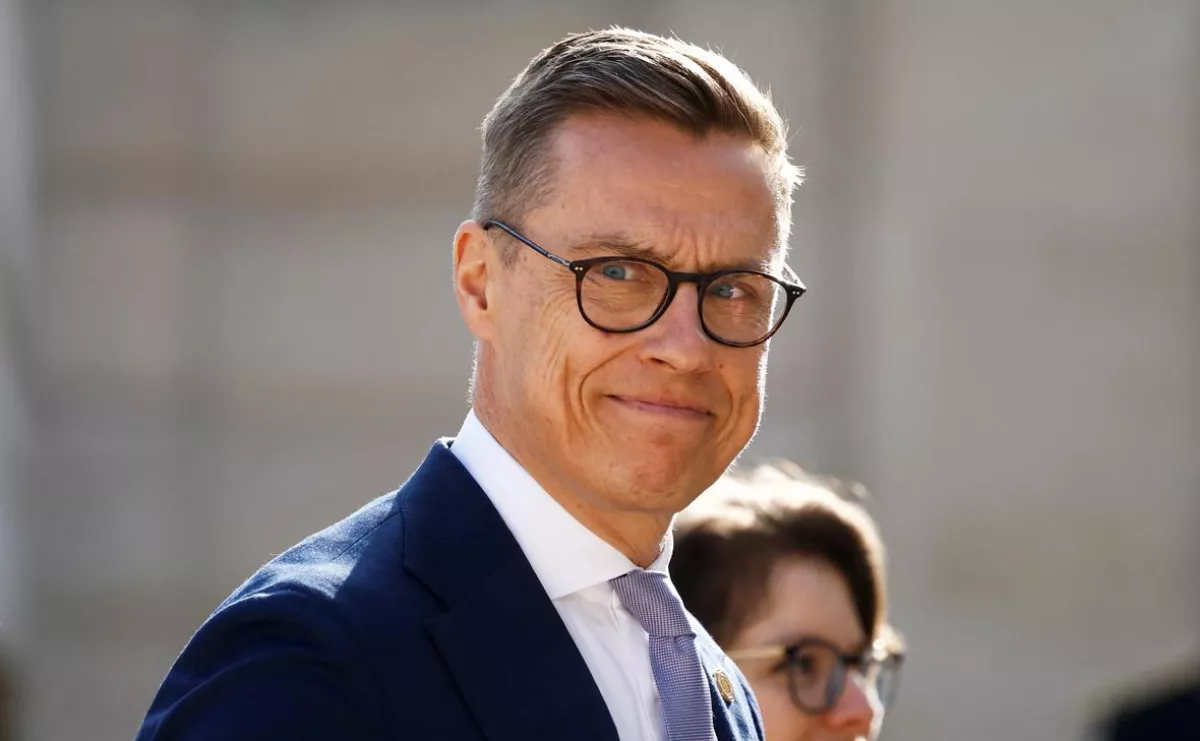
A telling example of this shift is a recent article in Foreign Affairs by Finnish President Alexander Stubb. The author rightly observes that the “The liberal, rules-based order … is now dying.” With clearly perceptible notes of indignation, he points out that “Opportunistic transactions seem to matter more than defending international rules.” With a certain hint of bargaining, he acknowledges that increasingly influential non-Western states “have a reason to demand change,” since the previous system “ did not adapt to adequately reflect their position in the world and afford them the role that they deserve.” Finally, he accepts the fact that the systemic changes now under way are not the result of a struggle between good and evil—as the U.S. administration of Joseph Biden and many European governments attempted to portray them in simplistic terms not long ago—but rather the product of competition among the “global West,” the “global East,” and the “global South.”
Some of the concepts and causal linkages employed by Stubb appear debatable. However, that is not the key issue at this point. What is important—and noteworthy—is the emerging acceptance of reality, which is now being voiced by Western elites not only behind closed doors, but also openly in the pages of mainstream publications. The same acknowledgment can be heard from most non-Western leaders as well. In this sense, a certain—however imperfect—consensus is beginning to take shape in global discourse. This is a positive development for the future trajectories of global development.
Power and legitimacy as drivers of transformation
The new world order will be probed for and shaped in much the same way as it has been throughout history. Its two main drivers, to use Henry Kissinger’s terminology, will be power and legitimacy. In other words, those states that possess greater power—and are also able to put forward persuasive arguments that resonate with the expectations of the majority—will be best positioned to advance their vision of the future structure of the global system and its regional subsystems.
Power, of course, is not limited to military might alone. Other manifestations of interstate power continue to play an important role as well. These include economic capacity; access to resources, technologies, and reliable logistics; and geostrategic diversification, which enables states to exercise national sovereignty more effectively. So-called “soft power” also remains relevant—that is, the ability to achieve desired outcomes through attractiveness rather than coercion. Finally, at critical turning points, political will to act in the national interest and the capacity of state institutions to make rational decisions based on a sober assessment of available resources become decisive.
That said, as the outgoing year has demonstrated, military power has once again acquired central importance amid growing instability and the dysfunction of most international institutions. This is a reality that cannot be ignored.
World in search of big ideas
The factor of legitimacy primarily belongs to the realm of ideas. It requires the development and presentation to the international community of a vision of the future that not only rests on the power resources of individual states, but also corresponds to the basic needs of the majority. This entails both the identification of new balances of power and the ideological articulation of future conceptual frameworks.
At the close of 2025, one can declare an open competition for new “big ideas.” This competition is relevant both to the international system and to the political and socio-economic organization of states. It is in the latter sphere that the scope for creativity is considerably broader, since the construction of international relations will, in any case, be tightly constrained by objective structural realities. For the architects of the future world order, the key task is therefore not to search for something radically new or excessively creative, but rather to carefully align the real balances of power and interests among the principal actors in order to minimize the potential for conflict between them.
Meanwhile, in domestic politics, elites in many parts of the world are increasingly confronted with a swelling ideological vacuum that can confidently be described as a crisis of ideologies. It is particularly pronounced in the West, where in 2025 the central political theme became the deepening crisis of the centrist mainstream. This trend is set to continue in the coming year. And since it was precisely the West that set the global ideological agenda over the previous decades, the reverberations of this crisis are inevitably being felt—in one form or another—across very different parts of the world.
Trump, Trump, and Trump again
The most vivid manifestation of these trends in 2025 was Donald Trump’s return to the political Olympus in the United States. Literally from the very first moments after his official inauguration, his administration began to roll—like a steamroller and a hurricane—over many long-established norms and habitual routines, both in American politics and in international affairs.
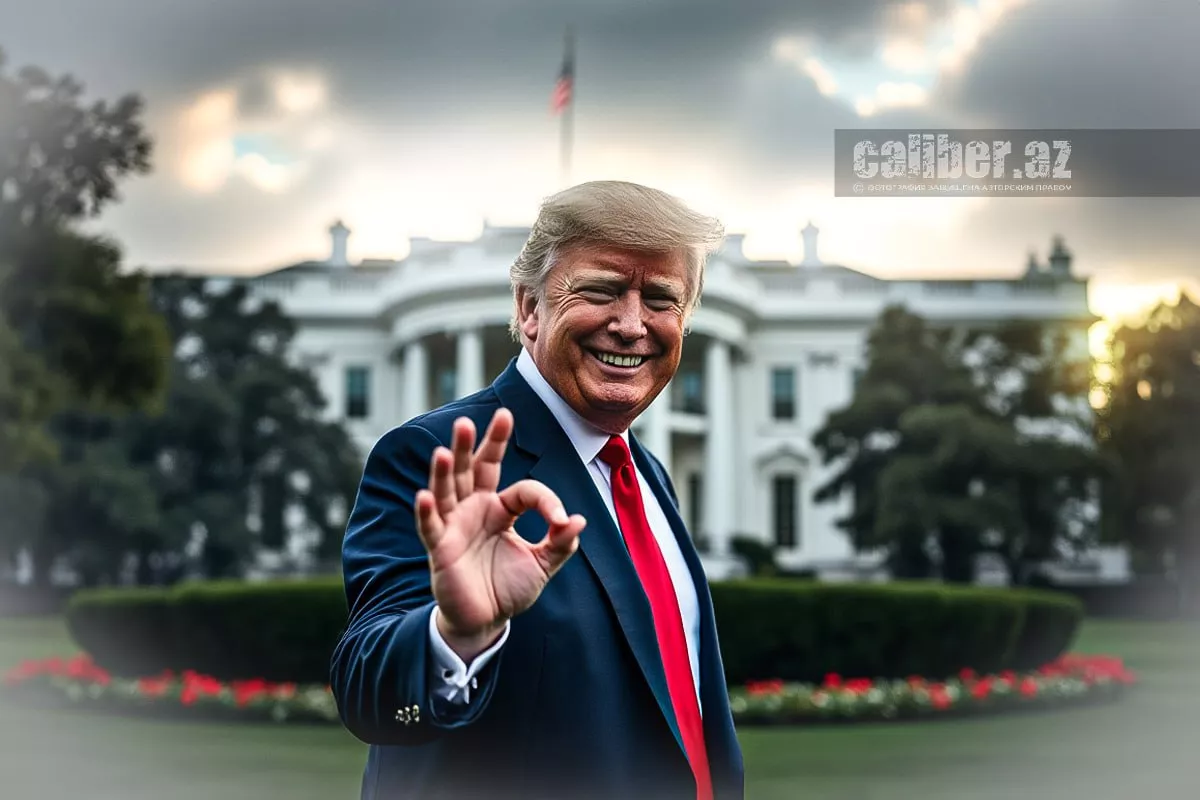
Had there not been Trump’s first presidential term in 2017–2021, his current actions would have produced a sense of total shock and awe. Yet given past experience, events today should, in theory, be received with greater composure. On the eve of, and immediately following, last year’s U.S. presidential election, many world leaders, as we recall, made loud declarations that they and their countries were well prepared for Trump’s return to the White House. It is clear, however, that in most cases these were merely words. First, in reality almost no one had seriously prepared for what was to come. Second, it is doubtful that one could genuinely prepare for such a hurricane of change in the first place.
One of the challenges posed by Trump’s whirlwind march across the political landscape is that he is widely perceived around the world as the sole source and driver of revolutionary change. As a result, lingering attitudes—sometimes conscious, sometimes intuitive—persist: to wait out Trump, endure his term, and anticipate a return to familiar normalcy once he leaves the White House. Such attitudes are far less common than during his previous term, but they still exist. Yet these hopes are nothing more than illusion and self-deception. Trump is a vivid embodiment of profound change in the United States and the world, but he is not their sole cause.
This does not mean that, without Trump, events would unfold in roughly the same way as they are now. Naturally, his particular views, decisions, and style today shape much of global politics, coloring certain events and processes in ways that would not exist without him. This is the essence of the historical moment revealed in 2025: the old order has been broken, yet what lies ahead remains uncertain, awaiting a careful architect capable of sculpting the contours of the future world. The demand for fresh ideas, solutions, and actions is high—and Trump is one of those actively and persistently attempting to meet that demand with his own offering.
It is by no means certain that his vision will ultimately lay the systemic foundation for the new political realities in the United States and across the globe. Competition among ideas on the unseen market of a new world order will only intensify. In 2025, Trump was the loudest voice. Yet, with the growing demand for change, ever more voices will be rising to be heard.







 editor@caliber.az
 +994 55 444-88-98
 Азербайджан, Баку, ул. Низами, 203, Af Business House, 5-й этаж