










A rapporteur without memory Lexmann and the antilogic of justifying war criminals
Miriam Lexmann, a Member of the European Parliament from Slovakia’s Christian Democratic Movement, the permanent rapporteur of the European Parliament on Armenia and one of the co-authors of many Strasbourg resolutions on the so-called “Armenian agenda” in recent years, stated in an interview published on April 15, 2026 by Brussels correspondent of the Armenian news agency Armenpress that the European Union and the United States should jointly exert pressure on Azerbaijan to secure the release of Armenians serving prison sentences in Baku.
The logic of her proposal is built around the thesis that the EU allegedly possesses “leverage” in its relations with Azerbaijan that should be used, and that Washington, interested in the implementation of the TRIPP transport project, could also “join the efforts.” Formally, this is presented as a recommendation for foreign policy pressure. However, in essence, it is a call that in any jurisdiction in the world would be classified as direct interference in the administration of justice in cases involving serious crimes — and this circumstance requires separate analysis, since similar ideas are regularly voiced in certain European capitals.
The individuals whom the European Parliament’s permanent rapporteur advocates releasing are not abstract “political prisoners,” as they are persistently labelled in European Parliament resolutions and in Ms. Lexmann’s own statements. These are concrete individuals: Ruben Vardanyan, Arkadi Ghukasyan, Bako Sahakyan, Arayik Harutyunyan, David Ishkhanyan, David Babayan, Levon Mnatsakanyan, and a number of other former leaders of the illegal separatist entity that previously existed in Azerbaijan’s Karabakh region.
They are accused of aggression, genocide, terrorism, mass killings of civilians, and violations of the laws and customs of war. In the case of Vardanyan alone, the Baku Military Court examined more than forty episodes, including financing terrorism and the creation of illegal armed formations.
In the verdict delivered in February 2026, all defendants received lengthy prison sentences. These sentences were handed down following an open trial broadcast on Azerbaijani and international platforms, with the participation of more than a hundred victims — individuals who were either personally affected by the defendants’ actions or lost relatives as a result.
One of the central episodes in these proceedings was the Khojaly genocide of February 25–26, 1992, during which 613 Azerbaijani civilians were killed, including 106 women, 63 children, and 70 elderly people — the largest act of ethnic violence in the entire history of the Karabakh conflict.
It is noteworthy that a number of defendants, in particular Madat Babayan, during the preliminary investigation and court hearings admitted their direct involvement in attacks on Azerbaijani villages and confirmed the existence of an order to “carry out mass extermination” of Khojaly’s civilian population.]
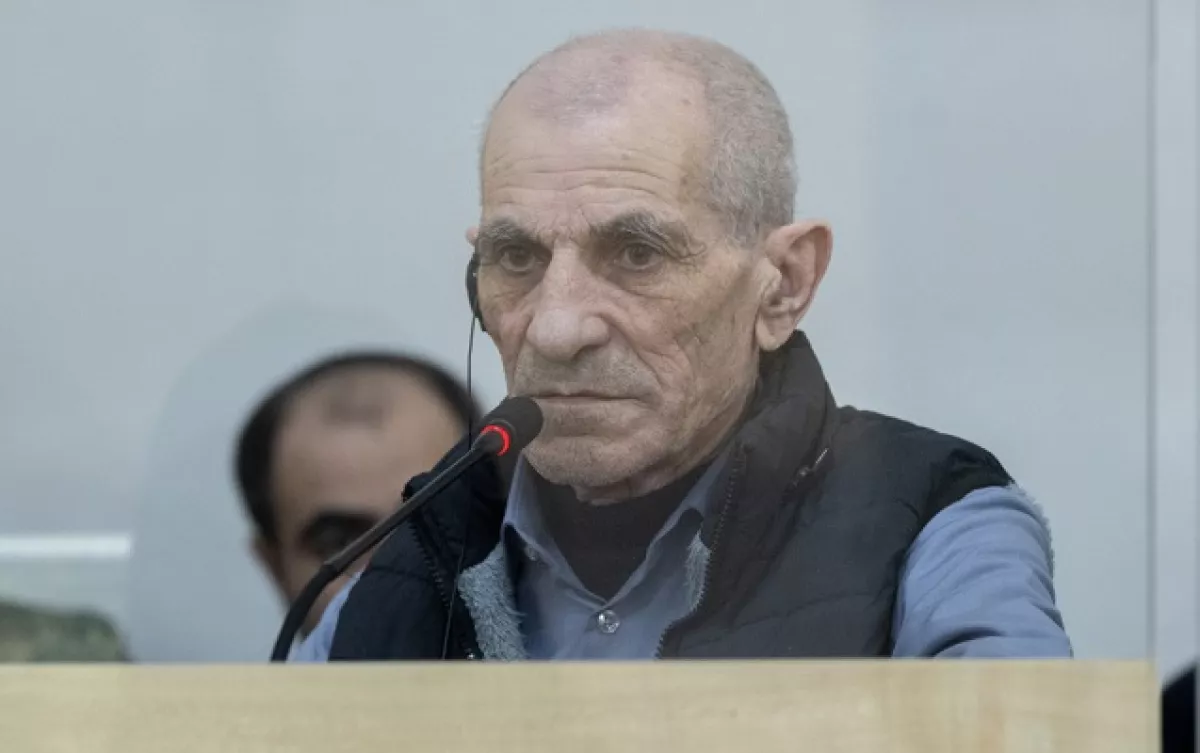
When the permanent rapporteur of the European Parliament calls on both the EU and the United States to exert pressure on a sovereign state in order to secure the release of individuals convicted under such serious provisions of the Criminal Code of Azerbaijan, she is effectively reproducing a logic that was rejected by the international community as early as 1946.
Indeed, the Nuremberg Tribunal was long perceived as merely a “victors’ trial.” However, today it would not occur to anyone — even in Strasbourg or Brussels — to demand the revision of Nuremberg verdicts on the grounds that doing so might help improve relations between defeated Germany and the European countries that suffered at the hands of the Nazis.
The difference between 1946 and the present moment lies in one thing only: at Nuremberg, the defeated in a major European war were tried, whereas in Baku, those defeated in a war that parts of the European bureaucracy still tend to view as peripheral are being tried. This distinction is geographical and reputational, but not legal in nature. The category of “war criminal” does not become less applicable simply because the crimes were committed in the South Caucasus rather than in the centre of Europe; and a call for the release of such individuals under the guise of “humanitarian concern” does not become any less outrageous — indeed, it becomes even more morally indefensible when it is made by a Member of Parliament from an EU member state.
To this fundamental consideration, one must add another issue that Ms. Lexmann, in her interview, as well as her colleagues in the European Parliament in dozens of resolutions, carefully avoid addressing — the problem of landmines.
According to data published on April 4, 2026, by the Azerbaijan National Agency for Mine Action (ANAMA), since November 2020, there have been 259 mine explosion incidents in the liberated territories, resulting in 72 deaths and 349 people injured to varying degrees of severity. These are real, documented casualties over the five and a half years that have passed since the 44-day war.
The most recent incident occurred on April 14 in the village of Ashaghi Abdurrahmanli in the Fuzuli district. ANAMA employee Matili Mughan (born 1995) was killed in the line of duty as a result of an anti-tank mine explosion.
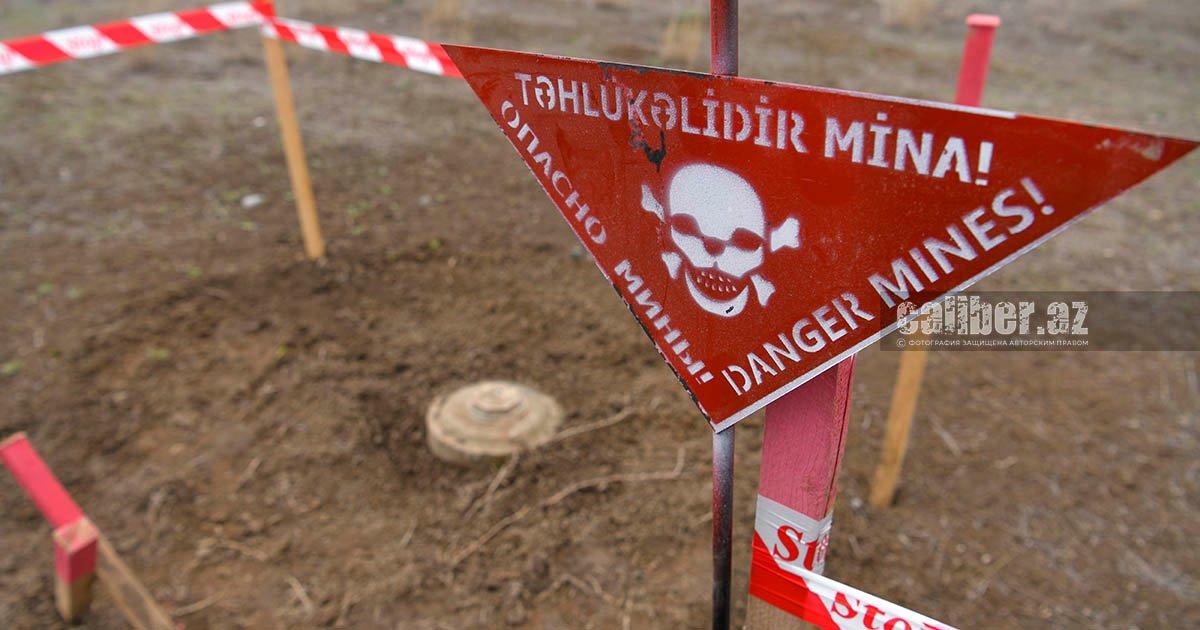
The mines in question were laid over nearly three decades of Armenian occupation — including under the direct orders of those very individuals whose release is now so actively advocated by the European rapporteur. According to estimates by international specialists, more than one million mines and unexploded ordnance still remain in Azerbaijan’s liberated territories, while full clearance, under the most optimistic scenarios, will require another 20–30 years and approximately $25 billion.
Despite the agreement signed in Washington on August 8, 2025, the Armenian side has still not provided complete and reliable minefield maps. Every one of the 72 deaths and 349 injuries is not an abstract “legacy of war,” nor an incidental by-product, but the result of concrete decisions taken by those whom Ms. Lexmann refers to as “political prisoners.”
It would therefore be entirely appropriate to hear a separate statement from the permanent rapporteur of the European Parliament — as forceful as her call for pressure on Baku — regarding the issue of the mine-related crimes associated with her “defended” figures. As it stands, her public position is reduced to demanding the release of the architects of one of the most densely mined post-war environments in the contemporary world, without even formally acknowledging the dozens of Azerbaijani families who continue to bury their loved ones years after the end of active hostilities.
A separate point of attention is that in certain Western capitals — and especially within the Brussels–Strasbourg institutional ecosystem — there is a persistent narrative according to which the issue of releasing the aforementioned individuals in Azerbaijan is supposedly decided “in a single office.” Hence the logic of pressure: if one applies leverage at the top level of government, everything “below” will supposedly fall into place along the hierarchy.
This model is fundamentally flawed and reflects a superficial understanding of Azerbaijani society. Baku does indeed possess a strong executive vertical and a consolidated foreign policy line; however, the question of Khojaly and Karabakh, of those who issued orders to shoot, to lay mines, and to deport, is not a matter of administrative adjustment. It is a matter of national memory shaped by three decades of occupation, the 44-day war, the counter-terrorism operations of September 2023, and the return of internally displaced persons to their native lands.
Public opinion in Azerbaijan — and on this point it is remarkably unified — would not accept the release of convicted war criminals under any circumstances. Any move in this direction would be perceived as a betrayal of the memory of the victims, and the societal reaction — firm, justified, and entirely predictable — would follow immediately.
In this sense, the external pressure advocated by Ms. Lexmann is not only unproductive but also counterproductive to European interests themselves: it creates the illusion, particularly in Yerevan and parts of the Armenian diaspora, that the issue can be resolved through indirect channels — by capitalising on sympathies within the European Parliament and exerting external pressure — whereas the only viable track has long been clearly defined in Washington on August 8, 2025. That framework, supported by signed commitments, provides for bilateral normalisation based on mutual recognition of sovereignty and territorial integrity, rather than interference by third parties in the judicial decisions of a sovereign state.
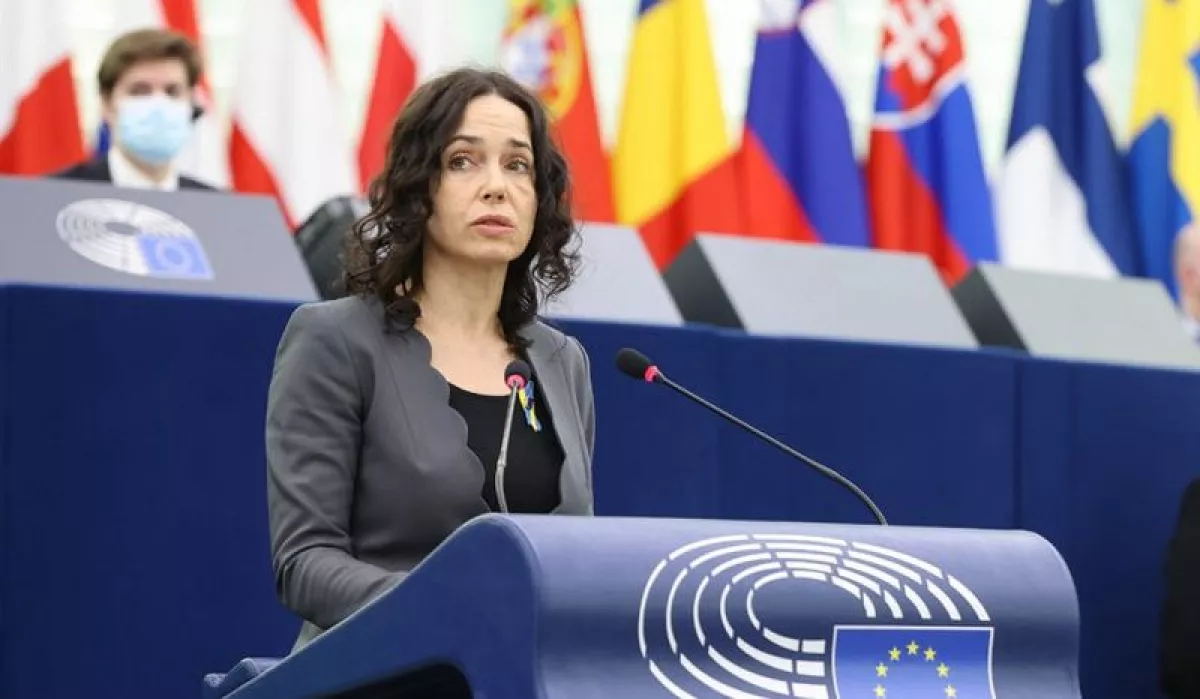
It is also worth recalling the broader context in which Ms. Lexmann constructs her public activity. Her political biography — from her work at the International Republican Institute to her current mandate as rapporteur on Armenia — is largely built around the rhetoric of “defending values” and “applying pressure on regimes.”
It is within this logic that she was sanctioned by China in 2021; and within the same framework, she has, at different times, publicly defended various figures designated in her political milieu as “prisoners of conscience.” The problem is that such a model — in which a European lawmaker first constructs the category of “political prisoners” and then calls for their release — functions only until the formula gives way to concrete realities: killed children, burned villages, anti-personnel mines buried in the ground, and documented records of confessions.
From that point onwards, “defence of values” effectively turns into defence of specific war criminals. A European lawmaker signing such appeals is inevitably confronted with a choice: either to reassess their own position, or to explain to their electorate why justice for the victims of the Khojaly genocide and for those killed by mine explosions should be treated as less important than the release of those directly responsible for these crimes.
Azerbaijan went through nearly three decades of occupation of 20 per cent of its internationally recognised territory, ethnic cleansing, and tens of thousands of killed and wounded — and ultimately restored its sovereignty through diplomatic and military means that have been recognised, including by Western partners.
The trial held in Baku, contrary to the usual characterisations in Armenian and parts of European media, was conducted openly, with procedural safeguards, interpreters, state-appointed lawyers, and the opportunity for defence throughout more than a year of hearings. The verdicts delivered in February 2026 are not an instrument of political bargaining, but the result of the work of a national jurisdiction fulfilling its duty to prosecute serious international crimes committed on the territory of the Azerbaijani state and against its citizens.
Such jurisdiction is not subject to diplomatic bargaining, parliamentary resolutions, or “joint pressure” from Brussels and Washington. And each time European rapporteurs call for such pressure, they do not strengthen European values — they undermine them, because the foremost of those values is precisely the principle that accountability for war crimes is inevitable, regardless of the defendant’s nationality, political weight, or the presence of influential lobbyists in Strasbourg and Brussels.







 editor@caliber.az
 +994 55 444-88-98
 Азербайджан, Баку, ул. Низами, 203, Af Business House, 5-й этаж