










Azerbaijan and Uzbekistan gear up for $1 billion trade breakthrough From energy to fintech
Azerbaijan is steadily boosting its business ties with Central Asian countries, with the greatest progress achieved in cooperation with Uzbekistan. Alongside traditional sectors such as energy, logistics, and trade, the focus of Baku and Tashkent’s integration policy in recent times has shifted to increasing mutual investments and developing joint production. The two fraternal countries have accelerated efforts to form a joint investment portfolio worth $10 billion, aiming to raise their annual trade turnover to $1 billion. This year, another session of the Azerbaijan–Uzbekistan High Intergovernmental Council is expected to take place, during which the priorities for bilateral business cooperation will be outlined.
In recent years, the business communities of Azerbaijan and Uzbekistan have been successfully expanding their cooperation, aiming to significantly increase trade turnover and investment ties, as well as to boost cargo traffic along the Middle Corridor. Today, the two Turkic states are opening trade representations, utilising resources from a joint investment fund, developing cooperation in the agricultural and industrial sectors, and collaborating in automotive manufacturing, space and IT industries, and fintech. Importantly, the implementation of these joint initiatives is fully supported by the presidents of Azerbaijan and Uzbekistan—Ilham Aliyev and Shavkat Mirziyoyev—and this consistent strategic direction is fostering a breakthrough in bilateral business cooperation.
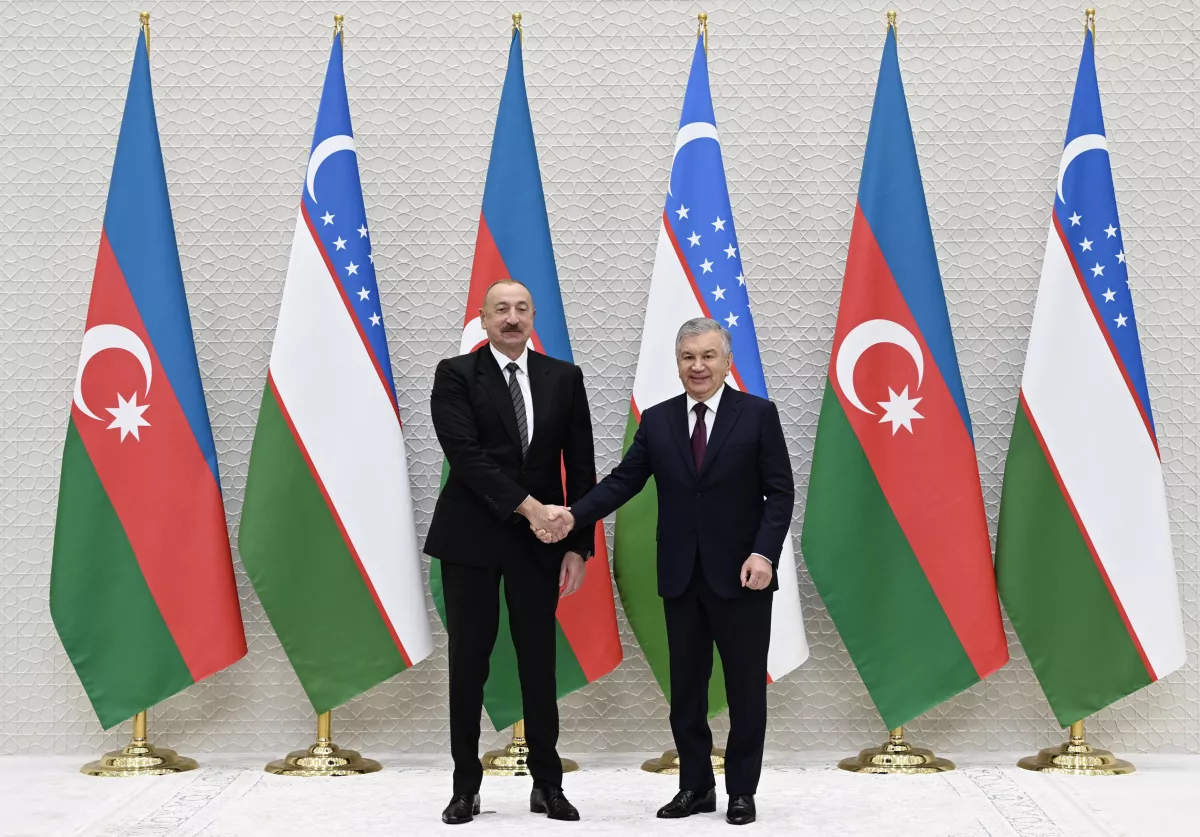
In recent years, Baku and Tashkent have achieved the greatest progress in trade. By comparison, in 2017, Azerbaijan’s trade turnover with Uzbekistan was a modest $31.2 million. Over the course of eight years, however, mutual trade has grown more than 25-fold. Specifically, by the end of 2024, Azerbaijan–Uzbekistan trade reached $252 million, a 41% increase year on year. These positive trends accelerated even further in 2025: according to data from the State Customs Committee of Azerbaijan, bilateral trade reached $795.159 million, more than triple the figure of the previous year.
And this is far from the limit: today, Baku and Tashkent are working to further expand trade volumes, as the economic potential of both countries allows for trade turnover to reach one billion US dollars. Jointly, they are also developing an e-commerce platform that will enable digital contracts at both B2B and B2C levels, significantly speeding up and simplifying trade and intermediary activities.
“Uzbekistan and Azerbaijan have set the goal of increasing trade turnover to $1 billion, while the two countries are also working on forming a $10 billion investment package to implement joint projects between enterprises and businesses in both countries,” recently stated Bahrom Ashrafkhanov, Uzbekistan’s ambassador to Azerbaijan. According to him, bilateral cooperation is structured around a roadmap and encompasses a wide range of activities.
These include preparations for this year’s planned session of the High Intergovernmental Council, the work of the Intergovernmental Commission on Economic Cooperation, as well as other specialised events such as business forums, interregional forums, consultations in the healthcare sector, and meetings of the scientific community.
The ambassador also noted that efforts are underway to establish a new Business Council, aimed at strengthening ties between the business communities and providing a platform to promptly address emerging issues. The Council will operate on a permanent basis, with participation from chambers of commerce and industry as well as various entrepreneurial associations. This initiative is expected to be a key step in further revitalising the economies of both countries and advancing new joint projects.
Emphasising that Azerbaijan–Uzbekistan relations are currently at their peak, the Uzbek ambassador noted that the number of bilateral and multilateral events is growing in both countries. Overall, over the past few years, bilateral investment cooperation has gained strong momentum: currently, 540 companies with Azerbaijani capital are registered in Uzbekistan, while around 70 Uzbek trading, service, and manufacturing enterprises operate in Azerbaijan.
At the same time, mechanisms for preferential financing are now available to entrepreneurs from both countries planning joint projects. A particularly effective tool for Azerbaijan–Uzbekistan industrial initiatives is the joint investment fund with a capital of $500 million: last year, the fund’s supervisory board selected twelve concrete projects for implementation.
Notably, Azerbaijani and Uzbek businesses show strong interest in joint production in non-oil sectors. Examples include cooperation in automotive manufacturing and cotton processing: the two countries operate a joint venture for assembling Chevrolet cars in the Hajigabul industrial district, as well as Uzbek investments in a cluster for cotton processing and cottonseed oil production, with future plans to build facilities for yarn, textile, and garment production in the Mingachevir Industrial Park.
In Khankendi, Uzbek investors have established a large garment factory employing over 200 people. Among other promising areas of bilateral cooperation is the memorandum of understanding signed on 19 January between Uzbekistan’s National Agency of Perspective Projects (NAPP) and the Central Bank of Azerbaijan, aimed at collaboration in developing, regulating, and supervising capital markets, insurance, and cryptoasset circulation. Under this agreement, special attention will be given to the development of innovative financial technologies, increasing financial inclusion and operational efficiency, as well as exchanging best practices in fintech regulation and emerging financial technologies.
The largest investment initiatives that Baku and Tashkent plan to implement are in the energy sector. Specifically, these involve agreements signed last year between Azerbaijan’s State Oil Company (SOCAR) and Uzbekistan’s Ministry of Energy, as well as the national operator Uzbekneftegaz, on a production-sharing agreement (PSA) covering geological exploration and subsequent hydrocarbon production in the investment blocks of the Ustyurt oil and gas region.
In December of last year, a ceremonial opening was held in Tashkent for the office of the operating company, Ustyurt Operating Company, and preparations began for field geological exploration at the site. According to forecasts, the Ustyurt blocks may contain reserves of 100 million tonnes of oil and 35 billion cubic metres of natural gas, and once the project is launched, the Ustyurt plateau could produce 5 million tonnes of oil annually. Total investments in the Ustyurt project are estimated at $2 billion.
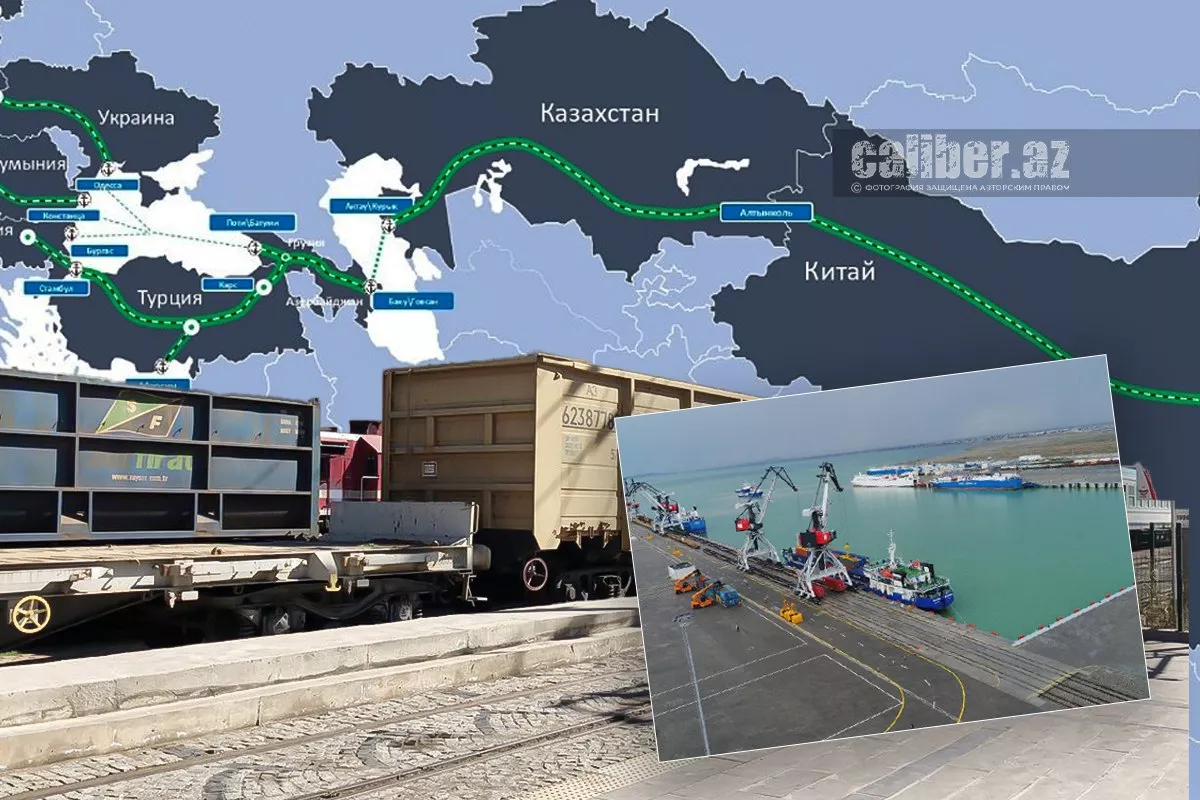
Cooperation between Baku and Tashkent also looks highly promising in the transport and logistics sector. Although Uzbekistan has no direct access to the Caspian Sea, it is a significant freight carrier and partner of the countries participating in the Trans-Caspian International Transport Route (TITR), actively developing cargo transit through Azerbaijan.
Specifically, agreements have already been reached to provide Uzbek companies with space to build their own terminal at the Alat port, which will be used for transit shipments of sugar as well as other import–export operations with Azerbaijan. Meanwhile, Azerbaijan’s subsidiary of the Azerbaijan Railways, ADY Container, along with Caspian Shipping Company vessels, transports goods produced in Uzbekistan to Black Sea ports via block trains.







 editor@caliber.az
 +994 55 444-88-98
 Азербайджан, Баку, ул. Низами, 203, Af Business House, 5-й этаж