










Azerbaijan’s Davos agenda: strengthening global economic ties Caliber.Az review
The World Economic Forum (WEF), which got underway on Monday in the Swiss city of Davos, proved highly productive in advancing Azerbaijan’s economic agenda at the global level. Between January 19 and 22, President of Azerbaijan Ilham Aliyev took part in panel discussions and the event titled “Azerbaijan Executive Breakfast”, and held meetings with heads of government and state, leading international business circles, and media representatives.
The talks focused on prospects for business and investment cooperation, including in the supply of gas and green energy, as well as in the fields of transport, logistics, and the digital economy.
The opportunities offered by the Davos platform for dialogue and compromise-building are particularly valuable at a time of mounting global uncertainty. This is especially evident amid growing risks of another downturn in the global economy, driven by trade, customs, tariff, and other disputes among the world’s leading economic centres. Challenges in the energy sector also remain highly relevant, reflecting the close interconnection between geo-economic issues and today’s increasingly complex geopolitical environment.
Participation in the WEF is therefore of considerable importance for Azerbaijan. This influential international platform enables the country to present its achievements to a global audience, highlight strategic initiatives, and explore prospects for cooperation with key international partners. In this regard, it is notable that the WEF organisers extend an annual invitation to the President of Azerbaijan to attend the forum.
During his participation in Davos, the head of state traditionally holds a wide range of meetings with national leaders, executives of leading global companies, and prominent business figures. He also gives interviews to major international media outlets and takes part in high-level panel discussions, further reinforcing Azerbaijan’s profile and engagement on the global stage.
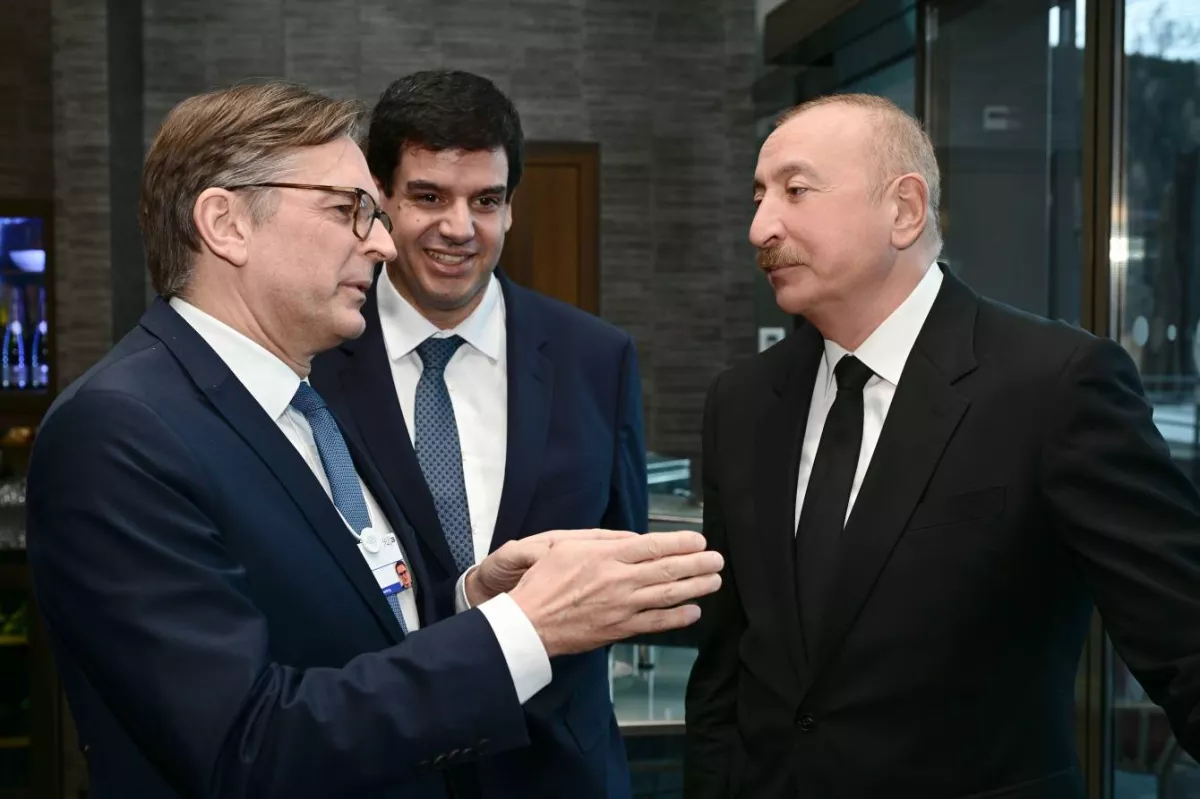
In particular, on January 20, President Ilham Aliyev took part in an event organised by the Euronews television channel titled “Azerbaijan Executive Breakfast”, where discussions focused on the growing role of Azerbaijan as a regional hub for connectivity, energy, and, of course, economic development. The participants also addressed regional transport links, strategic investment priorities, and related issues.
“For many years, for us, the number one priority was the energy sector, because the resources we had allowed us to increase our economic performance and improve the living standards of the people. Today, most of the energy portfolio is done. Yes, we continue, and definitely we will have more to offer to international markets. But of course, the priority is the non-energy sector, the non-oil and gas sector. Diversification of the economy for our country is the number one priority,” President Ilham Aliyev noted. “Today we see a growing interest in renewable sources. We already inaugurated two big renewable power stations. And in the coming six years, we will dramatically increase our capacity to generate energy from solar and wind.
In other words, by 2032, we expect to have eight gigawatts of solar and wind energy, because there is a lot of sun and a lot of wind.”
On the other hand, surplus “green” energy can be channelled to supply data centres, which are highly energy-intensive. This is one of Azerbaijan’s key objectives—to become a regional hub for artificial intelligence and information technologies. “Azerbaijan is the place where data centers can have maximum efficiency. We are actively working on that, including my and the delegation's interactions here in Davos,” President Ilham Aliyev stressed. According to him, the country is investing in renewable energy not because it lacks energy, but as a demonstration of responsibility towards future generations and a desire to make the country and the region more livable.
At the same time, the head of state emphasised that gas production in the country is increasing. Last year, Azerbaijan exported more than 25 billion cubic metres of natural gas, with nearly 13 billion cubic metres supplied to Europe. He also recalled that following the outbreak of the Russia–Ukraine war, a strategic partnership document in the energy sector was signed with the European Commission: “We agreed that we would double our gas supply to Europe from the existing, at that time, almost 8 to 16 BCM. So in some three years plus, we already almost reached 13, and the number will grow.”
The head of state also spoke about plans to stabilise oil production, stressing that there are well-grounded hopes that the country could experience a second major oil boom if exploration projects carried out by international energy companies deliver positive results.
Nevertheless, overall, Azerbaijan’s key priority has been identified as the development of the non-energy, non-oil sectors of the economy. Another important area for attracting investors and expanding international cooperation is the mining sector. “This is relatively recent, because most of our rare metals potential is in the territories which have been liberated from Armenian occupation during the last five and the last two years. And now we are in the active phase of surveys, using the most sophisticated technological capabilities in order to define all our potential,” President Ilham Aliyev noted. “So mining, renewable energy, AI, and data centers - I think these are the main targets for attracting investments from outside.”
During the “Azerbaijan Executive Breakfast” event, particular attention was paid to the country’s role in projects focused on energy and transport connectivity. “We worked on connectivity basically with respect to the construction of oil and gas pipelines [...] We managed to build probably one of the most challenging projects - a gas pipeline stretching from Baku to the Italian coast, with a length of 3,500 kilometers, passing through several countries en route,” the head of state emphasised. “We started to invest in transportation connectivity and invested in the construction of the railroad going from Azerbaijan to Georgia and Türkiye, further down to Europe and to Mediterranean ports.”
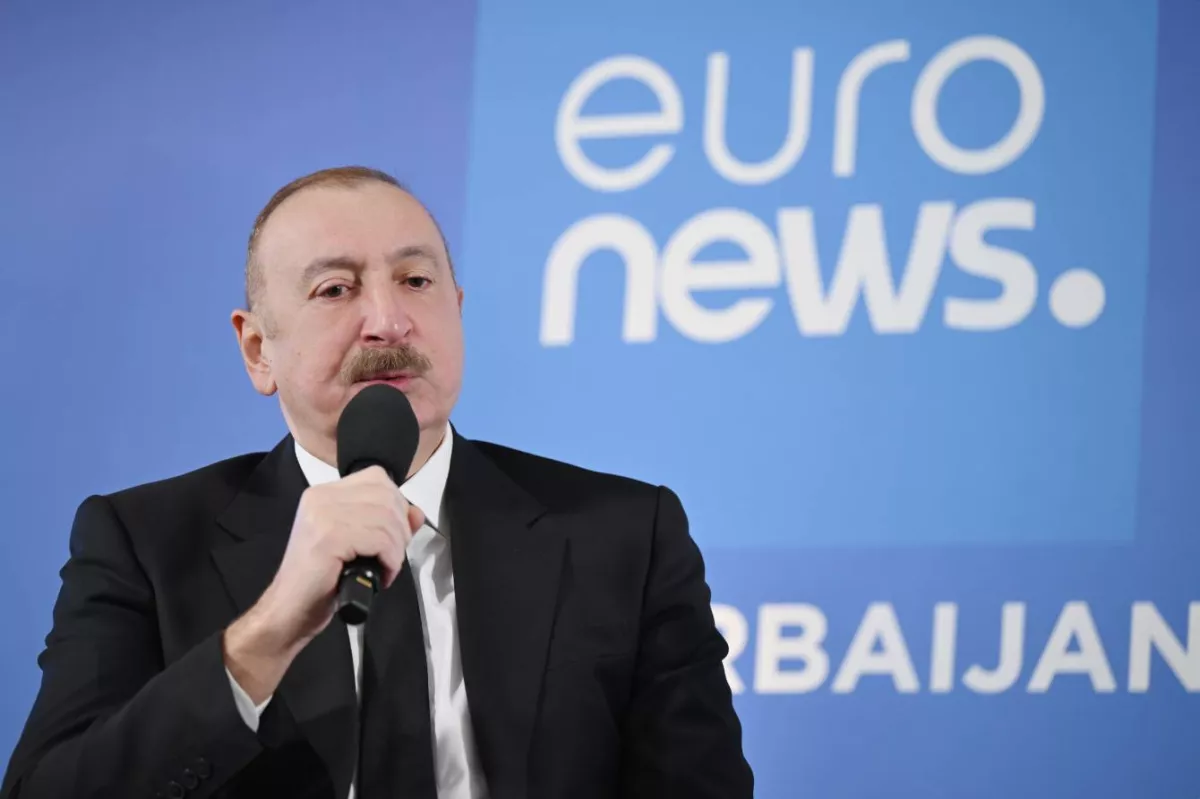
Azerbaijan is the only reliable, secure, and friendly destination connecting Europe with Central Asia (CA). The country also plays an important role in the European Union’s Global Gateway project, which will link Europe with the Central Asian region. “The volume of cargo is growing so fast that we have now made a decision to increase the capacity of our Trade Sea Port. So connectivity, including the Trump Route for International Peace and Prosperity, which will also engage Armenia into the transportation network of the broader Central Asia region, will also serve the cause of peace, because Armenia will stop being a deadlock, will get benefits from tariffs, and will be part of broad international cooperation,” President Ilham Aliyev emphasised.
The meetings held in recent days on the sidelines of the WEF forum proved highly productive. President Aliyev met with heads of state and government, as well as leaders of major international organisations. These included discussions with the prime ministers of Qatar, the Kurdistan Region of Iraq, and the Czech Republic, with the presidents of Finland and Israel, and with the European Commissioner for Enlargement. A central theme of these discussions was the development of bilateral relations, including prospects for expanding trade and economic ties, fostering joint business initiatives, and related cooperation.
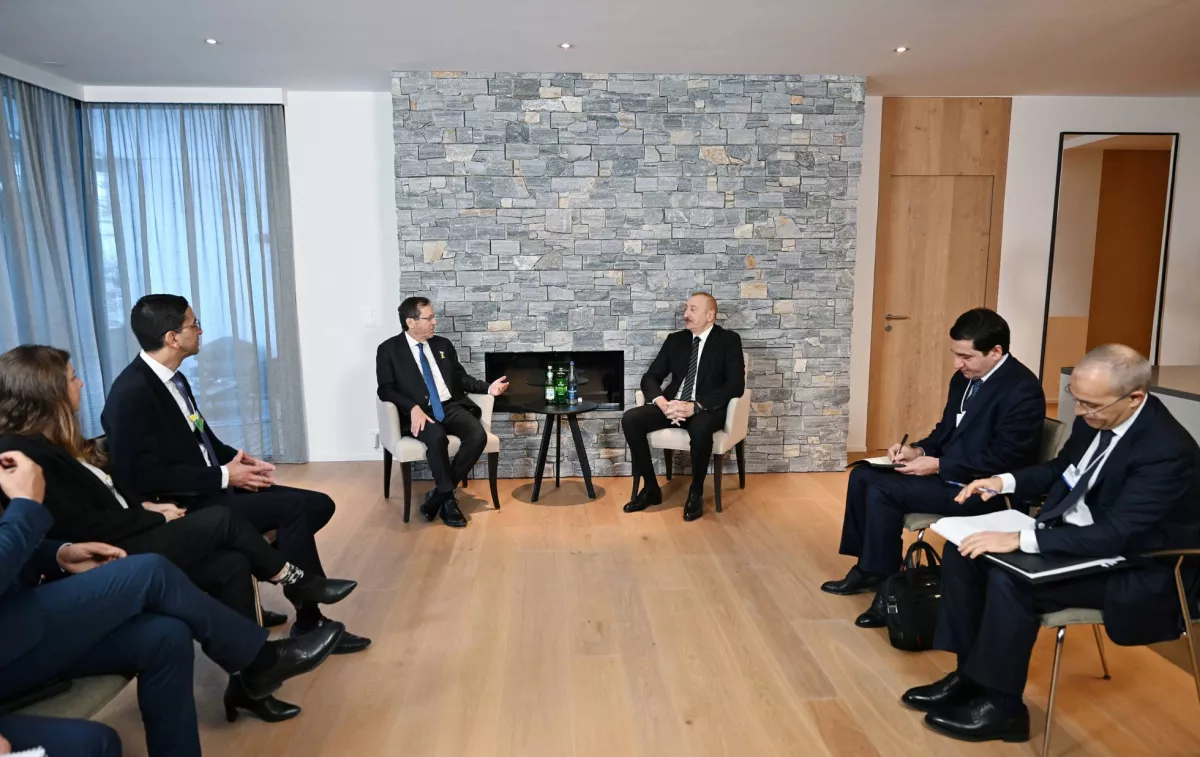
Equally important in Azerbaijan’s Davos agenda were the meetings held between January 20 and 22, in which President Ilham Aliyev met with leaders of leading global companies, banks, and asset management firms to identify areas of mutual interest and discuss avenues for business cooperation.
A particularly productive meeting took place with Larry Fink, CEO of BlackRock, one of the world’s leading asset management companies, and Adebayo Ogunlesi, founder, chairman, and CEO of Global Infrastructure Partners (GIP), a company within the BlackRock group. Under a memorandum of intent for long-term cooperation between the State Oil Fund of the Republic of Azerbaijan (SOFAZ) and BlackRock, it is expected that over the next three to four years up to $1.5 billion will be mobilised into SOFAZ infrastructure funds managed by GIP, as well as into joint investment opportunities.
As part of cooperation with GIP, potential investment opportunities will be assessed in the fields of data centres and infrastructure supporting regional needs for cloud technologies and artificial intelligence in Azerbaijan, as well as partnerships in the development of airport infrastructure.
An important focus of the Davos meetings was attracting global vendors and technology companies to Azerbaijan. This topic was discussed by President Ilham Aliyev in a meeting with Adrian McDonald, President for Europe, the Middle East, and Africa at Dell Technologies, one of the world’s leading IT companies. Dell Technologies has already participated in the creation of a supercomputing centre in Azerbaijan, and in the future, the company’s resources are expected to be used in the development of artificial intelligence solutions.
The meeting also covered promising projects in the development and modernisation of domestic IT infrastructure, networking equipment, data centres (DCs), and cloud infrastructure projects, including the design and implementation of state-of-the-art data centres.
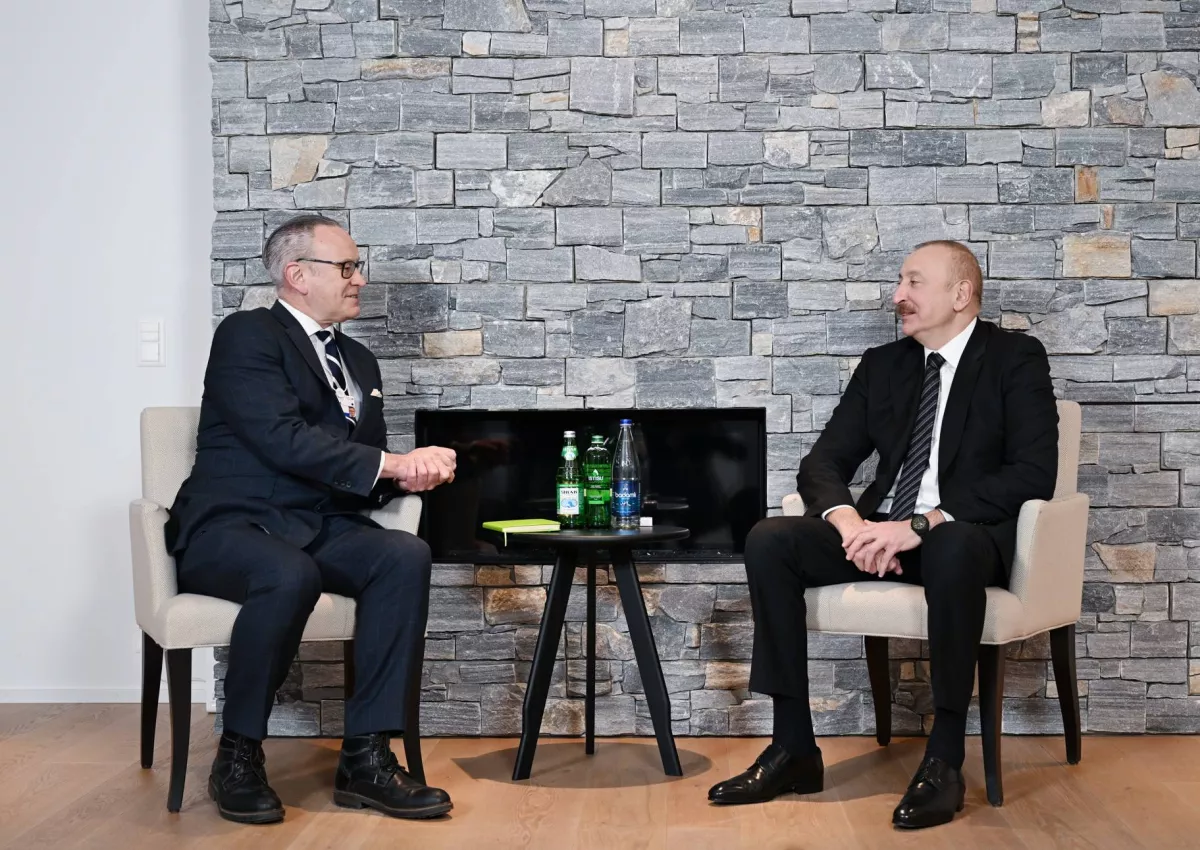
During a conversation with Jamie Dimon, CEO of the leading American company J.P. Morgan, the discussion focused on potential partnerships between the company and SOFAZ, as well as prospects for financing new SOCAR projects, along with other related issues.
Meanwhile, in a meeting with Connor Teskey, President of Brookfield Asset Management, a memorandum of intent was signed for long-term strategic cooperation with SOFAZ. An agreement was also reached to evaluate investment opportunities of up to $1.4 billion by SOFAZ in Brookfield-managed funds and joint investment projects over the next three to four years.
During a meeting with Russell Hardy, CEO of Vitol—the world’s leading oil trading company—information was provided on Azerbaijan’s ongoing oil strategy, as well as prospects for gas supplies and the role of the country in ensuring Europe’s energy security.
Equally substantive were the discussions with Odile Renaud-Basso, President of the European Bank for Reconstruction and Development (EBRD). These talks focused on the prospects for financing projects under the “State Program for the Improvement of Water Supply, Stormwater, and Wastewater Systems in Baku and the Absheron Peninsula for 2026–2035”, as well as credit support for the domestic renewable energy sector, the modernisation of Nakhchivan’s transport system, municipal waste management projects, and more.
Judging by the outcomes of the president’s meetings at panel sessions and discussions with world leaders and international companies, Azerbaijan’s participation in the 56th WEF forum, as in previous years, proved highly productive. The country’s involvement in this global economic platform once again confirmed Azerbaijan’s role as a key link connecting the economies, transport networks, and energy sectors of the West and the East, in line with this year’s WEF motto: “A Spirit of Dialogue.”







 editor@caliber.az
 +994 55 444-88-98
 Азербайджан, Баку, ул. Низами, 203, Af Business House, 5-й этаж