










Azerbaijani petrochemicals in the premier league From Sumgayit to Davos
In recent years, Azerbaijan has been steadily shifting from a focus on raw material exports to developing a modern, high-value non-oil industry for international markets. A standout example of this effort is the urea plant in Sumgayit, where the majority of production is exported. Last year, SOCAR Carbamide’s export revenues surged by nearly 45%.
These achievements have also gained international recognition. At the recent World Economic Forum (WEF) in Davos, SOCAR Carbamide was admitted to the prestigious Global Lighthouse network and received the WEF Digital Lighthouse Award for implementing Fourth Industrial Revolution (4IR) standards and advancing digitalisation in its production processes.
According to the “Azerbaijan 2030: National Priorities for Socio-Economic Development”, adopted several years ago, along with other strategic development plans, a central goal of transforming the domestic economy is the digitalisation of the non-oil sector (4IR), including the creation of new industrial capacities under Industry 4.0 standards. The plan envisions that within the next decade, two-thirds of Azerbaijan’s domestic industry will comprise high-tech sectors unrelated to oil and gas production. Government estimates indicate that these initiatives could boost non-oil export volumes to around $5.3 billion by 2027.
“Azerbaijan’s achievements in industrial transformation have been recognised at the international level: the Petkim and STAR plants, owned by SOCAR’s subsidiary, were awarded the prestigious WEF prize as some of the world’s most advanced digitalised industrial facilities. SOCAR Carbamide in Azerbaijan was also included among the nominees for this award,” said Azerbaijani Prime Minister Ali Asadov in September of last year during a plenary session on “Union of New Technologies: Creating the Industry of the Future” held at the BELEXPO exhibition centre in Minsk. “These achievements serve as a vivid example of Azerbaijan’s ambitious and forward-looking approach to implementing new technologies and transforming industry within the framework of the state’s ‘Industry 4.0 Readiness Programme.’”
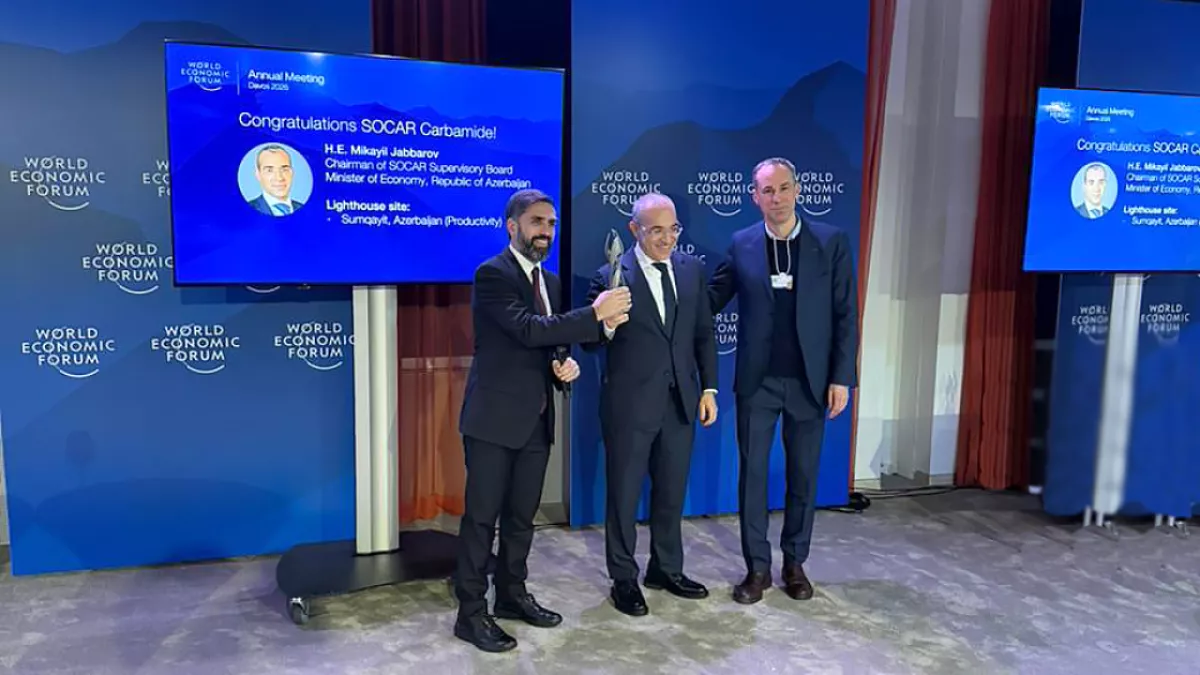
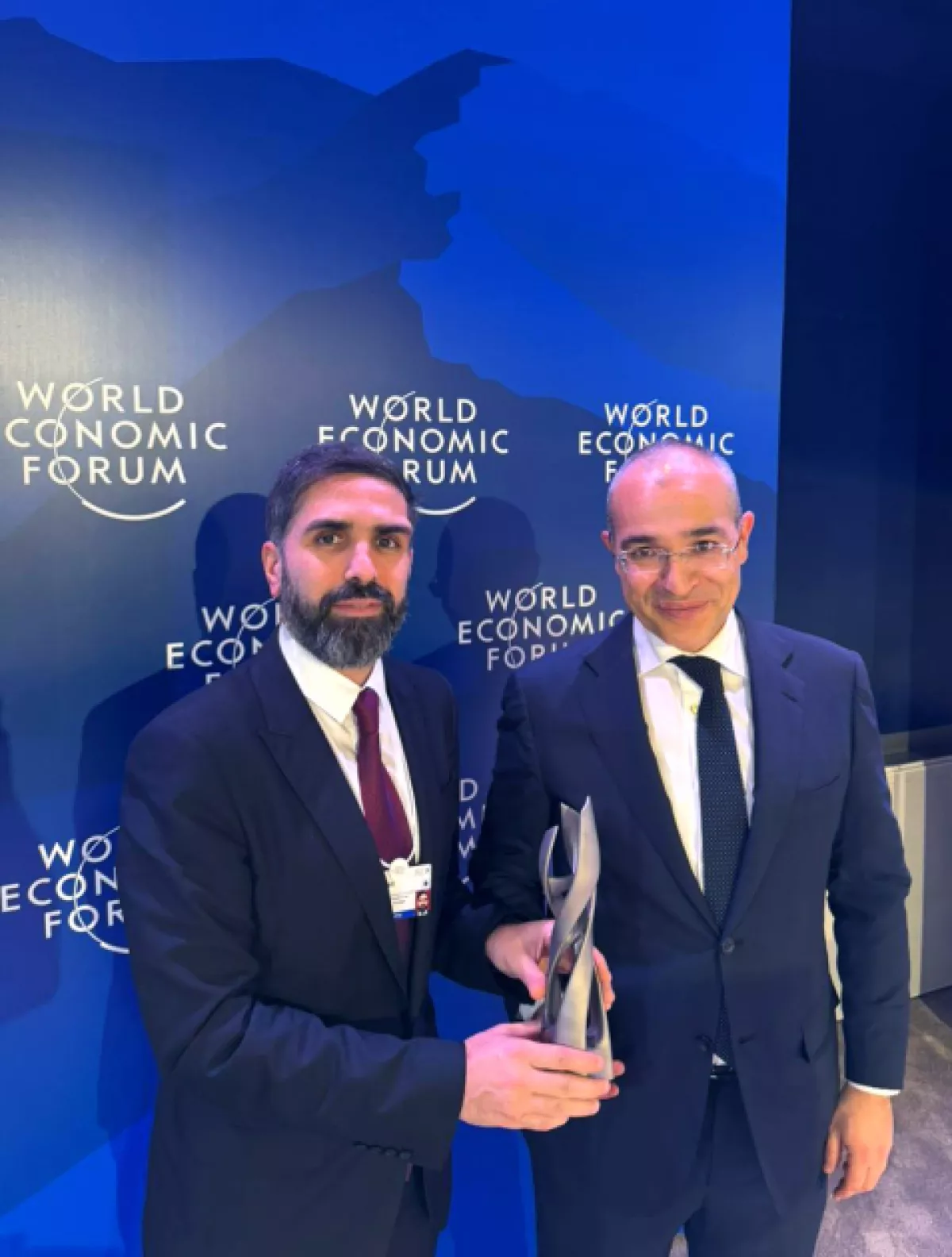
A few months later, the prestigious WEF international award was also presented to the Sumgayit Carbamide Plant. The prize was handed over in Davos to Mikayil Jabbarov, Chairman of SOCAR’s Supervisory Board and Azerbaijan’s Minister of Economy.
“SOCAR Carbamide became the first enterprise in Azerbaijan to receive this prestigious award, while SOCAR is the only energy company in the world to have received three Digital Lighthouse Awards. This achievement reflects the successful implementation of Industry 4.0 technologies, continuous innovation, and significant efficiency gains in production processes,” Jabbarov said.
Over the past three years, SOCAR has invested in advanced technologies aimed at improving production efficiency, process safety, and the management of health, safety, and environmental (HSE) standards, achieving significant progress in these areas. At the SOCAR Carbamide Plant, management of complex chemical production processes is based on advanced automation and artificial intelligence (AI) models: a total of 42 AI-based digital solutions have been implemented across the plant. With the adoption of Industry 4.0 practices, productivity has increased by 21%, natural gas efficiency by 24%, carbon emissions have been reduced by 19%, production waste by 72%, and unplanned downtime by 82%.
“Admission to the Global Lighthouse Network and the award of the Digital Lighthouse Award is a confirmation of the success of SOCAR’s transformation programme—a demonstration of how digital technologies, advanced automation, and workforce upskilling can deliver tangible improvements in productivity and environmental safety,” said SOCAR President Rovshan Najaf, speaking at the WEF 2026.
What benefits does Azerbaijan gain from SOCAR’s inclusion in the Global Lighthouse Network and the WEF’s recognition of its Industry 4.0 achievements? Today, environmental, social, and governance (ESG) principles are widely accepted as global standards. In the chemical industry, these principles involve reducing toxic waste, developing zero-waste technologies, recycling and sorting, implementing efficient management of natural resources and climate risks, maximising digitalisation of production processes, and ensuring workplace safety.
For companies that implement and comply with ESG standards—SOCAR Carbamide is undoubtedly among them—this creates a favourable regime for bank financing, simplifies export procedures, standardisation, and certification processes, and provides other significant advantages.
All of this is extremely important for Azerbaijan, as urea production is now one of the most export-oriented sectors of the domestic economy. The SOCAR Carbamide Plant in Sumgayit, commissioned just over six years ago, consists of three production units: ammonia, urea, and urea granules, with a design capacity of 1,200 tonnes of ammonia and 2,000 tonnes of urea per day.
According to the Export Review by the Center for Analysis of Economic Reforms and Communications (CAERC), between January and November 2025, Azerbaijan exported urea worth $163.4 million, an increase of 44.9% compared to the same period in 2023. In response to growing market demand, the SOCAR Carbamide Plant has ramped up fertiliser production to nearly its full design capacity—660,000 tonnes per year.
Azerbaijani urea and ammonia are exported to around 15 countries worldwide, and the prestigious WEF award will help expand access to new markets, including in highly developed regions. Notably, over the past four years, Azerbaijan has also become a leading regional hub for fertiliser transit.
At the end of 2023, the Baku International Sea Port (BISP) commissioned a modern fertiliser terminal with an annual throughput capacity of 2.5 million tonnes, making it the largest specialised terminal on the Caspian designed to receive bulk cargoes from the ports of Aktau and Turkmenbashi.
Today, primarily through BISP, and to a lesser extent via the Hovsan harbour and the Zira port, sulfur, urea, and ammonium nitrate fertilizers from Central Asian countries (Turkmenistan and Uzbekistan) are transited through Azerbaijan and Georgia (Batumi and Poti) to Türkiye, Romania, and further to Europe, Africa, and other regions along a “sea-rail-sea” route.
To put the scale of this transit into perspective: according to preliminary estimates, around 1.13 million tonnes of fertilisers—including urea and sulfur—passed through Azerbaijan’s ports from Turkmenistan last year. These figures also include urea shipped from Uzbekistan via the port of Turkmenbashi. Meanwhile, sulfur produced by Tengizchevroil at the Tengiz field (a by-product of high-sulfur oil processing) is periodically transported via the Russian railway system through Azerbaijan and then forwarded to the port of Batumi.
The presence of a major fertiliser terminal in Azerbaijan opens new opportunities for the future: by attracting local and international trading companies, it will be possible to procure and store large quantities of fertilisers and re-export them based on global demand and market conditions.







 editor@caliber.az
 +994 55 444-88-98
 Азербайджан, Баку, ул. Низами, 203, Af Business House, 5-й этаж