










Baku confirms its significance — Washington signs on Charter marks a new era of Partnership
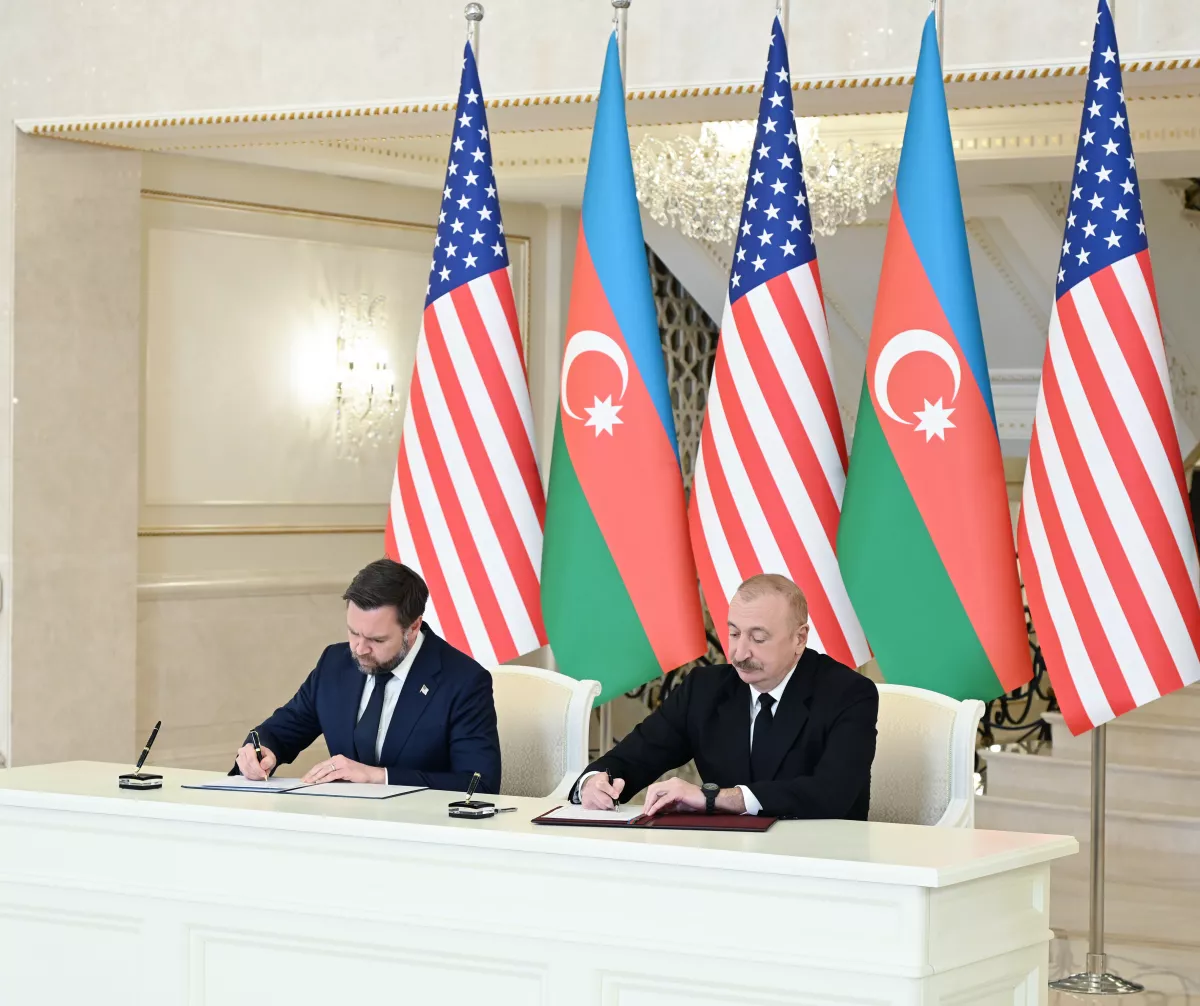
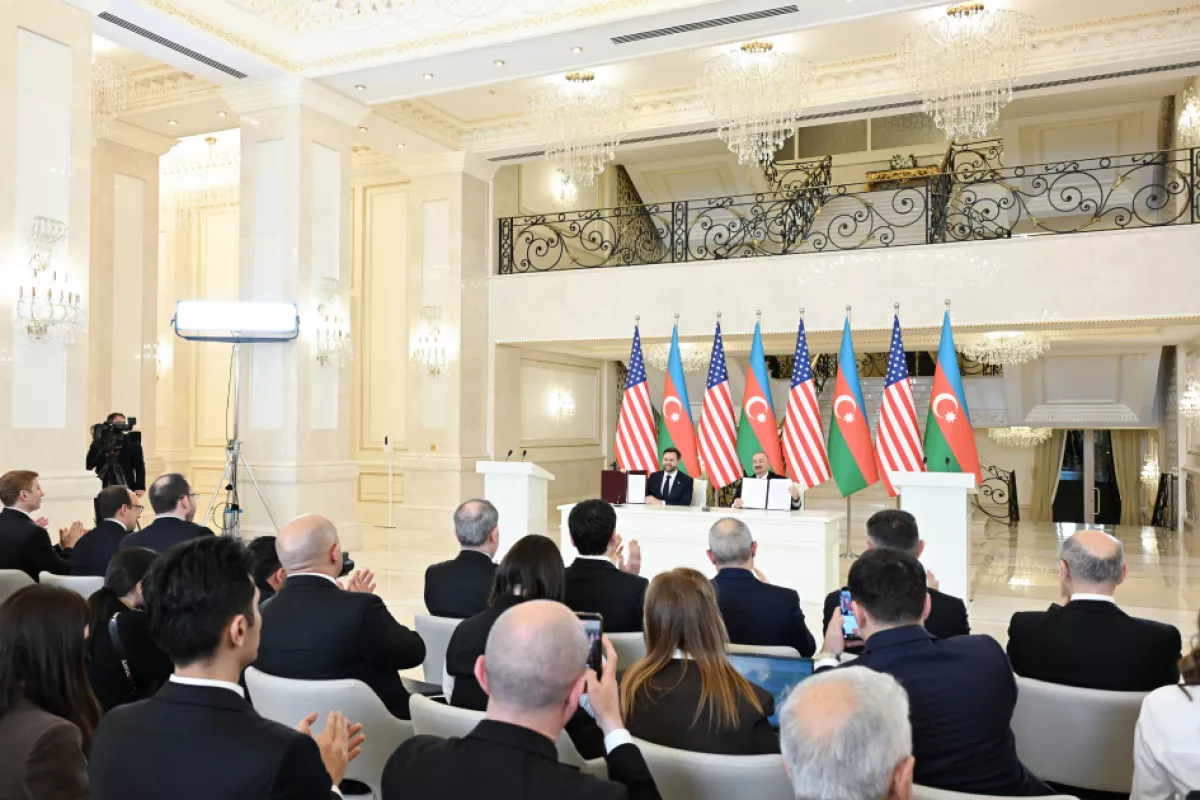
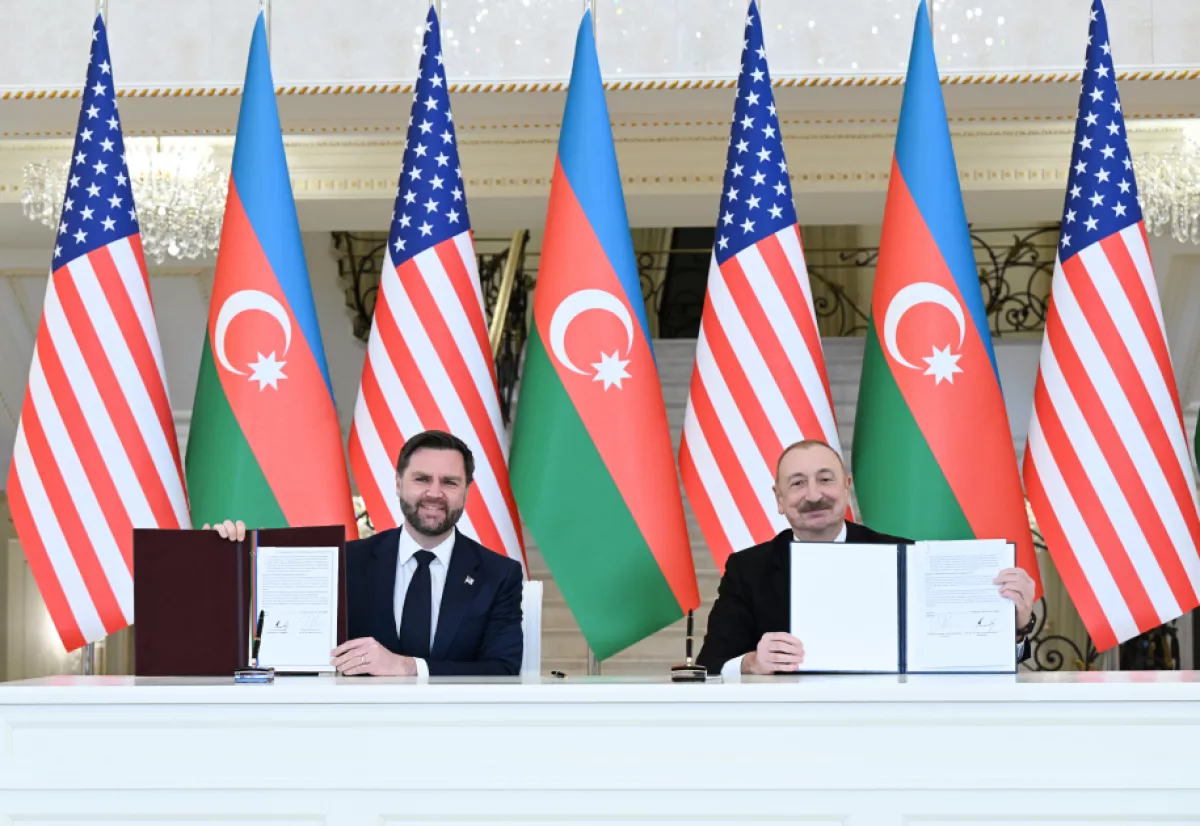
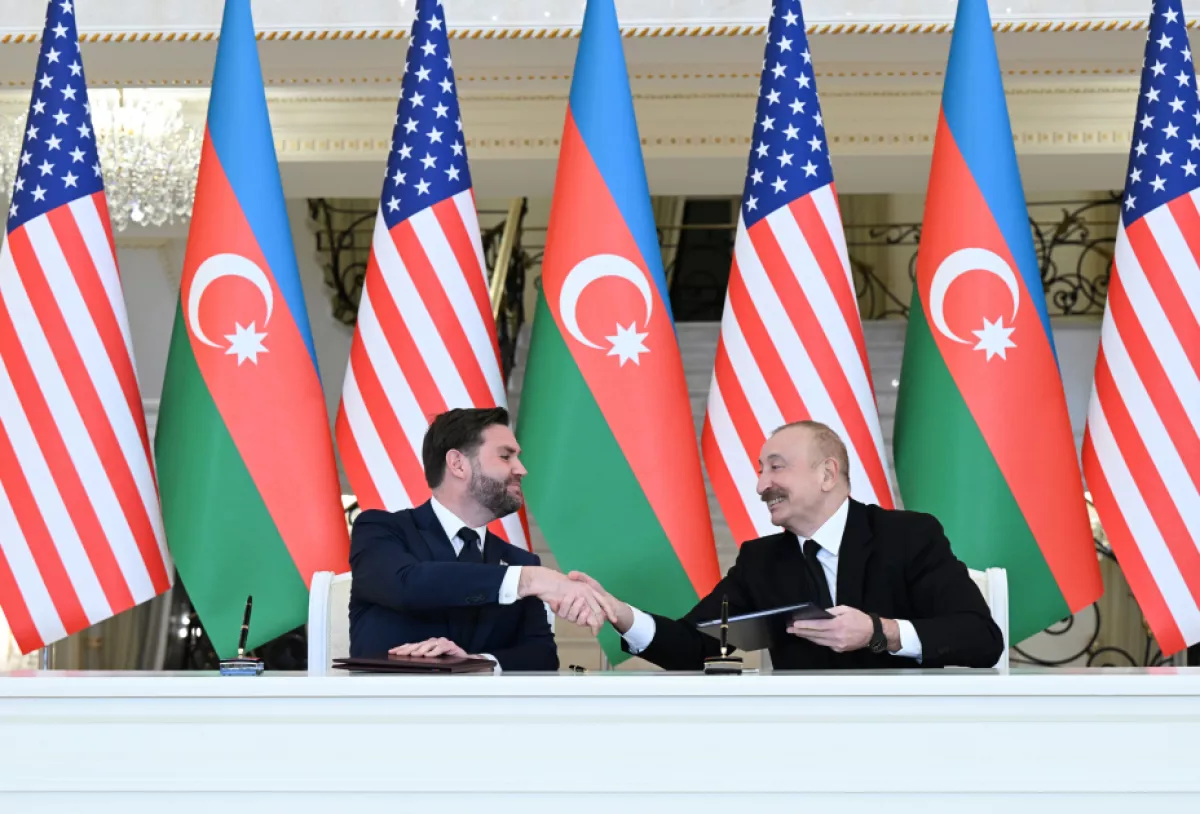
The document signed on February 10 in Baku between Azerbaijan and the United States of America spans only a few pages, yet behind each line lies a scale and significance that are still to be fully grasped.
The “Charter on Strategic Partnership between the Government of the Republic of Azerbaijan and the Government of the United States of America” formalises what Baku has long and methodically pursued: a qualitative transition from bilateral cooperation to a full-fledged strategic partnership. Crucially, this is not a symbolic declaration but a working document, in which both sides have outlined specific areas of joint engagement in energy, transport, defence, and artificial intelligence.
To fully appreciate the significance of this document, it is necessary to recall the path the two sides travelled before reaching its signing. Under the Biden administration, Azerbaijani–American relations experienced arguably their most difficult period in the history of Azerbaijan’s independence. The line pursued by the State Department under Antony Blinken was openly hostile toward Baku.
Washington demonstratively ignored Azerbaijan’s interests in the peace process with Armenia, sought to exert pressure through public statements with a poorly concealed pro-Armenian tilt, while sanctions rhetoric in Congress was fuelled by Blinken’s closeness to the Armenian lobby and his personal ties within that community.
Baku found itself in a position where any steps aimed at restoring sovereignty over its own territory were met in Washington with irritation and threats. It was a period of deep disappointment, and the diplomatic damage inflicted during those years was considerable.
The contrast with current developments could hardly be more striking. Trump’s return to the White House has altered the foreign policy trajectory, and the Charter has become the formal embodiment of that shift — its institutional expression. Importantly, the document builds on the Memorandum of Understanding signed on August 8, 2025, indicating that the process moved forward swiftly and with clear purpose, without the bureaucratic delays often associated with Washington. In just a few months, the two sides progressed from establishing a working group to signing a comprehensive strategic document. The pace alone speaks volumes about the seriousness of their intent.
The Charter’s preamble begins with language that might, at first glance, seem routine: the parties “reaffirm their support for each other’s sovereignty, independence, territorial integrity and inviolability of borders as the foundation of their bilateral relations.” Yet for Azerbaijan — which restored its territorial integrity after thirty years of occupation and, during that time, faced an ambiguous and later openly unfriendly position from Washington on the Karabakh issue — such wording from the United States carries tangible political weight.
The preamble further highlights the strategic nature of the partnership in areas of “mutual interest and shared benefit,” including regional connectivity, economic investment and security cooperation. It also explicitly states the intention to deepen engagement in diplomatic, economic, energy, technological and security spheres. Notably — and in keeping with Trump’s approach — it underscores the importance of mobilising the private sectors of both countries to implement the partnership.
The operational part of the Charter begins with a section on regional connectivity — and it reads like a programme of action. The parties affirm their intention to jointly advance the Trans-Caspian Transport Corridor (Middle Corridor) through the development of land, maritime, and air transport infrastructure, as well as energy and digital connectivity, trade and transit facilitation, customs cooperation, and international multimodal logistics.
For Azerbaijan — which has spent years building this route, investing in the Port of Alat, modernising its railway network, and expanding Caspian shipping — the United States’ entry into the project signifies a qualitatively new level of support. The Middle Corridor ceases to be merely a regional initiative and gains a global partner with commensurate resources.
Particular attention should be paid to the inclusion in the document of the “Trump Route for International Peace and Prosperity” — TRIPP. The Charter recognises its significance as a multimodal connectivity project that will ensure unimpeded communication between mainland Azerbaijan and its Nakhchivan Autonomous Republic — with mutual benefit for both international and domestic connectivity among the countries involved — and unlock the region’s transit potential in line with the Washington Declaration of August 8, 2025.
The appearance of this route in a bilateral U.S.–Azerbaijan Charter indicates that the White House views the unblocking of transport communications in the South Caucasus as a strategic interest of its own.
The energy section of the document explicitly describes Azerbaijan as a “reliable partner in energy security” — wording that carries practical weight in a world shaped by sanctions and redirected energy flows. The parties affirm their intention to expand cooperation in the oil, gas, and electricity sectors — both bilaterally and in partnership with third countries — to advance interconnector projects and diversify supply routes.
The Charter also refers to the productive history of bilateral energy ties, citing the “Contract of the Century” and the Southern Gas Corridor as projects that have delivered mutual benefit.
Two provisions in this section merit particular attention. The first is the intention to deepen cooperation in the field of civilian nuclear energy. For Azerbaijan, which does not possess nuclear power generation, the very inclusion of this topic in a strategic document with Washington signals readiness for a long-term technological partnership in this sphere.
The second key element is the intention to facilitate the transit of critical minerals through the Middle Corridor to global markets. At a time when competition for rare earths and other strategic resources has become a central dimension of geopolitical rivalry, Washington’s readiness to integrate Azerbaijan into these supply chains speaks volumes.
The Charter’s second section focuses on economic investment. The United States welcomes Azerbaijan’s efforts to integrate into the global economy and strengthen its position as an energy, trade, information, financial, transport and logistics hub in the Caspian region. The parties intend to identify strategic opportunities to expand trade and investment, including through the creation of economic dialogue platforms and by broadening private sector engagement.
However, the most significant innovation lies in the technological dimension. The Charter outlines plans to develop partnerships in artificial intelligence, promote cooperation in the space sector, and invest in digital infrastructure — including the construction of AI data centres in Azerbaijan. It also establishes mechanisms to support joint research and development, innovation platforms, sector-specific initiatives in cybersecurity and AI, tools to attract venture capital and accelerate technology commercialisation. In addition, the sides aim to expand workforce training programmes and stimulate investment in cross-border and trans-Caspian digital connectivity.
All of this outlines the contours of a partnership that goes well beyond the traditional energy model. Azerbaijan is positioned as a technological hub, and Washington confirms its readiness to support this transformation through concrete instruments — from public-private partnerships to technology protection mechanisms.
The security section is marked by restraint, yet it is precisely this restraint that lends it particular weight. The Charter opens with the acknowledgement that peace in the South Caucasus serves the shared interests of both countries, and that security cooperation benefits not only bilateral relations but also regional stability. Washington “deeply values Azerbaijan’s contributions to international peacekeeping efforts,” noting that Azerbaijani servicemen have served alongside U.S. forces and coalition partners.
Four areas of cooperation are then outlined: the expansion of defence cooperation, including the sale of defence articles; deeper collaboration in counterterrorism; cooperation in cybersecurity and the protection of critical infrastructure; and — given the serious challenges posed by landmine contamination — support for humanitarian demining through financial assistance and the transfer of technology.
The provision on the sale of defence articles deserves special attention. For decades, the U.S. Congress applied restrictions to Azerbaijan under Section 907 of the Freedom Support Act, and although these restrictions were regularly “waived” by presidential orders, the mechanism itself remained a tool of leverage. By enshrining defence supplies as part of the strategic partnership, the Charter elevates this area to a fundamentally new level — moving it from a zone of exceptions and temporary allowances into the realm of systemic engagement.
Washington’s recognition of the landmine issue is also a twofold step: it signals practical readiness to assist a country facing one of the world’s largest mine contaminations, while simultaneously affirming the legitimacy of Azerbaijan’s sovereignty over its de-occupied territories.
The institutional section — the fourth — transforms all of the above from a set of intentions into an operational mechanism. The parties provide for the creation of working groups on key areas: economy and trade, energy, connectivity, AI and digital development, and security and defence. Within three months of signing, these groups are to identify specific projects and develop roadmaps for their implementation. The parties commit to holding regular meetings at least once a year and may establish additional dialogue platforms as needed.
As is well known, strategic charters often remain declarative, but this one — with its three-month deadline and working groups — is clearly designed for realisation.
Viewed as a whole, the document reveals a clear-eyed mutual calculation, free of sentimentality. Baku gains the opportunity to convert years of strategic effort into tangible capital — investments, technology, defence capabilities, and political weight — while Washington secures a strong partner in a strategically vital region. At the same time, the Charter undeniably stands as a symbol of deep and enduring mutual trust between Azerbaijan and the United States and represents a strategic move aimed at strengthening stability, security, and partnership in the South Caucasus.
Moreover, the Charter is the culmination of brilliant Azerbaijani diplomacy, which consistently demonstrated that the Caspian nation is a strategic hub on which Eurasian logistics depend. Baku proved this through action — and Washington put its signature on it. After the deadlock into which relations had fallen under the previous U.S. administration, the document signed in Azerbaijan’s capital opens a fundamentally new era: a “strategic partnership based on the national interests of both countries.”







 editor@caliber.az
 +994 55 444-88-98
 Азербайджан, Баку, ул. Низами, 203, Af Business House, 5-й этаж