










Bargaining behind Kyiv’s back How Paris plays its game with Moscow
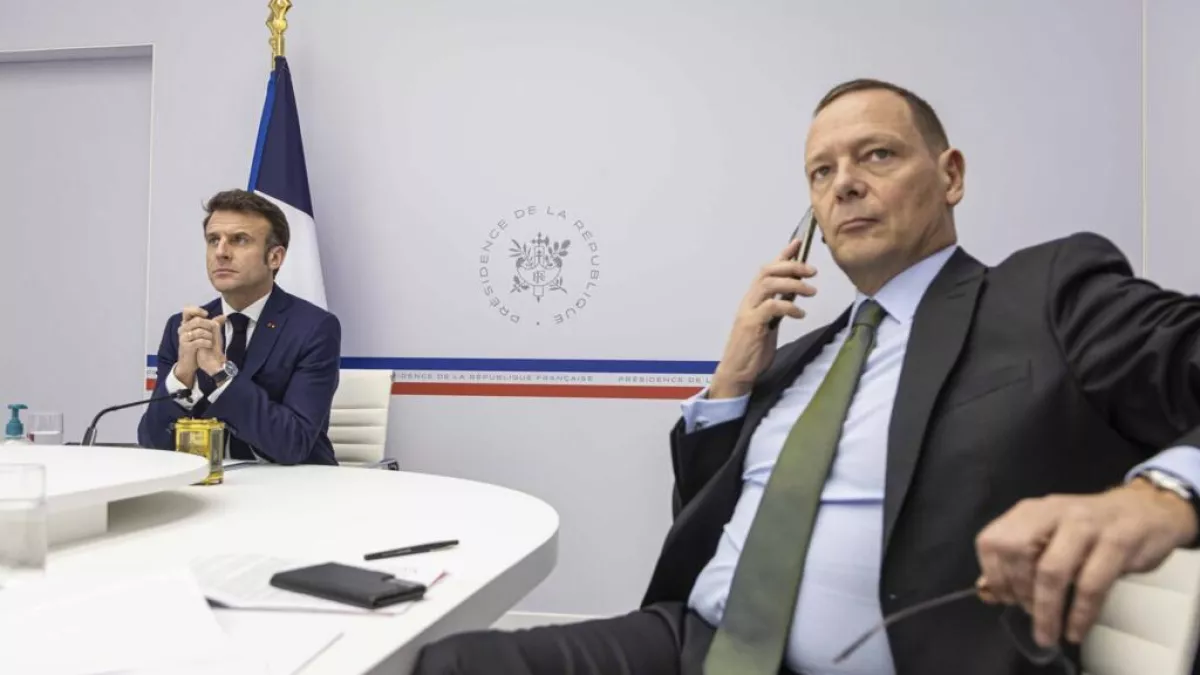
The secret visit of Emmanuel Bonne to Moscow earlier this month reveals the essence of contemporary French diplomacy in its most cynical form. Bonne, the French President’s foreign policy advisor and one of the key members of his diplomatic team, arrived in the Russian capital without any prior announcement from either the Élysée Palace or the Kremlin. This fact speaks for itself. Clearly, when a state that publicly positions itself as one of Ukraine’s key defenders sends its top diplomatic emissary for undisclosed talks with Moscow, it indicates a gap between its declared stance and actual policy.
Russian Foreign Minister Sergey Lavrov effectively confirmed the existence of such channels in an interview with RT on February 5, stating that Russia maintains contacts with a number of European leaders who request that these negotiations remain confidential. The wording itself is significant: this is about systematic communication. Moscow receives from certain European capitals exactly what it needs — a willingness to engage in dialogue in a format where Ukrainian interests are pushed to the background.
Macron’s actions fit within the logic of French foreign policy. Paris has traditionally viewed Russia as an inevitable participant in Europe’s balance of power. After February 2022, this logic did not disappear; it simply took a new form, moving into secret diplomatic channels. The French president is focused on the period after the end of the Russia–Ukraine war, when the question of restoring economic ties will arise. Bonne’s mission is to lay the groundwork for the return of French business to the Russian market and to secure positions for companies of the Fifth Republic in the future configuration of relations.
Macron and Bonne
This strategy comes at the expense of Ukrainian interests. Any informal agreements between Paris and Moscow will, by definition, be reached at Kyiv’s cost. France can publicly declare support for Ukrainian sovereignty and the need to punish the aggressor, while simultaneously calculating its own plans for future engagement with Russia. French diplomacy has long operated in two modes: one for cameras and public statements, and another for behind-closed-doors conversations. In the first, Macron remains an ally of Ukraine. In the second, he negotiates with Moscow over the parameters of post-conflict cooperation. And it is in this second mode that decisions are made which shape reality.
Against this backdrop, the economic dimension of European policy is particularly telling. Paradoxically, the European Union continues to effectively finance Russia’s military machine through liquefied natural gas purchases. According to European media, Russian LNG supplies to Europe reached a record level in January 2026 — 2.276 billion cubic meters.
In the end, a strange but telling picture emerges. Ukraine receives European military and financial assistance. Russia receives European money for energy supplies, which allows it to continue the war. This paradox reflects a conscious choice by European elites, for whom morality ends where economic calculation begins.
Against this backdrop, France’s position becomes particularly clear. Paris is preparing for a post-conflict reality in which French business must return to the Russian market, and Russia retains significant influence in the European security architecture. Ukrainian interests in this configuration are considered only to the extent necessary to maintain the outward appearance of European solidarity.
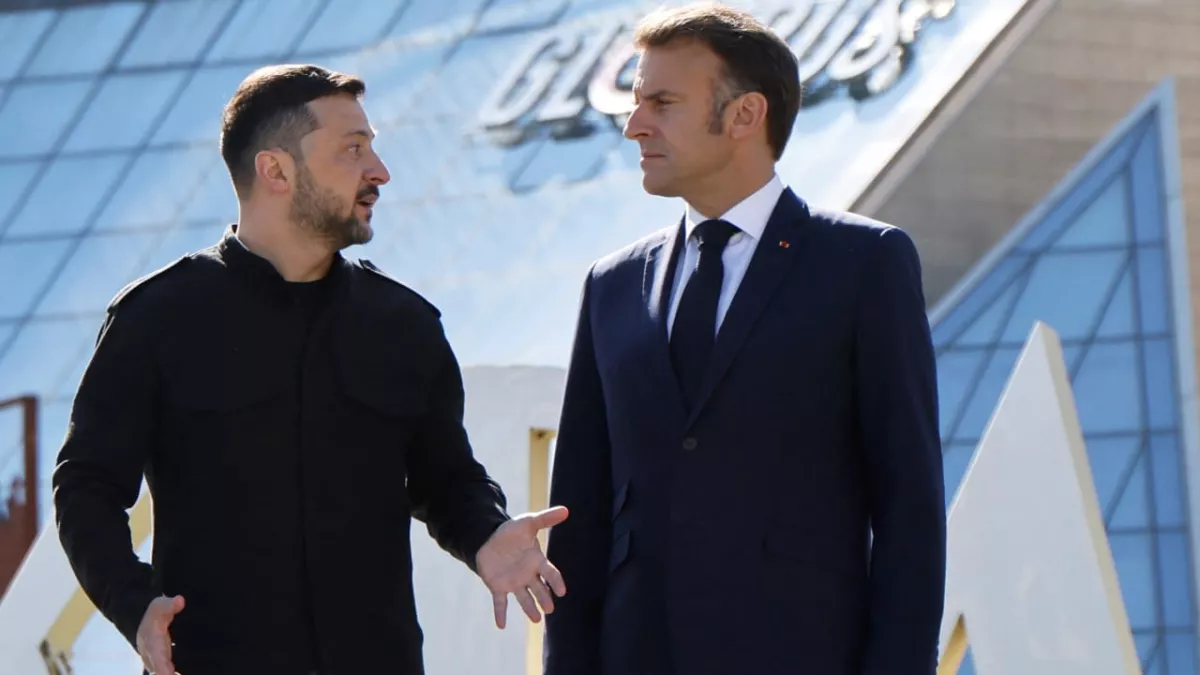
The duality of French policy is not an exception. Macron is attempting to replicate the Gaullist model, under which France built relations with the USSR outside the NATO framework. The difference is that de Gaulle operated in the context of the Cold War, with a relatively stable balance of power. Macron operates in the context of a hot war, in which one side — Ukraine — is the victim of aggression and directly dependent on European support.
Zelenskyy and Macron
In this system, Ukraine becomes a hostage of a double game. It receives weapons and financial aid that allow it to continue resisting. At the same time, European capitals maintain informal contacts with Moscow, within which Ukrainian interests are turned into bargaining chips. The result could be a situation in which Ukraine holds its ground on the battlefield but loses at the negotiation table. Europe provides just enough support for survival, but not enough for victory on terms that guarantee long-term security and sovereignty.
Macron assumes that the war will eventually end, and European states will have to establish a new system of relations with Russia. Whoever begins this process first gains a strategic advantage. France is attempting to secure such a position now, sacrificing Ukrainian interests for its own economic and geopolitical calculations.
Macron’s secret diplomacy and the EU’s record purchases of Russian gas are two sides of the same coin. Europe is unwilling to pay a high price for supporting Ukraine. It helps Kyiv while, in effect, continuing to fund Moscow. It condemns aggression while simultaneously building ties with the aggressor. This is a symptom of moral bankruptcy, in which the economic interests of European elites outweigh the principles they publicly profess. And the longer this double game continues, the higher the cost for Ukraine.







 editor@caliber.az
 +994 55 444-88-98
 Азербайджан, Баку, ул. Низами, 203, Af Business House, 5-й этаж