










Belarusian opposition: A signal to Minsk and the West What Kolesnikova’s return means
One of the pardoned opposition leaders wants to return to Belarus. And it’s not Sviatlana Tsikhanouskaya. The recently freed and expelled Maria Kolesnikova has announced her intention to return to the country in order to “develop European culture.” But why, and who benefits from this?
Fighting “low-quality horror”
On December 13, 2025, Maria Kolesnikova was pardoned by the President of Belarus along with a large group of others convicted for the events of 2020. Their release was the result of negotiations between Alexander Lukashenko and the US President’s Special Envoy, John Coale. Among those released was former presidential candidate and former head of Belgazprombank, Viktar Babaryka, whose campaign headquarters were effectively led by Kolesnikova.
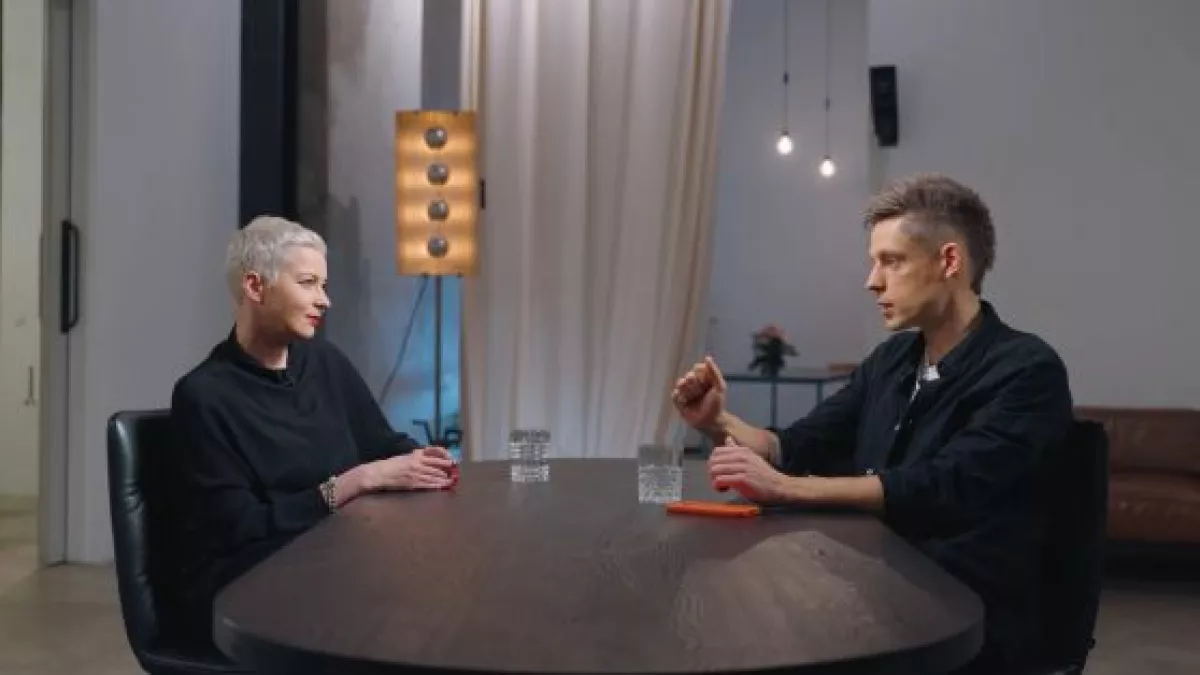
On February 3, in an interview with Russian blogger Yuri Dud, Kolesnikova spoke about the possibility of returning to Belarus. The former activist of German NGOs framed this primarily in terms of work on the “cultural front”:
"When some cultural institutions return… If we talk about Germany — the Goethe Institute, and other institutions that don’t support politicians but support people, support culture. And culture is what defines all of us. We are heirs and bearers of European culture… If as a result of this dialogue such changes take place, that’s a good thing. Because in history, there have never been eternal dictators. But what has happened is that after dictators there was scorched earth. Why would we want scorched earth? People need to feel free, to be able to aspire to that. We need to support culture… Belarusian theatre, Belarusian music, artists — they have all left, almost no one remains. And what is left is of very low quality. So in its place comes some Russian content, which is also not very good. Many talented Russian performers have left the country. And what remains is this kind of low-quality horror…”
The question inevitably arises: why is the focus not on Belarusian national culture, but on some sort of “European” culture? And is it really just about the quality of musical “output” in the Belarusian entertainment scene? It seems that the issue is far deeper than that.
One of the key points of the interview was Kolesnikova’s statement supporting Western negotiations with the President of Belarus: “If, in order to free people, it is necessary to talk to Lukashenko, I believe it is worth doing.”
To better understand what truly lies behind Kolesnikova’s current statements, it is important to pay attention to other parts of the conversation. Dud asked what she would have done differently in 2020, since, as the blogger put it, “the regime held”, and thousands of people faced administrative and criminal charges or ended up in exile. Kolesnikova replied that she had not planned to organise protests. This claim appears, at the very least, disingenuous: the leaders of the electoral campaign, which gradually evolved into a protest movement, clearly knew what they were doing and should have anticipated the consequences of their actions—primarily for the people involved.
It is possible that Kolesnikova was not directly involved in organising street demonstrations. However, in her youth, she herself participated in nationalist opposition actions, as evidenced by surviving photographs against the backdrop of white-red-white flags. Now she claims: “Perhaps we could have communicated our position to the country’s leadership even more clearly and explicitly, to show that it was entirely peaceful.”
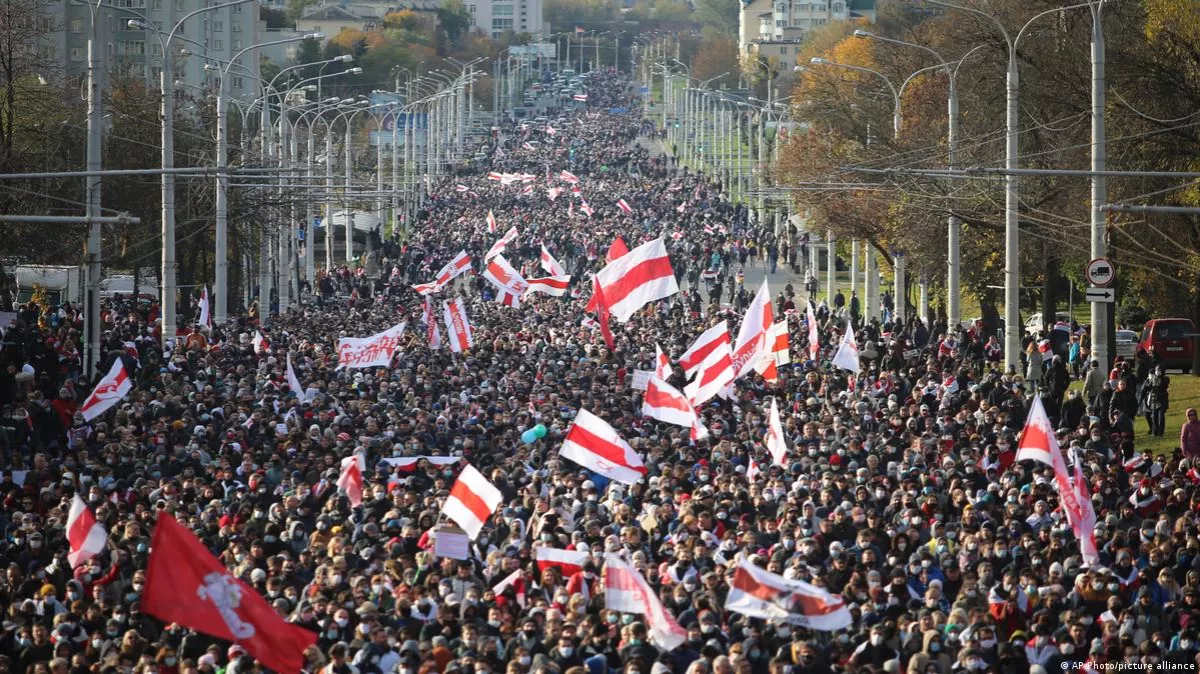
Kolesnikova also stated that she does not regret not calling for the storming of government buildings or other violent actions in 2020, presenting herself as a consistent opponent of any form of violence. At the same time, some members of the opposition still reproach her for this stance. “You don’t overthrow tyrants like that,” Dud himself noted.
However, during those events, Kolesnikova objectively could not restrain the more radical participants in the protests—including far-right football “hooligans” who joined the movement—from clashing with law enforcement.
Whether Maria Kolesnikova recognises it or not, the protest movement was aimed at removing Alexander Lukashenko from power—either through “soft” or forceful means—and establishing a pro-Western puppet regime in Belarus. The potential consequences of such a course could have been tragic for the Belarusian people and, in scale, far exceeded the harm suffered by the participants in the 2020 events.
From the outset, a fairly humane decision was made regarding Maria Kolesnikova: in September 2020, Belarusian security forces simply escorted her to the border with Ukraine. What happened next was the result of her personal choice—Kolesnikova tore up her passport and returned, while two of her associates left Belarusian territory. After that, Maria Kolesnikova was detained and later convicted.
In her interview with Yuri Dud, she explained her action by saying that she had repeatedly promised her supporters that she would stay with them in Belarus. Meanwhile, for many of them, Sviatlana Tsikhanouskaya’s flight abroad came as a real shock. Incidentally, according to the Belarusian leader, it was he who arranged for Tsikhanouskaya to be given money for her journey.
“We appealed to the authorities, we appealed to the elites…”
Another important point Kolesnikova mentioned in the interview, which had previously been hardly discussed by either the opposition or the official side, is that the organisers of the 2020 protest movement sought to work with serving officials.
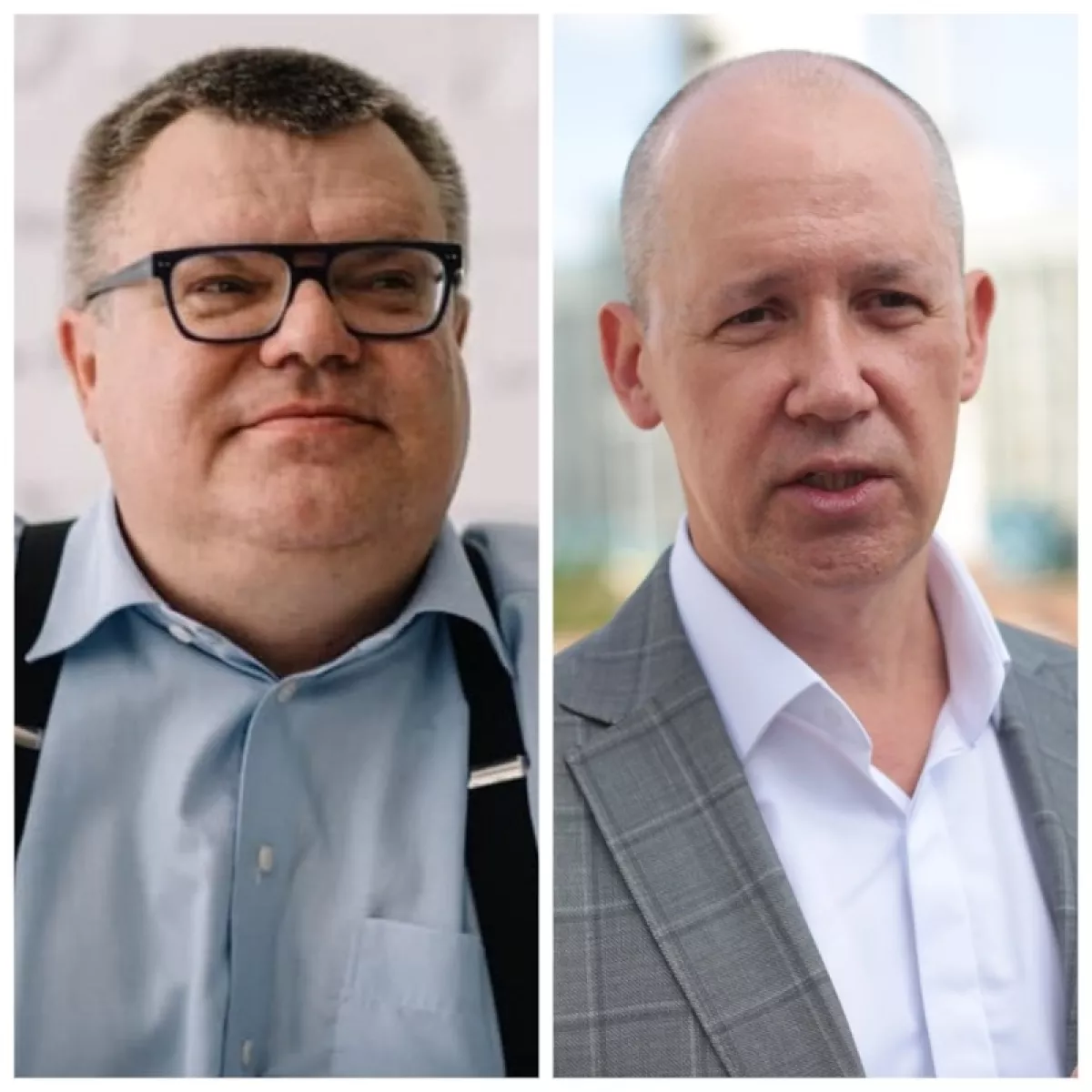
Unlike the “old,” refined-nationalist opposition, the front figures of that electoral campaign were new faces—including former presidential administration officials (Valery Tsepkalo) and major business figures (Viktar Babaryka). Today, Kolesnikova openly states: “We appealed to the authorities, we appealed to the elites and the state apparatus to show them that there is nothing terrible about the fact that power can change…”
In this context, Kolesnikova’s current desire to return to Belarus can probably be understood. Having failed to achieve a change of power through force, certain circles in the West apparently intend to return to a strategy of “encirclement.”
Speaking in favour of dialogue, Kolesnikova emphasises that it is necessary, first, for the release of those convicted over the 2020 events, and second, for the return of European embassies to Belarus.
“A very interesting point…” she noted.
"Russia is at war with Ukraine, yet there are European embassies in Russia. Belarus is not at war, yet there are no embassies in Belarus. What does that mean? The most important principle of diplomacy is being violated—the possibility of close communication…”
Kolesnikova also spoke in favour of the return of Western-funded NGOs to Belarus and of the country emerging from “isolation”—including the possibility for Belarusians to once again travel to Vilnius on weekends. At the same time, the pardoned opposition figure seems to assume that this is currently impossible. In reality, only the railway route has been cancelled, while ordinary Belarusian citizens continue to travel to Lithuania and Poland by car. Travel restrictions mainly affect those who are subject to sanctions.
Notably, in this interview, Maria Kolesnikova appeared largely free of personal animosity—even towards the Belarusian leader. When asked why Alexander Lukashenko should engage in further dialogue, she stated that he could do so “for the future, in terms of the future, as a demonstration of wisdom and strength.”
Yuri Dud repeatedly asked questions that revealed his openly sceptical attitude toward the idea of dialogue. However, Kolesnikova consistently insisted that sanctions should be lifted—even though she herself, as a committed pro-Western opposition figure, is under anti-Belarusian sanctions: her bank account and funds in Germany are currently blocked.
Overall, the impression is that Maria Kolesnikova does not seem a seasoned politician, but a naive activist with idealistic notions of Western democracy. She admitted that, after her release, she was surprised to discover that the so-called “democratic” opposition is dominated by mutual hatred, insults, and aggression, which have now become the norm. According to her, the level of animosity has increased noticeably compared to six years ago.
The pardoned opposition figure remarked: “We are not only unprepared to listen to the authorities, but we cannot even listen to each other… What kind of democracy can there be, what kind of freedom—if we are not free from hatred toward one another?”
Dud, against the backdrop of the usual disputes among Russian liberals, listened with a stone-faced expression. However, it is hardly surprising—this is typical of the émigré community, which competes fiercely among itself for Western funding. And refined politicians in the EU are no better: competition for power and resources is always a form of war.
Finally, Maria Kolesnikova confirmed her previously stated desire to remain in Belarus even under Alexander Lukashenko. In her view, such a step could serve as good PR for the current authorities. She wants to demonstrate that she is not an enemy and sees her role as building relationships. When asked if she would agree to such a scenario now, Kolesnikova replied evasively: “I would think about it…”
Soft and hard
Within the Belarusian opposition, Maria Kolesnikova’s statements—she was previously called the “face of the protests” and undoubtedly appears a more charismatic and intellectual figure than Sviatlana Tsikhanouskaya—have already triggered a wave of criticism and indignation.
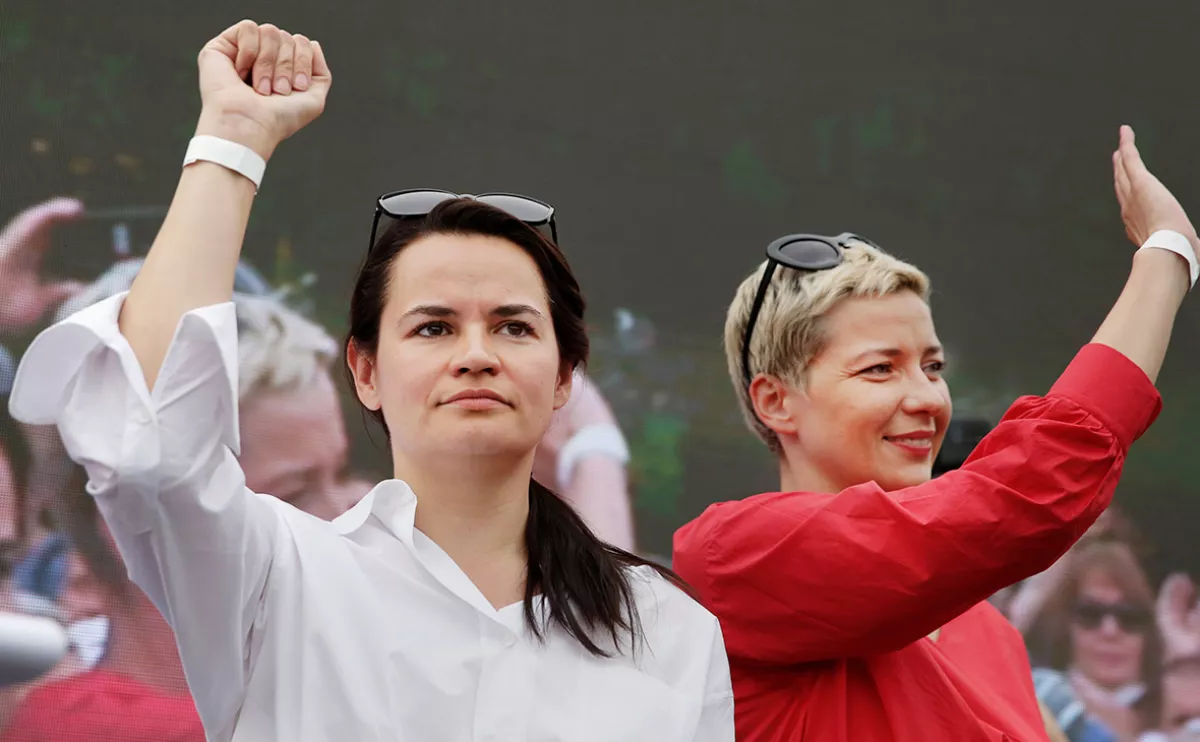
Some bloggers are literally unleashing megatons of hate. Female opposition figures reacted especially sharply: on social media, they spewed accusations and drowned in anger. At times, it is difficult to tell where this hatred is directed more—at the “criminal regime” or personally at Maria Kolesnikova, who, through her calls for dialogue, gathered over two million views on Yuri Dud’s channel in just two days.
For now, however, Kolesnikova’s return to Belarus remains only a hypothetical scenario. Yet Maria Kolesnikova is not an abstract “activist with bows,” especially since, in the interview, she refuses to consider herself a politician.
“Federal President Steinmeier received Belarusian opposition politician Maria Kolesnikova today,” Frank-Walter Steinmeier announced on his page on January 15. On February 3, she met with Lithuanian Prime Minister Inga Ruginienė. According to former Lithuanian Minister of Economy Mindaugas Sinkevičius, “During the meeting, Maria Kolesnikova called on Lithuania and other European countries to actively support US efforts regarding Belarus.”
The discussion focused, in particular, on a “reasonable approach” to sanctions and the restoration of railway service between Vilnius and Minsk. At the same time, Kolesnikova was referred to by Sinkevičius as the “leader of the Belarusian opposition”—a subtle nod to Tsikhanouskaya’s office. Interestingly, Viktar Babaryka, with whom Kolesnikova intends to continue cooperating, was at the same time meeting in Vilnius with Sviatlana Tsikhanouskaya. Could he have also suggested to the “irreconcilably democratic leader” to adopt a more moderate stance?
It is clear that behind these developments lies not only Maria Kolesnikova’s personal nostalgia, but also the interests of certain business and moderately oriented political circles in Germany and other EU countries regarding a return to Belarus. This comes especially in the wake of Donald Trump’s successful negotiations with the Belarusian president. The outcome was not only the release of those convicted over the 2020 events. As early as December last year, Alexander Lukashenko reported that during one of the meetings he had offered the American side the opportunity to acquire a Belarusian potash mine. Recently, reports have emerged that the largest private network of gas stations, Lukoil-Belarus, which also holds a stake in the Novopolotsk refinery, could come under American control.
Meanwhile, the West’s presence in Belarus primarily serves its own self-interest. And “soft power” in the form of “moderate” opposition figures, a renewed influx of NGOs, and other instruments can easily coexist with hard pressure—ranging from economic and political sanctions to the threat of military intervention.
In any case, it is clear that the collective West’s efforts in the Belarusian direction are currently intensifying noticeably.







 editor@caliber.az
 +994 55 444-88-98
 Азербайджан, Баку, ул. Низами, 203, Af Business House, 5-й этаж