










Committees against peace What unites ANCA and pro-Russian forces in Armenia?
The visit of U.S. Vice President JD Vance to Armenia and Azerbaijan is rightly regarded as the key event on the regional agenda at this stage. One of the most influential institutions of the global Armenian community—the Armenian National Committee of America (ANCA)—offered its own distinctive assessment of this event, as could be expected.
In a post on its X account, ANCA criticised Vance’s statements made in Yerevan in support of Pashinyan ahead of the upcoming elections. The committee emphasised that the “Trump-Vance Administration should not play favorites in Armenian politics for the very same reasons that foreign countries should not play favorites in American politics.”
“Increasingly unpopular at home - rigging election rules and jailing civil society and spiritual dissidents - Pashinyan is looking abroad for support,” the ANCA post stated.
Frankly, it was hardly worth expecting anything different from this ideological stronghold of Armenian nationalism, and the event would not have attracted much attention if the ANCA initiative had not been supported by the well-known pro-Russian Armenian blogger Mika Badalyan. Here’s what this activist writes: “The Armenian National Committee of America (ANCA) delivered a strong message to the Trump–Vance administration: no bias in Armenian politics. Washington should not interfere in our affairs or prop up bankrupt actors. Today, Pashinyan, having completely lost trust within Armenia, is desperately seeking legitimacy abroad. When your own people do not support you, there is only one option left—manipulate elections and clear the political field”—and so on.
A natural question arises: why, in the midst of Russia’s confrontation with the West, do pro-Russian forces openly support the initiatives of an organisation based in the United States? Of course, one could argue that in this case, the policies of Moscow and the Armenian diaspora in the U.S. align in their opposition to Pashinyan, and that American Armenians hate Azerbaijan so much that they are willing to oppose any initiative—even those serving the interests of both the U.S. and Armenia. All of this is true. Indeed, the alignment of interests is a key factor behind such synchrony and unanimity, yet history suggests that the forms this synchrony takes often involve more than mere situational support.
The fact is that members of the Armenian diaspora, including its various institutions, have long maintained close ties with Soviet intelligence agencies. The USSR’s KGB used these individuals primarily for propaganda against Türkiye, which, due to its NATO membership, the Soviet Union saw as a potential adversary on its southern borders.
For this purpose, in the 1970s and 1980s, the USSR actively promoted the issue of the so-called “Armenian genocide,” funded publications and conferences on Armenian topics through various “cultural” foundations, and helped disseminate anti-Turkish materials. Naturally, the Armenian SSR played a special role in this activity.
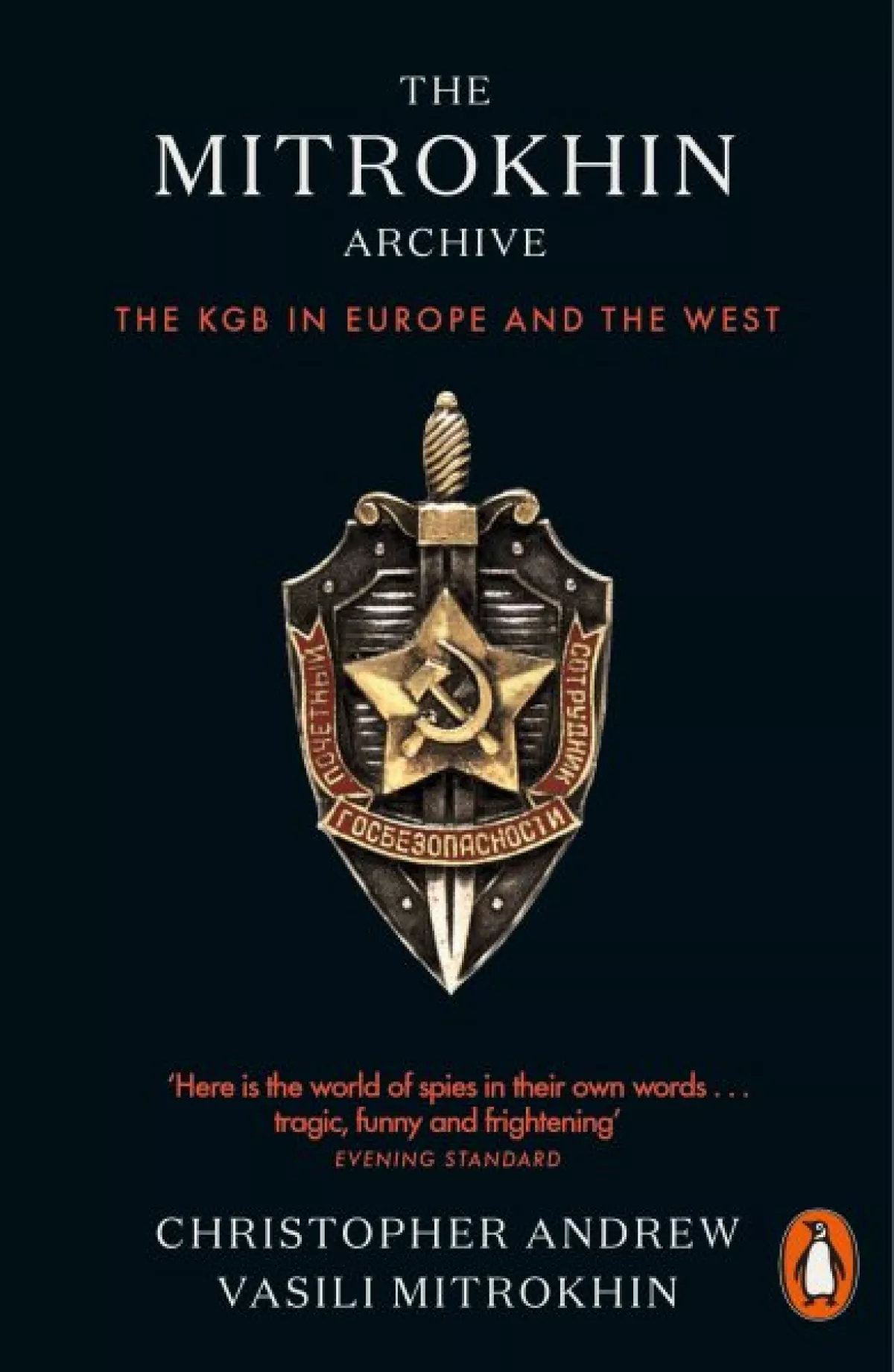
Declassified KGB materials reveal that Soviet Armenia invited members of the diaspora to the “historic homeland,” organised trips, conducted “patriotic” events, and sought to strengthen loyalty to the USSR. For example, in the memoirs and archives of former officers of the First Chief Directorate of the KGB (foreign intelligence), particularly Vasili Mitrokhin, and in studies by the British intelligence historian Christopher Andrew, the following scheme is described: a diaspora member arrives in Yerevan, is introduced to “cultural officers,” assisted in locating relatives and necessary archival information, and then is encouraged to “maintain contacts,” with the ultimate goal of gradually and naturally asking them to pass on information or promote certain narratives in their country of residence.
All of this activity was aimed at cultivating pro-Soviet sympathies among members of the Armenian diaspora for future work, which did not always follow formal recruitment or control procedures. Moscow operated under the logic that it was advantageous to support Armenian activists worldwide in their pressure on Türkiye—in other words, this was more of a mutually beneficial project than direct control of the Armenian diaspora by Soviet intelligence.
In this case, the USSR employed soft power, or “influence diplomacy,” through which the alignment of interests between Moscow and global Armenian communities was optimised into coordinated anti-Turkish action. Most likely, we are observing the same dynamics today.
Russia’s loss of geopolitical influence in the South Caucasus and the rise of Türkiye—both in the region and more broadly in the Greater Middle East—has provoked Moscow’s discontent at a new historical juncture. Under these circumstances, it would be entirely natural for Russia to seek to intensify contacts with the Armenian diaspora worldwide, which seems to be what we are observing in the case of Mika Badalyan and ANCA.
It is evident that the actions of Armenian organisations abroad and pro-Russian forces in Armenia, even if not directed from a single centre, are at least coordinated with each other. In this sense, it appears that U.S. intelligence services should take a closer look at any institutions of the global Armenian community that act destructively toward America and its interests, with ANCA being a primary example.







 editor@caliber.az
 +994 55 444-88-98
 Азербайджан, Баку, ул. Низами, 203, Af Business House, 5-й этаж