










EU turns up pressure on Yerevan A choice must be made
Brussels appears to have decided to put an end to Yerevan’s long-standing attempts to “sit on two chairs at once”. Armenia has effectively found itself facing a foreign-policy dilemma — choosing between Russia and the European Union.
The tough statements made by the EU High Representative for Foreign Affairs and Security Policy, Vice-President of the European Commission Kaja Kallas, during an extraordinary meeting of the European Parliament’s Foreign Affairs Committee, directly point to this.
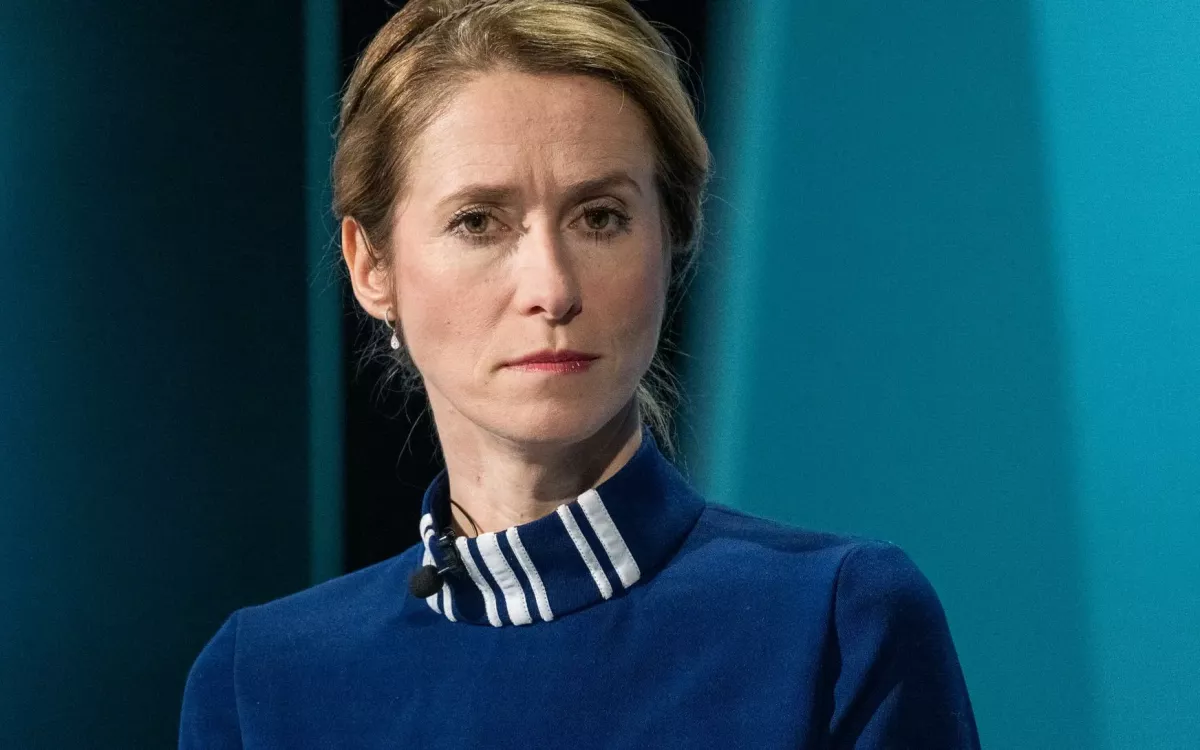
“We also see that the closer a country gets to the European Union, the greater the pressure from malign foreign influence. Russia and its proxies are ramping up disinformation campaigns, including in Armenia ahead of next year's election. Moldova was this year’s primary target, but also the best proof that this challenge can be overcome,” Kallas stressed.
Such statements are not new. Earlier this month, at a press conference following the EU–Armenia Partnership Council meeting attended by Armenian Foreign Minister Ararat Mirzoyan, Kallas called on Yerevan to join the sanctions against Russia.
“The world order is clearly changing, and that's why the strategic alignment of the common foreign and security policy for our partners is extremely important with whom you really are. Right now,I mean, also Armenia's alignment is 37%. So yes, the sanctions that we have put on Russia are, of course, difficult, but we also ask this from our partner countries because we all want this war to end,” she said, adding that the European Union is interested in an early end to the war.
The persistent statements from the Deputy Chair of the European Commission only confirm Brussels’ clear position: Armenia’s foreign policy must fully align with the European Union’s line. In essence, this obliges Yerevan to move in the wake of EU priorities and principles. Theoretically, such a course may increase Armenia’s long-term prospects for EU membership — but only if it fully breaks with Russia. This raises an obvious question: how advantageous would such a shift actually be for Armenia?
These latest remarks should evidently be seen as a form of “soft” pressure on Yerevan concerning a key issue directly linked to Armenia’s own security. At the same time, Brussels is reinforcing this pressure with financial instruments.
“Today, I am pleased to announce €15 million towards sustaining peace and a more resilient Armenia. This will fund a variety of initiatives, including demining training and equipment, as well as regional confidence-building measures,” Kaja Kallas assured at the same briefing following the 6th meeting of the Armenia–EU Partnership Council. She emphasised that European funding would enable Yerevan to respond more effectively to foreign interference — in effect referring to Russia.
The European Union is now scarcely hiding its unwillingness to see Russia present in the South Caucasus and its intention to advance its own interests in the region.
Statements by European institutions about potential external risks ahead of Armenia’s parliamentary elections are not unfounded. In September 2024, the country reported preventing an attempted coup with a “Russian trace”.
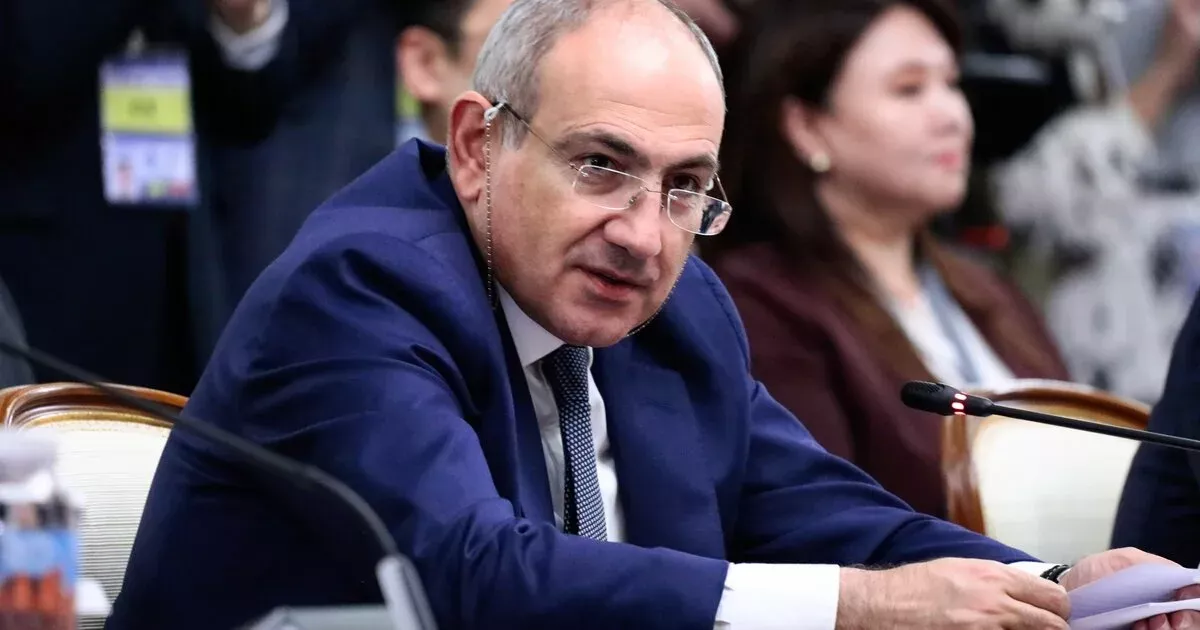
In June 2025, Armenian Prime Minister Nikol Pashinyan announced yet another alleged coup attempt — after the outlet Civic published a purported “Coup Strategy”, claiming that the Armenian opposition had been preparing to seize power and had drawn up a detailed plan. The document mentioned former Armenian presidents and Russian companies.
Thus, Yerevan’s and the EU’s assessments regarding the presence of external threats have formally converged. However, even taking this into account, the likelihood that Armenia will join the anti-Russian sanctions appears to be zero for several reasons.
First, despite its aspirations for a European future, the Armenian leadership is fully aware of the extremely low chances of the country joining the EU — especially against the backdrop of the current political turbulence within the Union itself.
Second, no matter how much Armenia tries to distance itself from the Collective Security Treaty Organisation (CSTO) and Russia, the country’s economy still directly depends on the Russian market and the mechanisms of the Eurasian Economic Union. And for Armenia, the financial factor is fundamental.
Third, in recent times, the Armenian authorities have in effect been imitating a multi-vector policy, attempting to satisfy the expectations of both Moscow and Brussels simultaneously, counting on Europe’s tolerance and Russia’s “understanding”.
Prime Minister Nikol Pashinyan has repeatedly declared Armenia’s pragmatic multi-vector course, aimed at developing relations with both Russia and the West (the United States, the EU, and France). But the sharp signals coming from Brussels show that the EU is no longer satisfied with this approach. Armenia is being made to understand that it will have to determine its foreign-policy orientation — and do so before the onset of the looming decisive developments.







 editor@caliber.az
 +994 55 444-88-98
 Азербайджан, Баку, ул. Низами, 203, Af Business House, 5-й этаж