










Georgia’s demographic pit Can repatriation reverse population decline?
“Geostat” recently published demographic data for 2025, and the figures are disappointing. The birth rate in the country has decreased by 4.1 per cent: 37,867 children were born — 1,616 fewer than in 2024.

Overall, the indicator has dropped to a historic low over the past 32 years. The peak of “post-Soviet” birth rates in Georgia occurred in 2014, when 60,635 children were born. Since then, a decline has been observed almost every year.
The number of deaths in 2025 amounted to 44,319 — 348 fewer than the year before. However, despite this decrease, the negative demographic balance increased to 6,452 people (in 2024 — minus 4,488). According to 2025 data, natural population growth was recorded only in Tbilisi, Adjara, and Kvemo Kartli — a region with a significant share of ethnic Azerbaijanis. In all other regions, the number of deaths exceeded the number of births.
Experts cite migration of the population of reproductive age abroad as one of the key reasons for the decline in birth rates. The visa-free regime with the EU only facilitates these processes. At the same time, young families often leave the country and later have children abroad. As a result, Georgian migrants contribute to the demographic statistics of other countries. For example, in Poland, among foreign women who give birth, Georgian citizens rank second only to citizens of Ukraine and Belarus. Children born abroad are not included in Georgia’s demographic statistics, and migrants themselves are increasingly linking their future with other countries. This leads to population ageing and a reduction in the share of young people.
At the same time, against the backdrop of economic growth in Georgia and stagnation in a number of EU countries, there has recently been a decrease in migration outflow toward Europe. The topic of repatriation is also becoming more relevant — both from post-Soviet countries and from Iran.

The Georgian government is considering the possibility of simplifying the process of obtaining citizenship for ethnic Georgians living abroad, according to the recent statement by Prime Minister Irakli Kobakhidze.
At the same time, there is still no consensus on how significantly repatriation can improve the demographic situation. Kazakhstan is often cited as an example, where the return of the so-called oralmans — ethnic Kazakhs from other countries — has had a noticeable effect. Over the years of independence, more than 1.1 million people have returned to the country, and their families, as a rule, were large. This contributed to an increase in birth rates and a higher share of ethnic Kazakhs in the population structure.
However, in the case of Georgia, the potential of this tool may be limited. In Kazakhstan, mostly people from rural backgrounds returned, preserving traditional values, including a focus on large families. Ethnic Georgians returning to their homeland, however, are generally already urbanised, less religious, and have largely moved away from traditional behavioural models. Therefore, even the return of some ethnic Georgians from Russia and Ukraine after 2022 has so far been unable to reverse the trend of declining birth rates.
Urbanisation and the concentration of the population in just two cities also do not favour higher birth rates.

In Tbilisi and Batumi, there is a construction boom, while housing prices are rising, making it inaccessible for a significant portion of young people. This, in turn, negatively affects both the formation of stable families and the birth of children. In the provinces, villages are generally dying out, especially in some mountainous areas.
Under these circumstances, the task of curbing excessive urbanisation and creating jobs in rural areas and regions becomes particularly relevant, so that young people do not feel the need to move to Tbilisi or Batumi, or to emigrate. Developing suburbs—residential areas with individual housing—could also be a promising direction. Experience, particularly in the United States, shows that in suburbs, especially those inhabited by middle-class residents, birth rates are generally higher than in densely built megacities dominated by high-rise buildings.
To assess the demographic situation in Georgia, it is important to consider it in a comparative context. The country’s total fertility rate (TFR — the number of children per woman) in 2025 stood at 1.61. For comparison, in 2020 it was 1.9, and in 2014 it exceeded 2.0.
At the same time, in most EU countries, which Georgia aspires to join, the figures are even lower: in Germany, the TFR for 2025 was 1.3; in Poland, 1.09; in Spain, 1.1; and in Greece, 1.21.
The decline in birth rates is also being recorded in most post-Soviet countries, with the exception of Central Asian states. In Russia, the TFR for 2025 stood at 1.37, and in Belarus — around 1.0, which is significantly below the level of 2.1 required for simple population replacement.
Thus, the problem of sharply falling birth rates is not unique to Georgia — it is a global phenomenon. Even in countries that previously had high fertility rates, including several Latin American and Arab states, the rate of decline has exceeded projections. For example, in Colombia, the TFR fell to 1.0, and in Tunisia — to 1.3. The demographic situation in East Asia is extremely tense: in South Korea, the rate remains one of the lowest in the world at around 0.8, and in Thailand it has dropped below 0.9.
Despite these generally negative trends, the birth rate in Georgia remains higher than in most European countries. One contributing factor is the relatively high religiosity of the population — both among Christians and Muslims.
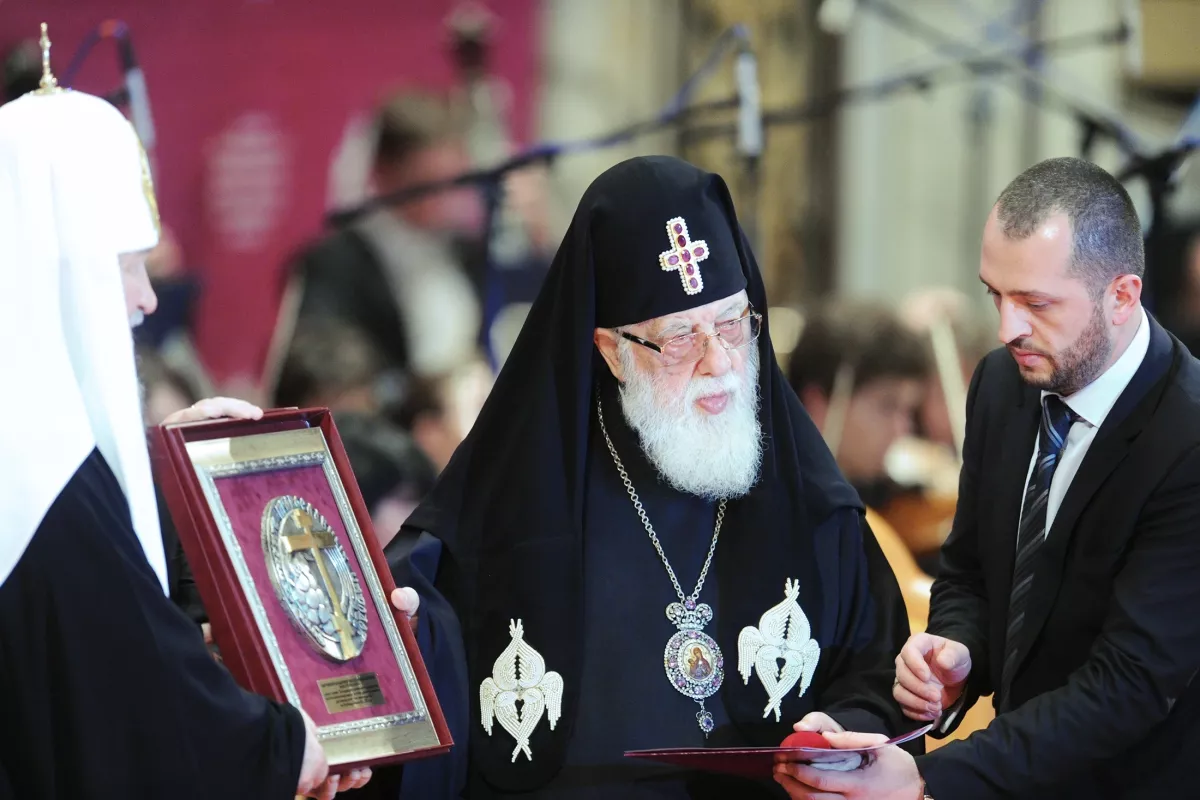
The late Catholicos-Patriarch of All Georgia, Ilia II, played a significant role in promoting large families among Orthodox Georgians. In 2008, he initiated the practice of becoming the godfather to the third and subsequent children in Orthodox families. This measure led to a noticeable increase in birth rates, and Ilia II himself became godfather to more than 50,000 children. Additionally, in 2014, on his initiative, Family Sanctity and Respect for Parents Day was established, celebrated on May 17.
At the same time, the Georgian authorities are taking legislative steps to support traditional family values, which is also seen as a factor helping to mitigate the deepening demographic crisis.
By Vladimir Tskhvediani, Georgia, exclusively for Caliber.Az







 editor@caliber.az
 +994 55 444-88-98
 Азербайджан, Баку, ул. Низами, 203, Af Business House, 5-й этаж