










Illusion vs reality Vardanyan clings to a straw
The trial of Armenian citizen Ruben Vardanyan in the Baku Military Court is approaching its logical conclusion. From the outset, this case represents a fundamental clash between international law and political mythology—an attempt to substitute criminal responsibility with slogans about “self-determination” and the well-known tactic of denying the legitimacy of the court itself.
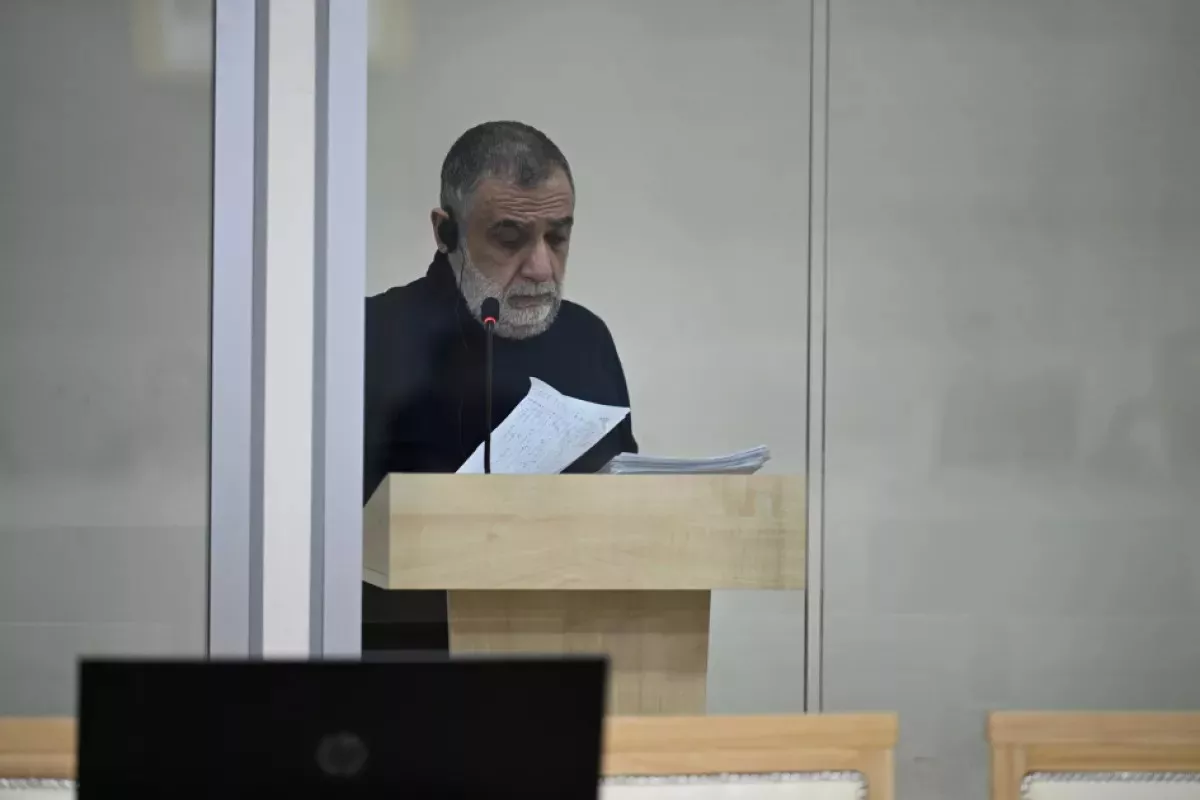
The Prosecutor’s Office of Azerbaijan has charged Ruben Vardanyan under several articles of the Azerbaijani Criminal Code, including crimes against peace and humanity, war crimes, terrorism, and financing of terrorism. Taken together, the prosecution is seeking a life sentence. This is not a political statement, but a legally substantiated position based on a substantial body of evidence and witness testimony.
However, as could be expected, both Vardanyan and his lawyer, Jared Genser, have consistently refused to acknowledge not only his guilt but also the very legitimacy of the judicial process. In one of his statements on social media, Genser claimed that his client “is imprisoned along with the other Armenian Christian prisoners simply for advocating for the right to self determination for the people of Nagorno-Karabakh,” which clearly borders on deliberate manipulation of public opinion—or demonstrates a remarkable ignorance of the basics of international law.
Assuming the second option is also plausible, we will offer Genser a brief lesson. The right to self-determination is not equivalent to the right to secession and cannot be exercised through armed separatism, the creation of unrecognised quasi-state entities, or, most certainly, through acts of terrorism and war crimes. The principle of territorial integrity of states is one of the cornerstones of international law, enshrined in the UN Charter. Even Armenia recognises this principle, albeit reluctantly, as has been repeatedly noted in official statements and international documents.
Thus, what Vardanyan’s lawyer tries to present as a “human rights position” is, in reality, a justification for separatism and a direct disregard for Azerbaijan’s sovereignty.
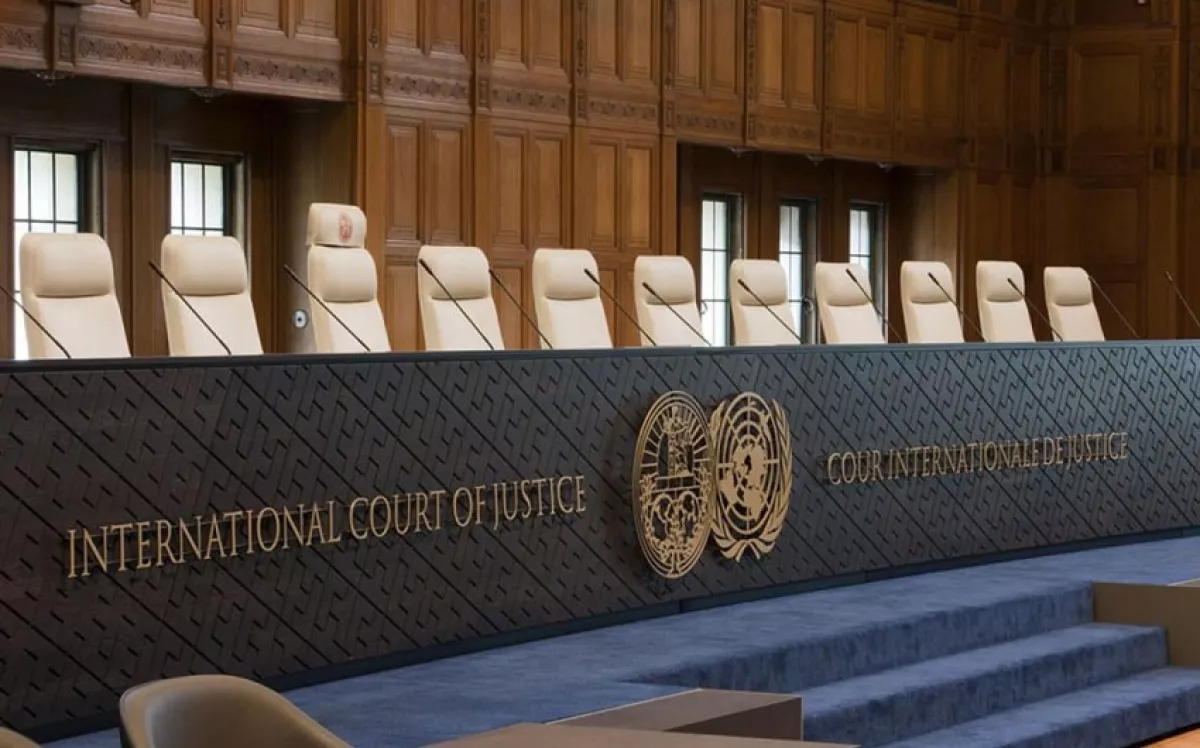
In this context, it is worth recalling that on April 25, 2025, the International Court of Justice rejected a number of Armenia’s claims regarding the treatment of Ruben Vardanyan and 15 other individuals of Armenian descent, whose trial is concluding in the Baku court. After reviewing Azerbaijan’s arguments and the evidence presented in the case concerning the implementation of the International Convention on the Elimination of All Forms of Racial Discrimination, the Court made a fundamental decision not to request additional information, not to demand an independent investigation, and not to appoint an expert assessment regarding the conditions of the detainees’ confinement.
This verdict, in itself, provides a comprehensive response to any attempts to portray Vardanyan’s case as “political persecution” or a “show trial.” The international judicial body found no grounds even for additional procedures. Therefore, claims of an “unfair trial” are purely propagandistic.
But the defendants are struggling to resist until the very end. According to reports from Armenian media, Ruben Vardanyan recently had a phone conversation with his elder son, David, during which he stated that he would soon be given the opportunity to make his final statement in court. He also declared: “I do not recognize what is happening as a judicial process and do not intend to participate in an imitation of justice.”
This stance is by no means new. Legal scholars and historians recognise it as a classic approach adopted by defendants accused of serious crimes who lack a convincing legal defence. Refusing to acknowledge the court is an attempt to avoid discussion of facts, evidence, and specific episodes of the charges. In this context, a direct historical parallel comes to mind.
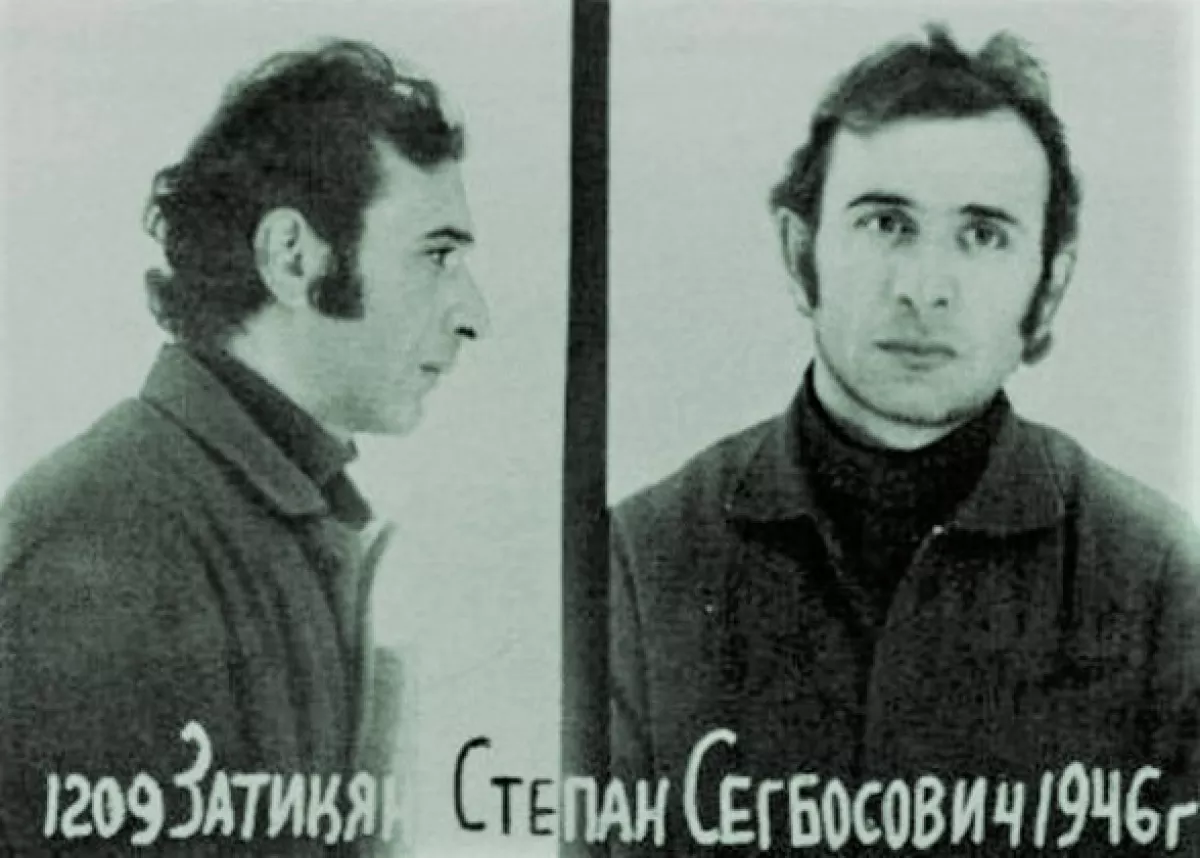
On January 8, 1977, a series of terrorist acts occurred in Moscow: three explosions in public places, including a subway car between Izmailovskaya and Pervomayskaya stations. Seven people were killed and 37 injured. On January 24, 1979, Stepan Zatikyan, Hakop Stepanyan, and Zaven Bagdasaryan were found guilty of carrying out the attacks and were sentenced to the maximum penalty.
Video recordings of the court sessions have been preserved, in which Zatikyan declared: “I refuse your tribunal and need no defenders. I am the accuser, not the accused.” What we are witnessing today in Ruben Vardanyan’s behaviour is essentially the same: refusal to recognise the court, demonstrative denial of guilt, and an appeal to a “higher truth.”
Moreover, the leadership of Soviet Armenia sought to suppress the very fact of Zatikyan’s group’s crimes. As noted by former head of the 5th Directorate of the USSR KGB, Filipp Bobkov, on the orders of Karen Demirchyan, First Secretary of the Communist Party of Armenia, no newspaper in the Armenian language published news of the terrorist attacks. He also actively obstructed the investigation. This approach—the defence of “one’s own” regardless of the severity of the crime—is strikingly familiar even today.
Further confirmation of this pattern is found in another statement by Vardanyan himself, reported by Armenian media citing his son. Vardanyan senior stated: “I declare: Artsakh was, is, and will be.” As we can see, there is not even a hint of remorse.
However, such statements have long since moved beyond the realms of politics and law, entering the sphere of symbolic rhetoric with no legal force. Meanwhile, the Baku Military Court is considering not mythology, slogans, or emotional declarations, but concrete criminal acts. The law does not operate on the principle of loud statements; it functions based on facts, evidence, and established norms. For this reason, it can be stated with a high degree of confidence that the Baku court will issue a lawful, reasoned, and fair verdict, regardless of how many times Ruben Vardanyan refuses to acknowledge reality.







 editor@caliber.az
 +994 55 444-88-98
 Азербайджан, Баку, ул. Низами, 203, Af Business House, 5-й этаж