










India’s miscalculation in the South Caucasus Weapons over diplomacy
India has recently sent another signal that it continues the process of militarising Armenia with domestically produced weapons. Defence Minister Rajnath Singh announced the shipment of the first batch of Pinaka guided rockets to Armenia from the Solar Defence and Aerospace Limited (SDAL) plant in Nagpur.
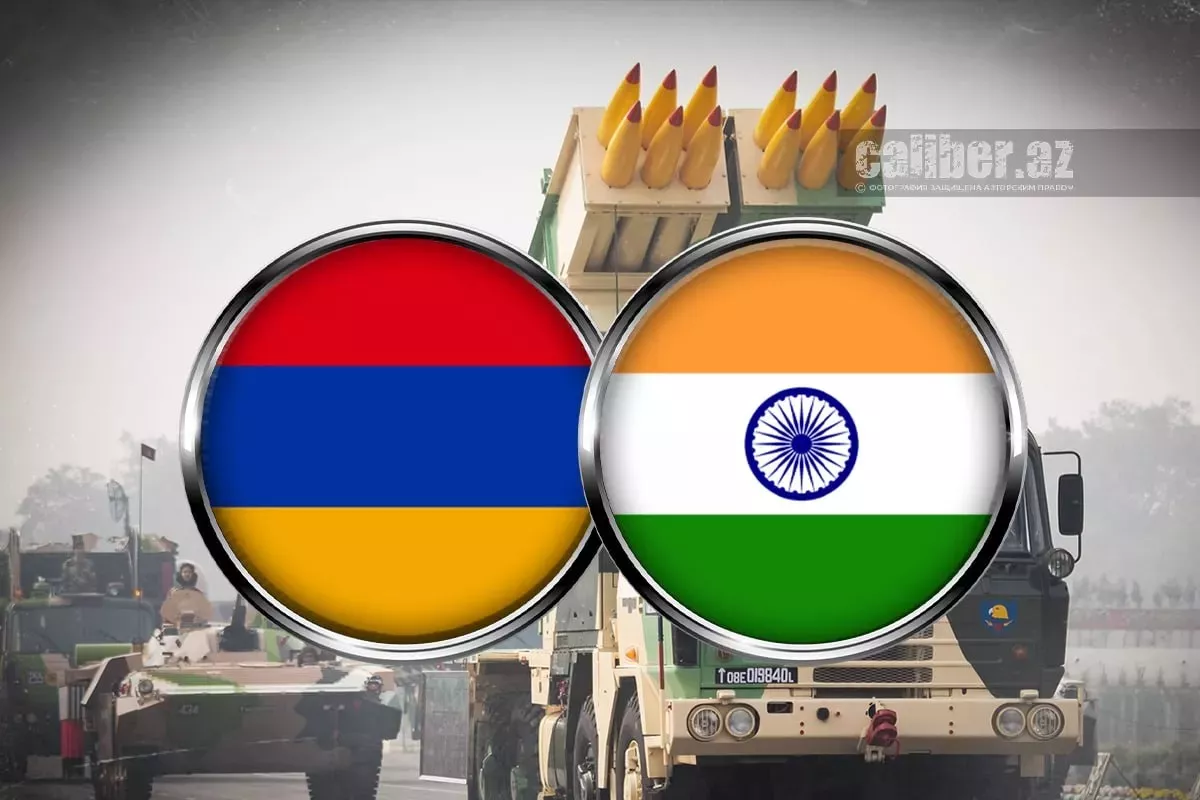
According to Hindu Business Line, Armenia had previously signed a contract with India for the supply of four batteries of Pinaka systems. The agreement also included the export of guided rockets for multiple launch rocket systems and other military equipment. Deliveries of the launchers began in July 2023 and were fully completed by November 2024.
India began actively militarising Armenia almost from the very first months of the post-conflict period in the region, thereby fueling revanchist sentiments in Yerevan. Between 2022 and 2023 alone, Armenia signed defence contracts with India worth over $1.5 billion. During that period, Yerevan concluded a series of agreements to purchase Indian 214-mm Pinaka multiple launch rocket systems, 155-mm ATAGS artillery guns, ZADS counter-drone systems, Akash-1S air defence systems, as well as Konkurs anti-tank missile systems (produced under Russian licence), mortars, and various munitions. In 2024–2025, the two countries signed additional contracts for arms purchases worth $600 million.
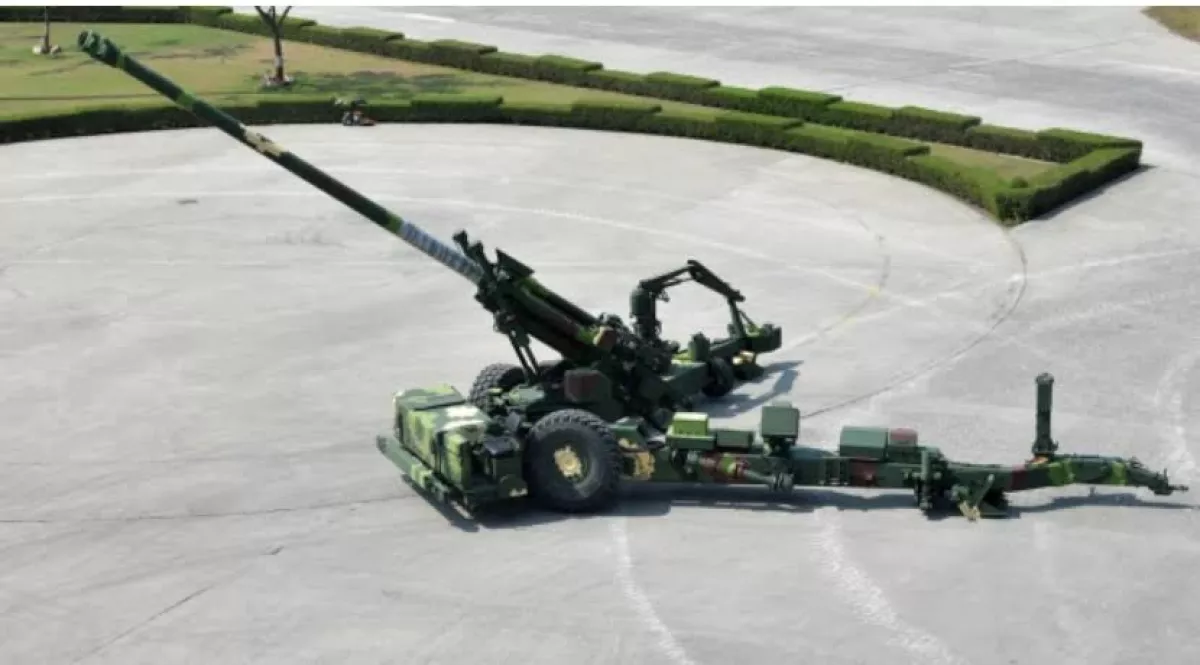
Apparently, Armenia is buying nearly everything offered by India’s defence industry. As reported earlier last year, Yerevan ordered a large batch of 155-mm Trajan howitzers, which are a product of joint production between the French company Nexter (now KNDS) and the Indian firm Larsen & Toubro (L&T). According to the manufacturers, these weapons are “next-generation howitzers” suitable for both plains and high-altitude regions. The Trajan howitzers were first presented by Nexter in 2014 at the Abu Dhabi arms exhibition.
According to the military-analytical portal Army Recognition, Armenia has also shown significant interest in acquiring BrahMos hypersonic missiles with a range of up to 900 kilometres, developed jointly by India and Russia.

In light of all the above, reasonable questions arise: “Why is Armenia arming itself so feverishly if Baku and Yerevan are literally on the verge of signing a peace agreement?” and “What explains Armenia’s hyperactivity when there are no threats to its security from neighbouring countries?” It would be far more logical for the Armenian leadership, alongside its loud declarations of commitment to regional peace, to back up these words with real actions—first and foremost by ending the arms race.
Baku, for its part, has repeatedly emphasised that this situation only serves to sustain revanchist sentiments in Armenia. Azerbaijan has warned Yerevan on multiple occasions that it must immediately halt arms purchases, and that countries supplying it with weapons should annul existing contracts and return the weapons already delivered. However, as is evident, the neighbouring country has no intention of abandoning its planned acquisitions of lethal weapons. This is further illustrated by a recent statement from Armenian Defence Minister Suren Papikyan, who said that Armenia does not intend to enter an arms race with any country, including Azerbaijan, but this does not mean it will stop purchasing weapons and military equipment or halt the modernisation of its armed forces.
In this endeavour, New Delhi appears to be at the forefront, seemingly pursuing its own interests while aiming to obstruct an Armenian–Azerbaijani settlement.
The Indian government’s irritation is clearly evident regarding Azerbaijan’s support for Pakistan on the Kashmir issue and Islamabad’s involvement in the post-war settlement process. This factor largely explains India’s steps to arm Armenia while attempting to limit Baku’s influence on the international stage. For instance, in 2025, India blocked Azerbaijan’s entry into the Shanghai Cooperation Organisation (SCO). In other words, the Indian authorities used the SCO as a tool to assert their grievances, which, first, contradicts the principles of the organisation and, second, further confirms India’s hostile stance towards the Republic of Azerbaijan.
However, Azerbaijan, as a self-sufficient and strong state, remains calm in such situations, stays true to its principles, and demonstrates a completely opposite approach by building long-term ties with key global centres such as the United States, China, Türkiye, and others. This is the fundamental difference between the strategic vision of official Baku and the flawed, short-sighted policy of New Delhi, which clearly serves as a counterexample in the global system of international relations.







 editor@caliber.az
 +994 55 444-88-98
 Азербайджан, Баку, ул. Низами, 203, Af Business House, 5-й этаж