










Maliki 2.0 and the "pearl of Iran’s crown" Shereshevskiy on the situation in Iraq
Last week, U.S. President Donald Trump urged that former Iraqi Prime Minister Nouri al-Maliki should not be allowed to take office for another term. Trump’s message highlights the growing strategic risk for Iraq.
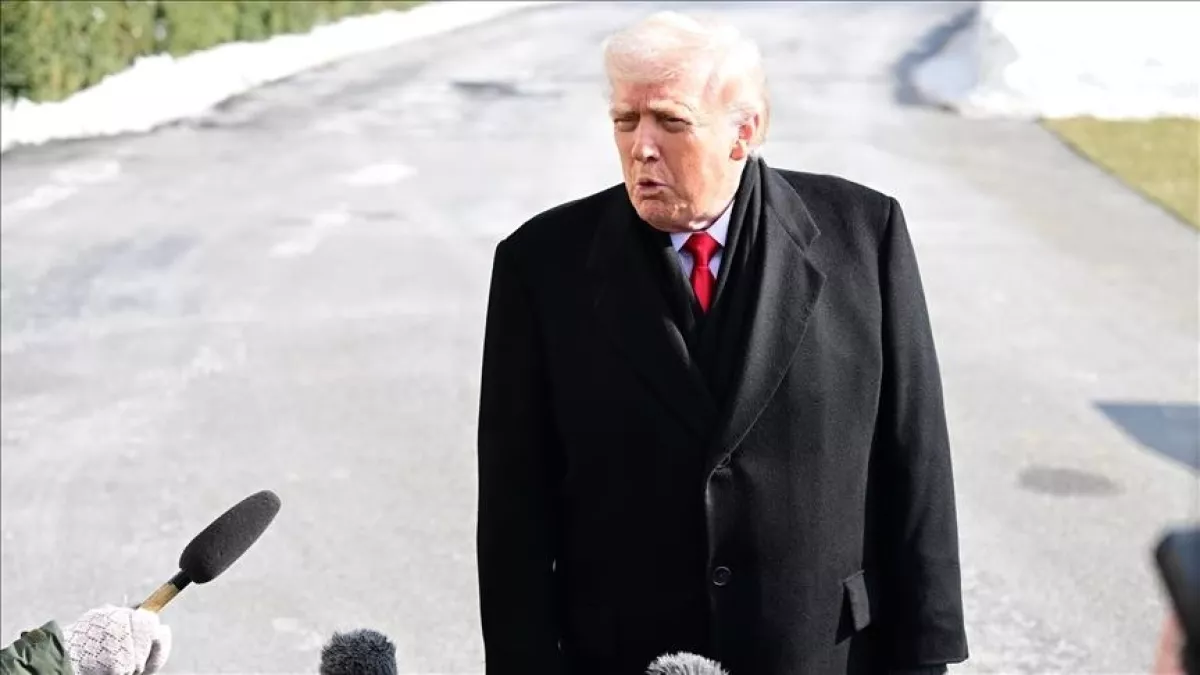
Nouri al-Maliki was nominated for the position of prime minister by the Shiite pro-Iranian bloc—the Coordination Framework (CF), which emerged victorious in the parliamentary elections. His nomination provoked a strong reaction from Washington, which is keen to prevent any further expansion of Iranian influence in Iraq.
The Iraqi prime minister wields the country’s greatest executive authority and is the central figure in its political system. However, his power is directly contingent on the support of a parliamentary majority—without it, the prime minister becomes politically powerless.
However, for al-Maliki to secure the premiership, he must win the backing of the Kurdish parties. By longstanding political convention, the country’s president comes from the influential Kurdish minority and has the authority to approve the prime ministerial nominee. Meanwhile, the position of parliamentary speaker is reserved for the Sunni community. Kurds and Sunnis each number roughly 7–8 million, while Shiites make up the majority—about 30 million, or 65 per cent of Iraq’s approximately 46 million population.
In any case, the future prime minister will represent the bloc of Shiite pro-Iranian parties and factions. As the central figure in Iraq’s political system, the prime minister wields significant power—but al-Maliki’s candidacy has sparked opposition not only from Washington but also domestically, with the National Political Council, representing six Sunni parties, expressing its disapproval.
Who holds power in Iraq?
Real power in Iraq is currently concentrated in the hands of the CF—a political bloc backed by an alliance of pro-Iranian armed Shiite militias. This coalition includes Asa’ib Ahl al-Haq, led by the influential leader Qais Al-Khazali; Kata’ib Hezbollah, which maintains substantial armed forces; and the Badr Organisation, which controls the Ministry of Interior and is headed by Hadi al-Amiri, along with several other groups.
Formally, all of these structures are funded through the state budget and are considered part of Iraq’s official armed forces. In practice, however, they are controlled by independent field commanders. The combined strength of these militias is estimated at around 200,000 personnel. Authorities had previously planned to pass legislation that would have doubled their funding.
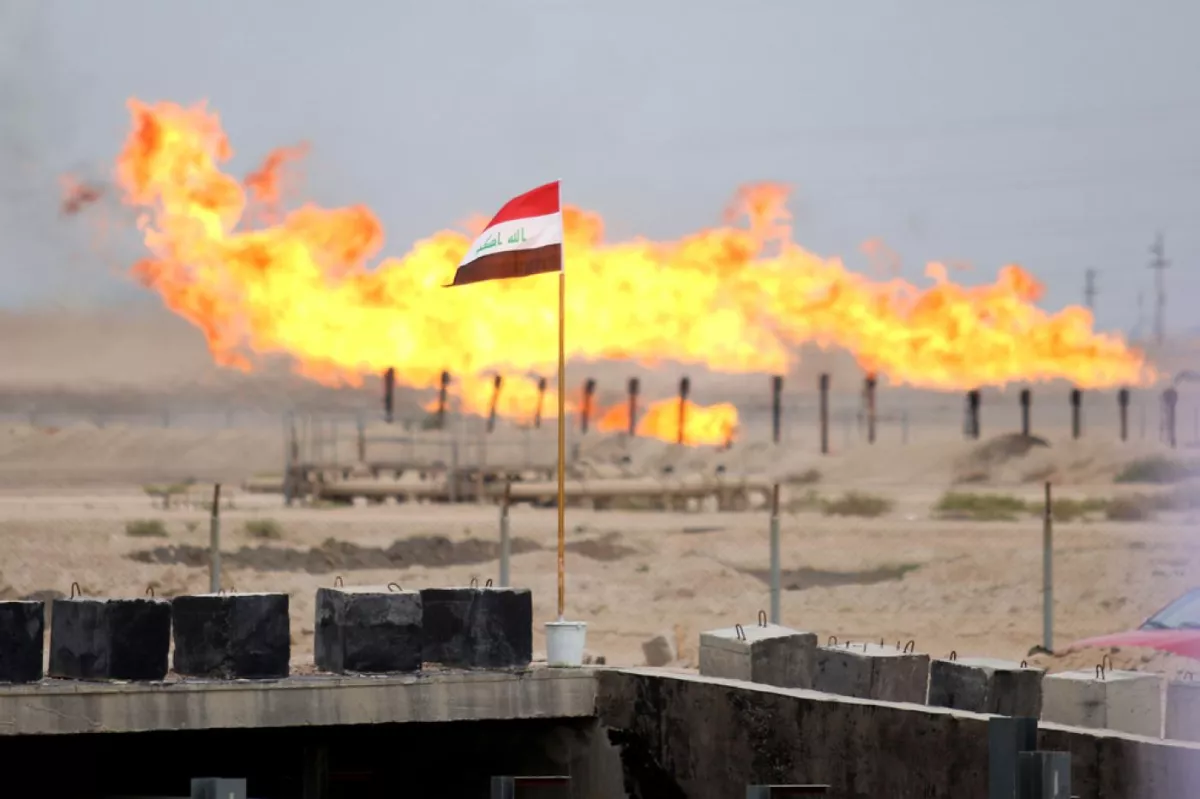
The country’s main wealth and key financial flows are also controlled by the parties and militias, which divide among themselves the revenues from oil exports. Iraq, it should be noted, is the world’s fourth-largest exporter of “black gold.” To institutionalise their control over these resources, pro-Iranian groups established the Muhandis General Company — an economic conglomerate that has become a vehicle for diverting state funds. It wields broad powers, including the ability to appropriate land plots without parliamentary approval.
As Iraq researcher Michael Knights notes, in recent years, the country’s government has effectively become a puppet structure in the hands of pro-Iranian militias and their leaders, who have emerged as the true masters of the state. Among the key figures concentrating power, he highlights Qais Al-Khazali, Hadi al-Amiri, and Nouri al-Maliki.
Notably, unlike Hadi al-Amiri, Qais Al-Khazali, and other field commanders, Nouri al-Maliki does not command his own armed militias. Yet, it is precisely this fact that has enabled him to become one of the country’s key political figures. With his party, the State of Law, lacking its own military forces, Maliki has carved out a role as a mediator and coordinator among pro-Iranian armed groups—a role that, apparently, their leaders find acceptable.
It seems that the militias have decided to take full control of Iraq’s financial and administrative resources, promoting Maliki to the premiership as a convenient coordinator and arbiter, capable of balancing the interests of different factions within the Shiite camp.
However, he has not yet taken office as prime minister. In Iraq, the approval of key government figures is traditionally a protracted process, closely tied to the division of influence—particularly over budgetary resources—among political parties. Behind-the-scenes negotiations, including with Kurdish political actors, can stretch on for months.
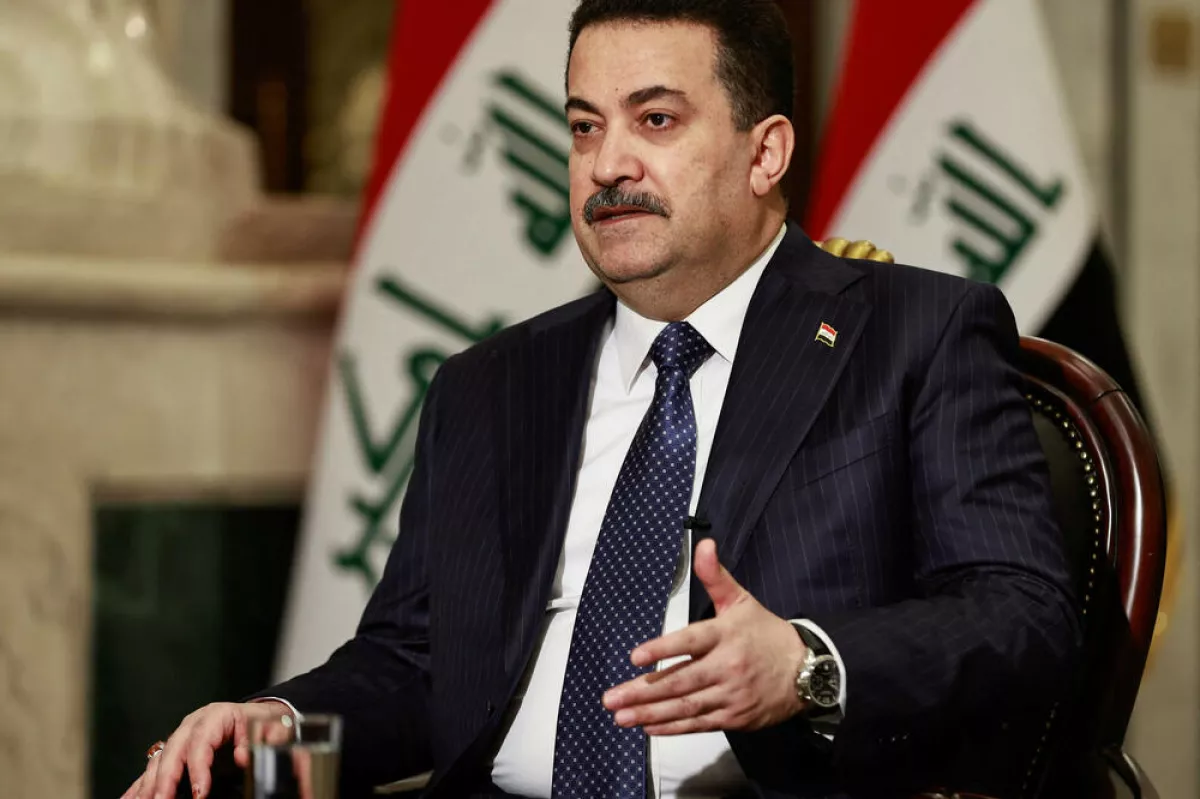
The previous prime minister, Mohammed Shia al-Sudani, was also a protégé of the CF and currently serves as acting head of government. His opponents have branded him “the most corrupt politician in Iraq.” Yet, unlike al-Sudani, Maliki is viewed as a toxic figure not only by Washington but also within Iraq’s political establishment, despite his support from major parliamentary blocs and Shiite militias. And there are, arguably, very compelling reasons for this.
Maliki’s rule could lead to systemic collapse
The figure of Nouri al-Maliki provokes irritation not only in Washington but also among the Sunni minority—and not merely because he is seen as a conduit for Iranian influence.
Maliki previously served as Iraq’s prime minister during the period of American military presence—from 2007 to 2014. His tenure was a key factor in the sharp rise of the Islamic State of Iraq and Syria (ISIS) and the effective disintegration of the Iraqi state. The country was only reassembled after a brutal, bloody campaign to defeat the fanatical Salafist groups united under the banner of the “Islamic State.”
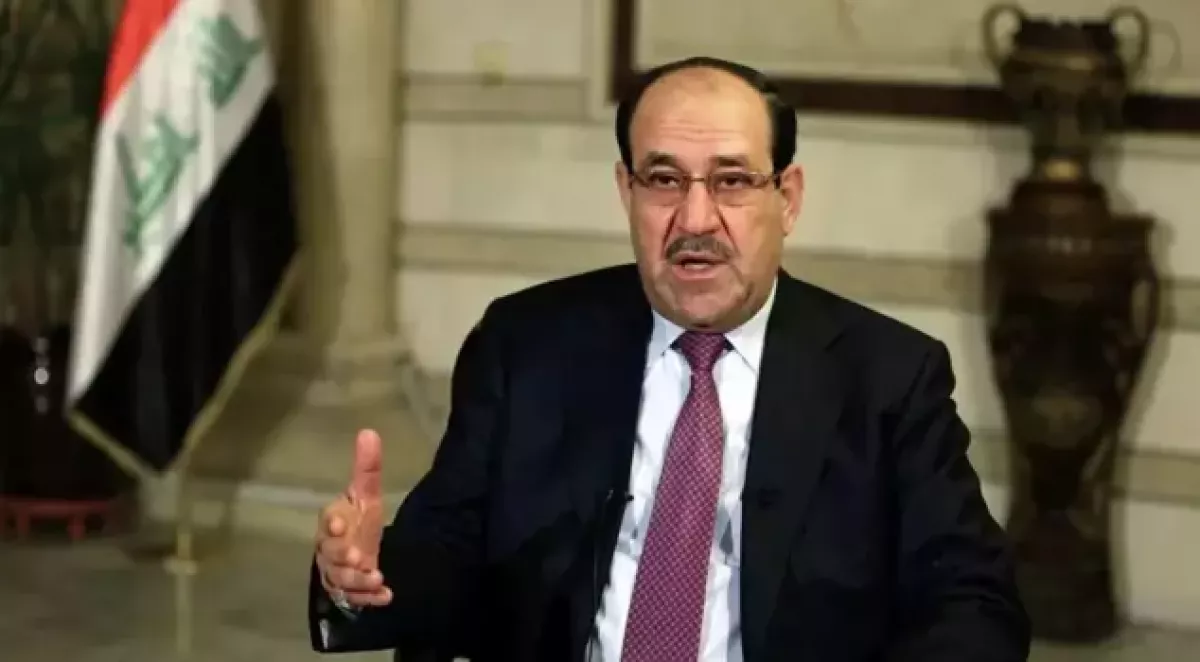
This crisis had two main underlying causes.
First, Maliki pursued a rigidly sectarian policy, disregarding the interests of other ethno-confessional communities. He systematically filled key government positions exclusively with Shiites, marginalising Sunnis from the decision-making process.
Second, there was widespread corruption. This combination of political discrimination and rampant embezzlement sparked a surge of anger among the Sunni minority. Radical groups and terrorists exploited this sentiment to form ISIS. By that time, the state’s administrative structure had decayed to a critical point and literally collapsed under the assault of the militants.
During his tenure, Maliki oversaw the disbanding of the Sunni Sahwa militias, which had played a crucial role in combating radical Islamists, including al-Qaeda and the groups that later evolved into ISIS. The Sahwa were tribal Sunni formations that operated with high effectiveness: tribal sheikhs, with their extensive kinship networks across Sunni areas, had an intimate knowledge of where radicals were hiding.
Maliki insisted on dismantling the structure, arguing that an armed organisation independent of the army could not exist in the country. Following this decision, the authorities violently suppressed large-scale Sunni protests, using firearms against civilians.
Although some elements of the Sahwa (Awakening) were later integrated into the Iraqi army, the disbanding of the militias provoked intense anger among Sunni tribal elites—wealthy and influential sheikhs. As a French researcher noted, they felt betrayed, having previously been promised full positions within the security structures. As a result, many of them engaged in tactical cooperation with ISIS, even without sharing the group’s Salafist ideology. Their overriding motivation was to remove Maliki’s regime in Baghdad at any cost.

The formal presence of Sunnis in some high-ranking military positions had little real significance: all key managerial functions were concentrated in the hands of influential and affluent Shiite families. A similar situation developed across other state institutions. This sectarian imbalance was accompanied by a rapid rise in corruption, with vast oil revenues being appropriated by politically appointed officials.
The country’s infrastructure rapidly deteriorated, further fueling social discontent.
Moreover, military and police officials systematically inflated the size of their units while diverting funds allocated for their upkeep. The army and police became a financial resource for hundreds of high-ranking officials, while the actual combat readiness of the security forces approached zero. This explains the catastrophe of summer 2014, when an attack by just one to two thousand ISIS fighters led to the complete collapse of government forces in Mosul. Around 35,000 soldiers and police officers fled, abandoning their weapons and equipment.
Ultimately, ISIS was defeated only through the massive efforts of neighbouring states and the U.S.-led international coalition. Shiite militias—those same structures now seeking to return Nouri al-Maliki to power—also played a significant role in the campaign against the group.
The future of Iraq
The rule of the pro-Iranian CF, led by Nouri al-Maliki, continues to threaten Iraq with escalating corruption and a renewed surge of sectarian strife. Moreover, the dominance of pro-Iranian forces raises the risk of dragging the country into a direct military confrontation between Iran on one side and the U.S.-Israel alliance on the other. Preventive strikes by the United States or Israel on Iraqi territory cannot be ruled out, as both Washington and Tel Aviv increasingly view Iraq as the “pearl in the crown of the Iranian empire.”
Yet the greatest threat lies not only in foreign policy. In recent years, Iraq has become one of the epicentres of large-scale social protests—alongside Iran and Lebanon.
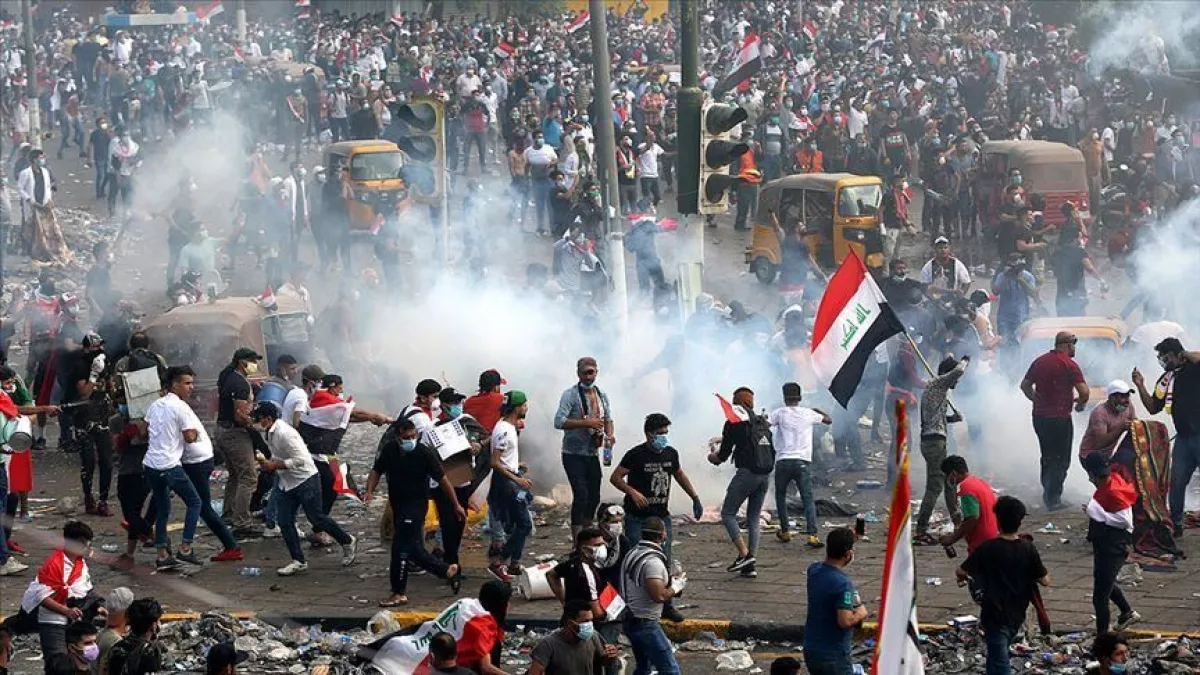
A few years ago, hundreds of thousands of Iraqis—primarily poor Shiites—took to the streets, protesting the lack of jobs and basic government services. Demonstrators demanded access to clean water, electricity, healthcare, and social housing.
The movement was leaderless and coordinated through the internet and social media. Participants opposed all political parties, undeterred by the fact that their co-religionists, the Shiites, were in power. A significant number of Sunnis and Christians also joined the protests. The response was harsh repression: pro-Iranian militias and the police dispersed the demonstrations, killing an estimated thousand people and injuring tens of thousands more.
The poverty of the majority of Iraq’s 46 million citizens, set against the conspicuous luxury of the ruling elite, has become a symbol of a dangerous social divide. The country faces not only the threat of further deepening ethno-confessional tensions but also the risk of direct class-based uprisings fueled by growing wealth inequality and the impoverishment of large segments of both employed and unemployed populations.
The results of the most recent elections should not be misleading: roughly half of Iraqis did not participate at all. The largest Shiite political force—the supporters of Muqtada al-Sadr, a prominent religious leader—boycotted the vote. In the previous elections, Sadrists won a victory, but pro-Iranian forces secured judicial rulings that prevented al-Sadr from forming a government. This outcome was the primary reason for the boycott.
In Sadr City, the poorest Shiite district of Baghdad, home to around 3.5 million people and where al-Sadr retains significant influence, a pervasive sense of hopelessness prevails. In interviews with journalists, local residents recall that under Saddam Hussein, their children attended school and then went on to work in factories, while families received basic food packages—flour, sugar, rice. Today, young people remain unemployed even with university degrees, and government “support” is limited to deliveries of low-quality rice, often infested with insects.
This situation cannot continue indefinitely. Although most Iraqis do not wish for a return to the days of Saddam Hussein, who also brutally suppressed mass uprisings, public frustration and social tension are steadily rising.







 editor@caliber.az
 +994 55 444-88-98
 Азербайджан, Баку, ул. Низами, 203, Af Business House, 5-й этаж