










Mobilisation or the collapse of the front How to fix the critical situation for Ukraine?
The Commander-in-Chief of the Armed Forces of Ukraine, Oleksandr Syrskyi, wrote on his Telegram channel about the need to strengthen the country’s defence capabilities, particularly through intensified mobilisation. He emphasised that Russian forces continue their offensive operations, leaving Kyiv with few alternatives other than building up its own military potential.
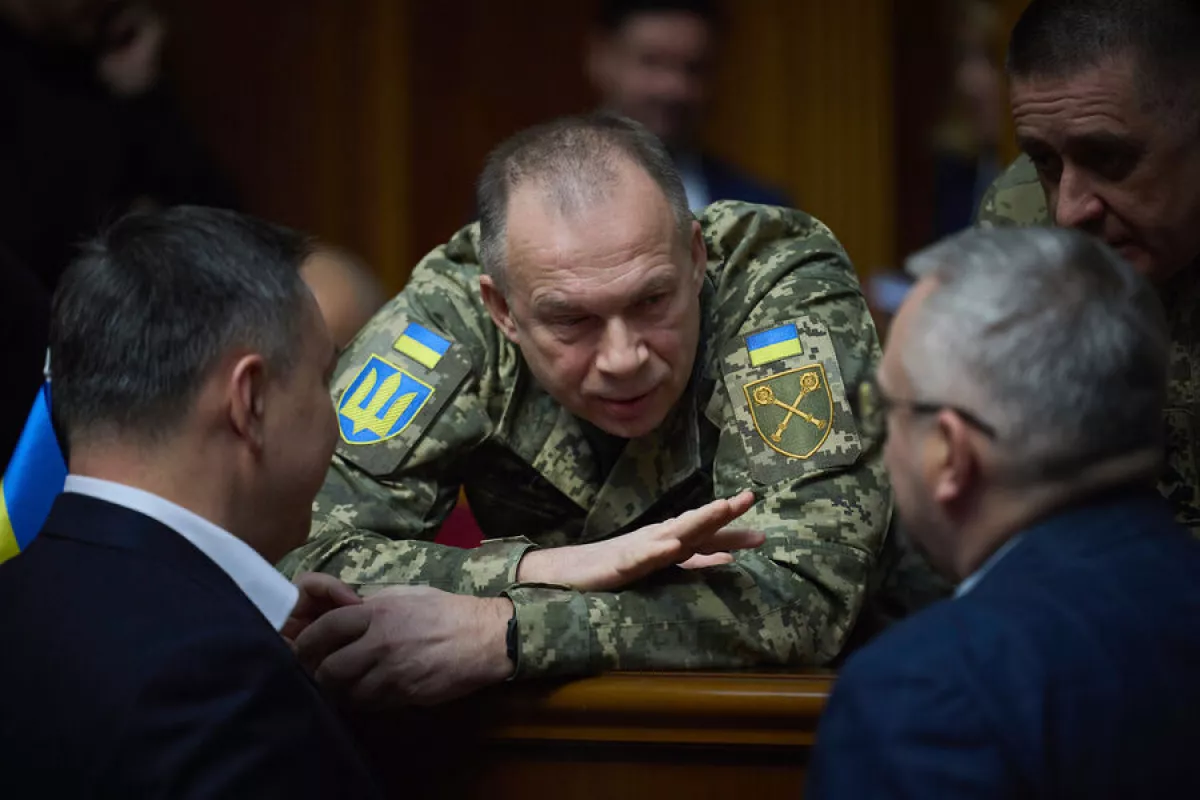
“The main resource we must rely on is not equipment, but people. Mobilisation, the recruitment of new contract soldiers, and high-quality training—these are our priorities,” Syrskyi noted.
This statement was made against the backdrop of regular reports of new territorial losses by Ukraine. The Telegraph also reports that Russia is demonstrating the fastest rate of advance in years of the war. According to the newspaper, in November, Russian forces advanced 322 square kilometres—twice as much as in October and nearly at the peak levels of 2022. In the eastern direction, Russia is increasing pressure on the area around Siversk and the approaches to Sloviansk. To put the scale into perspective, the area of Sumgayit (a city in Azerbaijan) is 143 square kilometres. So, one way or another, the losses for the Ukrainian army are quite significant.
Since Syrskyi was appointed Commander-in-Chief of the Armed Forces of Ukraine, serious doubts have been expressed within Ukraine’s expert community regarding his “commanding talents.” One of the key reasons cited for President Volodymyr Zelenskyy’s choice in his favour was Syrskyi’s willingness to agree with any of Zelenskyy’s decisions—even when miscalculations were obvious.
Syrskyi stands in stark contrast to former Commander-in-Chief of the Armed Forces of Ukraine Valerii Zaluzhnyi, who currently serves as Ukraine’s ambassador to the UK. Notably, as early as late 2023, Zaluzhnyi openly spoke about the need for a significant expansion of mobilisation resources, citing a figure of 400,000–500,000 personnel. These statements ultimately led to his conflict with the Ukrainian president: Zelenskyy feared a sharp drop in his approval ratings if he agreed to such an unpopular step as mass mobilisation.
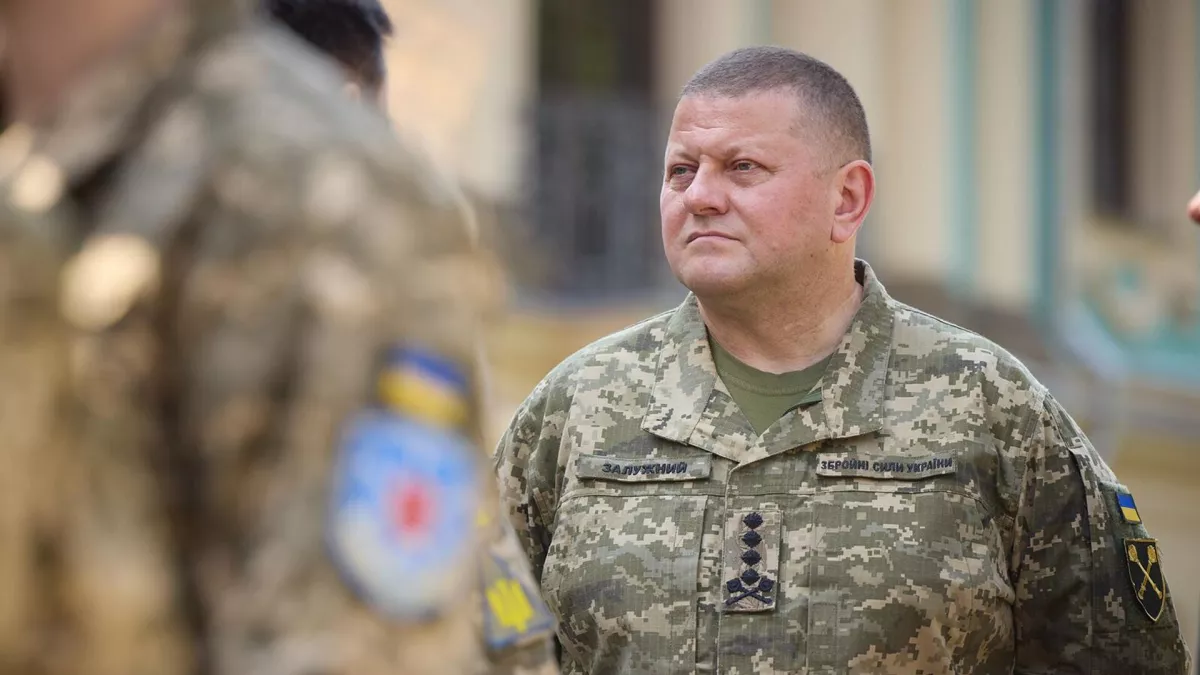
However, as current trends indicate, Zelenskyy’s approval rating has fallen to critically low levels anyway, and public distrust now exceeds the level of support. At the same time, Zaluzhnyi’s popularity continues to grow noticeably.
Meanwhile, on December 8, the situation for the incumbent president could have become even more unfavourable. Oligarch Ihor Kolomoisky had announced an important statement in court but ultimately failed to appear at the Podilskyi District Court—officially because the vehicle meant to transport him broke down. The hearing has been postponed until December 11. If Kolomoisky does appear in court, high-profile revelations can be expected from him.
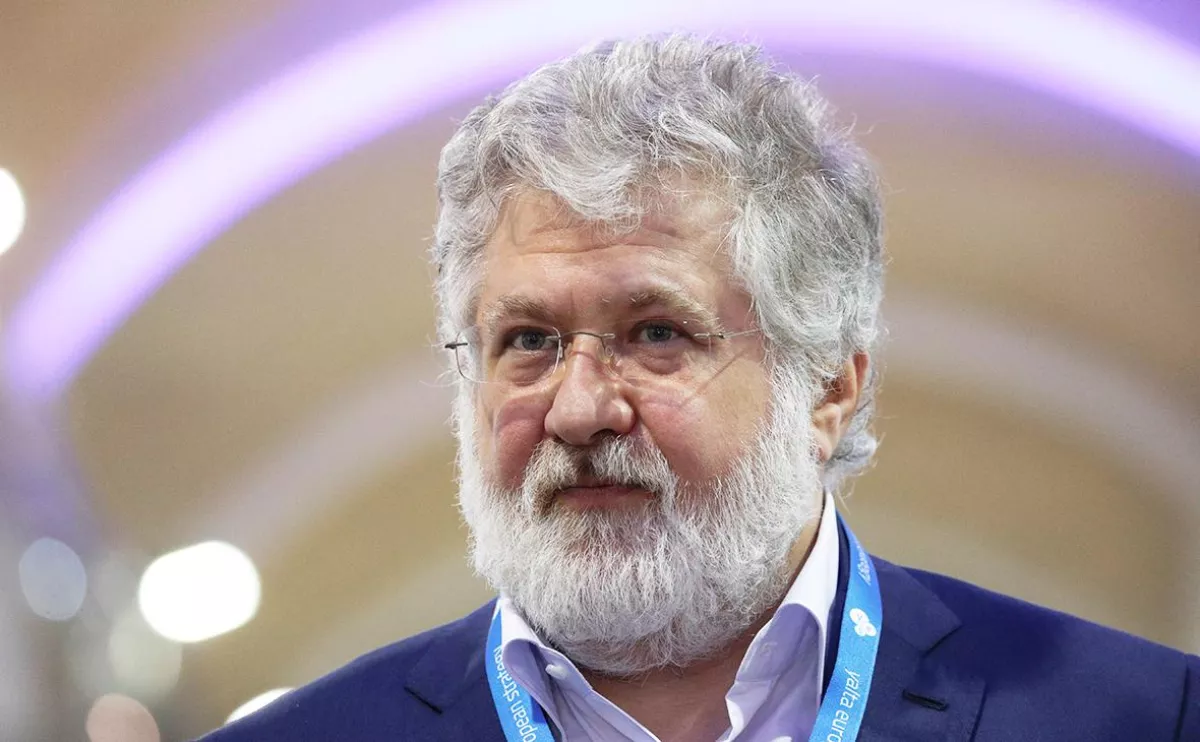
Against the backdrop of Zelenskyy’s already rapid decline in approval ratings—driven by a series of corruption scandals—such statements could have a “bombshell” effect for the Ukrainian leader, especially given that his rise to power would have been impossible without the support of Kolomoisky.
It is therefore no coincidence that a hypothesis is now circulating within Ukraine’s political and expert community suggesting that Volodymyr Zelenskyy could repeat the move of former Russian President Boris Yeltsin, who announced his resignation in a New Year’s address on December 31, 1999, with the words: “I am tired. I am leaving.” At the very least, this is the scenario proposed by Ukrainian political strategist Volodymyr Petrov, who was considered close to former Head of the Office of the President Andriy Yermak. Discussion of this version is now unfolding quite actively.
However, such a scenario appears unlikely. A far more probable outcome is that Zelenskyy will continue to delay the issue of his own departure from the presidency. At the same time, it is becoming increasingly obvious that the situation on the front line for Ukraine will continue to deteriorate—among other reasons, due to Zelenskyy’s reluctance to take a number of obvious steps. This includes, in particular, the need to distance himself from the “five or six effective managers” in his inner circle who have failed on too many fronts—ranging from the timely and honest warning of society about the real threat of a full-scale invasion to the adoption of genuinely effective measures to counter Russian aggression.
As of today, it is already clear: without compulsory mobilisation, the front may not hold, and Ukraine risks losing the war, forfeiting significant portions of its territory and population, and even effectively disappearing as a state. These are not merely subjective assessments—many Ukrainian politicians, military experts, and media outlets speak openly about this. They also warn that those who evade service in the Ukrainian army today could tomorrow find themselves serving in the ranks of the occupiers.
One might assume that the existential threat so widely discussed today would have changed public attitudes toward mobilisation and increased the number of people willing to defend the country. However, this is not happening. On the contrary, tension and mutual hostility are growing within Ukrainian society, actively fueled by Russian propaganda. How can the situation be changed? Solutions have long been proposed repeatedly by Ukrainian experts.
According to them, to more effectively replenish the Defence Forces, it is necessary, on the one hand, to abandon the practice of “street mobilisation”—the so-called “busification,” arrests at checkpoints, and the removal of citizens from trains. Such methods only generate new videos and stories that further deter people. On the other hand, it is necessary to strengthen positive messaging about military service, develop more systematic enforcement tools, and, most importantly, restore citizens’ trust in the state and the army.
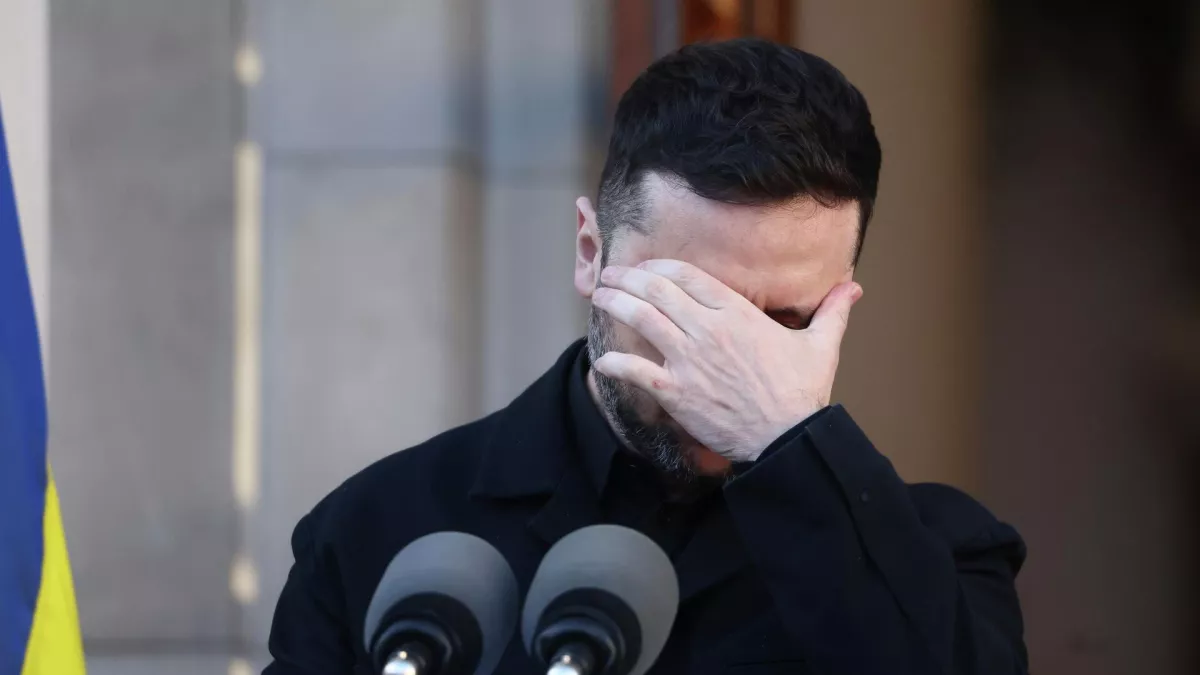
At the moment, this may sound almost unattainable, but it is worth recalling the first year of the war, when society and the state acted as a single organism. Therefore, everything comes down to the political will of Volodymyr Zelenskyy, who has made numerous critical mistakes but still has the ability to change the situation—if he begins to implement the measures that Ukrainian experts have been advocating for a long time.
Implementing these steps could help compensate for the personnel shortage on the front and stabilise the defensive line. And when the Russian leadership sees a lack of progress, a stalemate, or even a rollback, it would have to consider agreeing to a ceasefire. But for now, as it continues to seize new Ukrainian territories and observes the acute shortage of personnel in the Ukrainian Armed Forces, Russia is not even considering that option.







 editor@caliber.az
 +994 55 444-88-98
 Азербайджан, Баку, ул. Низами, 203, Af Business House, 5-й этаж