










Nuclear renaissance in Europe Energy crisis reshapes the rules of the game
Events in the Middle East, in particular the escalation of the confrontation between the US–Israel bloc and Iran, have significantly increased energy risks in Europe, forcing its executive institutions to reconsider their previous priorities in the field of energy security.
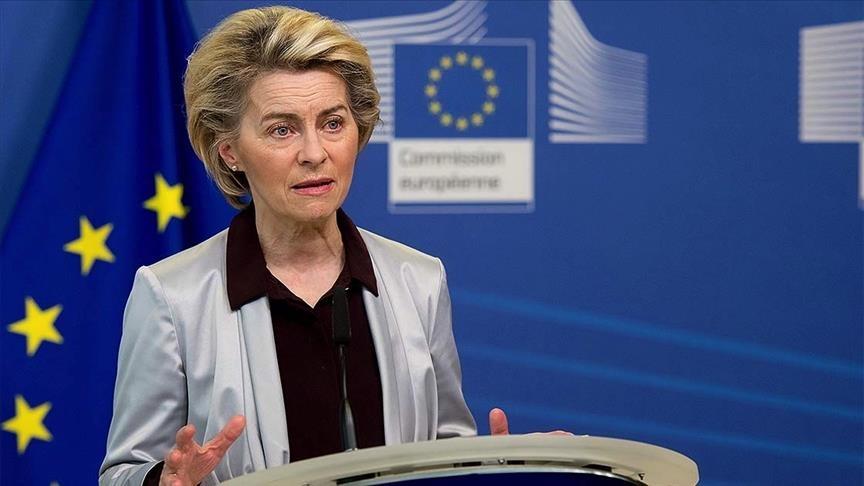
This is further underscored by European Commission President Ursula von der Leyen’s renewed call for EU member states to develop not only “green” energy but also nuclear power.
“We are paying a very high price for our overdependency on fossil fuels. And the grim reality for our continent is fossil fuel energy will remain the most expensive options in the years to come. But on the other hand, we also have assets. Europe has assets. We have the electricity that is produced in Europe from renewables and from nuclear,” the senior EU official stated at a press conference in Brussels, adding that since the beginning of the crisis in the Middle East, the EU’s energy import bill has increased by €22 billion.
In general, the issue of reviving the nuclear segment in Europe has been brewing for a long time. Europe, which is highly dependent on imported hydrocarbons, has recently been experiencing considerable difficulties in this regard, caused both by the Russia–Ukraine war and the current Middle Eastern confrontation, as a result of which the world’s main artery for oil and gas supplies—the Strait of Hormuz—has been virtually blocked, while Iran’s strikes have significantly damaged the oil and gas infrastructure of Arab states.
All of this has prompted European countries to return to the issue of nuclear power. In particular, the Italian government under Prime Minister Giorgia Meloni has proposed legislation to develop new nuclear technologies, with the aim of covering 11–22% of the country’s electricity demand through nuclear energy by 2050.
In turn, at the European nuclear energy summit in Paris in March 2026, Ursula von der Leyen described Europe’s decision to abandon nuclear energy as a “strategic mistake.” Paradoxically, however, it was von der Leyen who, in 2011, while serving as Germany’s Minister of Labour in Angela Merkel’s government, actively advocated for phasing out nuclear energy following the Fukushima nuclear accident. As a result, Germany adopted a plan to shut down eight reactor units and completely abandon nuclear power plants, a process that was completed by April 2023.
However, current geopolitical upheavals, which have made Europe even more vulnerable in terms of energy security, have forced the head of the European Commission to reconsider her position on nuclear energy. And such a sharp shift from a negative to a positive stance is not accidental, as the problem of the energy crisis conceals more serious threats than it may seem at first glance—it affects the balance of power and internal stability within the EU.
As is known, rising energy prices in most cases trigger public protests in European countries, which contributes to the growing popularity of right-wing and Eurosceptic parties and ultimately influences elections and government approval ratings. There are several examples that confirm this trend.
In September 2022, demonstrations took place in Prague involving 70,000 people protesting high energy prices and demanding the resignation of the government. In October of the same year, tens of thousands of people took to the streets in six German cities, calling for a fairer distribution of public funds to compensate for rising energy and living costs, as well as a faster phase-out of fossil fuels.
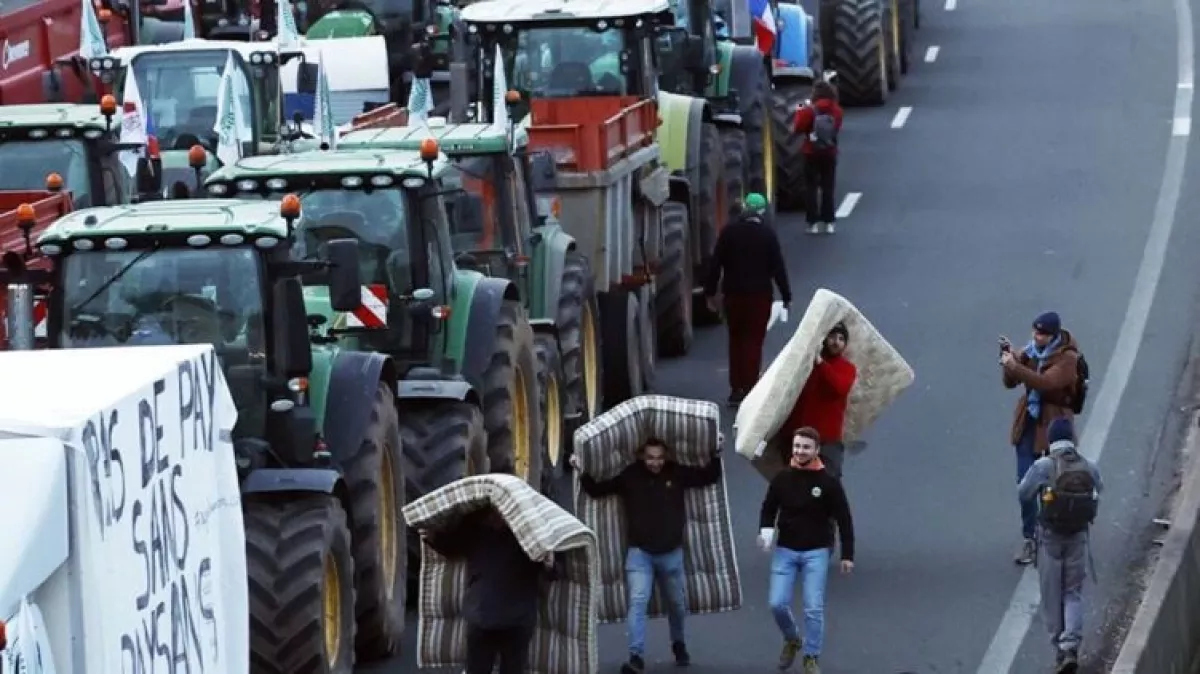
Further protests followed. French farmers and transport unions repeatedly blocked roads in 2023–2024, also protesting rising fuel prices. At the same time, in April 2026, reports emerged of fuel price protests in Ireland. It is not excluded that such a dangerous trend will continue to grow in a sustained manner. This is the first point.
Secondly, it can be said that the EU is now effectively facing a political dilemma. If earlier Europe sharply criticised Middle Eastern countries for human rights violations, including freedom of speech and women’s rights, today, under conditions of the energy crisis, it is forced to engage more actively with Qatar, Saudi Arabia, and the UAE.
Thirdly, due to the crisis, Europe has become critically dependent on liquefied natural gas supplies from the United States, which increases Washington’s influence over Brussels’ policy. There are differing views within the EU on this situation: some see it as a loss of autonomy, while others view it as a guarantee of security. In simple terms, the energy crisis has turned into a crisis of the EU’s political sovereignty, which is indirectly confirmed by the recent call of the head of the European Commission to develop nuclear energy.
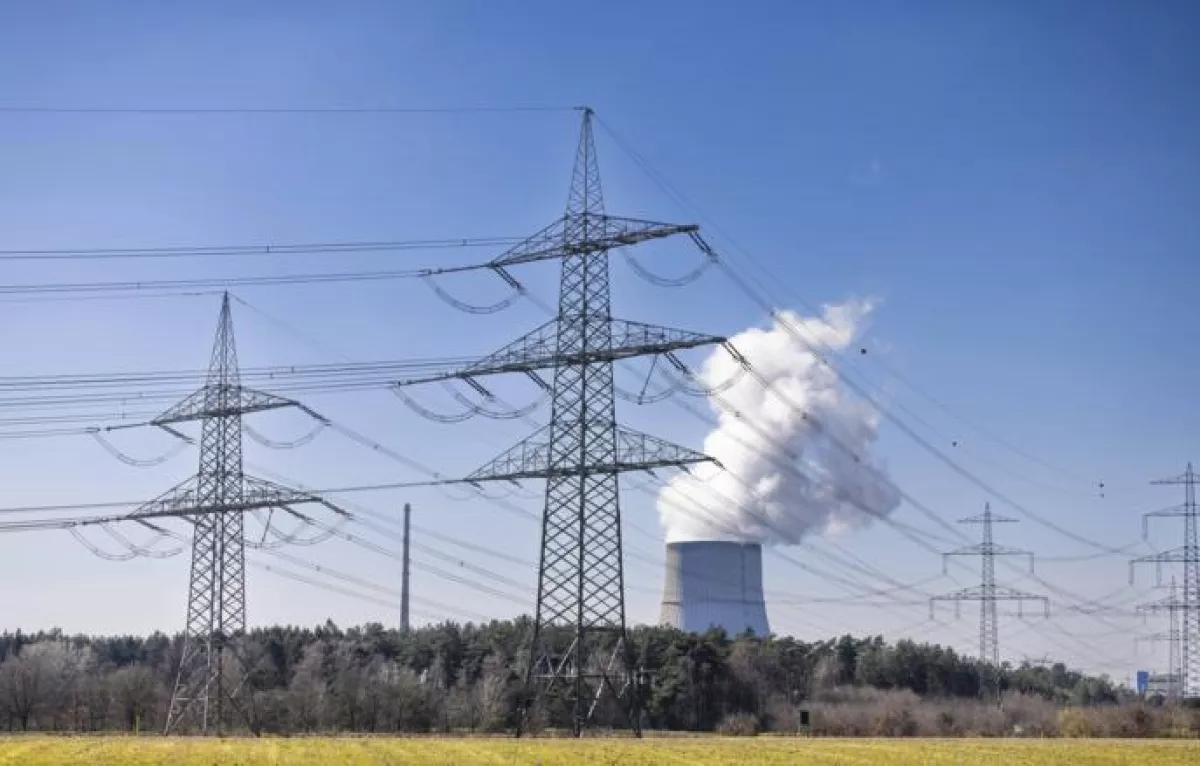
In this context, it is also important to note another key point: while a number of EU countries previously rejected nuclear energy on environmental grounds, the focus is now gradually shifting away from “green” ideology towards nuclear energy security. However, the problem is that the development of nuclear energy will reduce US influence over the EU and diminish the role of energy suppliers only in the long-term perspective, since nuclear power plants take 10–15 years to build.
In addition, there is no unanimity among European countries on the issue of a nuclear renaissance, as well as on many other matters. In particular, France intends to significantly strengthen its nuclear energy sector: the Fifth Republic has already planned the construction of six EPR-2 (European Pressurized Reactor) units at the “Penly,” “Gravelines,” and “Bugey” nuclear power plants. In this way, Paris seeks to maintain nuclear energy as the backbone of its energy system, complementing it with renewable energy sources.
Poland, in turn, has officially begun the construction of its first nuclear power plant, located in the Pomeranian Voivodeship and using American Westinghouse technology (AP1000 reactors). Sweden and Finland already use nuclear energy, although they do not rely on it exclusively.
On the other hand, the main opponent of the “nuclear renaissance” remains Germany, for which renewable energy sources are a priority, although even there, calls to bring back nuclear power plants are being voiced. For example, Economics Minister Katherina Reiche stated that the decision to phase out nuclear energy was a huge mistake, adding “we miss this energy.”
Austria also maintains a strict anti-nuclear policy and actively criticises nuclear projects in other countries. The country has no operating nuclear power plants: its only plant, the Zwentendorf Nuclear Power Plant, was built and ready to start operation in the late 1970s, but in 1978, Austrians voted in a referendum against the use of nuclear energy, and the plant was never commissioned. In December of the same year, Austria adopted a law banning the use of nuclear energy for electricity production.
Clearly, there are two opposing camps within the EU—the nuclear camp and the “green” camp—and it is still difficult to say which will prevail. Most likely, everything will depend on how the global political situation develops, which will in turn largely determine future events in the Middle East.







 editor@caliber.az
 +994 55 444-88-98
 Азербайджан, Баку, ул. Низами, 203, Af Business House, 5-й этаж