










Peace against “miatsum” A requiem for Armenian Revanchists
The prospect of signing a peace agreement between Azerbaijan and Armenia — a process set in motion during the historic meeting in Washington this August — has deprived the adherents of the notorious “miatsum” (unification - refers to a nationalist and irredentist ideology in Armenia -ed.) ideology of any peace of mind. This ideology seeks to expand Armenia’s borders through the annexation of territories belonging to neighbouring states — Azerbaijan and Türkiye.
As is well known, the opposition and certain members of the clergy stand at the forefront of this utopian idea. At the same time, it is noteworthy that a considerable contribution to this agenda is also made by several Armenian pseudo-political analysts and so-called public figures and experts. By broadcasting an anti-government narrative to the public, they are effectively calling on Armenia’s civil society to prepare for yet another war with Azerbaijan.
This revanchist agenda has become even more pronounced recently against the backdrop of reciprocal visits by representatives of Armenian and Azerbaijani civil society to Baku and Yerevan. It bears recalling that, within the framework of the Peace Bridge Initiative, a group of Armenian civil society representatives visited the Azerbaijani capital in November, while an Azerbaijani delegation travelled to Yerevan in October.
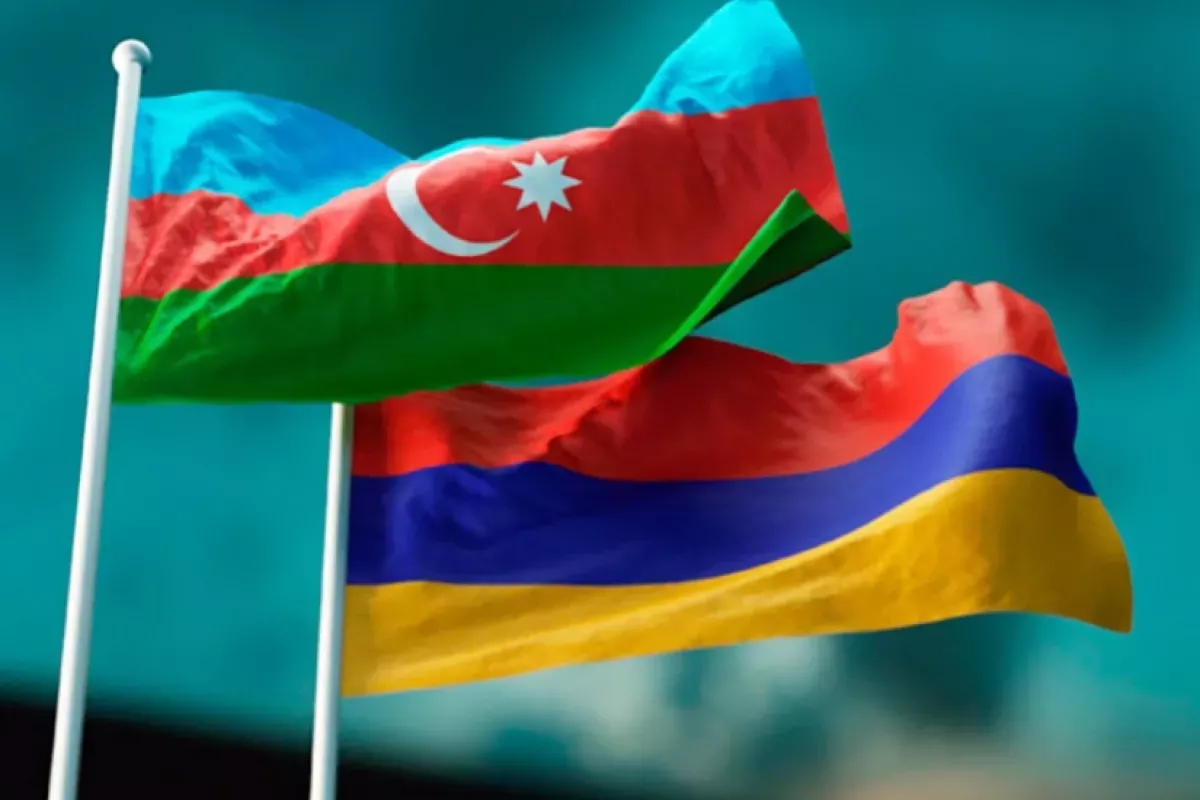
The successful implementation of this initiative has provoked strong resentment among those attempting to influence public opinion through the media. Thus, political circles in Yerevan are trying to impose on Armenian society the notion that the “visit of the Armenian delegation to Baku is part of Azerbaijan’s information strategy, which poses risks for Armenia.” In particular, this narrative is echoed in the openly provocative remarks made by Hayk Khalatyan, head of the Centre for Strategic Studies and Initiatives, in an interview with an Armenian media outlet.
According to him, “Azerbaijan has not abandoned its strategic objectives regarding Armenia and continues a policy aimed at fully neutralising the Armenian factor in the region.”
He further claimed: “On the eve of the 2026 parliamentary elections, Armenian society is being persuaded that a lasting peace has been established, although this does not reflect reality. Baku and Ankara are prepared to sign a peace treaty only if it serves their interests; otherwise, pressure and hostile actions will continue.”
Khalatyan added that “a peace agreement is possible only when Armenia becomes sufficiently strong, or when substantial international pressure is exerted on Azerbaijan and Türkiye.”

Such absurd assertions amount to an explicit call for continued confrontation. As we can see, the adherents of “miatsum,” still imprisoned by their own illusions and completely detached from reality, remain unable to grasp a simple fact: the majority of Armenia’s population supports the policies of the current authorities, having grown weary of internal political turmoil and wishing for peace with neighbouring states. As evidence, one may point to the opposition — represented by the Karabakh clan and the Church — failing to mobilise large numbers of people for anti-government rallies and street protests, despite considerable efforts.
For his part, during a speech in Paris, Nikol Pashinyan expressed full confidence that “the citizens of Armenia support the peace agenda.” He stated: “I am convinced that the citizens of the Republic of Armenia will support our achievements. Of course, there are various concerns — you know about the problems that exist around the world related to disinformation, and so on. Like any democratic country, we also feel this and are working to address it. But overall, I have no doubt that the citizens of Armenia support the peace agenda, the peace process, and the establishment of peace — and they will undoubtedly support it.”
In parallel, the Armenian leader appears determined to cleanse the country’s political environment of revanchist propagandists such as Serzh Sargsyan and Robert Kocharyan.
Thus, during the parliamentary debate on the “State Budget for 2026” bill, he described next year’s parliamentary elections as a good opportunity to rid the National Assembly of “agents of foreign influence and their leaders.”
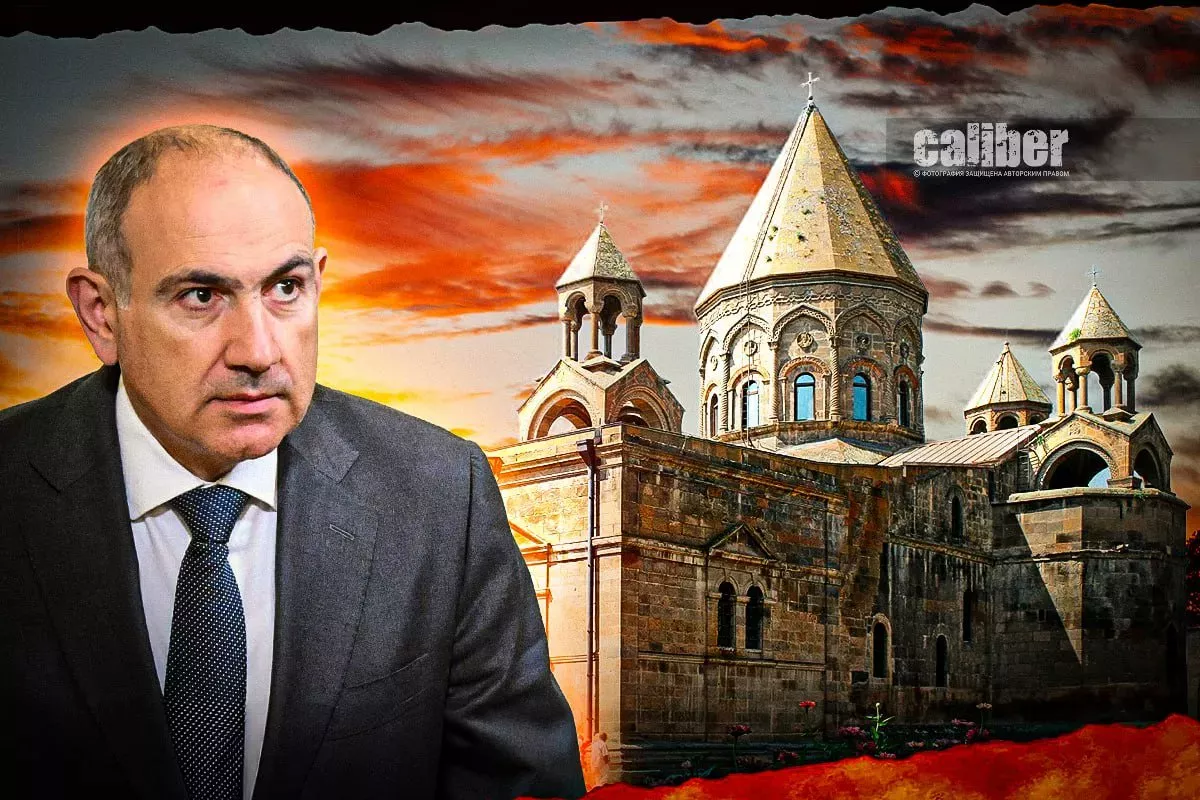
In addition, the Armenian authorities have carried out effective work to reach a consensus with the Church. As a result, a group of clergymen has already expressed support for Pashinyan — which should undoubtedly be viewed as an ideological victory for the Armenian prime minister.
Therefore, summarising all of the above, it can be assumed that the provocative narratives pushed through the media by representatives of Armenia’s political science circles — aimed at discrediting the Armenian government’s policy focused on achieving a lasting peace with Azerbaijan and calculated to trigger a revanchist sentiment — are unlikely to succeed.







 editor@caliber.az
 +994 55 444-88-98
 Азербайджан, Баку, ул. Низами, 203, Af Business House, 5-й этаж