










QR codes instead of trust: what’s changing in Belarus–Russia trade? Analysis by Limansky
New rules for the preliminary electronic registration of goods are being introduced in trade between Belarus and Russia. Under the new system, any goods transported across the border must be registered in advance and assigned a QR code. The initiative has received mixed reactions in both Belarus and Russia. Will this innovation strengthen the economies of the two countries, or will it create additional challenges for businesses?
Confirmation of expectation
Starting from June 1, 2026, the Government of the Russian Federation introduced the Goods Delivery Expectation Confirmation System (GDECS). Under the new rules, importers in Russia must prepare documents on the expected delivery of goods (DEDG) in advance for goods imported by road transport from Eurasian Economic Union (EAEU) countries and make a security payment.
From that day onward, both Russian importers and Belarusian suppliers must complete a number of mandatory procedures for the preliminary processing of documents. Among other requirements, the recipient of the goods must obtain a visualised link (QR code) for the DEDG and send it to the supplier and the carrier. The importer must also make an advance security payment equal to the amount of VAT and excise taxes. These funds will subsequently be credited toward the payment of those taxes.
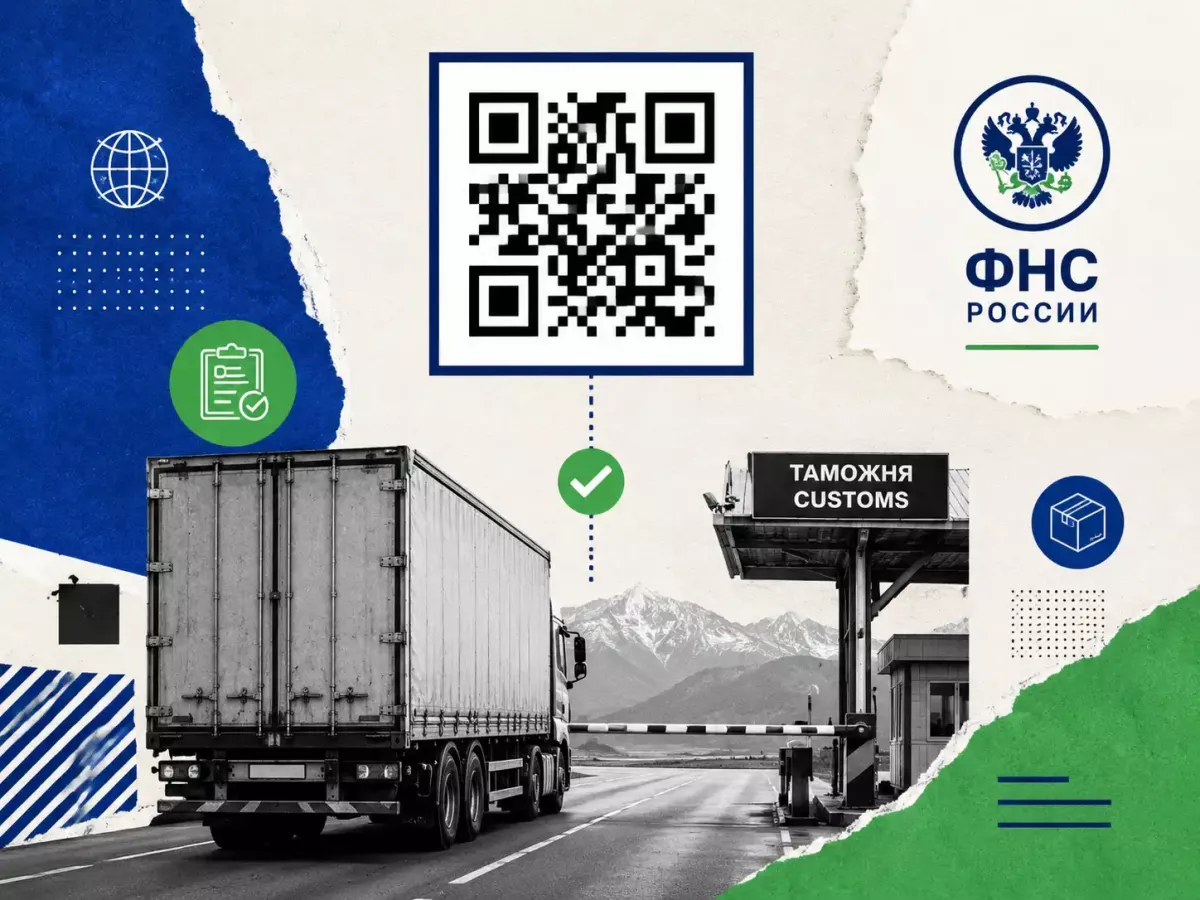
The import of goods by road transport without a QR code now carries the risk of administrative liability. However, exceptions have been made for certain business entities and specific categories of goods. The GDECS does not apply to cash, oil and petroleum products, electricity, or goods transported between the Kaliningrad Region and the rest of Russia. Nevertheless, in general, the majority of goods are now subject to mandatory preliminary registration.
The required documents must be prepared not only by the Russian importer but also by the Belarusian supplier. The Belarusian side is responsible for the timely transfer of all necessary information to its Russian partners, including details about the carrier and the vehicle. The carrier is required to have the QR code with them, and Russian customs mobile inspection teams may check it at any time after the border crossing. The Belarusian supplier must also verify in advance, in digital format, that its DEDG documents have been processed and confirm that they have received the “Secured” status — meaning that the import of goods has effectively been authorised. At the same time, the GDECS does not replace the previously existing EAEU procedure for submitting applications for the import of goods, which are required to confirm the zero VAT rate.
Initially, the GDECS was supposed to come into effect on April 1, but its launch was later postponed. The system underwent further development, and in April, the GDECS operated only in a testing mode. The implementation date was moved to July 1, but later the launch was brought forward and scheduled for June 1.
In 2027–2028, the GDECS is expected to be extended to include air freight transportation as well.
Border without barriers
What is the purpose of all this? First and foremost, it is aimed at preventing shadow deliveries, the import of goods of questionable origin and quality, as well as ensuring the flow of tax payments into the Russian budget. According to some estimates, this measure could allow Russia to collect an additional up to half a trillion rubles.

The control system primarily threatens “grey schemes.” According to some reports, smugglers who transport illegal goods along forest roads intend to continue operating “off the books.” The GDECS and digital transparency measures have little impact on them.
However, even at the project preparation stage, concerns emerged that the delivery confirmation system could become a serious obstacle to trade between Belarus and Russia.
The Belarusian side expressed concerns that the GDECS could lead to delivery delays, additional paperwork, incompatibility and duplication of existing goods-tracking systems, the introduction of extra control procedures, and an increase in production costs. A significant share of Belarusian exports to Russia consists of dairy products and other food items. For suppliers of perishable goods, any delay in the movement of cargo is critical.
Belarusian companies operating in the Russian market were advised to conduct an audit of their document flow in advance and bring their existing contracts into compliance with the new GDECS requirements. For example, in the event of missed delivery deadlines, standard force majeure clauses may not cover risks associated with technical failures in the new control system.
Additional difficulties may also arise from the fact that the carrier, the specific vehicle, and the driver are all subject to preliminary registration. However, many things can happen during the registration period: the driver may be replaced, the vehicle may break down, or other unforeseen circumstances may occur. As a result, the documents would have to be processed again, which is particularly critical for perishable goods and could lead to missed delivery deadlines.
Problems may also occur with the transportation of consolidated cargo. Usually, to avoid trucks returning empty, they were loaded with additional goods depending on the location and circumstances. Now, after such semi-spontaneous loading, the relevant data will have to be submitted for registration in the GDECS, followed by a mandatory two-day waiting period.

In an interview with the Belarus 1 TV channel in April 2026, Belarusian Ambassador to Russia Yury Seliverstov said: “It is necessary to ensure that the introduction of this system does not become an additional barrier requiring inspections of goods at the border and additional resources. The existing trade mechanisms must be preserved.”
At that time, in April, a joint working group of the Belarusian Ministry of Taxes and Duties and the Russian Ministry of Finance was established. Its goal was to further improve the GDECS so that the system would be convenient for both the Belarusian and Russian sides.
Inspection on the move
Criticism of the project is also being voiced in Russia. Some representatives of the real sector fear that the GDECS could seriously disrupt industrial cooperation with Belarus. Such measures could reduce the profitability of shipments and increase logistics costs. Large companies may still be able to offset such expenses, while the new rules could hit small and medium-sized businesses the hardest — both carriers and suppliers of goods.
Another question is also being raised: why do residents of countries that are not members of the EAEU receive a three-month deferral for paying customs duties, while suppliers from Eurasian Union member states are required to pay VAT and excise taxes in advance? In addition, such a system may require participants in Belarusian-Russian industrial cooperation to secure additional working capital, which would have to be obtained through bank loans.
Overall, it is still too early to give a final assessment of the performance of the GDECS — the mechanism has only just begun operating. However, the work of the joint Belarusian-Russian working group appears to have already produced certain results. There are currently no inspections directly at the Belarus-Russia border. Belarusian entrepreneurs report that mobile teams of the Russian customs service are checking carriers’ QR codes remotely — by scanning them while vehicles are already in motion.
Monitoring and further improvement of the GDECS will continue even after its launch. If shortcomings are identified, the system may be adjusted accordingly.







 editor@caliber.az
 +994 55 444-88-98
 Азербайджан, Баку, ул. Низами, 203, Af Business House, 5-й этаж