










Europe’s Balkan frontier: EU moves to block Russian and Chinese influence Analysis by Matanat Nasibova
In recent years, as part of its enlargement policy, the European Union has shown an overt interest in the accession of Western Balkan countries to the bloc. This is particularly evident in the cases of Albania and Montenegro, which have been gradually advancing towards European integration: the two countries have moved towards the provisional closure of several negotiation chapters, bringing them closer to the final stages of the accession process.
It should be noted that official Brussels has also intensified its efforts in this direction, holding four intergovernmental conferences with candidate countries in the current month alone. This development has not gone unnoticed by the European Commission. In particular, European Commission President Ursula von der Leyen described it as a historic step, noting that EU enlargement is a strategic choice that strengthens Europe’s security, peace, and prosperity amid geopolitical uncertainty.
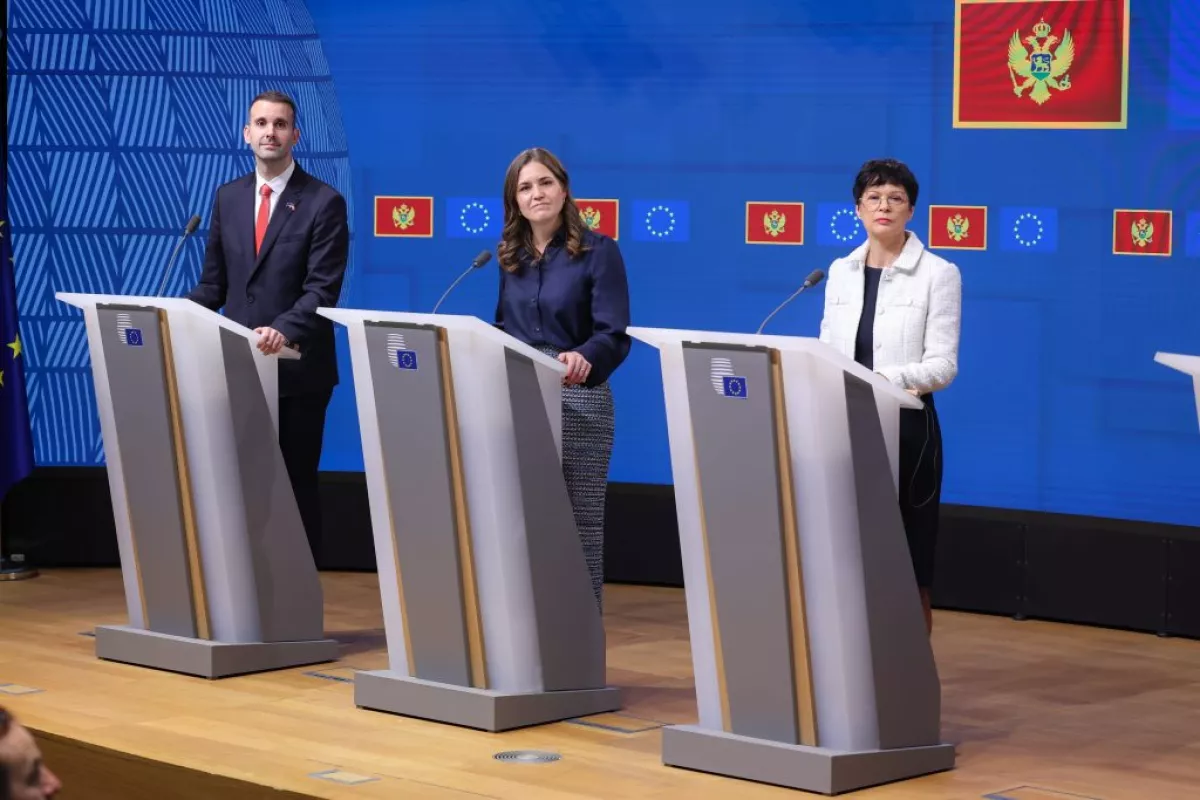
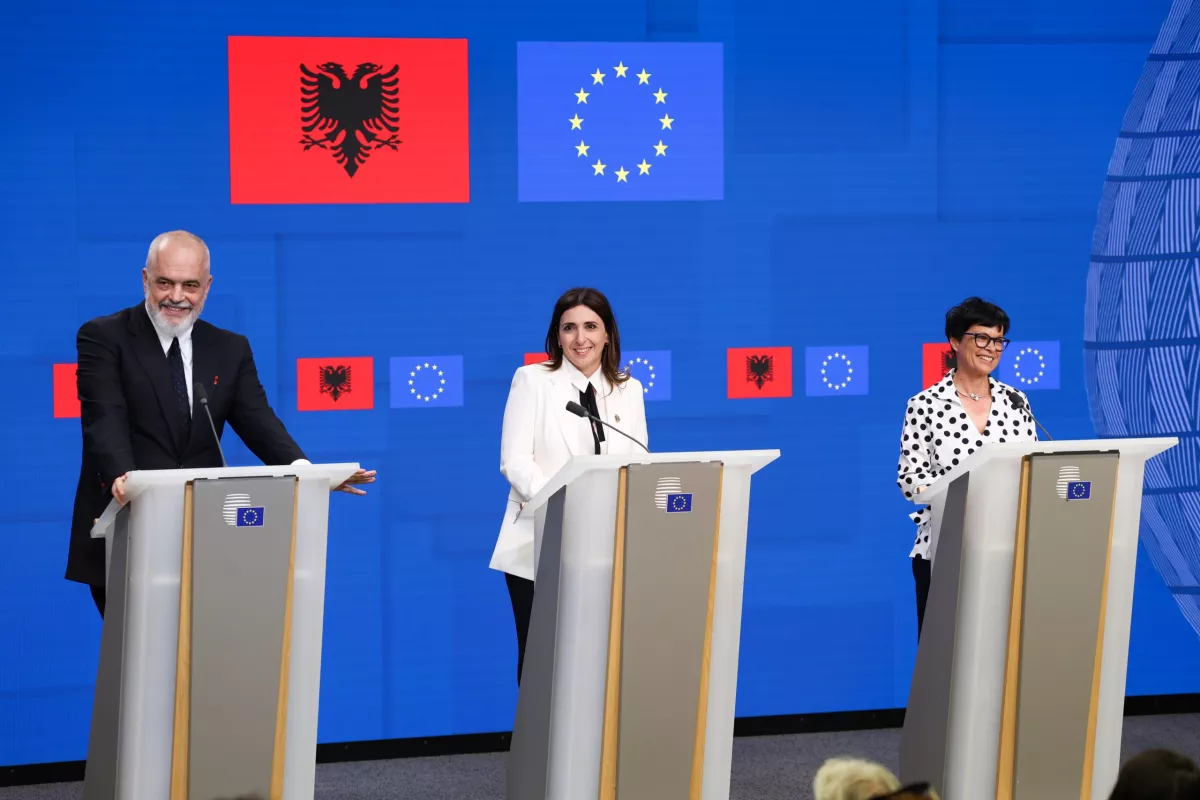
There is also an optimistic mood in the Western Balkans regarding European integration. Speaking at a joint briefing with Ireland’s Minister of State for European Affairs and Defence Thomas Byrne and EU Commissioner for Enlargement Marta Kos following the 9th Intergovernmental Conference between Albania and the EU, Albanian Prime Minister Edi Rama stated that his country had provisionally closed the first three negotiation chapters as part of its EU accession process, emphasizing that this represented recognition of the progress achieved by the Albanian state and the reforms it has implemented.
“We have just agreed on the provisional closure of three important negotiation chapters. This is not merely another step in a long process, but also a clear recognition that Albania is moving forward, that reforms are producing results and that the country is increasingly prepared to assume the responsibilities of membership,” he said.
A brief clarification is necessary here: the negotiations being provisionally closed concern Chapters 25 (“Science and Research”), 26 (“Education and Culture”), and 30 (“External Relations”). In addition, during the same period, a decision was made within the EU accession process to provisionally close negotiations with Montenegro on Chapters 8 (“Competition Policy”) and 29 (“Customs Union”). As a result, following the provisional closure of 18 chapters in total, Podgorica has completed more than half of the accession process and continues to maintain its leading position on the path towards European Union membership.
Thus, it can be argued that Brussels’ enlargement policy is becoming one of the important instruments of European security, primarily through the implementation of reforms, as clearly demonstrated by the examples of Tirana and Podgorica.
Taking into account the above-mentioned factors, it is worth examining the EU’s strategic objectives in advancing accession negotiations with Western Balkan countries. In this context, it should be noted that the European Union is seeking to consolidate its influence in this strategically important region, primarily in order to minimise competition from China and Russia. In other words, Brussels aims to alter the regional geopolitical balance of power in its favour by strengthening European integration.
For the European Union, this is presumably a critically important task, as Moscow and Beijing are seeking to use the Western Balkans to reduce Western influence. In particular, Russia relies on energy cooperation and support for pro-Russian forces in Serbia, with which it has longstanding friendly ties.
China, meanwhile, views the region as a strategic logistics corridor to Europe and is pursuing a much broader approach — expanding its economic presence, acquiring infrastructure assets, and investing through the Belt and Road Initiative. Moreover, Beijing’s main strategic partner in the region is also Serbia, which serves as a key hub for Chinese capital.
As we can see, China and Russia are pursuing similar objectives aimed at preventing a number of regional countries from fully integrating into the European Union.
As for Montenegro and Albania specifically, the situation is far more complex. In Montenegro, China has significant economic influence, which Beijing acquired through multimillion-dollar loans from the Chinese Export-Import Bank for the construction of the strategic Bar–Boljare highway. These loans led to a sharp increase in Podgorica’s public debt. Meanwhile, China’s influence in Albania is minimal: Chinese economic investments in the country remain extremely limited, making Albania the least attractive country for Beijing in the region.
Regarding Russia, it can be argued that Moscow has lost much of its influence in these two Western Balkan countries. Since 2022, relations between Russia and Montenegro have deteriorated sharply due to Podgorica’s decision to join anti-Russian sanctions, although Moscow’s information influence through pro-Russian forces remains present. Tirana, meanwhile, has consistently pursued a firm pro-Western policy, is a NATO member, and fully supports restrictions against Russia.
Thus, based on the above, it can be concluded that the European Union is seeking to strengthen its position in these countries through their accession to the bloc, thereby fully eliminating the prospects for Russia and China to restore their influence in Montenegro and Albania.
At the same time, the successful completion of negotiation chapters does not necessarily mean imminent membership, as candidate countries must fully align their legislation with EU standards, while the final decision requires unanimous approval from all EU member states — a highly complex process.
Nevertheless, the examples of Podgorica and Tirana reinforce the firm conviction that geopolitical rivalry and growing challenges to European security will continue to push the European Union to strengthen its position in the unstable Western Balkans region by all available means — a region that remains of significant interest to numerous international actors.







 editor@caliber.az
 +994 55 444-88-98
 Азербайджан, Баку, ул. Низами, 203, Af Business House, 5-й этаж