










Beijing and Baku call for common rules in the age of artificial intelligence Analysis by Teymur Atayev
The focus of Chinese President Xi Jinping’s recent speech at the World Artificial Intelligence Conference and the High-Level Meeting on Global AI Governance once again highlighted the geopolitical significance of this crucial field in the current stage of global development. This issue is important for each and every one of us, as Azerbaijani President Ilham Aliyev noted that if no one was talking about AI ten years ago, today it has already become an integral part of the future development of countries.
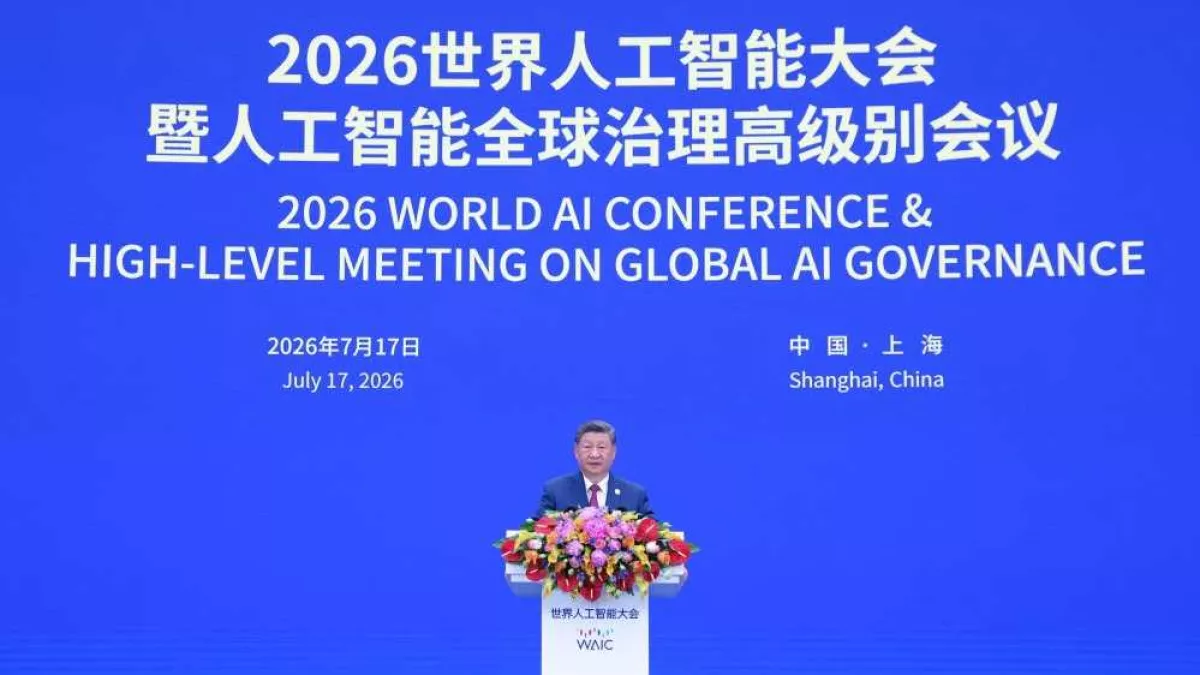
In this context, Xi Jinping first drew attention to the fact that, alongside the enormous opportunities that technological innovations in the field of AI offer humanity, they are also creating new governance challenges. This makes it increasingly important to ensure security when integrating algorithms into decision-making processes. Guided by the principle that people must come first, and AI should serve the benefit and progress of humanity, the Chinese leader outlined four key areas aimed at ensuring “shared prosperity and common security” through the creation of a fair system of global AI governance.
In broad terms, these principles can be summarized as follows: coordinated efforts to promote AI development and strengthen emerging industries so that artificial intelligence becomes a driver of all sectors of the economy; preventing the misuse of AI by countering attempts to broaden the concept of national security in relation to this field and place one’s own security above that of others; encouraging tolerance and creating conditions under which AI development does not undermine the diversity of civilizations and cultural identities by shaping AI values on the basis of shared human achievements; and ensuring solidarity in improving global governance through genuine multilateralism, based on the understanding of AI as the culmination of collective intelligence and a common asset of humanity.
This, in particular, implies safeguarding the central role of the United Nations, helping strengthen the capacity of Global South countries, narrowing the digital and intellectual divide in the interests of sustainable development, and preventing the emergence of new forms of inequality in the field of AI.
According to Xi Jinping, to implement this approach, China, as a responsible major power, consistently acts as a provider of international public goods in the field of AI. In particular, this refers to Beijing’s Global AI Governance Initiative, whose principles were reflected in a UN General Assembly resolution on strengthening international cooperation in AI capacity building.
Moreover, as Xi Jinping figuratively put it, just as it is impossible to create a melody with a single note, the development of AI “should not be a solo performance by a single country but a symphony of international cooperation.” Therefore, the advancement of artificial intelligence should serve the progress of all humanity while simultaneously improving mechanisms to prevent the risks of technologies spiralling out of control. The defining guideline should be a strong alliance between human intelligence and international consensus as the path for the further development of human civilisation.
The vision of AI development presented by Beijing clearly reflects a connection with China’s global initiative to build a “community with a shared future for mankind,” which calls for joint efforts to safeguard genuine multilateralism. This approach is based on the recognition of the diversity of world cultures and the promotion of shared human values, with China viewing the expansion of international cultural exchanges as an important instrument for achieving these goals.
It is precisely in this context that China’s approach to global AI development can be seen as a continuation of the idea of building a common world by bringing together different cultures, faiths, and nations.
In this regard, it is worth noting how closely this approach aligns with the Baku Declaration adopted in June 2026 following the International Ombudsman Summit, which identified the protection of human rights and freedoms, as well as the preservation of human dignity, as the top priorities in the development and deployment of AI technologies.
The adopted document emphasised the need to establish transparent and accountable AI governance mechanisms, prevent algorithmic bias, and ensure effective legal oversight. At the same time, it underscored the importance of maintaining human control over decision-making processes, protecting personal data, and strengthening cybersecurity. In this context, it also set the goal of developing independent monitoring and auditing mechanisms to prevent algorithmic discrimination, enhance the protection of vulnerable groups, improve digital literacy, and more effectively combat disinformation and hate speech.
In other words, the Baku platform has once again reaffirmed its role as a space that promotes the rapprochement of civilisations, races, cultures, and religions. This is by no means accidental, but rather a consistent continuation of Azerbaijan’s long-standing approach.
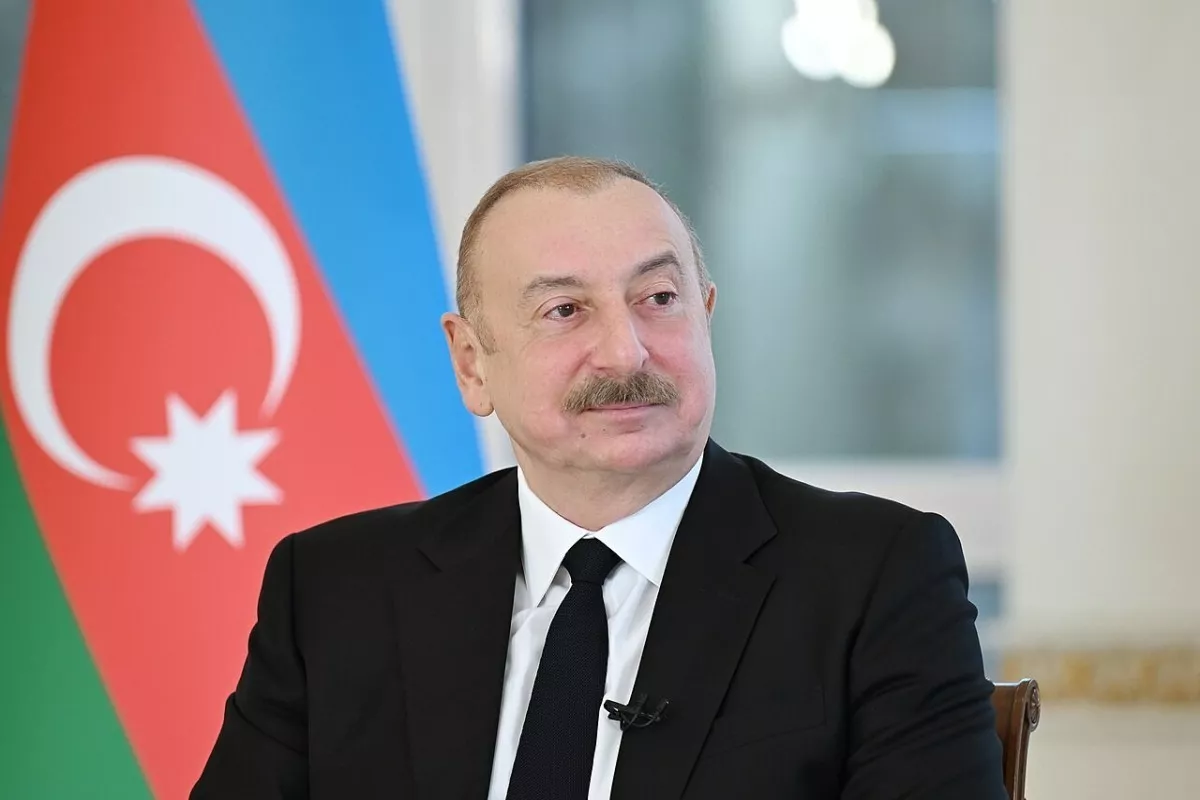
This is confirmed by the words of President Ilham Aliyev, who emphasised that tolerance and multicultural values represent a democratic norm of coexistence in Azerbaijani society. The World Forum on Intercultural Dialogue, the International Humanitarian Forum, and the Summit of World Religious Leaders held in Azerbaijan play an important role in advancing intercultural relations.
Therefore, as the head of state noted, “We believe that ethnic and cultural diversity is not a dividing line but rather a unique asset that serves harmonious development among nations.”
Thus, it is clearly evident that Beijing and Baku share common ground in their understanding of key global processes, including one of the most pressing issues of our time — the creation of a fair system of global governance for artificial intelligence.







 editor@caliber.az
 +994 55 444-88-98
 Азербайджан, Баку, ул. Низами, 203, Af Business House, 5-й этаж