










Turning toward Europe and skirting anti-Russian sanctions Armenia as the EU’s “favourite child”
Yerevan now stands before a pivotal choice: whether to make a definitive shift towards integration with the European Union or to deepen its engagement with the Eurasian Economic Union (EAEU). Judging by the outcome of Prime Minister Nikol Pashinyan’s visit to Germany — where he delivered a series of statements signalling his intention to move closer to the EU — such a course will require difficult decisions that run counter to the Kremlin’s interests.
The paradox, however, is that despite Armenia’s declared Euro-Atlantic aspirations, the country is not ready to relinquish the economic advantages it derives from cooperation with Russia. Since 2022, the Armenian economy has benefited substantially from speculative schemes, including the re-export of sanctioned goods to Russia and the routing of Russian diamonds and gold to the UAE, among other activities.
On 2 December, following the 6th meeting of the EU–Armenia Partnership Council in Brussels, the two sides signed the EU–Armenia Partnership Agenda. This marks the beginning of a new phase in their relations. In her post on X, EU High Representative for Foreign Affairs and Security Policy Kaja Kallas noted that the adoption of the agenda reflects a mutual desire for deeper cooperation across a wide range of areas — from the rule of law and economic development to visa liberalisation and security.
Meanwhile, Prime Minister Nikol Pashinyan’s recent visit to Berlin culminated in the signing of the Declaration on Strategic Partnership between Armenia and Germany, opening new avenues for collaboration amid Yerevan’s growing alignment with the European Union. German Chancellor Friedrich Merz reaffirmed his country’s support for Armenia’s European aspirations, pointedly contrasting this path with Armenia’s continued membership of the EAEU and the Collective Security Treaty Organisation (CSTO). He went as far as accusing Moscow of meddling in Armenian–German relations, stating: “Russia uses hybrid means to spread fears and disinformation about Armenia’s rapprochement with the EU and the West as a whole, and we intend to help Yerevan strengthen its sovereignty and security.”
However, is this truly how events are perceived in Yerevan, or is it merely a continuation of the familiar manoeuvring strategy long practised by the Armenian leadership — seeking the political and financial benefits of closer engagement with the EU while preserving the substantial profits generated by “grey” trade with Russia? It is evident that in recent years Armenian politicians have mastered the art of balancing, but the ability to sit on two chairs at once is inevitably subject to time limits — and those limits are not endless.
The reality is that Brussels views Armenia largely as a tool in its broader confrontation with Russia. Alongside encouraging rhetoric and political signalling, the EU has periodically hinted at the possibility of imposing secondary sanctions on states functioning as shadow hubs for the transfer of various technological goods to Russia. Armenia has been cited in this context, often alongside Kyrgyzstan.
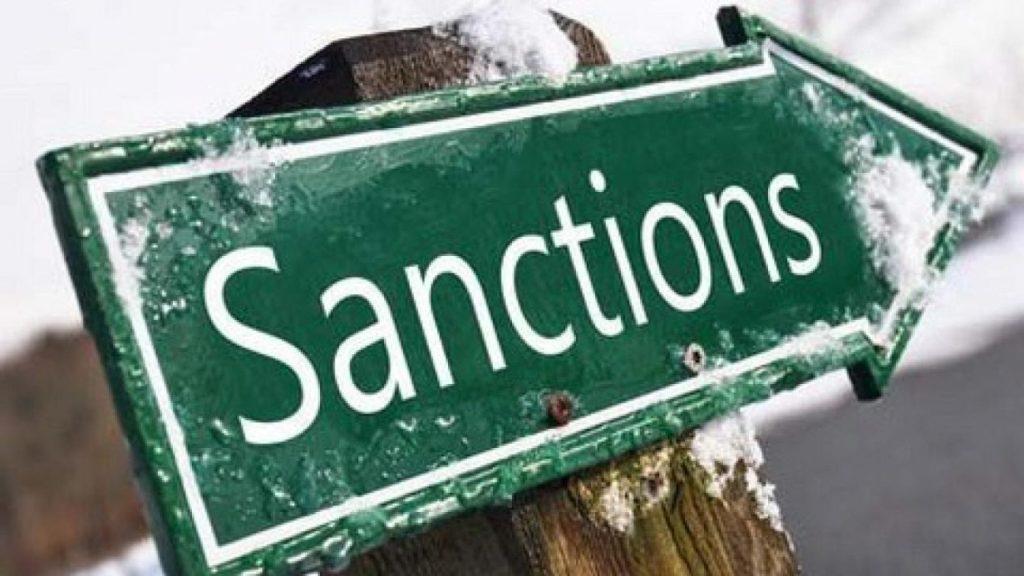
Nevertheless, for the collective West, Armenia has long been treated as “something different”. Despite the often questionable political manoeuvring of the Armenian authorities, Yerevan has never faced concrete accusations or secondary sanctions. It is therefore unsurprising that, since the start of the Russia–Ukraine war, European partners have continued to overlook Armenia’s close relationship with Russia — including turning a blind eye to the re-export of equipment and dual-use goods to the Russian market.
One way or another, the scale of this “shadow” trade is remarkable. Between 2021 and 2024, Armenian–Russian trade turnover increased by roughly 4.5 to 5 times — from around $2.6 billion to nearly $12 billion. It is evident that Armenia’s modest industrial and agricultural sectors could not have accounted for even a tenth of this surge. Almost all of the growth stemmed from the re-export of goods originating from third countries.
Since the outbreak of the Russia–Ukraine war in February 2022 and the introduction of Western sanctions against Russia, Armenian intermediaries began ordering microchips, electronics, electrical equipment, machinery and industrial tools, and various components from industrialised countries in Europe, the United States, China and Southeast Asia. After being re-registered under Armenian customs documentation and issued with new invoices, these dual-use goods were then shipped to Russia, generating considerable profits for Armenian companies. According to data published nearly two years ago by the international ratings agency Fitch Ratings, deliveries of goods from Armenia to Russia rose by 300% starting in 2022.
Equally profitable for Armenian companies has been the import of gold from Russia, both in bars and as jewellery, as well as diamonds and uncut gemstones. At the same time, Armenia’s jewellery industry has hardly contributed to adding value by producing ornaments from precious metals or cutting imported diamonds. Its role has essentially been limited to stamping the Armenian assay office mark on Russian products, which automatically removed them from the scope of sanctions. Almost all of the Russian gold and jewellery was then re-exported to the United Arab Emirates (UAE) and, to some extent, Hong Kong, from where large sums of cash and securities are transferred back to Armenia as part of mutual settlements.
Specifically, in 2022 alone, Armenia imported 89 tonnes of Russian gold worth $5.2 billion, and since the beginning of 2023, such imports amounted to 111 tonnes valued at $6.2 billion. This trend, despite some slowing, continued into 2024. Armenian re-exports to the UAE alone grew nearly fourfold — from $580 million to $2.298 billion.
At the same time, amid Western restrictions, the Armenian–Iranian transit route has flourished. Through this channel, Russian goods — machinery, equipment, metals, textiles, agricultural products, and dual-use items subject to “parallel import” — are sent to the Persian Gulf, the Middle East, and India, bypassing sanctions.

In short, membership in the EAEU single economic space has provided Armenian speculative-intermediary businesses with highly favourable trading conditions — conditions that Yerevan is clearly reluctant to give up.
The figures presented above allow us to assert that the public clashes between Moscow and Yerevan are nothing more than a political spectacle designed to distract attention. In reality, they demonstrate the strategic depth of bilateral relations. While Moscow and Yerevan publicly tried to convince the international community that a serious crisis existed, their trade turnover remained at a high level. Today, Russia continues to be the main sponsor of Armenia’s economy, and Armenia’s dependence on trade and economic ties with Moscow has not diminished.
Despite this, the European Union is in no rush to impose sanctions on Armenia for re-exports. Put simply, Russia allows Armenia to profit from sanctions circumvention and re-exports, while the West prefers to turn a blind eye. Brussels, which actively imposes anti-Russian sanctions and criticises those who bypass them, understands this perfectly. Yet, following the principle that “money has no smell,” it chooses to overlook Armenia’s activities, treating the country as a “favourite child” that must always be “saved.” This protection also gives Pashinyan greater freedom in domestic politics.
Hiding behind the “Russian threat,” Pashinyan has been able to arrest opposition activists and clergy who oppose him. Yet no Western human rights organisation condemns the Armenian authorities. As a result, the government behaves far more “boldly” than it did just a few years ago. And why not, if these “mischiefs” are tolerated by both Russia and the West?







 editor@caliber.az
 +994 55 444-88-98
 Азербайджан, Баку, ул. Низами, 203, Af Business House, 5-й этаж