










“A blooming garden” framed by corrupt decay Mogherini, Kaili, Metsola, Borrell…
On February 29, 2000, the national leader, President of Azerbaijan Heydar Aliyev, welcomed the first delegation of the European Union Parliament to visit our country. During the conversation, the guests, who had arrived in Baku from Tbilisi, remarked in a somewhat patronising tone that, “as they had found out,” Georgia and Azerbaijan “face very similar problems,” particularly in the area of corruption. According to them, this area is a priority for the EU, and they pay close attention to it. However, as the national leader calmly and convincingly made clear to them, these individuals were far from attentive to their own faults.
Heydar Aliyev, in particular, drew the critics’ attention to facts of corruption previously uncovered within the EU Economic Commission, listing the names of corrupt officials who had held responsible positions within the European political hierarchy. “All of them resigned. Are you aware of this?” he asked. The critics admitted that they were indeed aware. In this context, Heydar Aliyev stated that “in some countries, people fail to see the situation and mistakes in their own country, but in countries that have recently gained independence—Azerbaijan, Georgia, or others—they see this and blow it out of proportion.” He therefore urged the delegation members “to take this into account in the future and recognise their own shortcomings.” He added that European and global public organisations often compile lists ranking certain countries according to their level of corruption, “but on what law, on what principle is this done? Everything is based on subjective opinions. Therefore, all this information is inherently biased.”
Surely, the esteemed reader has understood why we recalled a situation from twenty-five years ago: nothing in the stance of EU politicians on this matter has changed. This cohort, which once sought to instruct everyone—including those living far beyond their reach—on standards they themselves did not uphold, continues to operate by the same criteria. This point was made a year ago by the President of Azerbaijan, Ilham Aliyev, who noted how “they are not used to being lectured on justice,” while still wishing to lecture everyone themselves. Moreover, “are used to being bowed to, being asked for something, being consulted, and believing that nothing can be done without their permission.”

Indeed, one could not put it better, a fact confirmed by yet another corruption scandal that has shaken not just Europe. According to the European Public Prosecutor’s Office, former EU High Representative for Foreign Affairs and Security Policy Federica Mogherini—currently rector of the EU-funded College of Europe (CoE) in Bruges, Belgium—along with Cesare Zegretti, director of one of CoE’s offices, and former Secretary-General of the European External Action Service (EEAS) Stefano Sannino, have become subjects of an investigation for fraud, corruption, and breach of official secrecy. The case concerns a tender awarded by the EEAS to the College of Europe in 2021–2022. Yes, all of them have been released from custody for now, but only because, according to Belgian police, they “have no intention of evading justice.”
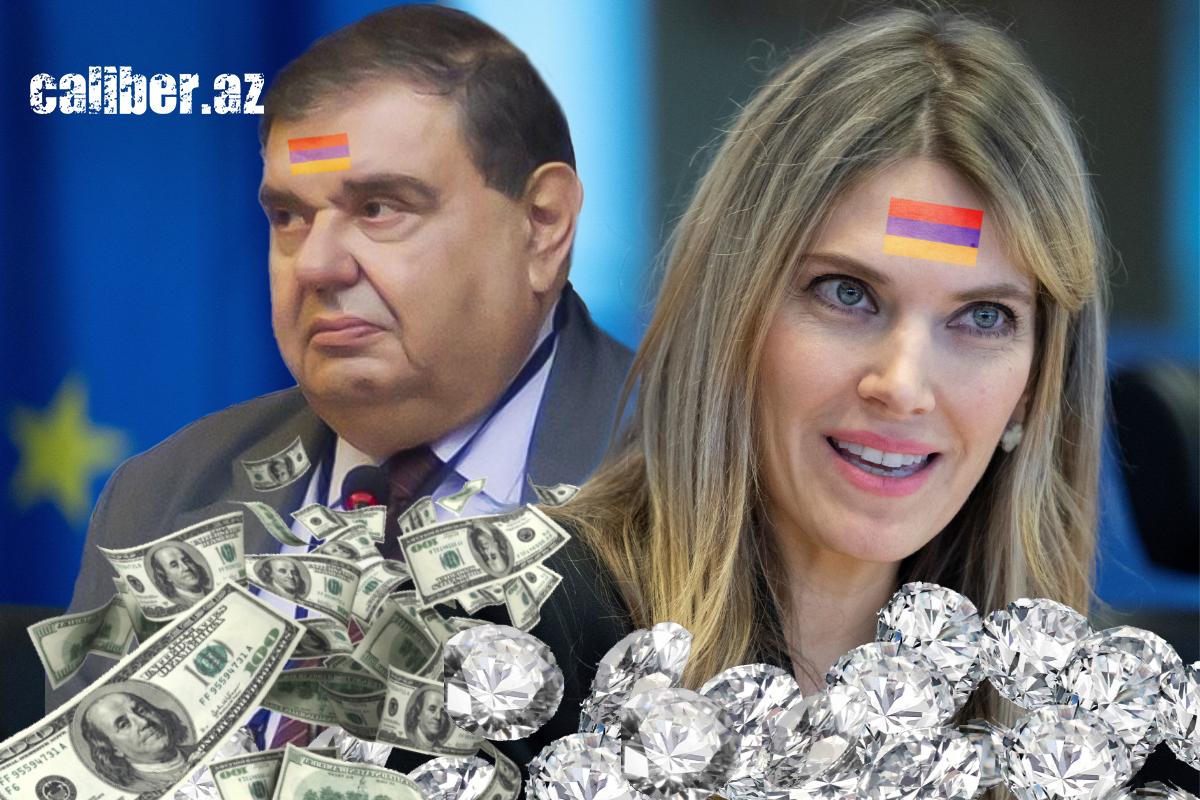
Against the backdrop of this scandal, the figure of former Vice-President of the European Parliament (EP) and Greek MEP Eva Kaili immediately comes to mind. In 2022, along with three other high-ranking European officials, she was charged by a Brussels investigating judge with “membership in a criminal organisation, money laundering, and corruption.” During the investigation, €600,000 in cash was seized from Kaili’s home. Moreover, her father also came under scrutiny, as he was found carrying a suitcase of cash at the time of his detention. At the same time, Kaili’s assistant and partner—head of an NGO with the grandiose name “Fight Impunity,” Francesco Giorgi—was also placed under investigation.
Two years later, Belgian police conducted searches in the homes of former EU Commissioner for Justice Didier Reynders over suspicions of money laundering linked to lottery ticket purchases.
In March 2025, the Belgian public prosecutor’s office detained a number of individuals for questioning on suspicion of involvement in corruption within the European Parliament. During those days, federal police conducted 21 searches. It was noted that the activities of these individuals “were disguised as commercial lobbying, including various forms of illicit rewards—from appointments to political positions to lavish gifts, payment for meals, travel,” and so on.
And alongside this is the figure of European Parliament (EP) President Roberta Metsola, who, it should be recalled, in 2024 appointed her brother-in-law, Matthew Tabone, as head of her office. At the same time, her husband was a significant lobbyist in the EU for the well-known American cruise operator Royal Caribbean Group—a connection that the EP President did not consider a conflict of interest. This is despite the fact that she herself had initiated a new code of ethics requiring high-ranking EP members to declare such cases. Incidentally, following the corruption scandal involving Eva Kaili, Roberta Metsola declared valuable gifts, including gold items, at lightning speed—although this procedure should have been carried out much earlier.
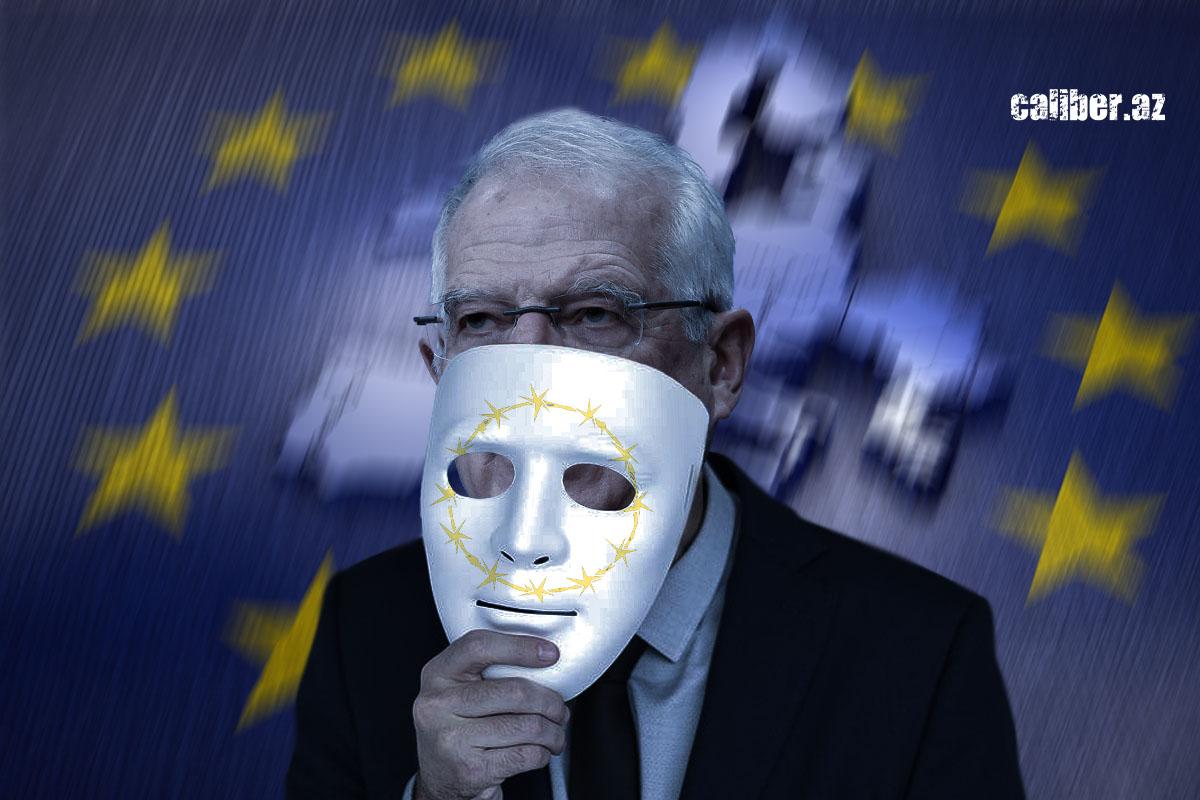
Returning to the current scandal, a particularly telling fact is the refusal of the former head of European diplomacy, the well-known Josep Borrell, to comment on such a disgraceful affair. This is hardly surprising, given that Borrell—who succeeded Mogherini as head of EU diplomacy—was the one who appointed Sannino as Secretary-General of the institution. Moreover, the author of the famous phrase “blooming garden” in reference to the “virtuous” Europe, as noted by the media, was responsible for the tender whose fraudulent handling is now under investigation at the College of Europe, led by Mogherini.
Thus emerges the so-called European trio, “blooming” amid their corrupt decay—a clear demonstration of the lack of real change within EU institutions regarding the fight against corruption. And therefore, new revelations are likely just around the corner.







 editor@caliber.az
 +994 55 444-88-98
 Азербайджан, Баку, ул. Низами, 203, Af Business House, 5-й этаж