










A lift without brakes New trends in Ukrainian politics
One of the most topical issues in Ukraine today is the emergence of new trends that have become increasingly prominent in Ukrainian politics. This article examines some of these developments in detail.
Let us begin with President Volodymyr Zelenskyy’s appointment of David Manvelovich Aloyan as Chairman of the Interagency Commission on Military-Technical Cooperation Policy and Export Controls. Since September 2025, Aloyan has served as Deputy Secretary of Ukraine’s National Security and Defence Council (NSDC).
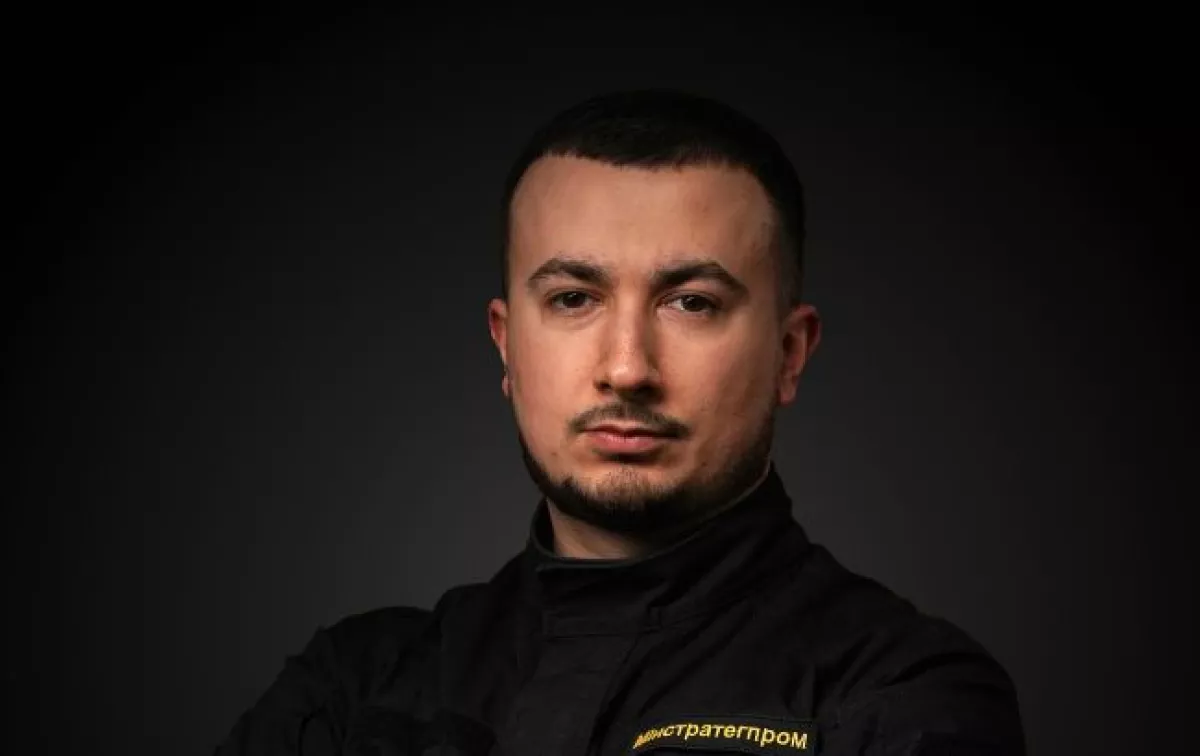
There is one particularly noteworthy aspect of this appointment. Aloyan’s new position involves access to restricted information, including information classified as a state secret. Ukrainian legislation directly regulates the export of goods and technologies containing information that constitutes a state secret. This is where the issue becomes particularly significant: Aloyan’s father, mother, paternal uncle and biological sister are all listed in the Myrotvorets database.
It should be noted that inclusion in this database is based on actions or views that its creators consider to pose a threat to Ukraine’s interests. According to Ukrainian media reports, the father and uncle of the newly appointed commission chairman officially conduct business in the so-called “LPR”.
This, therefore, raises an obvious question: how did a person whose close relatives are reportedly conducting business in territories of Ukraine currently under Russian occupation, allegedly in cooperation with Luhansk separatists, come to head the Interagency Commission on Military-Technical Cooperation Policy and Export Controls?
Yet this is not the end of the story. David Aloyan’s own professional background is also noteworthy. A review of his career raises another natural question: to what extent does the professional experience of a person who was engaged in business and worked for a logistics company until 2021 correspond to the requirements of such a strategically important position, given that within just a few years he advanced from a specialist at the Ministry for Strategic Industries to Deputy Secretary of the NSDC and, ultimately, to Chairman of the commission responsible for military-technical cooperation and export controls?
On the other hand, however, there is little reason to be surprised, especially if we recall that Ukraine has repeatedly appointed as ambassadors individuals who not only lacked diplomatic experience and relevant education, but had also been implicated in corruption scandals. And, to put it bluntly, the country’s president himself comes from show business and had neither the relevant education nor experience in high-level politics. Against this backdrop, Aloyan’s appointment to such a senior position can be viewed as yet another manifestation of the new trend in Ukrainian politics — one that is reflected in a number of other cases as well.
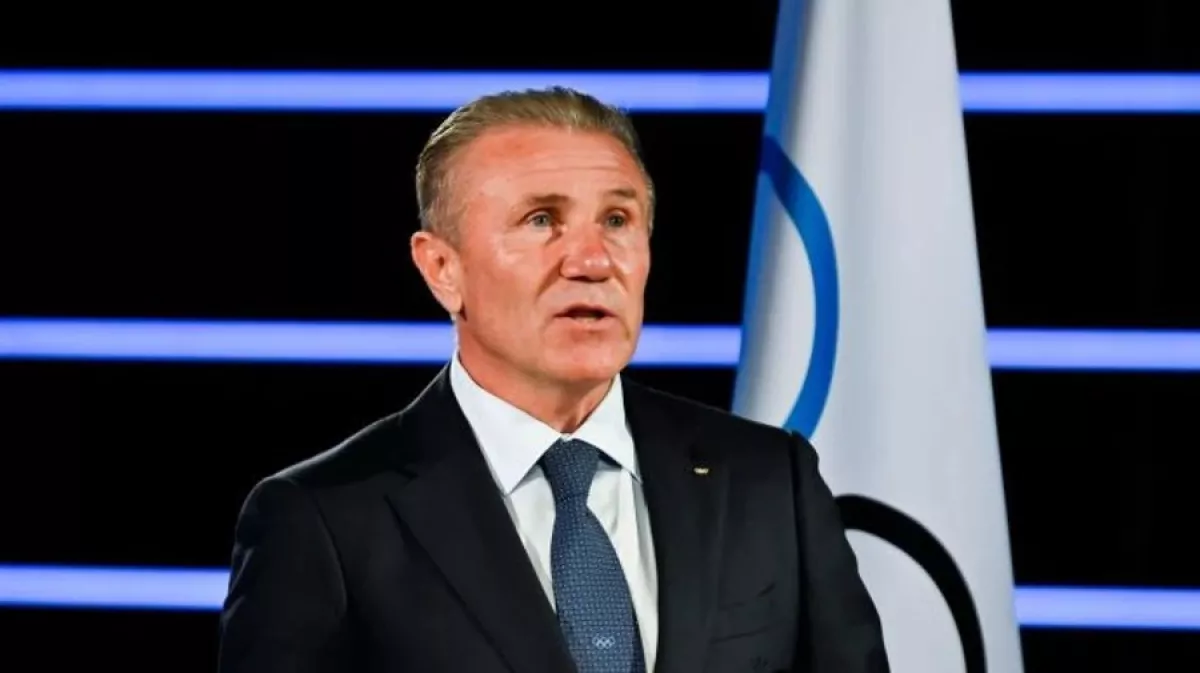
One such case involves legendary Ukrainian track-and-field athlete Sergey Bubka, who became embroiled in a high-profile scandal over the activities of Mont Blanc, a family-owned company associated with him, in the temporarily occupied parts of the Donetsk region. Journalists from Bihus.Info reported on the company’s contracts to supply fuel to entities linked to the occupation administration. Following the reports, the Security Service of Ukraine announced that Bubka’s brother, Vasyl, was suspected of two offences: collaborative activities under Part 4 of Article 111-1 of Ukraine’s Criminal Code and assisting the activities of a terrorist organisation under Part 1 of Article 258-3.
Yet, as the saying goes, none of this appears to have prevented Bubka from continuing his life in Russia. At the same time, Sergey Bubka, who headed Ukraine’s National Olympic Committee from 2005 to 2022, was not stripped of his title of Hero of Ukraine after the Verkhovna Rada rejected an appeal calling on President Zelenskyy to revoke the honour.
A similar situation unfolded yesterday, September 17, when lawmakers failed to pass a motion to strip singer Oleksiy Potapenko, better known as Potap, of his title of Honoured Artist of Ukraine.
A total of 226 votes was required to adopt the decision in question, but only 192 MPs voted in favour. Parliament also failed to support a motion to submit a parliamentary request to the head of state, with just 198 MPs voting for it. It is worth recalling here that Potap not only failed to serve in the ranks of the Armed Forces of Ukraine, despite being subject to mobilisation and frequently visiting the country, but has also repeatedly made publicly offensive remarks about what is supposedly his own country. Not long ago, for instance, he posted a video on Instagram in which he and his wife, singer Nastia Kamenska, “joked” about the use of the Russian language, provoking public outrage.
In the first part of the video, the couple appeared to be in pain and pulled grimaces, accompanied by the following text: “God, please forgive us for speaking Russian. We completely forgot that there is such a thing as...” The footage then abruptly changed, showing the smiling performers dancing against a seaside backdrop, with the sentence completed by the word “freedom”. In other words, Potap and Nastia openly exploited the sensitive issue of the Russian language in Ukraine while also displaying a lavish lifestyle at a time when Ukrainian cities are being subjected to daily devastating missile and drone attacks by Russia.
Yet apparently none of this was sufficient for the Verkhovna Rada to strip Potap of the title of Honoured Artist of Ukraine, which was awarded by the incumbent head of state, who, incidentally, repeatedly “joked” about the Ukrainian language and Ukrainian traditions himself during his career as an entertainer, and even compared Ukraine to an actress from adult films. None of this, however, prevented him from becoming president.
Thus, the outcome of the vote on Potap was hardly surprising, since, as is well known, the Servant of the People faction holds a single-party majority in parliament, which enables it to secure the “desired” results.







 editor@caliber.az
 +994 55 444-88-98
 Азербайджан, Баку, ул. Низами, 203, Af Business House, 5-й этаж