










A visit of “strategic courtesy” Symbolism over substance in Yerevan–Moscow ties
The slow-burning crisis in Armenian–Russian relations was recently punctuated by a dose of constructive engagement. The Speaker of the National Assembly of Armenia, Alen Simonyan, paid an official visit to Russia, where he met with the Chairwoman of the Federation Council, Valentina Matviyenko, and Russian Foreign Minister Sergey Lavrov.
The Speaker’s trip drew particular attention in regional media, as Simonyan is known for his sharp and biting remarks about Russia. “They probe, squeeze out different topics, craft pathetic articles, invent scenarios of non-existent intrigues and passions in their own image and likeness about me and my colleagues,” the Armenian parliamentary speaker said, insisting that Russia uses the media space to wage a hybrid war against Armenia.
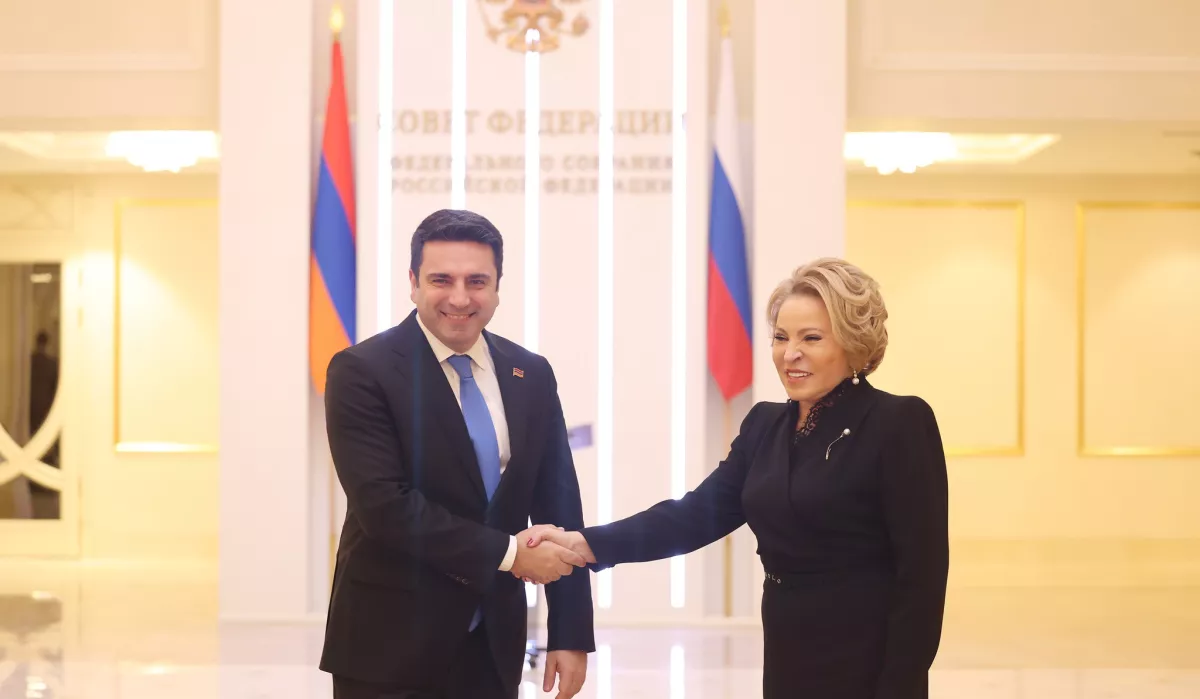
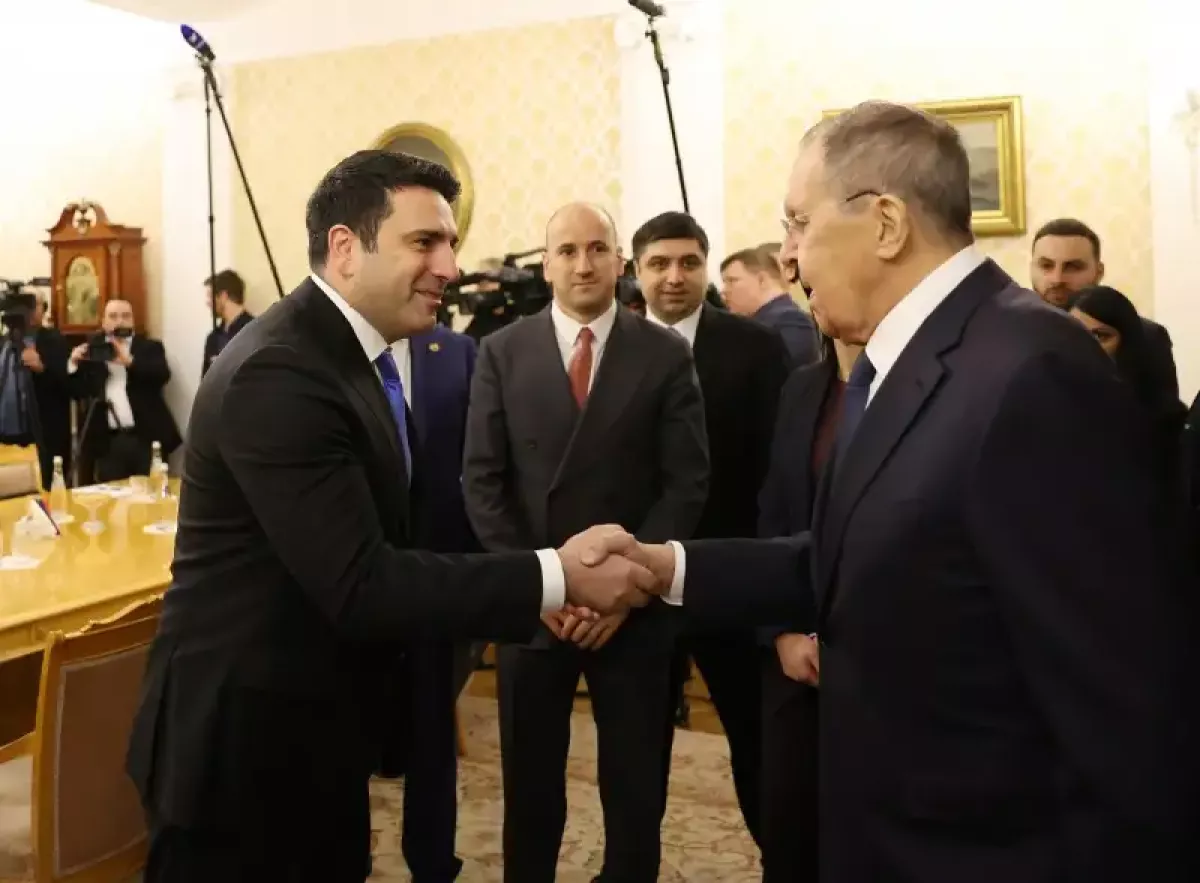
At the meeting with Lavrov, Simonyan, of course, spoke differently. “I do not want there to be any perception in Russia that Armenia is trying to do something against Russia, against a friendly allied state. I want to assure you that we have no such perception, and there will not be. This would be wrong considering everything we already have and what exists,” Simonyan said, adding that Armenia still has questions regarding the Collective Security Treaty Organisation (CSTO) that require answers. According to him, all disputed issues are gradually being discussed and could be resolved.
The Russian minister, in turn, noted that “it is somewhat strange for us to periodically hear statements about some mythical attacks from the north being prepared against Armenia, or about an existential threat from the CSTO.” Lavrov also emphasised that Moscow remains Yerevan’s main trading partner and is ready to expand cooperation. He added that Russia views EU membership as incompatible with participation in the Eurasian Economic Union (EAEU) but will respect Yerevan’s choice. The Russian minister further noted that the EU constantly puts Armenia in a position of choosing between Russia and the EU. Simonyan responded that Yerevan is interested in developing relations with Moscow and does not see leaving the EAEU as necessary.
It was in this atmosphere of cautious navigation that the Speaker of the Armenian National Assembly conducted his visit to Moscow.
While we cannot confirm the details, we suspect that Simonyan was unlikely to have negotiated anything substantial in Moscow. However, at a symbolic level, the speaker’s visit was significant for both Armenia and Russia. The ruling party in Armenia needs, ahead of parliamentary elections, to smooth over internal contradictions as much as possible in order not to alienate the pro-Russian segment of the electorate. It is important to understand that not everyone in this segment automatically supports the Karabakh clan, so they need to be reassured that Yerevan’s policies are not directed against Moscow.
In Moscow, of course, these motives are understood, but in the absence of effective ways to influence Armenia’s domestic political situation, the preference is to deal with a “familiar evil.” The Kremlin’s bet on opposition movements in Armenia, led by the Armenian Church, did not pay off, and now Moscow is making efforts to avoid completely losing the still fairly substantial resources of its presence in Armenia.
Yet Armenia is hardly aiming for a complete break with Russia. More than that, it doesn’t even need to. What seems to be emerging is an attempt at a multi-vector policy (in Yerevan, they like to speak of diversifying foreign policy), to extract “a little from everyone” for Armenia and to create a balance of interests and counterweights among the world powers. In this process, a reduction of Russia’s share in Armenian politics and economy is inevitable. However, in Moscow, it seems they are willing to lose a part in order not to lose everything.
This is all the more important because the Armenian–Azerbaijani settlement, while on one hand reducing Russia’s status as a geopolitical arbiter in the region, on the other hand contains direct geo-economic benefits for Moscow, particularly in logistics and trade.
In this sense, reassurances from official Yerevan—even coming from a figure with a reputation as an anti-Russian politician—about friendship and allied relations with Moscow, in one way or another, create a favourable backdrop for the planned reset.







 editor@caliber.az
 +994 55 444-88-98
 Азербайджан, Баку, ул. Низами, 203, Af Business House, 5-й этаж