










An alliance mapped out: Azerbaijan and Uzbekistan
A five-hectare park mirroring the outline of the map of Uzbekistan has been laid out on the shores of the Caspian Sea in Baku’s White City. Thousands of kilometres away, in Fuzuli, Karabakh, a 100-hectare friendship pomegranate orchard featuring Azerbaijani and Uzbek varieties is taking root, while the Mirzo Ulugbek School, built with Uzbek funding, is in operation. These three projects — a park shaped like a neighbouring country, a shared orchard, and a school bearing the name of the great astronomer on liberated land — speak to the nature of Azerbaijani-Uzbek relations more clearly than any diplomatic communiqué.
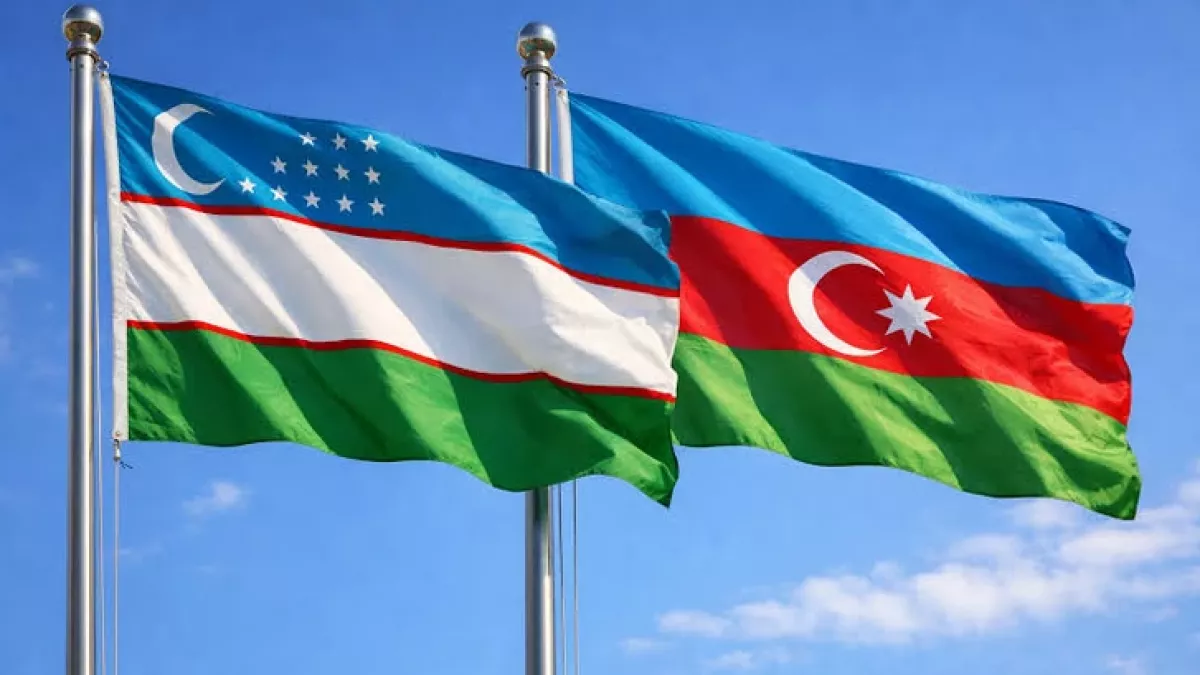
President Ilham Aliyev’s state visit to Uzbekistan on August 23–24, 2026, will merely put on paper what has already taken root in the soil of both countries. And this formalisation will be historic: relations between the two states have reached the highest possible level between sovereign nations — the level of an alliance.
The path to this summit has been consistent. The legal foundation for bilateral relations was laid by National Leader Heydar Aliyev, whose official visit to Uzbekistan on June 18–19, 1997, established the framework for subsequent cooperation. The qualitative breakthrough, however, came in recent years, driven by President Ilham Aliyev’s political will and his close personal relationship of trust with President Shavkat Mirziyoyev.
The intensity of contacts over the past five years has been unprecedented: Aliyev has made two state visits and four working visits to Uzbekistan, while Mirziyoyev has made two state visits and seven working visits to Azerbaijan. Behind these figures lies a constant alignment of positions. It was precisely this process that enabled the two countries to move from partnership to alliance, formalised through the Declaration on Deepening Strategic Partnership, the Treaty on the Establishment of the Supreme Interstate Council, and the Treaty on Allied Relations.
Institutional foundation
The upcoming visit will give this framework new substance. In addition to bilateral talks, the third meeting of the Supreme Interstate Council will be held (the first took place in Tashkent in 2024, and the second in Baku in 2025). A package of documents is being prepared for signing that will bring the treaty and legal framework governing bilateral relations to nearly 220 agreements.
These are not merely symbolic acts, but a dense network of commitments covering every sphere, from defence to culture. An alliance built on such a foundation does not rely solely on the personal chemistry between its leaders; it also rests on an institutional framework capable of withstanding any shifts in the political landscape.
Common origins and a geopolitical axis
The foundation of this rapprochement is a natural commonality of origins: Turkic kinship, a shared faith, linguistic, cultural and historical affinity. The modern institutional architecture fits organically onto this foundation. Baku and Tashkent coordinate their positions and act in concert at the UN, the Organisation of Islamic Cooperation, the Conference on Interaction and Confidence-Building Measures in Asia, and the Non-Aligned Movement.
A special place is occupied by the Organisation of Turkic States (OTS), which both republics regard as an emerging alliance aimed at strengthening the political, economic and military power of the Turkic world.
A symbolic milestone came at the Seventh Consultative Meeting of the Heads of State of Central Asia, held in Tashkent on November 16, 2025: Azerbaijan was granted full participant status in the format, transforming the former Central Asian “five” into a “six” — C6.
Economy, logistics and energy
Behind the political framework lies a rapidly growing economic relationship. In 2025, bilateral trade more than tripled, reaching $795 million, and increased by another third in the first five months of 2026. More than 130 Uzbek companies operate in Azerbaijan, including projects involved in the reconstruction of Karabakh. The joint venture Azermash has already produced tens of thousands of Chevrolet and Isuzu vehicles. The Azerbaijan-Uzbekistan Investment Company was established in 2023, while the fourth interregional forum, bringing together representatives of more than ten cities and districts of Azerbaijan, was held in Tashkent on August 22.
The strategic importance of the relationship is increasingly evident in the transport, logistics and energy sectors. The volume of transit traffic reached 1.4 million tonnes in 2025. Both countries are actively developing the Middle Corridor, which connects Central Asia with Europe via the Caspian Sea. Air connectivity is also expanding, with more than 15 flights operating weekly, including seven AZAL flights on the Baku–Tashkent route. In the energy sector, a joint venture based on the scientific expertise of the two countries’ oil and gas research institutes is operating successfully. For Uzbekistan, which has no direct access to the ocean, Azerbaijan is a gateway to global markets; for Baku, Tashkent is a key partner in generating cargo flows for the Middle Corridor.
The human dimension and a shared destiny
Uzbekistan’s involvement in the reconstruction of Azerbaijan’s liberated territories is of particular significance. The Mirzo Ulugbek School in Fuzuli, built to accommodate 960 students, welcomed children as early as 2023, while a pomegranate orchard was planted nearby. Baku, in turn, has adorned the city with Uzbekistan Park, while cities in the two countries are actively establishing sister-city ties, including Khankendi and Urgench, as well as Shusha and Khiva. The symbolism is clear: the two peoples are inscribing each other’s names and images into their own land and everyday lives.
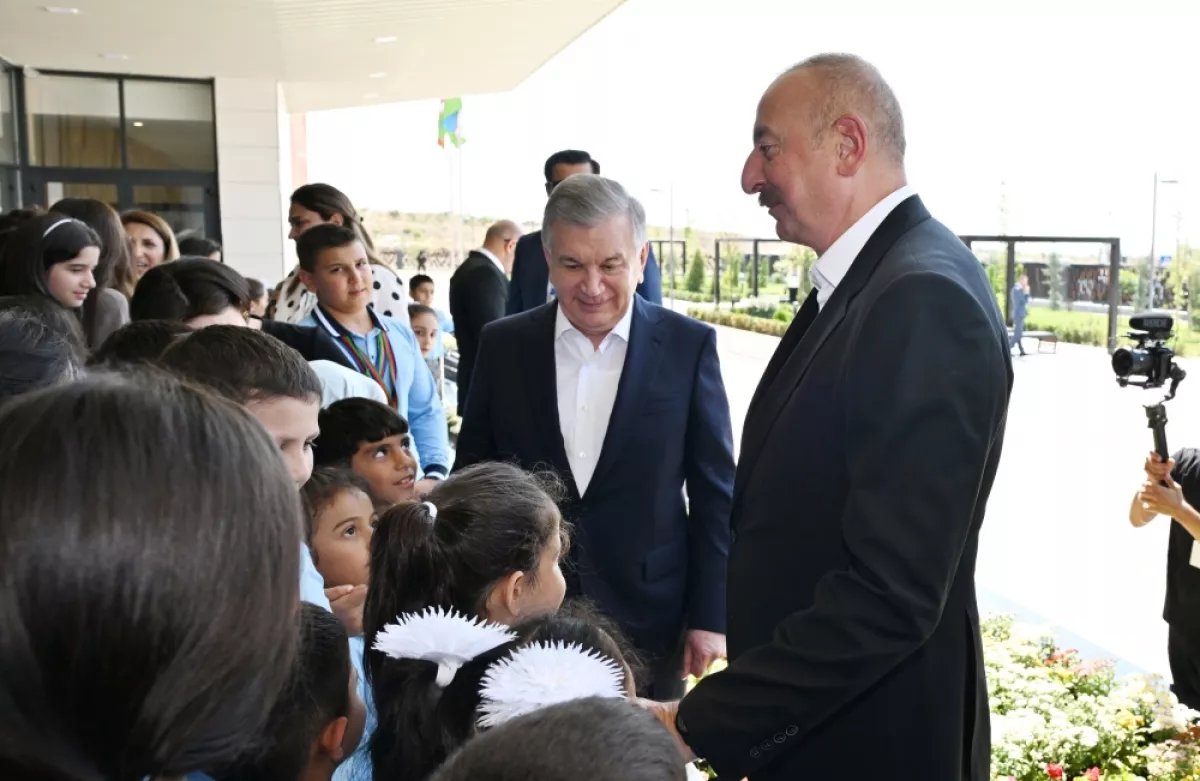
The humanitarian dimension is further strengthened by student exchanges, Days of Culture and Cinema, joint media forums, and a grant competition for NGOs, launched for the first time in 2026.
Azerbaijan-Uzbekistan relations have become the flagship of Baku’s Central Asia policy — an example of how shared origins can be transformed into shared interests, and shared interests into a functioning alliance. The state visit on August 23–24 will merely confirm what has already become a reality: another solid axis has taken shape on the map of the Turkic world, and it is measured not by political expediency, but by kinship.







 editor@caliber.az
 +994 55 444-88-98
 Азербайджан, Баку, ул. Низами, 203, Af Business House, 5-й этаж