










Anaklia without China? Georgia retains control and seeks investors Article by Vladimir Tskhvediani
The Georgian government has decided to develop the deep-sea port of Anaklia under the landlord model. Under this approach, the state will retain ownership of the port's core infrastructure and will be responsible for its development and management.
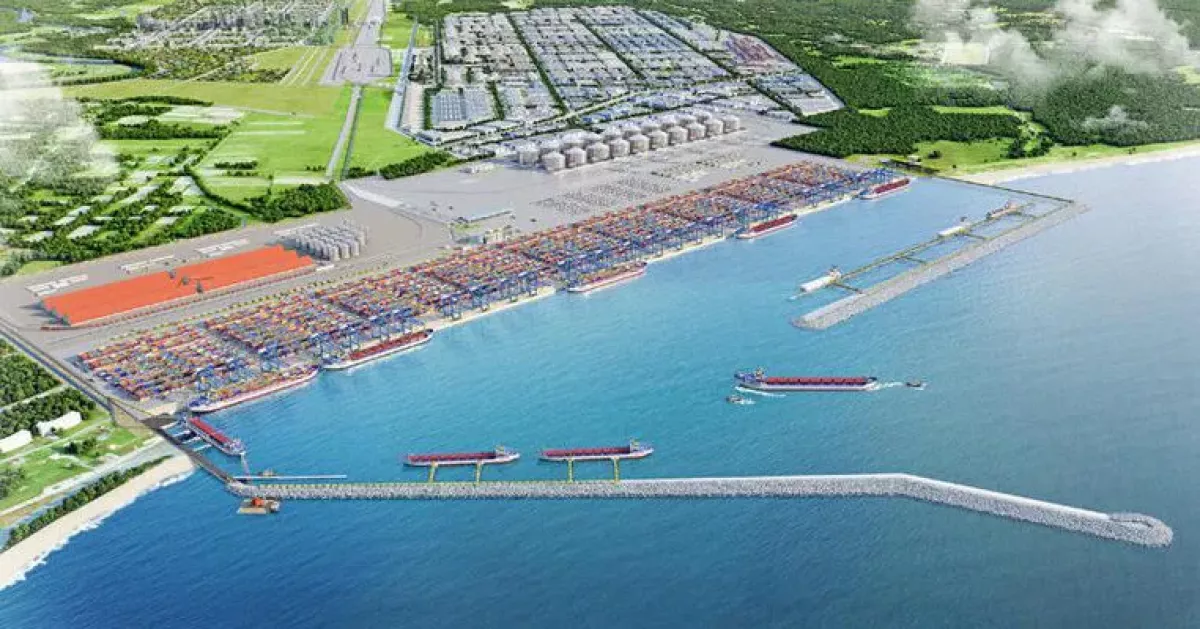
The total investment required for the project is still estimated at $1.1 billion. However, Georgia's financial contribution will increase, as the core infrastructure will remain under state ownership. Under the new model, the government will need to secure an additional $200 million in funding.
"No one other than the state will own this strategically important project for our country. The owner will be the state. This is a Georgian port, and it will remain a Georgian port.
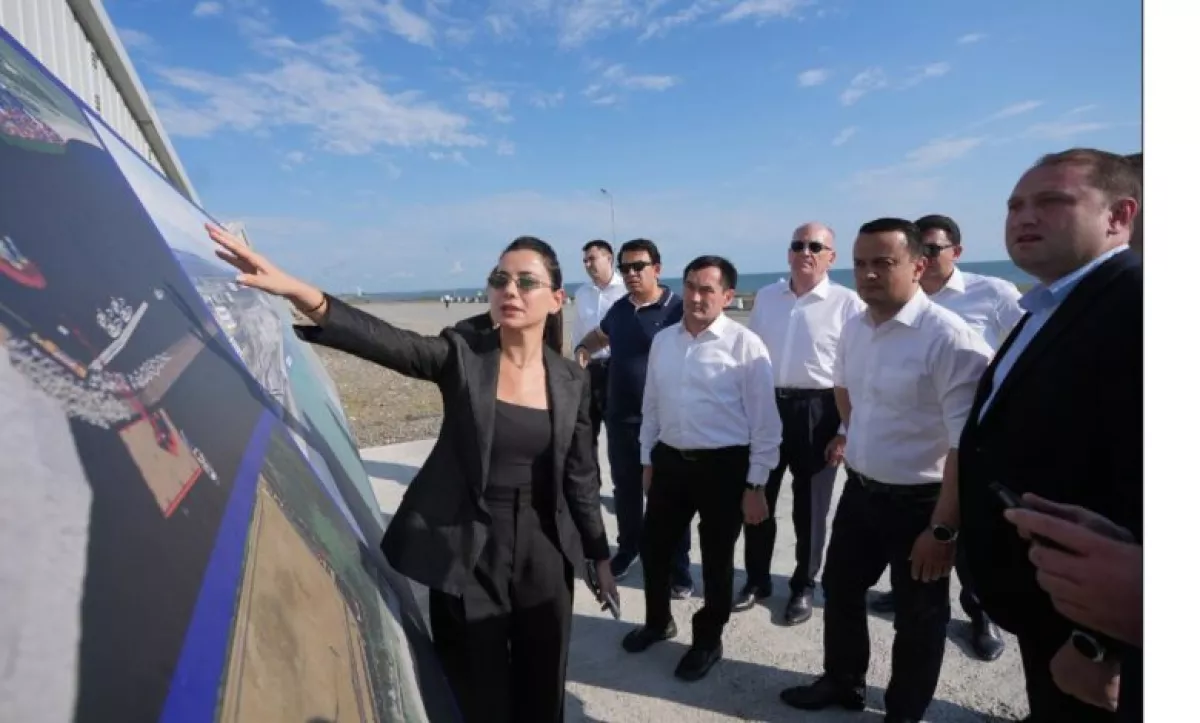
As for the participation of international companies, they will be involved solely in the operation of the terminal infrastructure, which has nothing to do with ownership rights," said Georgian Minister of Economy and Sustainable Development Mariam Kvrivishvili.
She also emphasised that the Georgian government particularly welcomes investment in the Port of Anaklia from countries participating in the Middle Corridor, including China, the Central Asian states, and Azerbaijan.
Meanwhile, the participation of international companies in the construction of the Anaklia deep-sea port remains the project's key geopolitical challenge. No investor is willing to commit substantial funds without guaranteed geopolitical influence over the future port.
When the Georgian government announced in May 2024 that a Chinese-Singaporean consortium, including China Communications Construction Company and China Harbour Investment, would acquire a 49 per cent stake in the Port of Anaklia, hopes rose that the project would finally move forward at a rapid pace. However, political instability in Georgia, coupled with opposition accusations that the ruling Georgian Dream party was abandoning its "pro-Western" and "pro-European" orientation in favour of a "pro-Russian" and "pro-Chinese" course, hindered the swift launch of construction and implementation of the project.
In addition, the United States and the European Union intensified pressure on Georgia in an effort to prevent China from gaining control over the deep-sea port project on the Black Sea coast, which would provide Beijing with the shortest maritime access to the Atlantic basin. The United States even imposed sanctions on entities seeking to acquire a stake in the Port of Anaklia. This was one of the reasons why the Georgian government delayed signing a formal agreement with the Chinese side on the transfer of a 49 per cent stake in the port.
According to information disclosed by former President of the National Bank of Georgia Roman Gotsiridze, during negotiations with Georgia's Minister of Economy and Sustainable Development Mariam Kvrivishvili in early 2026, the Chinese side demanded that the Anaklia Port be granted the status of a free economic zone.
Chinese representatives also insisted that the government provide financial guarantees to the investor in the event that the port failed to attract a sufficient volume of cargo traffic. Their list of demands further included halting any dredging work at Georgia's two other commercial ports—Batumi and Poti—as well as granting China the right of first refusal to purchase Tbilisi's stake in the Anaklia project should the Georgian state decide to sell it.
At the same time, Washington's dissatisfaction with Beijing's ambitions regarding the Port of Anaklia did not translate into any U.S. financing proposals for the project. This was acknowledged in April 2026 by Georgian Parliament Speaker Shalva Papuashvili.
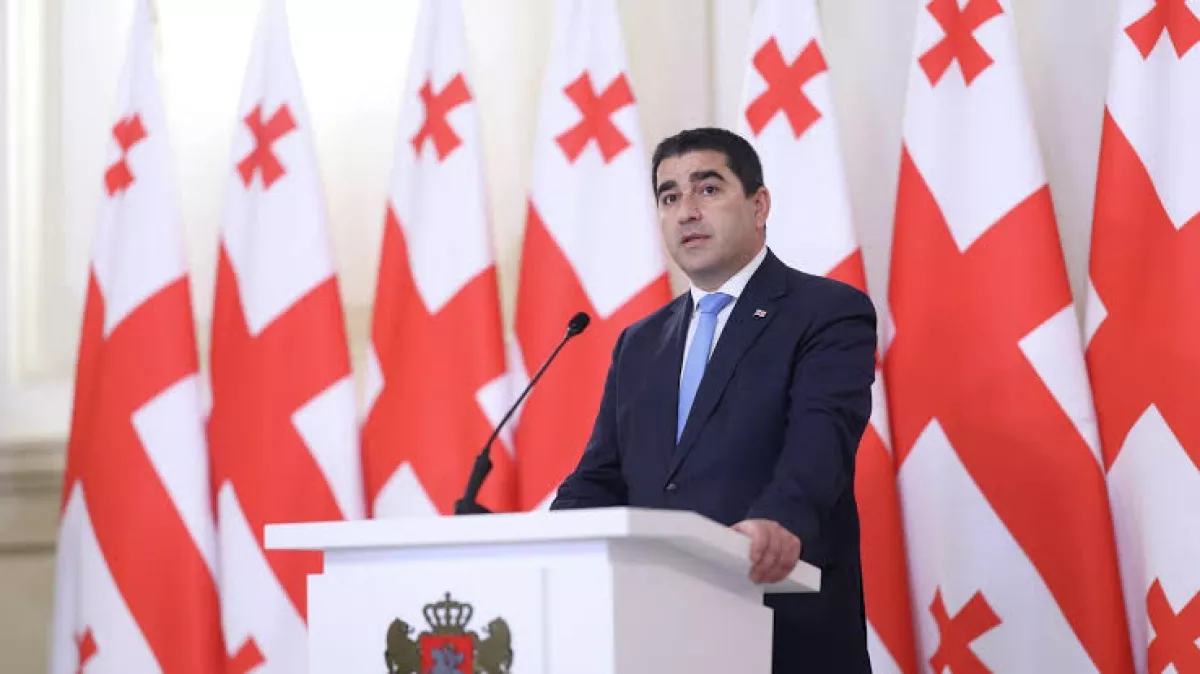
"Despite the Georgian government's determined efforts to attract not only American investors but also the support of the U.S. government in encouraging its businesses to invest in the Port of Anaklia, these efforts failed to generate interest on the American side," Papuashvili said in response to a journalist's question about U.S. interest in the Anaklia deep-sea port project.
The Georgian government's recent decision to develop the Port of Anaklia under the landlord model indicates that Tbilisi is unwilling to grant China a strategic foothold on the Black Sea under Beijing's proposed terms. At the same time, Chinese investors are still being invited to participate in the project, as the Georgian state lacks the financial resources needed to complete such a large-scale undertaking on its own.
The key question now is whether China will agree to the revised terms for participating in the construction of the Port of Anaklia, recognising that it is unlikely to achieve the level of control it originally sought. At the same time, Beijing may find that its primary concerns should be directed not at Tbilisi, but at Washington, whose pressure left the Georgian government with little room to accept China's original conditions.
Nevertheless, China continues to have a strong strategic need for efficient logistics along the Middle Corridor, a critical component of which is a deep-sea port capable of accommodating container vessels with a capacity of 15,000–24,000 TEU (twenty-foot equivalent units). It is unlikely that any country other than Georgia can offer Chinese partners the opportunities that the Port of Anaklia project is capable of providing.
Georgia's pro-Western opposition, which had previously criticised the ruling Georgian Dream party for pursuing a "pro-Chinese" policy with regard to the Port of Anaklia, might have been expected to welcome the government's latest decision to keep the port under state ownership. Instead, opposition politicians once again accused the government of effectively freezing the project and failing to secure an investor.

"What we heard were nothing more than abstract statements, with no concrete details. Moreover, this promise directly contradicts the government's own earlier declarations. Over the past ten years, they have failed to retain even a single strong international partner, yet now they claim they will simultaneously attract numerous countries and companies. Where are these companies? Where are these partners? In reality, it was this government that drove away Western investors and partners, undermined international confidence, stalled the project for years, and then placed its hopes on Chinese state-owned companies. Yet even in that direction, they failed to deliver a convincing and successful outcome for the country," said Irakli Kupradze, one of the leaders of the Lelo party.
It appears that precisely because the Georgian government is unwilling to surrender national sovereignty and state interests to a single geopolitical actor, the Anaklia port project will continue to face delays. At the same time, rushing to transfer a significant share of control to Brussels—as advocated by the country's pro-European opposition—could make it extremely difficult, if not impossible, to regain that control in the future.
Nor is it certain that Western investors would proceed with the construction of the Port of Anaklia even if pro-European forces were to come to power in Georgia. Given the current economic challenges, investors from the European Union may simply lack the financial capacity to undertake such a large-scale infrastructure project. Moreover, the EU has little incentive to use its own resources to facilitate the transportation of goods to European markets for its principal economic competitor—China.
By Vladimir Tskhvediani, Georgia, exclusively for Caliber.Az







 editor@caliber.az
 +994 55 444-88-98
 Азербайджан, Баку, ул. Низами, 203, Af Business House, 5-й этаж