










Azerbaijan at an economic turning point Between oil dependence and reform
Data from the first quarter of 2026 points to the presence of significant structural inertia in Azerbaijan’s economy. Overall GDP growth has slowed, driven primarily by a contraction in the oil and gas sector, while foreign trade activity has also declined. These negative trends are not new; in recent years, government policy has increasingly focused on reducing dependence on hydrocarbons.
Reforms aimed at developing the non-oil economy are ongoing, with an emphasis on producing competitive goods and services for international markets. If successfully implemented, this strategy could raise Azerbaijan’s GDP to around $150 billion by 2035, according to a report by the global consultancy Oliver Wyman Group.
The oil and gas sector and energy industry continue to serve as the backbone of the national economy. The high volatility of global hydrocarbon prices, along with declining oil production and exports in recent years, has contributed to a reduction in the trade surplus and a slowdown in overall industrial growth in Azerbaijan.
The depletion of the country’s oil reserves is an inevitable and natural process: in 2025, oil and gas condensate production decreased by 4.8 per cent year-on-year to 27.679 million tons, and it appears that the situation will only worsen in the medium term. According to expert forecasts, oil production is expected to reach just over 27.5 million tons in 2026, decline to 27.1 million tons in 2027, and further decrease to 26.6 million tons in 2028.
All these negative trends have been particularly evident in recent years, contributing to a noticeable slowdown in Azerbaijan’s economic growth, which stood at 1.1 per cent in 2023 and 1.4 per cent in 2025. Although the twofold increase in global oil prices in March 2026—triggered by the war in the Persian Gulf—has partially offset the country’s losses from declining oil production, overall, the first quarter of the year did not demonstrate any meaningful positive results in the development of the national economy.

According to data from the State Statistical Committee, in the first quarter of 2026 Azerbaijan’s total GDP, slightly exceeding 29.703 billion manats ($17.47 billion), decreased by 0.3 per cent. The situation in the oil and gas sector is even worse: during the reporting period, GDP in this sector declined by 1.2 per cent to approximately 8.531 billion manats ($5.02 billion). Despite the fact that the country’s non-oil GDP exceeded 21.171 billion manats ($12.45 billion) in the first quarter, its growth rate is close to a statistical margin of error—just 0.2 per cent.
The situation in foreign trade is also quite concerning: according to the State Customs Committee, during the reporting period the country’s foreign trade turnover in real terms decreased by 29.5 per cent, with exports falling by 6.8 per cent and imports dropping by as much as 51.9 per cent.
It is currently extremely difficult to make forecasts about what Azerbaijan’s economic dynamics will look like in the second quarter, and even more so by the end of 2026, especially taking into account the complex geopolitical situation in the world. The conflict in the Gulf is still ongoing, and the current situation, apparently, indicates that the Strait of Hormuz remains blocked for an indefinite period, which keeps global oil and fuel prices high. Thus, today the price of a barrel of domestic oil of the Azeri Light brand reached $118. It is also worth recalling that the “cut-off price” used in calculating oil revenues in Azerbaijan’s state budget for 2026 was reduced to $65, meaning that current oil prices are almost twice as high as the budget assumptions, which is certainly beneficial for Azerbaijan. If such a favorable external environment persists, it is quite possible that the forecast of the Azerbaijani Ministry of Economy for GDP growth at the level of 2.9 per cent will be achieved in 2026.
In any case, regardless of the situation on the global energy market, it is becoming increasingly clear in Azerbaijan that further development of the country based predominantly on its raw-material base carries significant risks. Unfortunately, today more than four-fifths of Azerbaijan’s exports still consist of oil and gas commodities, which indicates an urgent need to accelerate the transition from an energy-export model to a more diversified domestic economy.
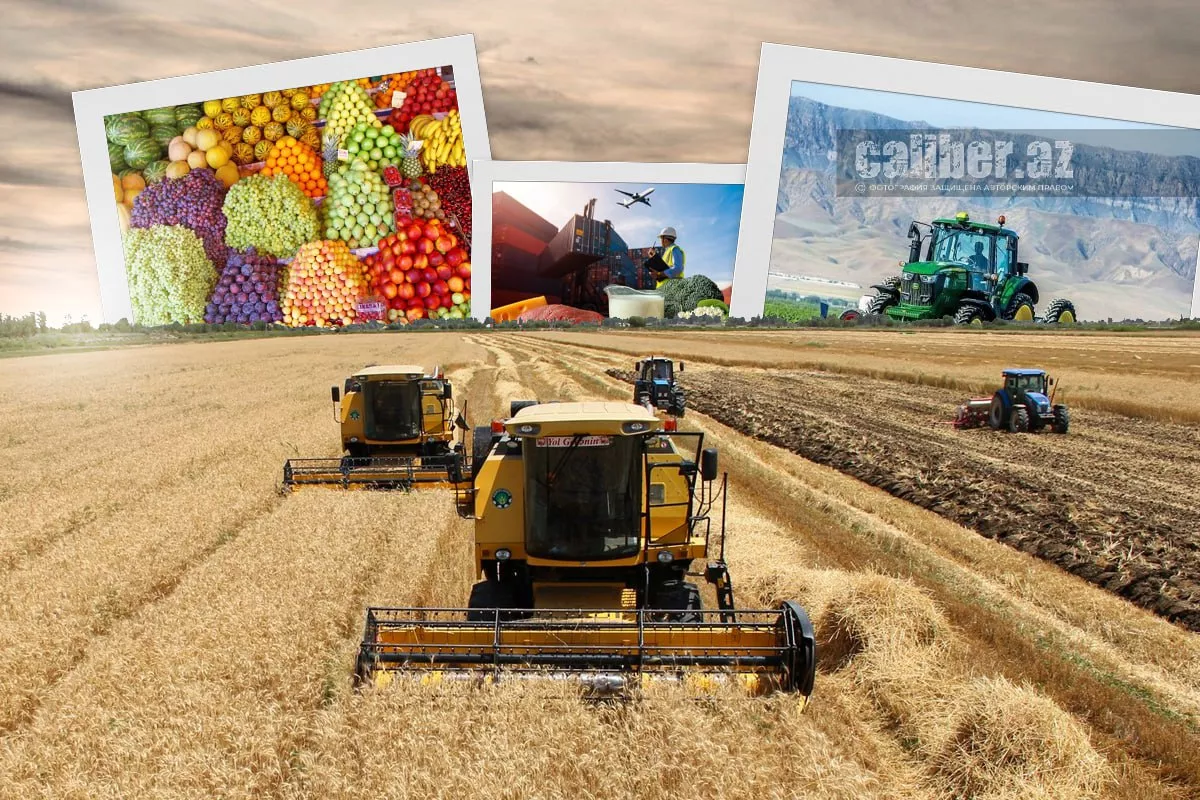
So far, the country has not achieved significant success in this direction. Thus, in 2025, Azerbaijan’s total non-oil exports, having increased by 8.1 per cent, reached $3.6 billion. A few years ago, the government set a target of raising total non-oil export volumes to $5.3 billion by the beginning of 2027. Overall, the weak export dynamics of non-oil sectors do not suggest that in the next two to three years this sector will be able to become an important source of foreign currency revenues, replacing declining commodity-based income.
Therefore, it is not surprising that, in terms of economic diversification and development dynamics, Azerbaijan lags behind its regional neighbors. Thus, according to Geostat, GDP growth in Georgia in January–February 2026 amounted to 8.4 per cent, while in Armenia, according to data from the Statistical Committee, the economic activity index increased by 7.4 per cent year-on-year for the reporting period.
In terms of GDP per capita, Georgia and Armenia have already reached levels of $10,800 and $10,400 respectively, while for Azerbaijan this indicator, according to the British Centre for Economics and Business Research (CEBR), came close to $7,365 in 2025.
In this regard, the dynamics of GDP in Central Asian countries is also quite indicative: in Kazakhstan this indicator amounted to 6 per cent in 2025, in Uzbekistan it is estimated by the World Bank at 7.7 per cent, and in Kyrgyzstan at as much as 11.1 per cent.
Neighboring countries in the South Caucasus and Central Asia, while actively developing trade, tourism, and transport, have also focused on light industry enterprises, ensuring the full processing of agricultural and other raw materials and the production of final goods with high added value. These countries did not reinvent the wheel, but simply adopted an economic model that was successfully tested in Japan and later proved effective in the Republic of Korea, China, Southeast Asian countries, the UAE, and others.

In recent years, the government of Azerbaijan has been attempting to overcome the inertia of development based predominantly on a raw-material economy, with the main focus of reforms aimed at stimulating the growth of non-oil production sectors. Agro-processing and non-oil manufacturing, the transport and logistics sector, “green” energy and energy efficiency, as well as the development of artificial intelligence (AI), the construction of data centers, and the digitalization of industry (Industry 4.0), including the petrochemical sector, have been identified as key drivers of sustainable economic growth in the country.
These directions are part of the new “Strategy for Socio-Economic Development for 2027–2030,” which is currently being finalized by the government of Azerbaijan. Within the framework of this strategic agenda, in the coming years it is planned to increase non-oil exports by 1.8 times, non-oil GDP by 1.3 times, and raise the share of the private sector in gross domestic product to 88 per cent.
If all the planned initiatives are implemented and the economy of Azerbaijan undergoes a planned transformation, the country’s GDP could reach $150 billion by 2035, according to a recently published report by the international consulting company Oliver Wyman Group.
The company’s analysts note that Azerbaijan’s economy is at a critical turning point and, thanks to its available resources, strategic location, and structural reforms, could double its GDP over the next decade, with the country having the potential to join the group of high-income economies.
To achieve this goal, Azerbaijan needs to move away from a commodity-based model toward the development of the services sector and high value-added petrochemical products, expand energy trading services, develop transit and logistics services, and actively enhance its tourism potential.







 editor@caliber.az
 +994 55 444-88-98
 Азербайджан, Баку, ул. Низами, 203, Af Business House, 5-й этаж