










Baku and Tashkent: A common past and a shared horizon Review by Teymur Atayev
Baku and Tashkent are consistently strengthening their alliance, turning it into one of the significant drivers of regional integration. Today, Azerbaijani-Uzbek cooperation extends beyond the economic and humanitarian spheres to encompass transport, energy, and international affairs, acquiring ever greater significance for the Eurasian space.
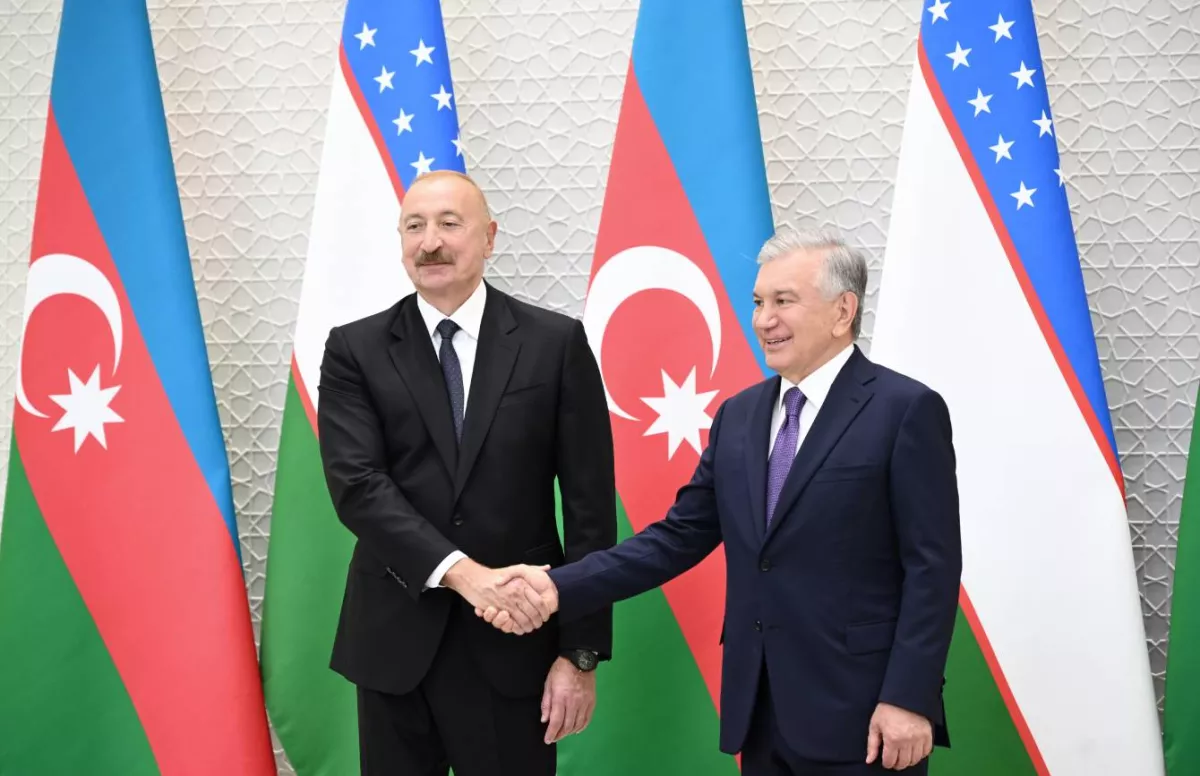
The current state visit of President Ilham Aliyev to Uzbekistan, during which the 4th Uzbek-Azerbaijani Interregional Forum, bringing together nearly 400 companies, has already taken place, is yet another confirmation of this trend. In parallel, the 3rd meeting of the Supreme Interstate Council of the two countries outlined key priorities for further developing bilateral cooperation.
As Uzbek President Shavkat Mirziyoyev stressed, it is important to continue close coordination between the two countries’ foreign ministries to promote common interests on regional and international platforms, reach a trade turnover of $1 billion, and deepen industrial cooperation, including through attracting funds from the joint investment company.
The transport agenda also occupied an important place in the talks. As part of the development of the Middle Corridor, the Uzbek president raised the issue of accelerating the launch of a joint fleet in the Caspian Sea, while also expressing interest in creating a separate Uzbek-Azerbaijani corridor with a single operator on the Caspian.
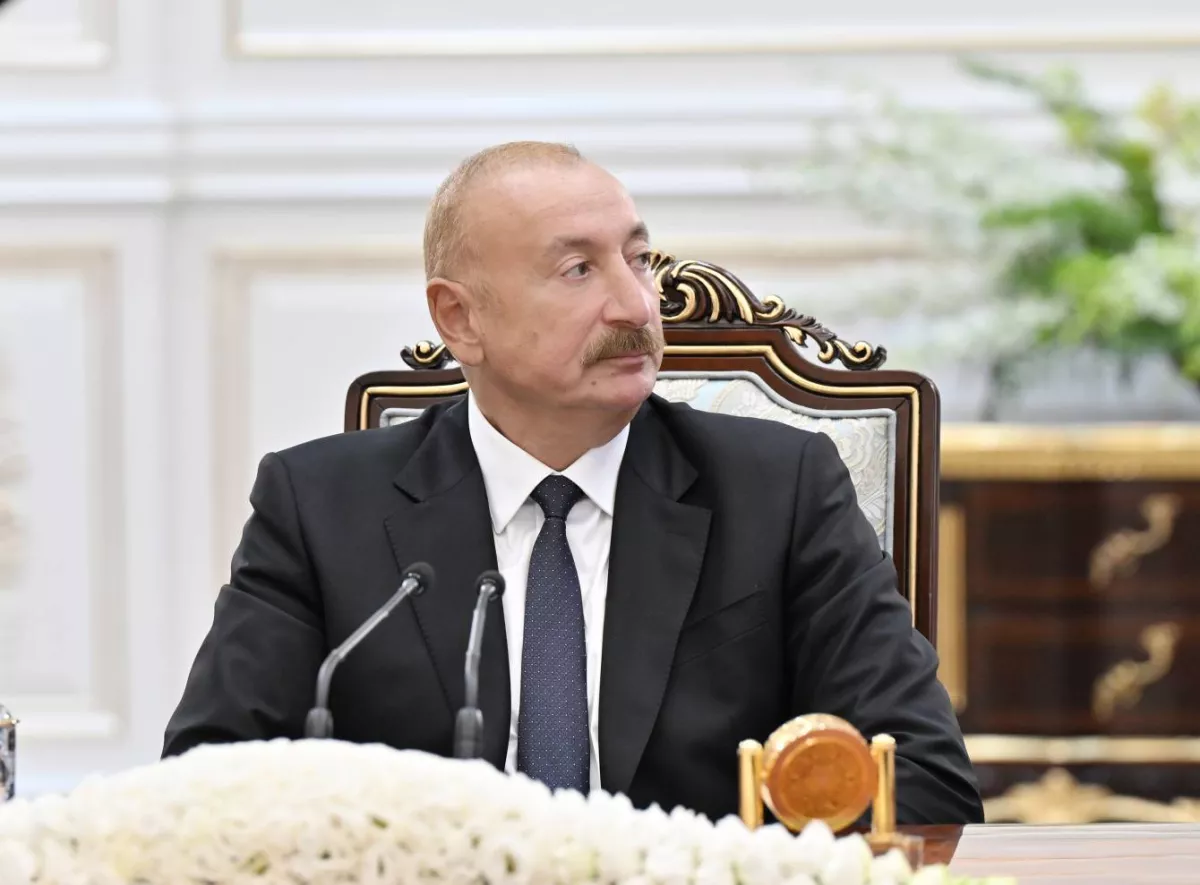
Azerbaijani President Ilham Aliyev noted the positive results achieved in the transport and transit sector, including an increase in the volume of cargo from Uzbekistan passing through Azerbaijan, and placed particular emphasis on accelerating the construction of a ferry for the brotherly country.
In addition, the head of state addressed the implementation of the Zangezur Corridor, describing the consideration of the Nakhchivan railway as part of Azerbaijan Railways as the basis of the conceptual approach to this initiative. According to him, this creates grounds for considering the establishment of an international consortium involving companies and countries interested in investing in the project, generating corresponding returns, and securing guaranteed transportation volumes along this route.
In this context, President Ilham Aliyev once again described the Zangezur Corridor as a “significant branch of the Middle Corridor.”
The transport dimension has become one of the key areas of the talks between the two heads of state, which was entirely expected. Having identified Baku some time ago as a bridge between Central Asia and Europe, President Mirziyoyev stressed that completing the development of logistics and energy corridors, many of which will run through Azerbaijan, would restore Central Asia’s role as a trade and economic hub between Asia and Europe.

At the same time, Uzbekistan’s leader described Azerbaijan’s accession as a full-fledged member of the Consultative Meeting of the Heads of State of Central Asia as a decision of historic significance that would “strengthen strategic connectivity between Central Asia and the South Caucasus and stability in the region.” The significance of this statement is particularly notable given that it was made in Mirziyoyev’s address to the parliament and people of Uzbekistan.
Overall, the Middle Corridor has now become one of the most important dimensions not only of relations between Tashkent and Baku, but also of the broader regional and global agenda, particularly cooperation between Central Asia and the South Caucasus. This was also reflected in the inclusion of a provision on jointly supporting the Coordination Platform of the Trans-Caspian International Transport Route (TITR) and critical infrastructure projects along the Middle Corridor in the declaration adopted at the first EU–Central Asia summit.
This emphasis is also reflected in the Astana Declaration adopted at the 2nd Central Asia–China Summit, as well as in the Joint Statement of Intent on Economic Cooperation signed following the C5+US summit. The latter highlighted the strategic importance of the TITR (Middle Corridor) in terms of its prospective connection with TRIPP, aimed at ensuring the secure movement of goods, information, and energy across Eurasia.
President Mirziyoyev, reiterating the importance of the Middle Corridor within the framework of the Organisation of Turkic States (OTS), also spoke about the prospects of connecting it with the China–Kyrgyzstan–Uzbekistan railway currently under construction and, potentially, with the Trans-Afghan Corridor. According to him, this would contribute to “the creation of a multi-sector strategic system of main routes across the vast region.”
The presidents of Azerbaijan and Uzbekistan also devoted considerable attention to the cultural and humanitarian dimension of bilateral relations. President Shavkat Mirziyoyev stressed the importance of carefully preserving and further enriching the rich heritage of the two countries’ shared centuries-old history and the closeness of their cultural values, which underpin their alliance. President Ilham Aliyev noted that Uzbekistan was the first country to provide practical assistance to Azerbaijan’s liberated territories at the initiative of its president, constructing the Mirza Ulugbek School.
This humanitarian dimension has long been an integral part of Azerbaijani-Uzbek cooperation. In 2022, Heydar Aliyev Square was inaugurated in Tashkent, and three years later, the leaders of the two countries took part in laying the foundation stone for the Uzbekistan Park in Baku — a large-scale cultural and recreational project designed in the shape of a map of the country.
Both countries regularly host Days of Culture, Azerbaijani-Uzbek media forums, and NGO cooperation forums. At the first Forum of Rectors of Uzbekistan and Azerbaijan, more than 60 agreements were signed to develop joint educational programmes. Among the documents signed the day before, including the Treaty of Eternal Friendship, are also agreements on cooperation in the fields of culture and tourism.
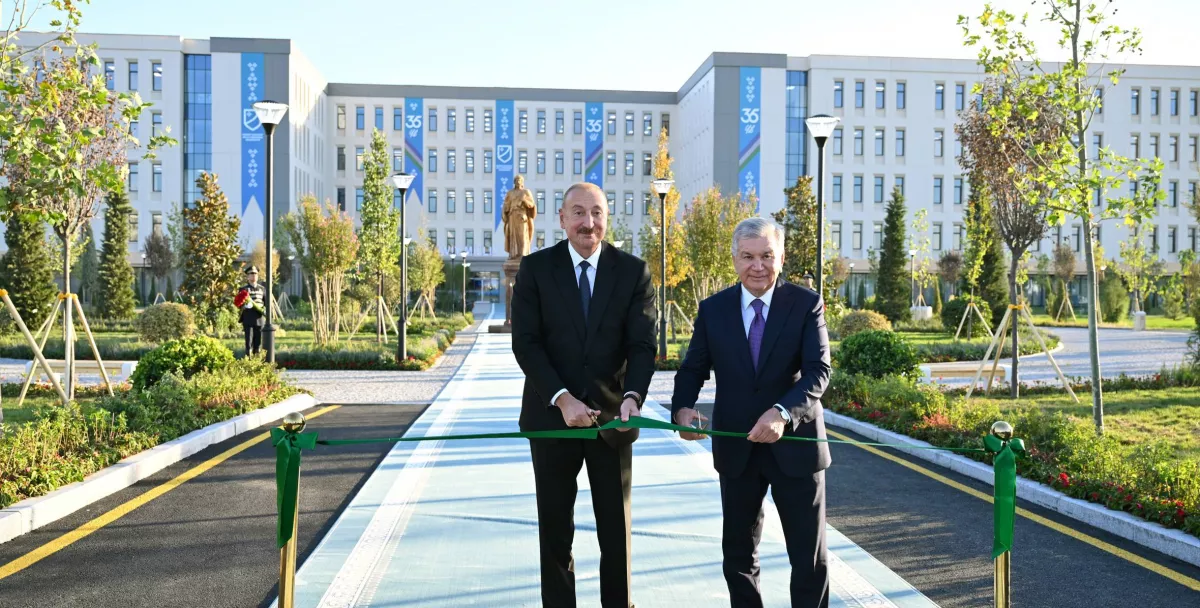
The current visit has given this area a new practical dimension: the leaders of the two countries laid the foundation stone for Azerbaijan Park in New Tashkent and attended the opening ceremony of the Nizami Ganjavi National Pedagogical University in Tashkent.
Undoubtedly, these cultural and humanitarian developments demonstrate the unique level of mutual understanding between Tashkent and Baku, which, in turn, feeds into and strengthens the geostrategic dimension of bilateral relations. In a joint statement to the press, President Ilham Aliyev described Central Asia and Azerbaijan as a single geopolitical and geoeconomic region with enormous growth potential.
The head of state presented this as a crucial international context, noting that “The close interaction between our countries, Uzbekistan and Azerbaijan, will largely determine the overall positive development dynamics of this vast region, which I would even call a newly emerging and already sufficiently integrated region.” Ilham Aliyev endorsed Shavkat Mirziyoyev’s assessment of bilateral relations as being of an “unprecedented level,” stressing that cooperation covers all areas, including energy, transport, investment projects, the automotive industry, and other sectors.
In this context, he highlighted the entry of a leading Azerbaijani bank into the Uzbek market, SOCAR’s operations in Uzbekistan, as well as the development of projects for the exploration of oil and gas resources.
President Ilham Aliyev noted that the two countries have a solid spiritual and material foundation for achieving full mutual understanding. In this regard, tribute must be paid to National Leader Heydar Aliyev, who as early as 1997 noted the importance of the document aimed at further strengthening friendship and partnership between Uzbekistan and Azerbaijan.
Today, together with all the documents signed over the course of the year, it provides a solid foundation for successful cooperation between the two countries. There is therefore no doubt that the agreements reached will be implemented, contributing to the further development of bilateral cooperation and bringing substantial benefits to both Tashkent and Baku.
On all the issues discussed, the two sides share a complete convergence of views and unity of positions, providing the basis for a reliable partnership that both states need “taking into account our common regional interests and common positions in international affairs.” This assessment is now receiving tangible confirmation.
Nearly three decades later, it has become clear how far-sighted the National Leader’s words were. It is no coincidence that during the opening ceremony of Heydar Aliyev Square in 2022, President Shavkat Mirziyoyev highlighted Heydar Aliyev’s enormous contribution to the development of friendly relations between the two countries and the historical ties between their peoples.
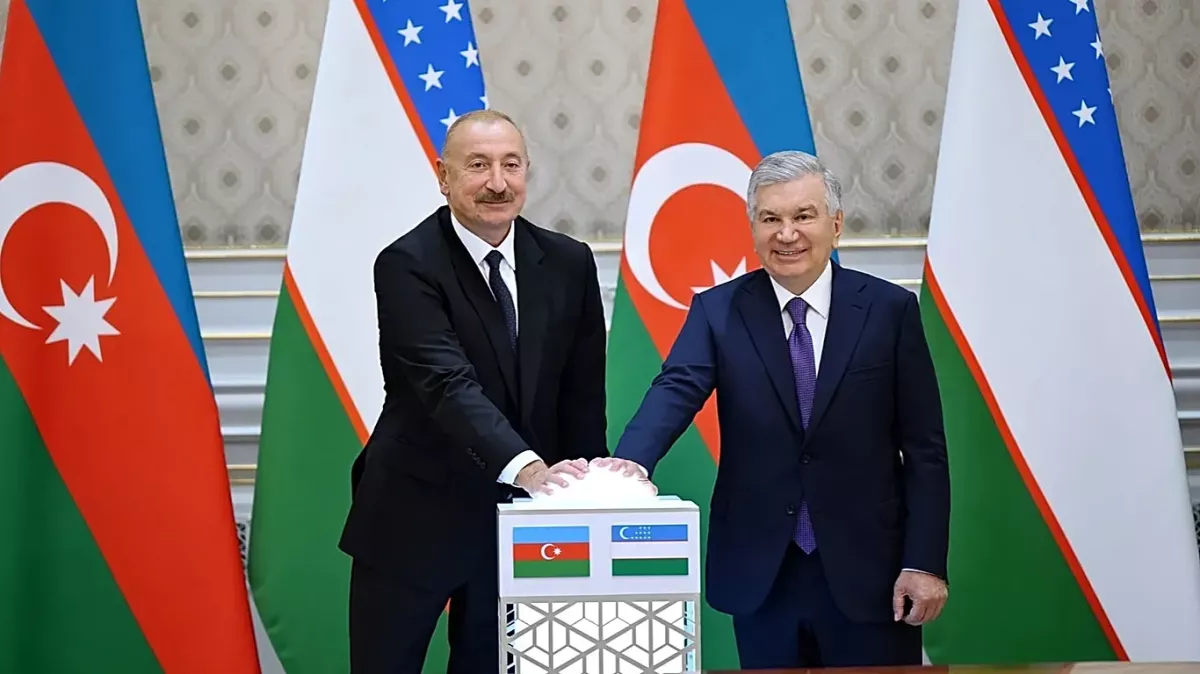
As part of President Ilham Aliyev’s current visit to Uzbekistan, the leaders of the two countries took part online in the opening ceremony and foundation-laying ceremony for Azerbaijani projects being implemented in the country.
The visit also featured award ceremonies: Shavkat Mirziyoyev presented the head of state with the Order of Friendship of the highest degree, while Ilham Aliyev presented the Order of Heydar Aliyev to the President of Uzbekistan.
These events provided yet another testament to the closeness between Baku and Tashkent, both on the regional stage and within the broader international agenda. Assessing President Aliyev’s visit as historic, the Uzbek leader described the foundation of this unity as “a shared civilizational code, common historical roots, centuries-old friendship, enduring spiritual values, and similar cultures and traditions.”
It is precisely this profound bond, he said, that makes relations between the two countries solid and resilient to external circumstances.
Developing this assessment, President Mirziyoyev noted that Tashkent and Baku have established themselves as key drivers of interregional integration. According to him, Azerbaijan’s accession to the Consultative Meeting format has opened up new opportunities for expanding economic and humanitarian cooperation between the two regions: “Through joint efforts, we are effectively shaping a new geoeconomic reality—a unified, self-sufficient macro-region with powerful potential for joint development.”
Thus, Azerbaijani-Uzbek relations have acquired a qualitatively new dimension, becoming a factor of security, stability, and economic development not only for the two countries but for the entire Eurasian space. At the same time, Baku and Tashkent are coordinating their diplomatic efforts and strengthening their allied dialogue at key international platforms, including the UN, the Non-Aligned Movement, the Organisation of Turkic States, the Organisation of Islamic Cooperation, and other structures.
The special nature of the relationship was also reflected in the decision by Azerbaijan and Uzbekistan to jointly host the 2027 FIFA U-20 World Cup, marking the beginning of a major tournament being organised under FIFA auspices by the two countries.
As we can see, the confident joint advance of Tashkent and Baku is becoming one of the most important trends in contemporary geopolitics.







 editor@caliber.az
 +994 55 444-88-98
 Азербайджан, Баку, ул. Низами, 203, Af Business House, 5-й этаж