










Bridges, tunnels, and corridors: Azerbaijan’s new transport map Caliber.Az review
About a quarter of a century ago, Azerbaijan embarked on large-scale construction of international-standard highways, linking Baku with the borders of Russia, Iran, and Georgia. Following this, interdistrict and local roads across the country were modernised. Over the past 20 years, more than 21,000 km of roads have been newly built or reconstructed. In the last five years, the focus has shifted to the Karabakh region, where highways, bridges, tunnels, and other road infrastructure totalling over 3,700 km are under development.
Summing up 2025 during an extended meeting of the collegium of the State Agency of Azerbaijan Automobile Roads (AAYDA), Chairman Saleh Mammadov highlighted that around 11,000 km of roads were built in Azerbaijan between 2015 and 2025 alone.
Today, Azerbaijan is ahead of many countries in the Caspian region in implementing large-scale transport infrastructure projects. Thanks to a visionary state policy, around a quarter of a century ago, a decision was made to allocate part of the country’s oil revenues to developing the transport sector, giving momentum to the creation of key transit arteries towards Georgia, Russia, and Iran.
This includes the modernisation of the strategic 508-km “Silk Road” route from Baku to the state border with Georgia. Currently, a 130-km section from Ganja to Gazakh and the Georgian border is being expanded to four lanes, with the project in its final stages. Seven years ago, a four-lane highway connecting Alat, Astara, and the state border with Iran, stretching 204 km, was commissioned. In 2023, a new 152-km high-speed highway from the settlement of Haji Zeynalabdin Taghiyev to Guba and the Russian border was opened to traffic.
“In the last two decades, 21,000 kilometres of highways have been built and repaired across the country,” said President Ilham Aliyev at the beginning of this year during a government meeting on transport issues.
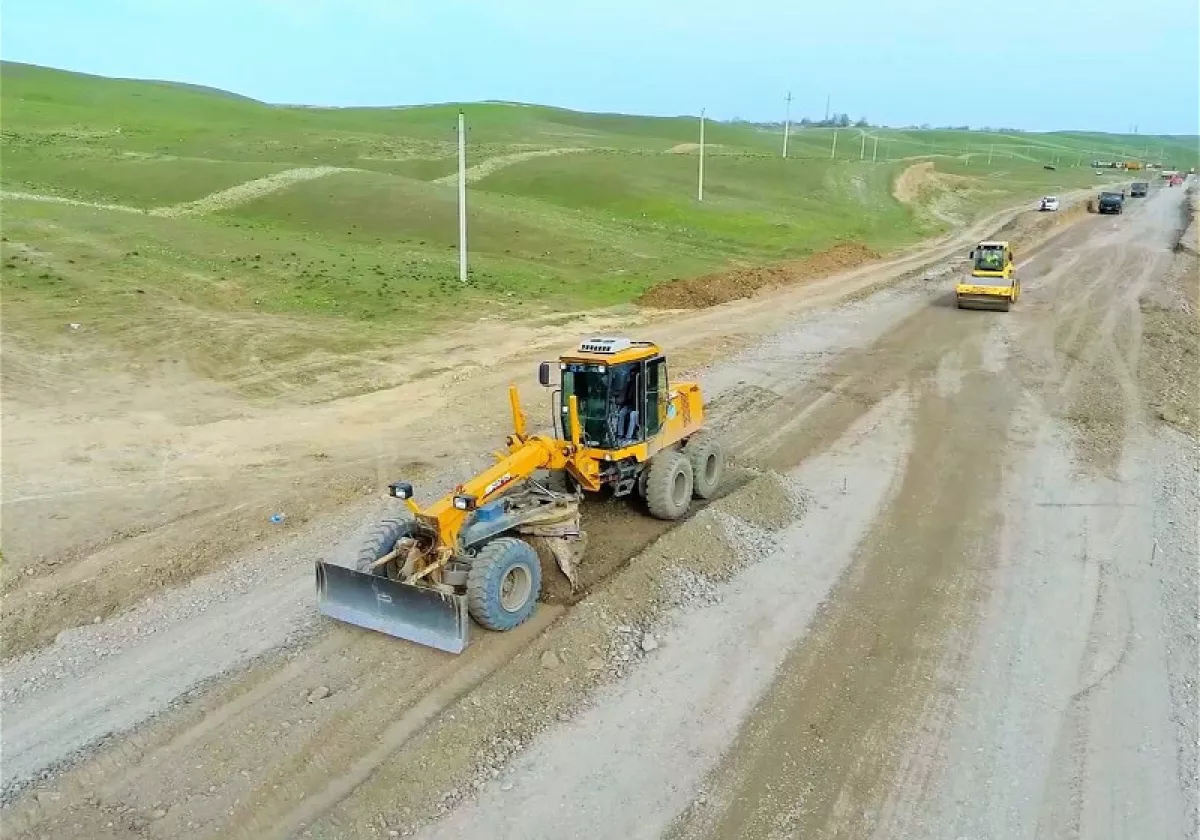
The pace and scale of transport infrastructure development in the country are indeed impressive. In particular, Azerbaijan has repeatedly been recognised in reports by international financial organisations, rating agencies, and leading global media for its road network development. Several years ago, for instance, in a World Economic Forum report, Azerbaijan ranked 27th globally in road network quality, surpassing many post-Soviet countries and even some highly developed nations. Since then, these indicators have only improved.
“Today, Azerbaijan ranks first among CIS countries and 24th out of 141 countries worldwide in road infrastructure quality,” reported Saleh Mammadov on December 25.
And this is hardly surprising, as more than half of all road construction and repair work carried out in Azerbaijan over the past quarter-century took place between 2015 and 2025. In particular, in the last decade alone, the State Agency has commissioned nearly 10,827 km of roads, avenues, and streets, including in Baku, where 129 new bridges, 40 overpasses, 8 road tunnels, and 52 underground and above-ground pedestrian crossings were built. Notably, this intensive work continued throughout 2025: according to the Agency, construction and repair activities covered a total of 440.7 km of highways, avenues, and streets, including 110.8 km of national significance and 153.1 km of local roads.
Over the past five years, the focus of road construction has shifted to the territories liberated from occupation. Immediately after the 44-day Patriotic War, rapid construction of 44 roads of various categories has been underway in the Karabakh and East Zangezur economic regions. Alongside large-scale highway projects, 47 tunnels, 447 bridges, 16 viaducts, and other road infrastructure are being developed, with a total current length exceeding 3,720 km.
Significantly, alongside local companies and AAYDA divisions, around two dozen Turkish contractors have been involved in these projects. The advantages of Azerbaijani-Turkish cooperation in road construction include the application of international expertise, state-of-the-art technologies, and modern materials, which help optimise and accelerate construction, ensure the strength and durability of engineering structures, and are particularly important given the complex geology of the mountainous landscapes in the Karabakh region.
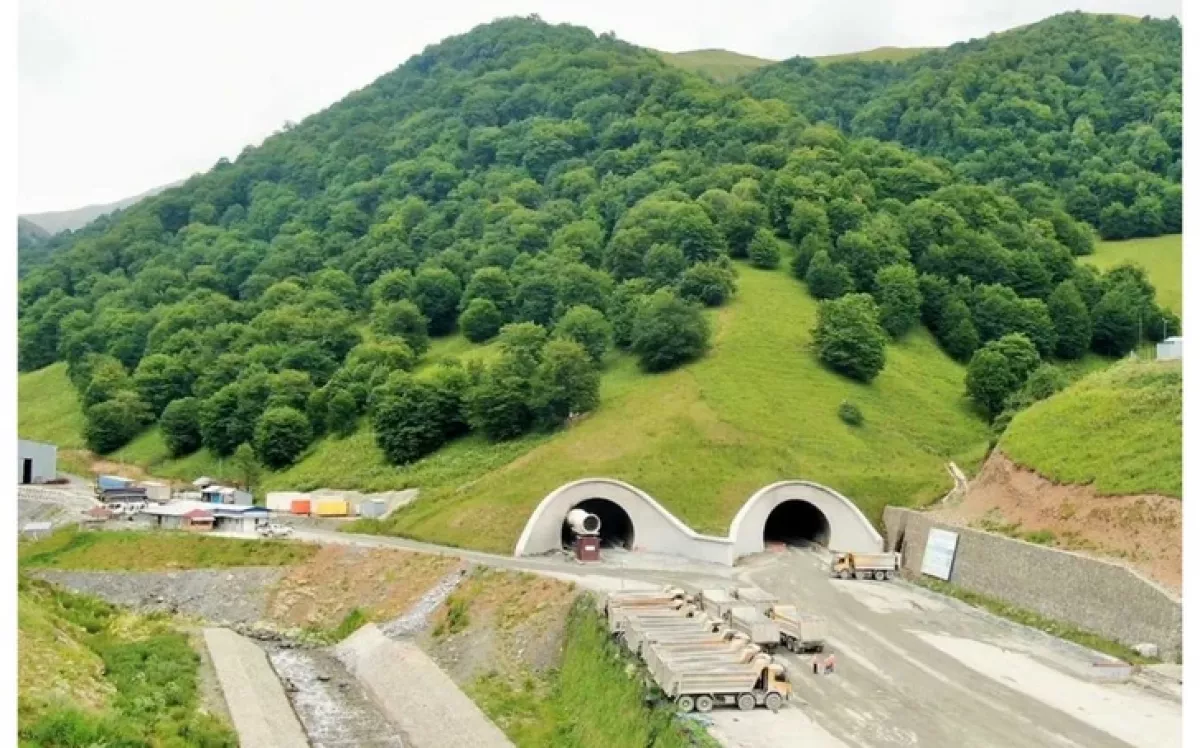
Three major projects — the Barda-Aghdam road, the Hadrut-Fuzuli road, and the “Victory Road” — were completed two years ago. Construction is also nearing completion on a crucial component of the Middle Corridor: the 123.5-km, first-class highway Goris-Jabrayil-Zangilan-Aghband passing through the East Zangazur Economic Region. Part of this road consists of six lanes, while the remainder consists of four lanes. As of November this year, 95% of the construction work was completed, with the full project expected to be finished by mid-2026.
Overall, in recent years, the Agency has accelerated work on other key transport arteries in the Karabakh region. In particular, a two-lane road connecting Sugovushan–Sarsang Reservoir–Gozlukorpu–Kalbajar, stretching 77.6 km, is under construction. Several other roads are being reconstructed and expanded, including Aghdara–Aghdam (35.5 km); the road linking the 40th kilometre of the Barda–Aghdam highway to the settlement of Asgaran (18 km); and the Shusha–Lachin route (41 km).
At the same time, last year, earthworks began on roads including Aghdam–Asgaran–Khojaly–Khankendi–Shusha (34 km), Tartar–Aghdara (24.2 km), and Fuzuli–Khojavend–Aghdam (55.7 km). All these projects are part of the plan for implementing the first State Programme of the “Great Return” to the territories of Azerbaijan liberated from occupation.
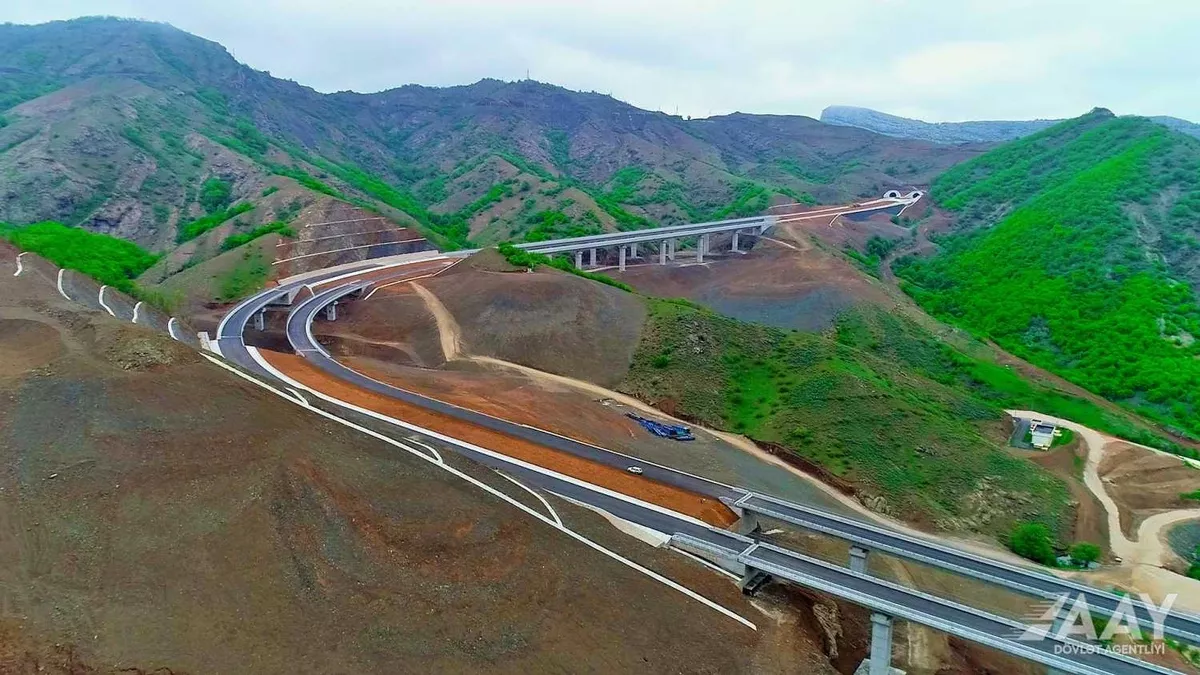
Another large-scale and technically challenging infrastructure project being implemented in the Karabakh and East Zangezur economic regions is the construction of the high-mountain Toghanali–Kalbajar–Istisu highway, stretching 82 km. The project consists of two sections: Toghanali–Kalbajar (56 km) and Kalbajar–Istisu (26 km). A key segment of this road passes through the Murovdag Ridge, starting at the 13.5 km mark, where the elevation rises from 1,700 to 3,250 metres above sea level.
To ensure safe operation of the highway during winter, underground communications are being completed beneath the Murovdag Ridge. This 11.7-km, four-lane tunnel is recognised as one of the longest in the world: it ranks 18th globally in length, 5th in Europe, and 1st among CIS countries. The project also includes four additional tunnels with a total length of 2,636 metres. Overall, most of the tunnel construction work, including excavation, reinforced concrete, and other technical operations, has already been completed.
Multibillion-dollar investments in developing the road network in Karabakh are a key condition for enabling former displaced residents to return to their homes in the newly developed cities and villages, establishing industrial and agricultural clusters, and setting up export-oriented production.
In particular, the highways of the future Zangezur Corridor contribute to diversifying the “West–East” transport vector and enhance Azerbaijan’s substantial transport potential, making it well-suited to meet new challenges in global trade. This potential is of strong interest to Central Asian countries, as well as China, Türkiye, and European Union states.







 editor@caliber.az
 +994 55 444-88-98
 Азербайджан, Баку, ул. Низами, 203, Af Business House, 5-й этаж