










China tightens the ring around Taiwan Rising tensions in the Asia-Pacific
Tensions are rising in the Asia-Pacific region (APR), with what observers describe as a “temperature increase.” China has launched new military drills around the island of Taiwan, describing them as a warning to separatist forces.
According to China’s People’s Liberation Army (PLA) Eastern Theater Command, the exercises include testing readiness for naval and air combat, blockading ports and strategic areas, and practising strikes against ground targets. State broadcaster CCTV reported that the main focus is the “blockade” of the key ports of Keelung and Kaohsiung.
China has deployed fighter jets, bombers, drones, and long-range missiles. PLA spokesperson Shi Yi stated that “This exercise serves as a serious warning to 'Taiwan independence' separatist forces and external interfering forces.”
The manoeuvres, dubbed Justice Mission 2025—the second-largest exercises of their kind this year—began shortly after a major arms deal between the separatist island and the United States worth $11.1 billion. The show of force is primarily aimed at Washington, as it is the United States that has long been central to Beijing’s confrontation over Taiwan.
At one point, the United States successfully positioned Taiwan as a crucial element of global security in the Pacific, integrating it into the system of island chains that effectively block Beijing’s access—so to speak—to open operational maritime space.
Beyond this geopolitical significance, the island also holds exceptional strategic value for Washington due to its leadership in the production of semiconductors critical to both industry and defence. Until recently, the alliance between the United States and the rebellious island included yet another factor: demonstrations of America’s commitment to democratic values worldwide. However, with Trump’s arrival in office and his articulated policy of flexible realism, this factor has become far less important—something that, nevertheless, does not weaken but rather reinforces the role of the remaining factors.
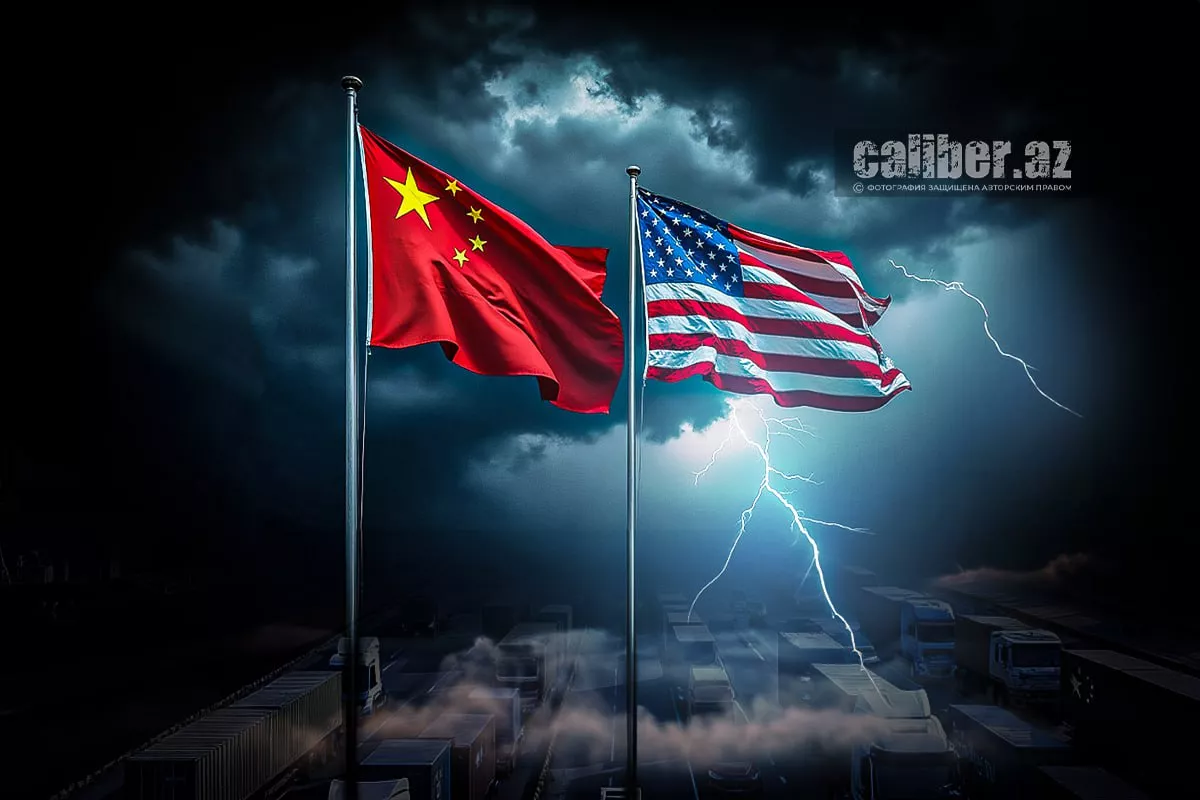
Washington, while de jure recognising only mainland China, has de facto turned the rebellious Taiwan into its ally by providing it with military assistance. For a long time, the White House adhered to the principle of strategic ambiguity, under which the United States neither confirms nor denies whether it would intervene militarily should China attempt to retake Taiwan by force. This approach was intended to deter both Beijing from launching a military operation against the island and Taiwan itself from declaring independence, thereby reducing the risk of conflict.
However, as China has grown stronger and has increasingly articulated its goal of reunification with the island, the United States has taken steps aimed at demonstrating its readiness to prevent a forceful resolution of the Taiwan issue. One need only recall the scandalous visit to Taipei by then Speaker of the House of Representatives Nancy Pelosi during the Biden administration. Donald Trump avoids such overtly escalatory moves, yet it appears that he has delegated this role to a US ally—Japan.
It is no coincidence that the PLA’s latest exercises coincided with a sharpening of Beijing’s rhetoric in response to blunt statements by Japanese Prime Minister Sanae Takaichi about a possible military response by Tokyo “to a Chinese attack on Taiwan.” Notably, Japan’s heightened activity on the Taiwan issue has occurred in parallel with the release of the new US National Security Strategy, which designates Japan as one of Washington’s key partners in containing China.
Returning from geopolitics to the exercises themselves, it is important to emphasise the extraordinary speed with which they are being conducted. Analysts note that China is increasingly blurring the line between drills and preparations for a military operation, seeking to reduce the reaction time available to the United States and its allies. “China is becoming increasingly adept at launching sudden exercises, making the situation particularly dangerous for Taiwan,” a Taiwan Security Monitor expert observes.
According to experts, Beijing is seeking to “strike without crossing the threshold of escalation.” Commentators note that China is likely monitoring the US response in order to adjust future PLA operations and to demonstrate its readiness to block external interference—particularly from Japan. Another factor frequently cited is the impact on the island’s domestic political situation, where the opposition criticises the separatist authorities for excessive militarisation and for increasing the risk of conflict with Beijing.
However high the stakes may rise in the struggle over Taiwan, the prevailing view is that a full-scale military confrontation remains a distant prospect. Still, as recent developments suggest, Beijing is inclined to exploit the element of surprise—meaning its next moves may well outpace all prevailing expectations.







 editor@caliber.az
 +994 55 444-88-98
 Азербайджан, Баку, ул. Низами, 203, Af Business House, 5-й этаж