










Defence—or the best defence? Inside Trump’s new National Security Strategy
"After the end of the Cold War, American foreign policy elites convinced themselves that permanent American domination of the entire world was in the best interests of our country. Yet the affairs of other countries are our concern only if their activities directly threaten our interests" — these lines from the introduction to the newly published U.S. National Security Strategy, issued by the White House, succinctly capture the overall meaning and tone of the document. The Strategy defines the country’s foreign policy course for the coming years.
The strategy, which sets the political priorities of Donald Trump’s administration, articulates an updated philosophy of American power. “America First” now transforms from an electoral slogan into the foundation of state doctrine.
Peace as a declared value
From its very first chapters, the document positions the U.S. under President Trump as a power striving for peace. “President Trump has cemented his legacy as The President of Peace. In addition to the remarkable success achieved during his first term with the historic Abraham Accords, President Trump has leveraged his dealmaking ability to secure unprecedented peace in eight conflicts throughout the world over the course of just eight months of his second term. He negotiated peace between Cambodia and Thailand, Kosovo and Serbia, the DRC and Rwanda, Pakistan and India, Israel and Iran, Egypt and Ethiopia, Armenia and Azerbaijan, and ended the war in Gaza with all living hostages returned to their families,” the Strategy states.
From globalism to “flexible realism”
One of the main ideas of the 28-page document is the U.S. abandonment of the role of global guardian and the shift toward a model of mutually beneficial relations. The U.S. no longer intends to bear the “burden of defending” weaker allies. Washington offers its partners—especially in Europe and Africa—a framework based on equal exchange and shared responsibility.
This reorientation effectively marks the end of the era of unilateral leadership, which Trump calls the mistake of the elites who believed in globalism and “free trade.” The new course represents a kind of 21st-century realism: trade and alliances—yes, but without ideological pressure or attempts to impose American political standards on other countries.
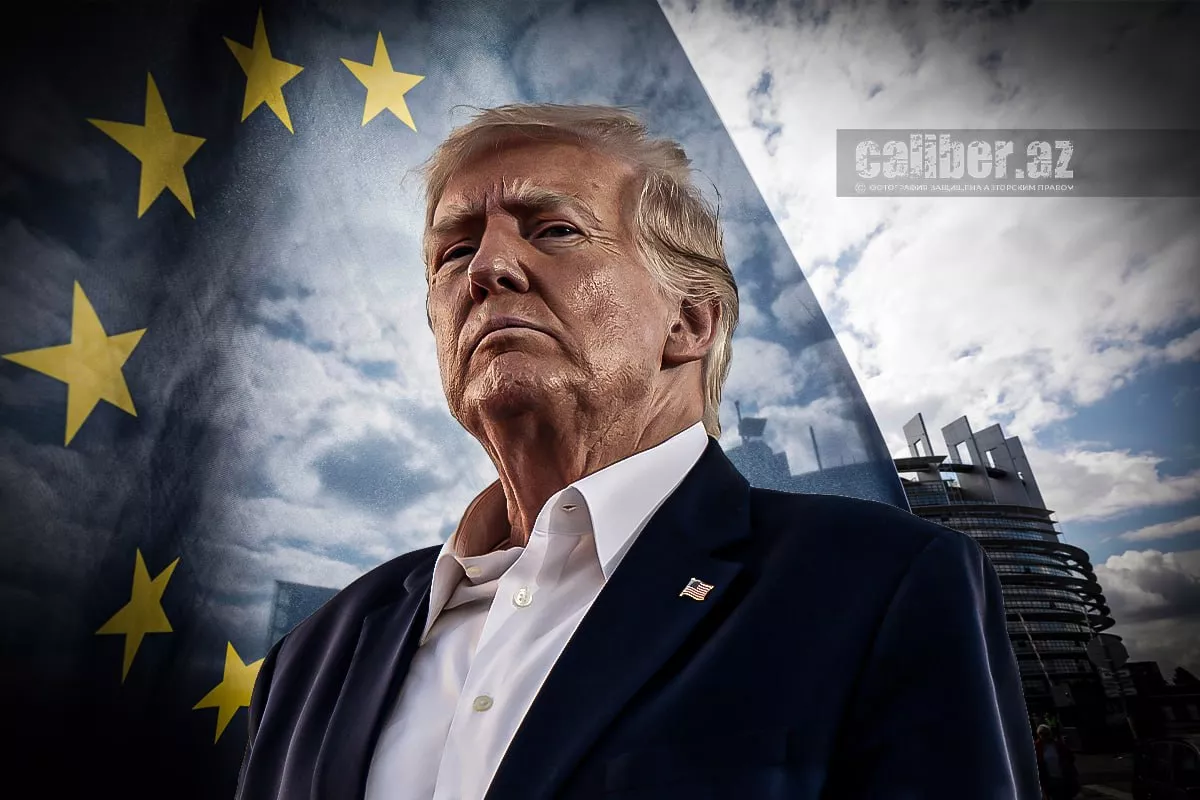
The document refers to this approach as “flexible realism”: the U.S. is ready to maintain good relations with states whose political systems differ from America’s, while “like-minded friends” are gently encouraged to uphold democratic principles. This is diplomacy based not on lectures, but on benefits and power.
The domestic front
The domestic section of the strategy is built on the thesis that national security is not only about the military and borders, but also about the cultural resilience of society. Immigration is framed as an existential challenge: “Who a country admits into its borders—in what numbers and from where—will inevitably define the future of that nation.” From this perspective, immigration policy becomes a tool to preserve the “spiritual and cultural health” of the nation. The document also enshrines a course toward full border control and stricter immigration rules. This aligns directly with the MAGA programme—“Make America Great Again”—which views demographic and cultural stability as the foundation of national power.
Physical security is ensured through army modernisation and the creation of the “Golden Dome”—a new missile defence system. The military is expected to remain the most technologically advanced and combat-ready in the world, with the economy serving as its material backbone.
Return to the Monroe Doctrine
One of the most symbolic points of the new strategy is the “revival of the Monroe Doctrine”—a concept first proclaimed in 1823 by then-U.S. President James Monroe. At the time, the U.S. declared the Western Hemisphere its sphere of influence, off-limits to European interference.
Now the White House is returning to this principle in the “Trump Corollary to the Monroe Doctrine.” “After years of neglect, the United States will reassert and enforce the Monroe Doctrine to restore American preeminence in the Western Hemisphere, and to protect our homeland and our access to key geographies throughout the region,” the document states.
In doing so, America reasserts itself as the unquestioned leader of the Western Hemisphere, effectively reserving the right to intervene in neighbouring countries’ affairs if needed to protect its interests. This entails increased activity in Latin America and the Caribbean, combating drug cartels and “hostile foreign incursion,” and strengthening control over migration flows and maritime routes.
Europe in the crosshairs
No region receives as sharp criticism in the U.S. National Security Strategy as Europe. The Trump administration accuses European elites of political self-destruction, an identity crisis, and abandonment of traditional values. Immigration policy is identified as a source of conflict and cultural erosion.
The document states that Europe has lost confidence and fears acting independently, even though its combined “hard power” exceeds Russia’s in almost every respect—except for nuclear capabilities.
Washington promises to “help Europe correct its current trajectory”—to support the revival of the European spirit and cultivate “resistance” to the course leading the continent toward decline. In this context, “patriotic European parties” are mentioned positively—an obvious signal of support for traditionalist forces.
At the same time, the U.S. emphasises that Europe remains a strategic ally. Its weakening would endanger American interests, so Washington’s goal is a strong, independent Europe capable of sharing responsibility for defence. NATO, according to the strategy, must redistribute the burden: “The days of the United States propping up the entire world order like Atlas are over.”
Ukraine and Russia
The war in Ukraine is seen as part of the broader European dynamic. The strategy calls for an urgent end to hostilities—not only for the sake of peace but also to stabilise European economies and prevent further escalation. The U.S. intends to participate in diplomatic efforts to restore strategic stability between Russia and Europe and to ensure the postwar recovery of Ukraine as a viable state.
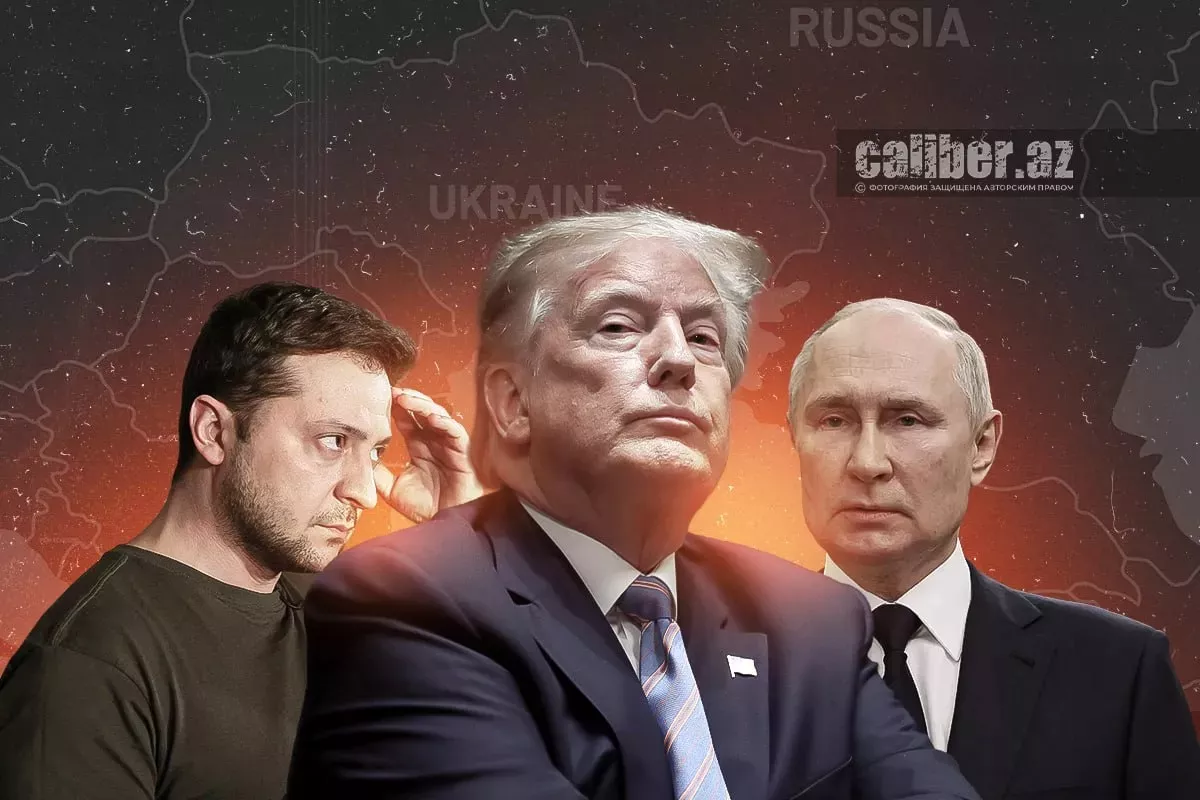
In the new version of the document, Russia is no longer listed as a “direct threat”, and there is a call for engagement with Moscow on issues of strategic stability.
The Indo-Pacific Region and China
In the Asia section, the strategy sets the goal to “win the economic future, prevent military confrontation.” Containing China is declared a key priority, with emphasis on alliances and the balance of power. The U.S. is strengthening ties with India, Australia, and Japan through the Quad format, viewing the Indo-Pacific region as “the foundation for long-term economic vitality.”
Taiwan remains a test of U.S. policy resilience: Washington reaffirms its commitment to the One China principle, while stating the need to maintain “military superiority” and its readiness to defend the island against aggression.
A new Middle East
The Middle East section of the strategy features unexpectedly peaceful rhetoric. The Trump administration highlights that its efforts helped achieve ceasefires in the Gaza Strip and secure the return of hostages, and that the key goal is not control but preventing conflicts from escalating into global wars.
The document also emphasises the desire to avoid “‘forever wars’ that bogged us down in that region at great cost.” “The key to successful relations with the Middle East is accepting the region, its leaders, and its nations as they are while working together on areas of common interest,” the new National Security Strategy states.
It also notes the need to contain Iran, ensure Israel’s security, and maintain freedom of navigation in the Strait of Hormuz and the Red Sea. At the same time, Washington increasingly views the region as a field for investment rather than military presence: energy, nuclear industry, artificial intelligence, and defence technologies are new areas of American interest.
The age of power: concluding thoughts
“Peace through strength” is another formula presented as foundational in the new strategy. The U.S. remains convinced that its political system, economy, military, and technology sector are the best in the world. The goal of the strategy is simple yet ambitious: to combine these advantages in order to “make our country even greater than it ever has been.”
Although the new U.S. National Security Doctrine is focused not on external expansion but on protecting American interests, in practice it is clear that the United States will not isolate itself from international affairs—if only because U.S. interests extend far beyond its borders.
The potential problem is that this rhetorical shift may result in a change in the mechanisms used to achieve objectives, but not in the objectives themselves. This, in turn, means that non-interference in other countries’ affairs remains a highly conditional principle. The strategic shift implies (and this can already be observed) a reduction in spending on global influence projects, such as international institutions, and, more broadly, on globalisation. At the same time, this does not mean that Washington will not pursue its goals with other countries by different means. The recent bombing of Iran and the current military-political pressure on Venezuela serve as vivid illustrations of this.







 editor@caliber.az
 +994 55 444-88-98
 Азербайджан, Баку, ул. Низами, 203, Af Business House, 5-й этаж