










EU without makeup: corruption, scandals and double standards President Aliyev’s message to Brussels
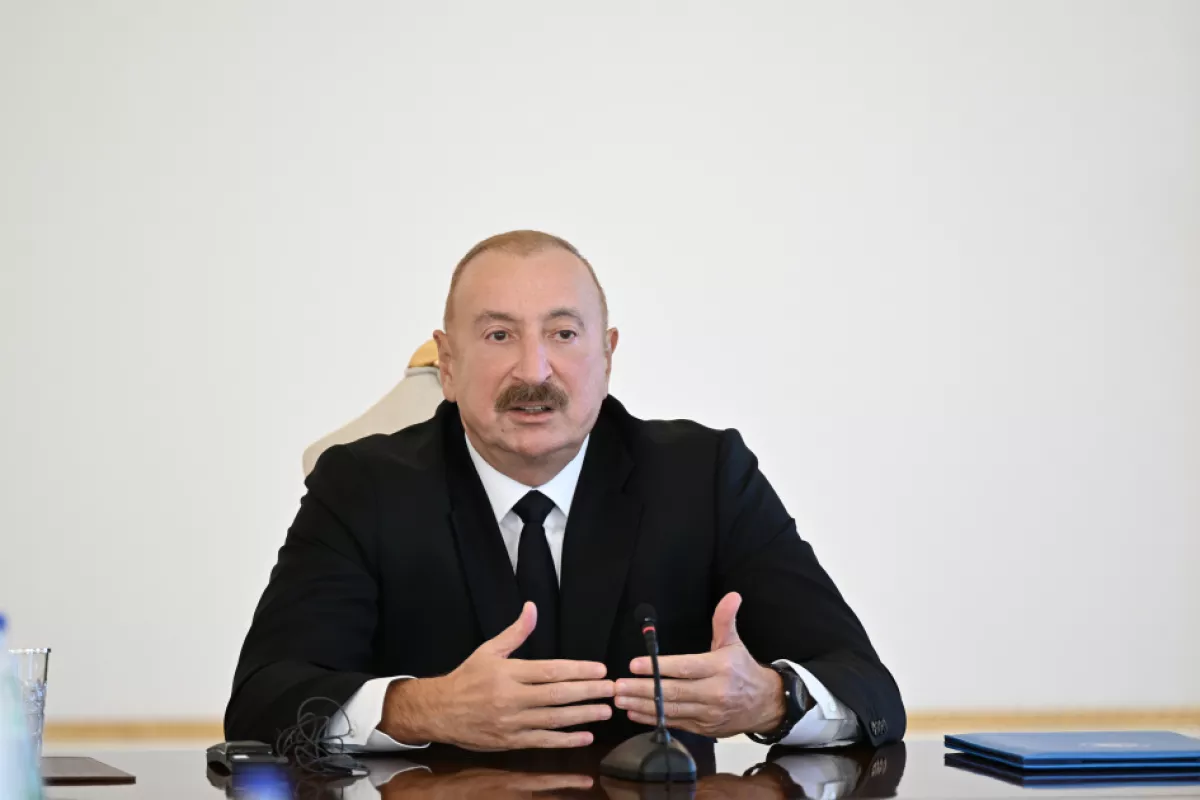
At a meeting with participants of international conferences held in Baku on September 15, President Ilham Aliyev articulated what has long been discussed in Azerbaijani society.
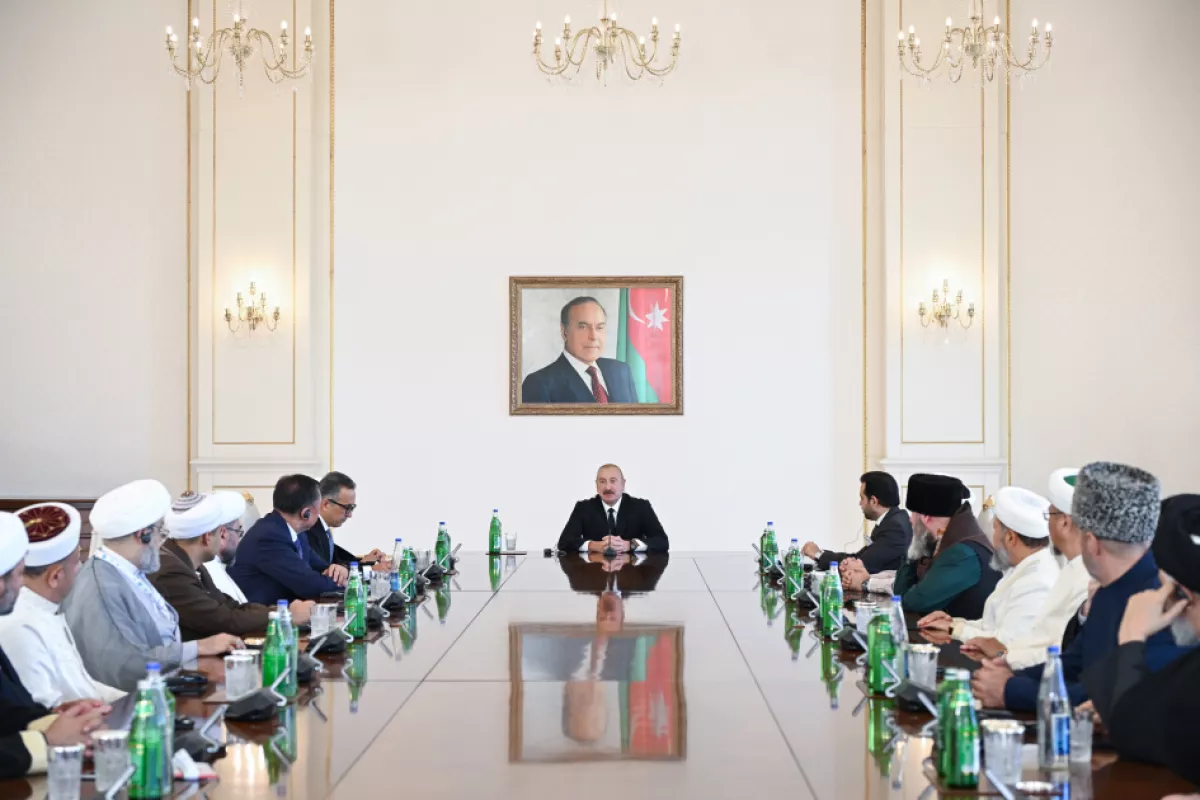
More specifically, the Azerbaijani president pointed to the practice of double standards: while sanctions are imposed around the world, sometimes with little justification, Armenia — which kept 20 per cent of Azerbaijan’s territory under occupation for nearly three decades and pursued a state policy of ethnic cleansing against the Azerbaijani people, as well as urbicide and ecocide — was never subjected to any such restrictions. At the same time, the Azerbaijani leader sharply criticised European institutions, describing the European Parliament as a “nest of corrupt figures” and recalling high-profile corruption scandals that the European justice system had preferred to hush up.
Four resolutions and zero effect
In 1993, the UN Security Council adopted Resolutions 822, 853, 874 and 884, calling for the immediate, complete and unconditional withdrawal of occupying forces from Azerbaijani territories. Armenia’s actions were described as an unlawful use of force contrary to the Charter of the United Nations and international law. However, despite the fact that UN Security Council decisions are legally binding, these resolutions were ignored for 27 years, even as the international community imposed sanctions on dozens of countries over grounds that were far less serious.
Meanwhile, the OSCE Minsk Group, established specifically to resolve the conflict, operated unsuccessfully for nearly three decades. Its co-chairs — Russia, the United States and France — maintained a format in which endless negotiations effectively replaced a genuine settlement, while the status quo suited everyone except the Azerbaijani state, whose territorial integrity had been gravely violated, and more than one million Azerbaijanis who became refugees and internally displaced persons as a result of Armenian aggression. This inevitably raises the question of why the Minsk Group’s inaction was considered sufficient fulfilment of its international mandate.
The decisive development came later — following Azerbaijan’s victory in the 2020 Patriotic War and the September 2023 anti-terror operation, as a result of which Azerbaijan fully restored its sovereignty, dismantled the separatist structures and detained their leaders.
The West’s reaction was swift. The Council of Europe, which had remained in a state of perpetual inertia, adopted a sanctions-based approach just four months after September 2023 — not against the side that had occupied another country’s territory for 30 years, but against the side to which those lands legally belong. The credentials of the Azerbaijani delegation to the Parliamentary Assembly of the Council of Europe (PACE) were called into question, after which Baku suspended its participation in the Assembly’s work.
Thirty years of occupation — zero sanctions. The restoration of internationally recognised borders — sanctions within four months. There is hardly any other explanation for such a sequence than political selectivity.
High-profile scandals and “buried” cases
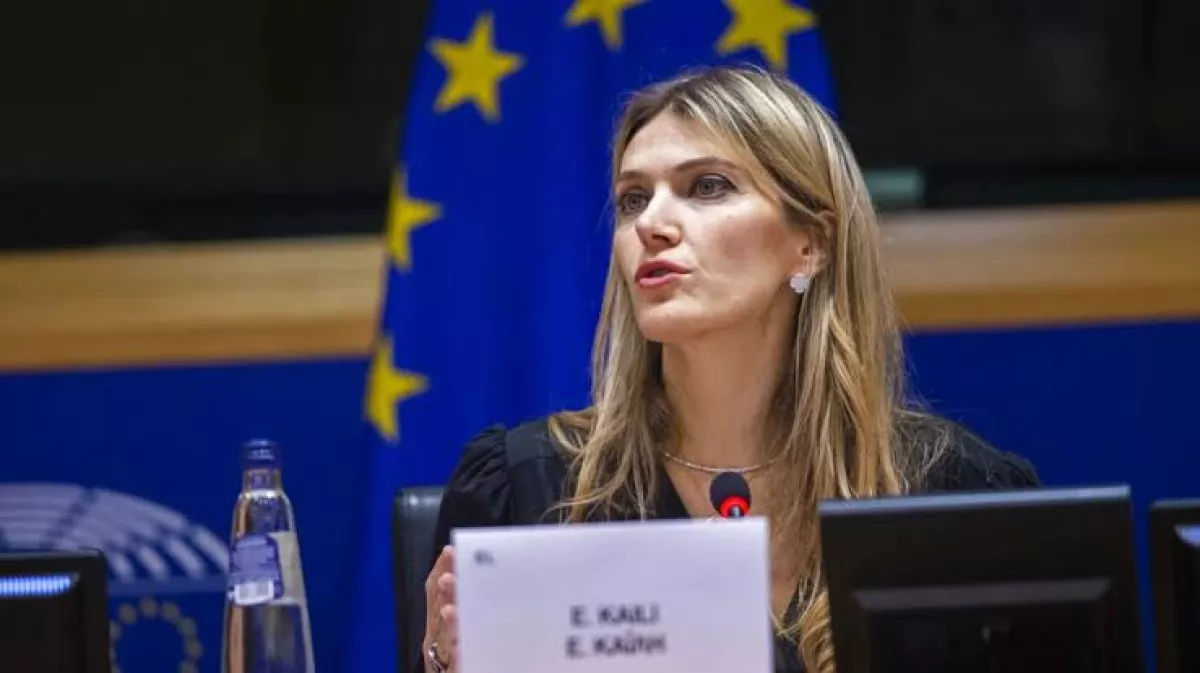
The second part of President Ilham Aliyev’s remarks concerned an institutional crisis within the European Union itself. Let us consider the facts, since they serve as the main argument. In December 2022, Belgian police carried out more than 20 searches in Belgium and Italy. Hundreds of thousands of euros in cash were found in private homes and a suitcase at a hotel in Brussels. Two days later, the European Parliament voted by 625 to one to strip Eva Kaili of her position as a vice-president. She was charged with participation in a criminal organisation, corruption and money laundering; she spent just over four months in Haren prison before being transferred to house arrest.
What followed was precisely what Ilham Aliyev was referring to. Years later, the corruption scandal had still not reached trial, while the investigation that began with the high-profile raids gradually petered out. Key figures successively withdrew from the case: first investigating judge Michel Claise, after a family connection between members of his circle and people involved in the case came to light; then the judge who replaced him; and subsequently the prosecutor. The main suspect entered into a plea deal with prosecutors and was released.
Thus, a system equipped with all the necessary tools and evidence failed, over more than three years, to bring to trial a case involving seized cash. The practical result remains the same.
Not an isolated incident
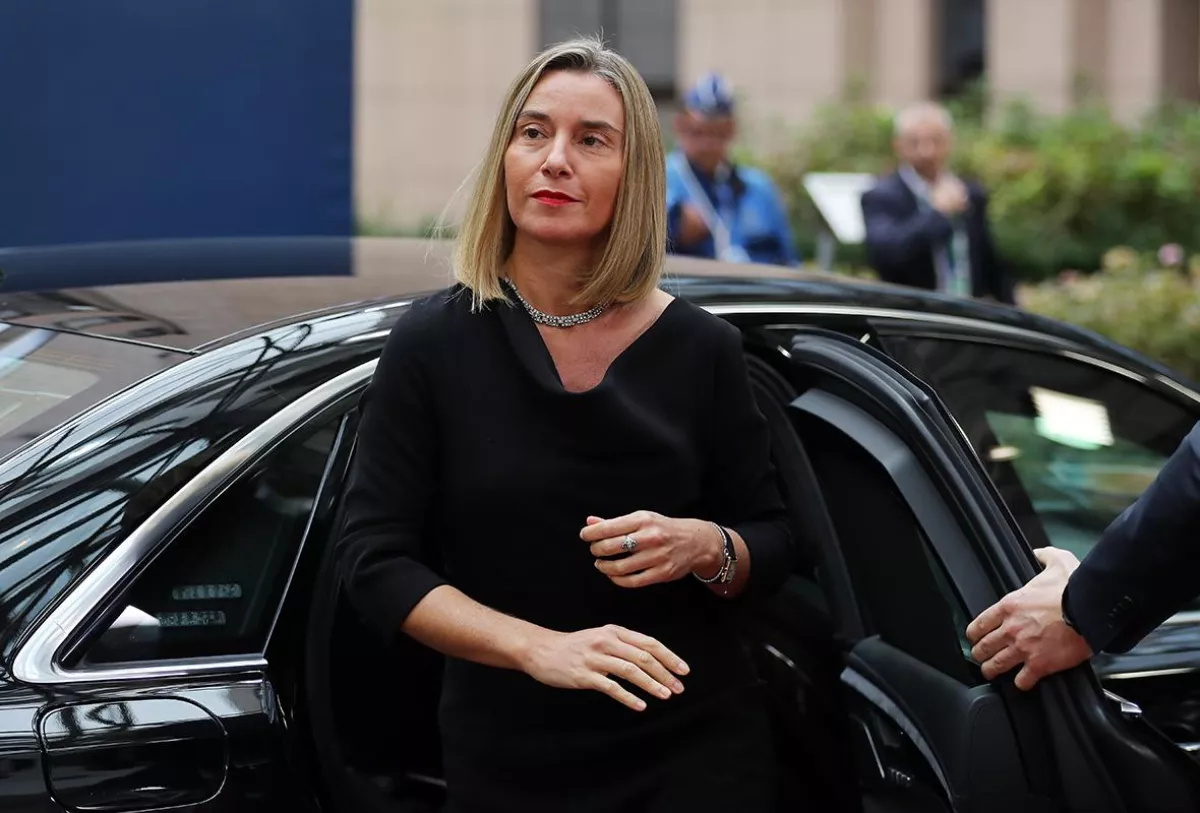
If the story were limited to Kaili, it could perhaps be dismissed as a procedural failure. However, on December 2, 2025, Belgian police, acting at the request of the European Public Prosecutor’s Office, conducted new searches — this time at the headquarters of the European External Action Service (EEAS) in Brussels and at the College of Europe in Bruges.
Among those detained was Federica Mogherini, the former EU High Representative for Foreign Affairs and head of the College of Europe, as well as Stefano Sannino, who served as Secretary-General of the EEAS from 2021 to 2024. The investigation concerns irregularities in the tendering process for a diplomatic training programme; those involved face allegations of fraud in public procurement, corruption, conflicts of interest and disclosure of professional secrets. Mogherini was forced to step down as rector.
As we can see, this is no longer a matter of ordinary EU officials, but of someone who spent five years shaping the European Union’s entire foreign policy, including its policy towards the South Caucasus.
The loss of moral authority
This is where President Ilham Aliyev’s statements come together. An institution that spent years adopting resolutions on the situation in Azerbaijan proved unable to investigate its own corruption case despite the existence of direct evidence; a structure that lectured Baku on the “rule of law” failed to uphold it on its own territory and when it came to its own leadership.
This is not an attack on European values as such. It is a strong argument against the right of specific institutions to act as their exclusive arbiters. Moral authority is not granted for life or inherited along with a position — it is earned by demonstrating the ability to apply proclaimed rules to oneself. Neither in the case of the Armenian occupation nor in the case of the cash-filled suitcases has such a demonstration been forthcoming.
The Azerbaijani president linked this selectivity to a biased attitude towards the Muslim world. This is the strongest claim in his remarks, but it is closely connected to the broader issue of selectivity. When one side occupies another country’s land for 30 years without facing consequences, while the other immediately comes under pressure for liberating its own territory, explanations in terms of geopolitical and cultural prejudices begin to emerge not from ideology, but from simple observation.
Practical conclusions
Azerbaijan is not asking European institutions for special treatment — it is calling for the same rules to be applied equally to everyone. At the same time, Baku has already drawn its own objective conclusion and is now building relations with Europe on a pragmatic bilateral basis — with Berlin, Rome and Budapest, as well as with Brussels as an economic and energy partner, without relying on politicised platforms. Azerbaijan remains a reliable energy supplier, participates in European Political Community summits and will host the next EPC summit in 2028. This is the substantive answer: not pointless disputes over declarations, but working where tangible results are measured.
European institutions, for their part, still have to resolve their own internal crisis. Until the Kaili and Mogherini cases receive a transparent legal resolution, any new “mentoring” resolution they adopt is likely to be viewed in a straightforward manner — as a document produced by an institution that has failed to put its own house in order.







 editor@caliber.az
 +994 55 444-88-98
 Азербайджан, Баку, ул. Низами, 203, Af Business House, 5-й этаж