










From the Alps to the Caspian: Baku and Bern deepen economic ties Overview by Khazar Akhundov
Azerbaijan and Switzerland have developed strong and productive trade and investment ties over the years, with Switzerland recently becoming the fourth-largest destination for Azerbaijani non-oil exports. Azerbaijan is also expanding its supplies of energy resources and gold to the Swiss market, while subsidiaries of the State Oil Company of Azerbaijan (SOCAR) maintain an active presence in Switzerland’s fuel retail and oil trading sectors.
Against this backdrop, Azerbaijan’s Minister of Economy Mikayil Jabbarov recently visited Switzerland, where Bern hosted the 10th meeting of the Azerbaijan-Switzerland Joint Intergovernmental Commission on Trade and Economic Cooperation, alongside a business forum. The meetings brought together officials and business representatives to discuss priority areas for investment, trade and economic cooperation between the two countries.
Since diplomatic relations were established between Baku and Bern in January 1992, Azerbaijan and Switzerland have steadily developed mutually beneficial economic and business ties. Their bilateral legal framework now comprises around three dozen agreements and other documents, including the Intergovernmental Agreement on Trade and Economic Cooperation signed in 2000, the Agreement on the Promotion and Reciprocal Protection of Investments signed in 2006, and the Energy Agreement concluded in 2007, which significantly expanded Azerbaijan’s hydrocarbon supplies to the Swiss market.
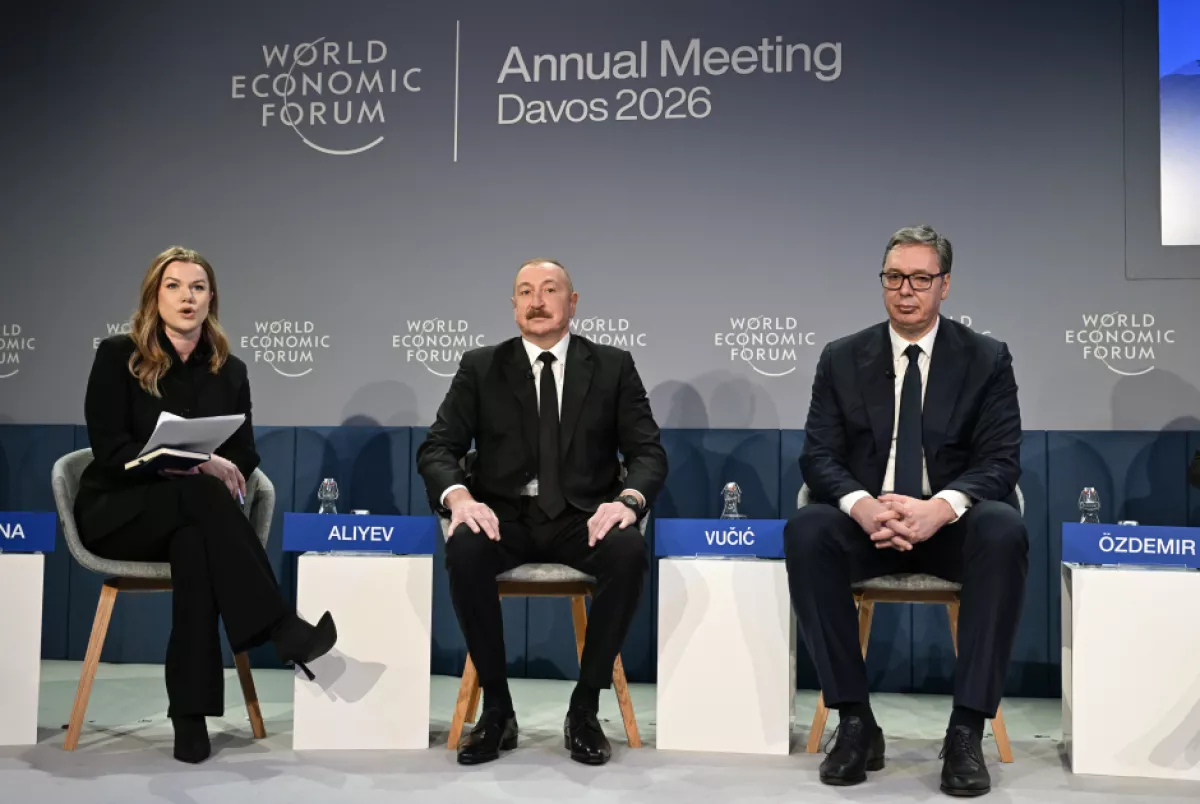
For many years, the World Economic Forum in Davos has also served as an important international platform for Azerbaijan to promote its economic agenda. On the sidelines of the WEF, President Ilham Aliyev has held dozens of meetings with the heads of leading global corporations, helping pave the way for a range of mutually beneficial business agreements and contracts.
During Economy Minister Mikayil Jabbarov’s visit to Switzerland, he met with Guy Parmelin, President of the Swiss Confederation and head of the Federal Department of Economic Affairs, Education and Research. The meeting underscored the strength of bilateral relations and the potential for further cooperation. In particular, the sides noted that “strong bilateral ties between our countries are based on mutual respect and trust, while there are also broad opportunities for further developing the partnership in the period ahead. Expanding trade and investment cooperation, identifying new areas within the framework of the intergovernmental commission’s activities, and further strengthening humanitarian ties are of great importance.”
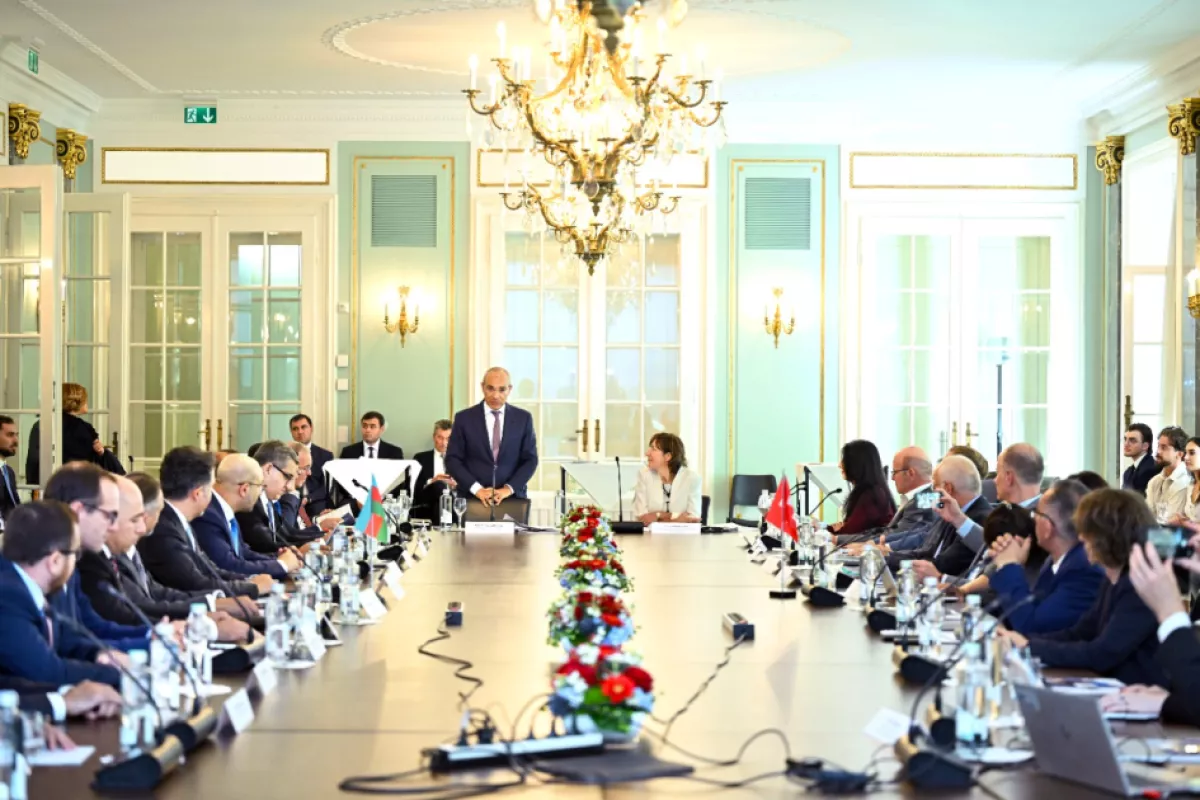
At the same time, the 10th meeting of the Joint Intergovernmental Commission (JIC) on Trade and Economic Cooperation, co-chaired by Mikayil Jabbarov and Andrea Rauber Saxer, Head of the Bilateral Economic Relations Division at Switzerland’s State Secretariat for Economic Affairs (SECO) and the Federal Council’s representative for trade agreements, placed particular emphasis on expanding Azerbaijani-Swiss economic and investment cooperation, both bilaterally and through international financial institutions.
As Economy Minister Mikayil Jabbarov noted in a post on X, views were exchanged on the priority areas for developing the economic partnership between Azerbaijan and Switzerland, while the expansion of trade and investment cooperation, including new promising areas, was discussed. He added that particular attention was paid to strengthening direct ties between the two countries’ business communities, promoting mutual investment and implementing new joint business initiatives. These efforts, he said, are expected to make a significant contribution to further strengthening the bilateral economic partnership.
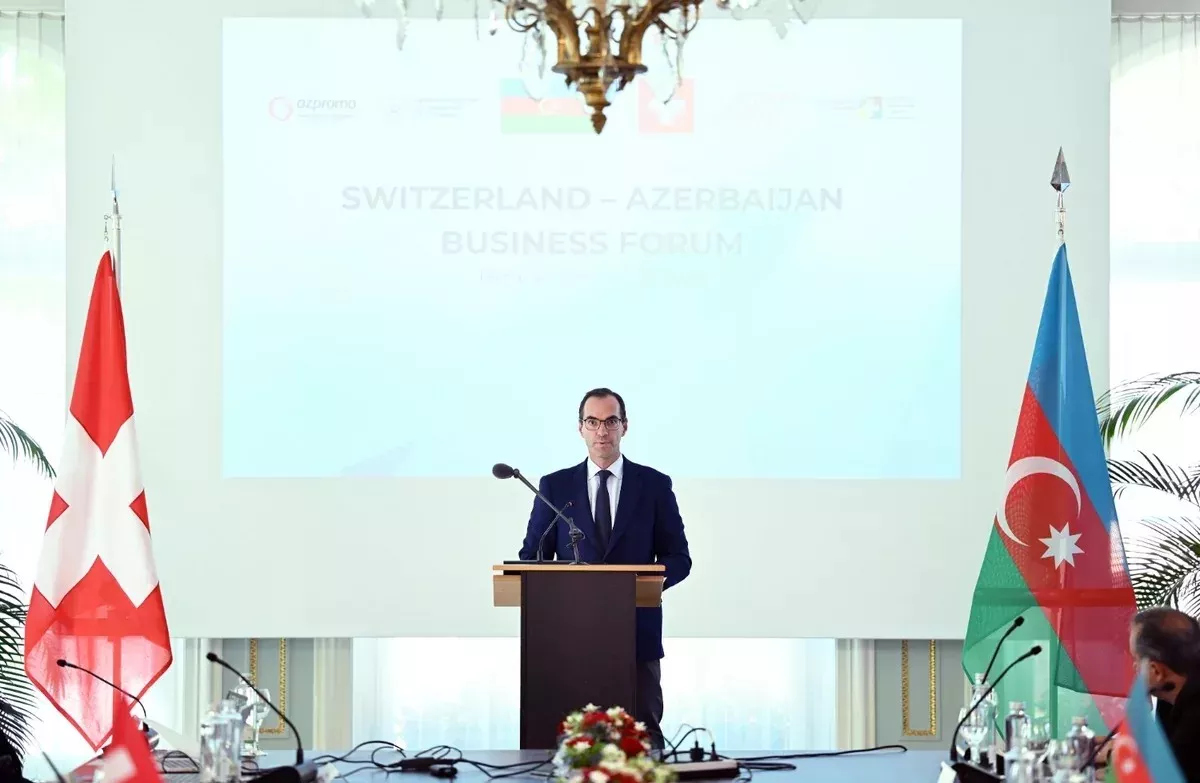
In addition, the business forum held in Bern provided an opportunity for direct B2B contacts between business representatives from the two countries and discussions of specific initiatives. The event brought together representatives of Swiss and Azerbaijani companies operating in such sectors as energy, transport and logistics, construction, engineering, metallurgy, food processing, tourism, healthcare, telecommunications, consulting, finance, chemicals and pharmaceuticals.
Speaking at the event, Economy Minister Mikayil Jabbarov provided detailed information on Azerbaijan’s favourable investment environment, its strategic transport potential along the Middle Corridor routes, opportunities in green energy, and the country’s efforts towards digital transformation, all of which open up broad prospects for foreign businesses. Particular attention was paid to government support mechanisms and fiscal incentives aimed at developing industry in industrial clusters and the Alat Free Economic Zone, including in the Karabakh and East Zangezur economic regions.
Overall, Swiss business circles, banks and state funds have long acted as donors for a number of projects initiated by the Azerbaijani government. In this context, particular mention should be made of the State Secretariat for Economic Affairs (SECO), which has co-financed water and other infrastructure projects and provided grants for research and the preparation of feasibility studies for a number of initiatives in Azerbaijan.
Thus, around four years ago, as part of the South Caucasus Regional Cooperation Strategy for 2022–2025, SECO supported a number of projects aimed at enhancing the competitiveness of Azerbaijan’s agricultural sector, improving the financial and marketing literacy of rural entrepreneurs, and expanding their access to credit resources. At present, the State Secretariat for Economic Affairs is supporting initiatives in the green energy sector, while paying particular attention to the modernisation and diversification of Azerbaijan’s financial sector and the strengthening of public financial management.
At the same time, Swiss businesses are interested in expanding commercial ties with Azerbaijan, and the founding conference of the Swiss-Azerbaijani Chamber of Commerce and Industry (SACCI), held in Geneva in September 2022, became an important instrument for promoting bilateral trade relations. This has been reflected in the significant growth of trade in recent years, which reached a peak last year. According to data from the State Customs Committee (SCC), bilateral trade amounted to approximately $1.773 billion in 2025, more than doubling year on year.
Azerbaijan’s exports to Switzerland primarily consist of gold concentrate for refining, hydrocarbons and petrochemical products, hazelnuts and other goods. In 2025, Switzerland was the largest buyer of Azerbaijani gold, with 4.522 tonnes of the precious metal worth $326.2 million exported to the country. This represented a 6% increase in volume and a 54% increase in value compared with the previous year.
In the first half of the current year, Switzerland ranked second after the United Kingdom in terms of gold purchases, with 2.33 tonnes of the precious metal worth $202.17 million supplied to the country. Overall, year on year, exports to the Alpine country increased by 18.9% in volume and 40.4% in value. According to the SCC, exports of Azerbaijani crude oil and petroleum products obtained from bituminous minerals also increased significantly in January–July this year. A total of 272,500 tonnes of such raw materials and semi-finished products worth $193.6 million were exported. Compared with the same period in 2025, exports of hydrocarbons to the Confederation increased 3.6-fold in value terms.
Swiss exports to Azerbaijan, meanwhile, mainly comprise machinery and chemical products, pharmaceuticals, watches, high-tech measuring equipment, machine tools and instruments, as well as railway equipment. In particular, double-decker KISS electric trains manufactured by Swiss-based Stadler Rail Group operate on the Baku–Sumgayit line and across the Absheron area, while FLIRT diesel-electric trains produced by the same company are used in other regions of the country.
Against this positive backdrop, it is hardly surprising that Switzerland has ranked fourth for several years in terms of the volume of non-oil products exported from Azerbaijan. Last year, Azerbaijani non-oil exports to Switzerland were valued at $347.8 million. Most importantly, however, Azerbaijani-Swiss business partnership is underpinned by a strong investment component. According to information provided to Caliber.Az by the Ministry of Economy, “95 companies with Swiss capital are actively operating in Azerbaijan, with investments directed towards industry, agriculture, construction, trade, transport and services. Overall, the volume of mutual direct investment reached $4.1 billion in 1995–2026, of which $2.3 billion was invested in the oil and gas and fuel sector, while $1.8 billion went to non-oil sectors.”
The ministry also noted that SOCAR subsidiaries operate in Switzerland. A retail network of more than 200 petrol stations is managed by SOCAR Energy Switzerland, which is also developing renewable energy projects. The company is expanding its network of electric vehicle charging stations at its petrol stations and fast-charging facilities located along major transport corridors and motorways. SOCAR Energy Switzerland controls around a quarter of the Swiss liquefied petroleum gas market and opened its first hydrogen refuelling station in Bern in June 2023. In addition, SOCAR Trading SA, a subsidiary of the State Oil Company of the Republic of Azerbaijan, operates in Switzerland, managing the international sale of Azerbaijani oil and trading crude sourced from third countries.
To sum up, it is clear that Azerbaijani-Swiss partnership is set to expand further, with a focus on innovative and green initiatives, as well as the development of industrial clusters. As noted in Bern in recent days, the 2nd Azerbaijan International Investment Forum, to be held under the patronage of the President of Azerbaijan in Baku on September 25–26 this year, will play an important role in establishing new partnerships and attracting investment.







 editor@caliber.az
 +994 55 444-88-98
 Азербайджан, Баку, ул. Низами, 203, Af Business House, 5-й этаж