










From the SCO to BRICS: Beijing is shaping a new architecture for the Global South Overview by Teymur Atayev
China has once again made clear its position on the emerging global order, calling on the countries of the Global South not to allow themselves to be guided by others but to work together to shape a new international agenda. This message was particularly evident in Xi Jinping’s address at the second session of the 18th BRICS Summit on September 13. His remarks, however, should not be viewed in isolation from the speech he delivered less than two weeks earlier, on September 1, at the 26th Meeting of the Council of Heads of State of the Shanghai Cooperation Organisation (SCO). Taken together, the two speeches offer a broader picture of Beijing’s outlook and priorities.
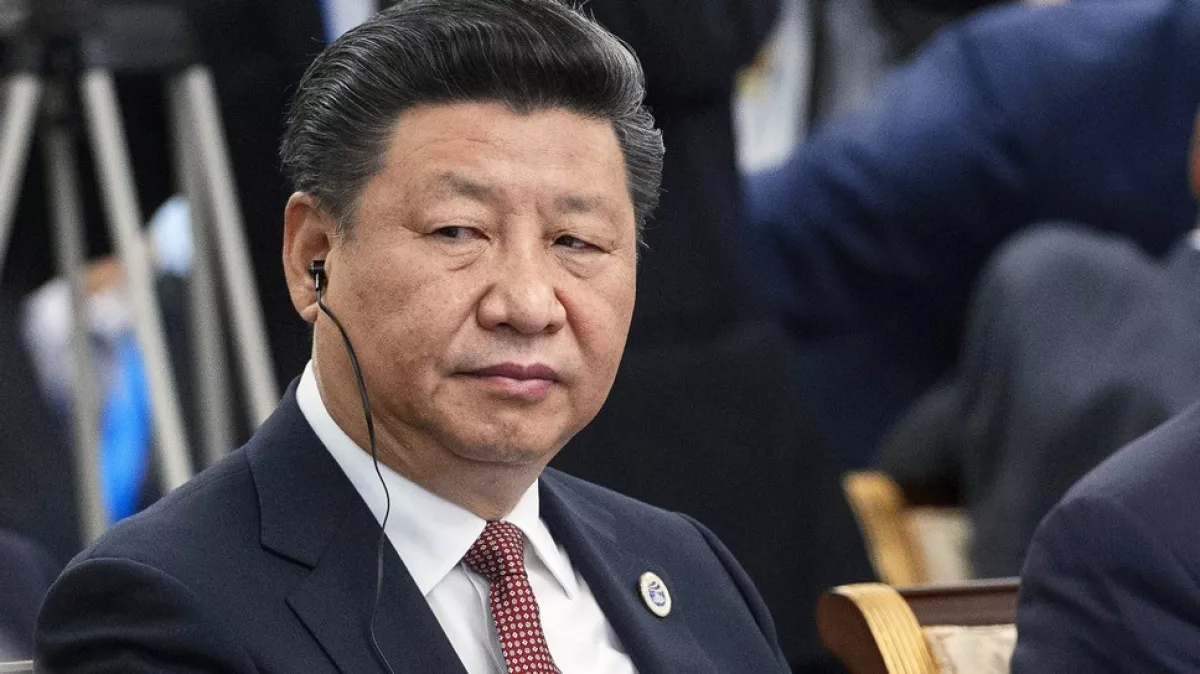
At the SCO meeting, Xi Jinping pointed to the unprecedented pace of global change over the past century, describing the most intense struggle now unfolding worldwide as one “between advocates of dialogue and confrontation, mutually beneficial cooperation and zero-sum games, multilateralism and unilateralism.” At the same time, noting that the threat of war had yet to recede, he highlighted the potential for achieving shared prosperity through trade and investment, connectivity and energy, while expanding cooperation in artificial intelligence, the digital economy and green industries.
The Chinese president also placed particular emphasis on the Caspian region, especially Azerbaijan and Kazakhstan, whose efforts to maintain uninterrupted transport links could give significant impetus to the initiatives he outlined. Against this backdrop, Beijing supports efforts to improve the efficiency of the Middle Corridor, while advocating an environment of comprehensive security and firm opposition to attempts at external interference in “our states and regional stability.”
This approach closely echoes the position expressed by Azerbaijani President Ilham Aliyev on the need to identify all risks to the country “beyond our borders,” including attempts to draw Baku into external conflicts or adventures. At the same time, as Aliyev has stressed, Azerbaijan is no stranger to defending itself, including by strengthening its national security.
Aliyev’s observation that the historic Silk Road passed through Azerbaijan, which lies at the crossroads of Europe and Asia, and is now being revived through modern infrastructure, also closely parallels Xi Jinping’s description of the region as “the cradle of ancient civilisations and a crossroads of different cultures.” Xi stressed that the history and culture, social systems and specific characteristics of each country must be fully taken into account at the present stage of development.
Emphasising the need to consistently uphold a “people-first” approach, Xi also expressed Beijing’s readiness to implement the Global Civilization Initiative together with its partners across the Global South, stressing that “all states – large and small alike – are equal.”
Less than two weeks later, Xi expanded on these ideas at the second session of the 18th BRICS Summit. He began by highlighting the “accelerating tectonic transformation” of the current era, arguing that “the collective rise of the Global South is emerging as a key driving force in shaping a multipolar world.”
This trend is becoming increasingly important amid the growing disorder in international affairs and the risks and challenges that accompany it. Comparing today’s “world without rules” to an intersection without traffic lights, Xi called for the international community to jointly develop new rules, rejecting the notion that “might makes right” and opposing the use of double standards.
A parallel can again be drawn with the position of official Baku. Describing Azerbaijan as a leading country in the South Caucasus and part of the Global South, President Ilham Aliyev has highlighted China’s “very important role” within this geopolitical and geographic framework. Speaking from the high rostrum of the 80th session of the UN General Assembly, he also called for the construction of a world in which double standards will be eliminated, justice will not be selective, respect for the rule of law will prevail, and peace will be ensured not only through words but also through practical steps.
Xi, for his part, called on the countries of the Global South to jointly uphold international law, non-interference in internal affairs and the peaceful settlement of disputes. He stressed that countries, regardless of whether they are large or small, rich or poor, are equal members of the international community.
In this context, his call for international institutional reform is particularly noteworthy. Xi argued that such reform should enable the countries of the Global South to uphold a development philosophy that puts “the people first.” This is broadly consistent with President Aliyev’s repeated calls for greater inclusivity and reform of representation on the UN Security Council, including through the rotational participation of representatives of the Non-Aligned Movement, the Organisation of Islamic Cooperation and the African Union.
At the BRICS meeting, Xi also put forward five initiatives, including a proposal for universal access to open-source artificial intelligence. He said Beijing would continue to promote high-quality development and expand high-level opening-up, implement the Global Development Initiative, advance cooperation under the Belt and Road Initiative and share development opportunities with countries around the world in pursuit of shared prosperity.
This, too, is consistent with the position expressed by President Aliyev, who has emphasised that “we, in Azerbaijan, consider China as a leader of the Global South. So this is a special role” for the PRC, which brings countries together around a number of fundamental universal principles.
Thus, Xi Jinping continues to use every available platform to communicate China’s position to the international community through the prism of protecting the interests of the countries of the Global South. The direction of his remarks at the SCO and BRICS clearly demonstrates Beijing’s global approach to issues of global importance.







 editor@caliber.az
 +994 55 444-88-98
 Азербайджан, Баку, ул. Низами, 203, Af Business House, 5-й этаж