










Global cotton situation opens window of opportunity for Azerbaijan Anaysis by Caliber.Az
Azerbaijan is taking significant steps to support cotton production, an industry with high export potential. Domestic companies-processors once again raised the purchasing price of tons of raw cotton. The increase in purchase rates is linked to the global hike in raw material prices in August amidst severe drought in India, China, the USA, and Brazil, which markedly reduced yields. Experts forecast that the second consecutive year of price increases for cotton raw materials, yarns, and fabrics will become a sustainable long-term trend. However, this creates additional incentives for Azerbaijani farmers and processors to increase the production of raw cotton, and most importantly, to increase its processing to load the local textile industry more tightly.
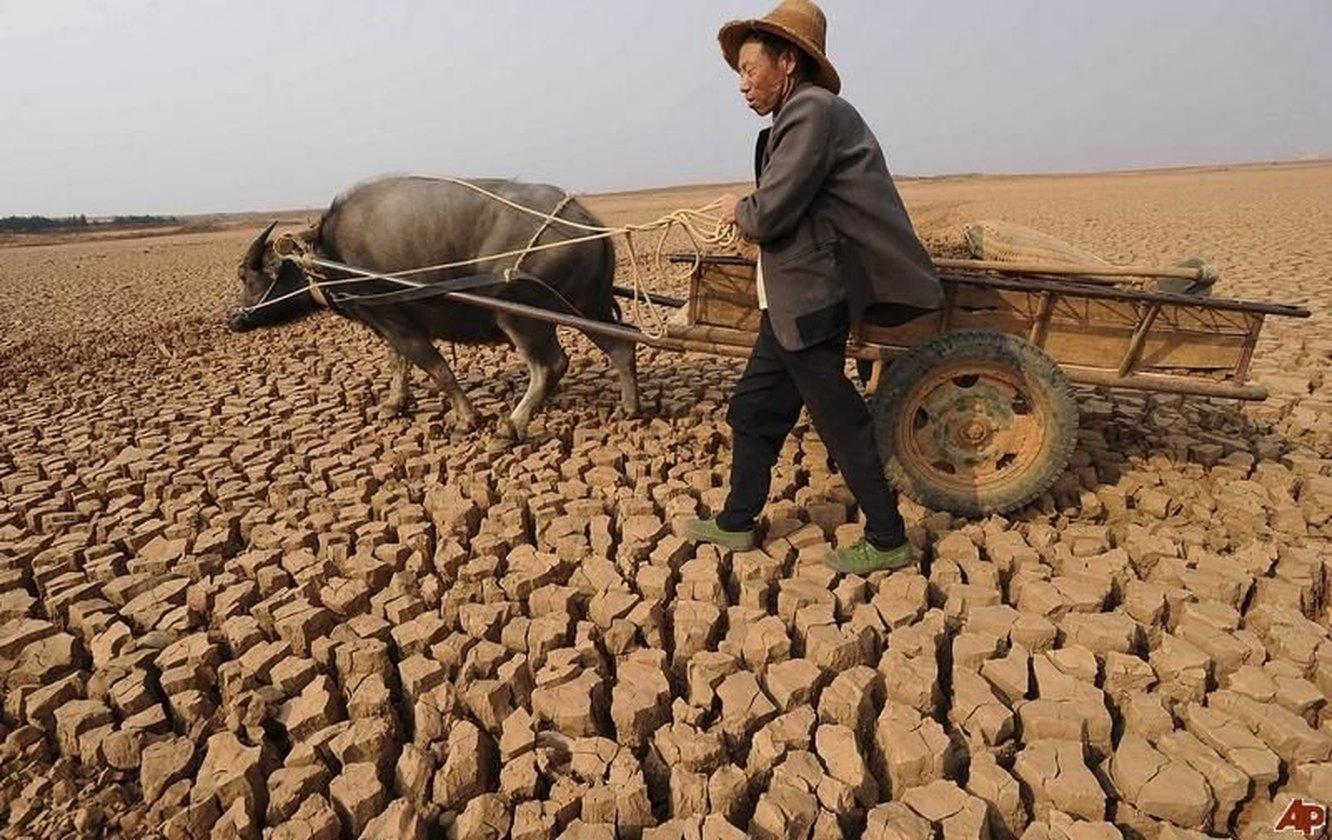
According to the Bloomberg agency, extreme drought and heat in the current summer led to a decrease in the yield of cotton in India, China, the United States, and Brazil by 28-30%, and more than 200,000 tons of raw cotton were irrevocably lost. These countries account for more than three-quarters of global production, and as a result, global cotton stocks continue to shrink. The situation in the industry is very difficult: according to the Wall Street Journal, in the USA about 40% of cotton plantations are abandoned because of the drought, and this year's total harvest will be the smallest since 1868. According to Reuters, the Indian cotton harvest has been disrupted since spring 2022 due to interminable rains, the value of Indian cotton has almost doubled and the second harvest in August, this time due to heat, is now being disrupted. As a result, in early May the global contract price per pound (455 grams) of cotton rose to a record high of $1.50, and after some downward correction in August, exchange prices are gaining momentum again.
It is appropriate to recall that that the global trend of rising cotton raw material prices and thus clothing prices started in 2021 at the end of the pandemic crisis. Risky monetary policies in the US and EU, which were boosting their own economies by throwing out trillions of dollars of unsecured liquidity, ratcheted up the imported inflation around the world. The cotton crisis has been exacerbated by supply chain disruptions and multiple increases in transportation costs, as well as problems with energy supplies to cotton processing plants due to the global rise in the price of oil, coal, and gas. The war in Ukraine has also contributed to these negative processes. The World Bank estimates that cotton prices will remain at historically high levels until the end of 2024, and possibly beyond.
Today, many experts believe that cotton and cotton products will soon become a kind of luxury: this radical view is confirmed by the fact that more and more textile manufacturers are reducing the share of natural cotton raw materials in their products, partly replacing it with man-made fibers, i.e. artificial polymer yarns, or at best viscose made from cellulose (wood chips). A noticeable price increase will also affect the high-quality paper sector, which uses cotton raw materials.
Who were the beneficiaries of price increases in the global cotton market in 2022 and what trends are emerging in this area in the former Soviet Union? Growth in export volumes and profits was recorded in Pakistan and a number of South-East Asian states, Australia, Mexico, and other Latin American countries. In the CIS region, Uzbekistan and Turkmenistan are increasing their exports of finished cotton products, while Tajikistan and partly Kazakhstan are boosting their supplies of raw materials. Azerbaijan can also be classed as a beneficiary of the changed world situation: according to the Centre for the Analysis of Economic Reforms and Communications, Azerbaijan's yarn exports rose by 23.7% in January-May 2022 and cotton fiber by 14.5%, a trend that continued in subsequent months.

A cold, rainy spring somewhat shifted the cotton planting schedule, and harvesting in Azerbaijan this year will start in September. According to the Ministry of Agriculture, this year more than 100 thousand hectares of land have been set aside for cotton plantations, roughly the same amount as last year, but today it is difficult to speculate what the final harvest will be. Unfortunately, 2021 was a bad year for Azerbaijani cotton growers - from an area of 100.6 thousand hectares in 17 regions of the country was collected a total of 287 thousand tons of cotton. The figures show a decline of 14.9% compared to the previous year. Experts mainly attributed the reasons for the drop in production to unstable weather conditions in the spring, the summer drought, and the lack of irrigation water. At the same time, during a similar drought in 2020, Azerbaijani farmers still managed to harvest 336,500 tonnes of cotton, with an increase of 14%, despite lockdowns and other quarantine restrictions, as well as the Karabakh war that began on September 27. Such big differences in cotton harvest results in 2020 and 2021 are understandable.
Of course, cotton production is very sensitive to climate change, but in Azerbaijan, the industry was also affected by other subjective factors: in particular, rising production costs due to higher tariffs for diesel fuel, water, gas, electricity, and petrol. The media also reported on the low quality of pesticides imported into the country, not to mention the growing prices for foreign agrochemicals, equipment, spare parts, and other components, which increased the costs for farmers-producers and processors. Finally, local labour market conditions have changed significantly in recent years, and cotton pickers were not motivated by the old prices. Overall, all these factors have had the effect of reducing villagers' interest in growing the cotton crop.
Apparently, the effects of these negative processes were also felt by the large processing companies buying cotton from farmers at the end of the season. Therefore, in order to stimulate cotton growers, in August 2021 the wholesalers decided to raise purchase tariffs by an additional 50 manats per tonne, and similar measures were taken in January 2022 - tariffs increased by another 50 manats. However, against the background of inflationary processes in the country, as well as the growth of global commodity prices, the issue of increasing the purchase prices of raw materials was again relevant in August 2022. In accordance with the instruction of the Head of State, who fully supports the development of cotton, as well as to stimulate farmers, the day before at the consultations of producers and processors of cotton with specialists from the Ministry of Agriculture it was decided for the second time this year to increase the purchase price per ton of cotton for an additional 50 manat, depending on the type of raw material. Thus, the updated rates for a crop of 2022 are determined as follows: for the first sort - AZN 800, the second - AZN 780, the third - AZN 740, the fourth - AZN 700.
That is, this year cotton growers will sell each ton of their output for 100 manats more expensive than last year. At the same time, for every tonne of cotton delivered to purchase points, farmers will be paid a subsidy of 170 manats. Support for this industrial sector is carried out not only by the increase in financing and subsidy but also by the introduction of high-yielding varieties of cotton and modern agrotechnical methods of its cultivation. Recently, a lot has been done to increase the efficiency of cotton-growing in the country: about 16 thousand units of various techniques, including 400 modern cotton-harvesting combines, mainly of American John Deere models, were bought, due to which 87% of cotton is now harvested by the mechanized method. Over the past two or three years, high-yielding American, Turkish and Greek cotton varieties have been sown on pilot plots of the Ministry of Agriculture and in pilot clusters of private farms. Laser soil harrowing based on Chinese technology was applied, which prevents re-salinization of the soil, saves water, and promotes uniform seed germination. By another method, the areas sown with cotton seeds were covered with polyethylene film, which limits the development of weeds and preserves a good temperature regime for seed development. In the end, all these innovations made it possible to increase yields to 50 and even 60 centners per hectare.
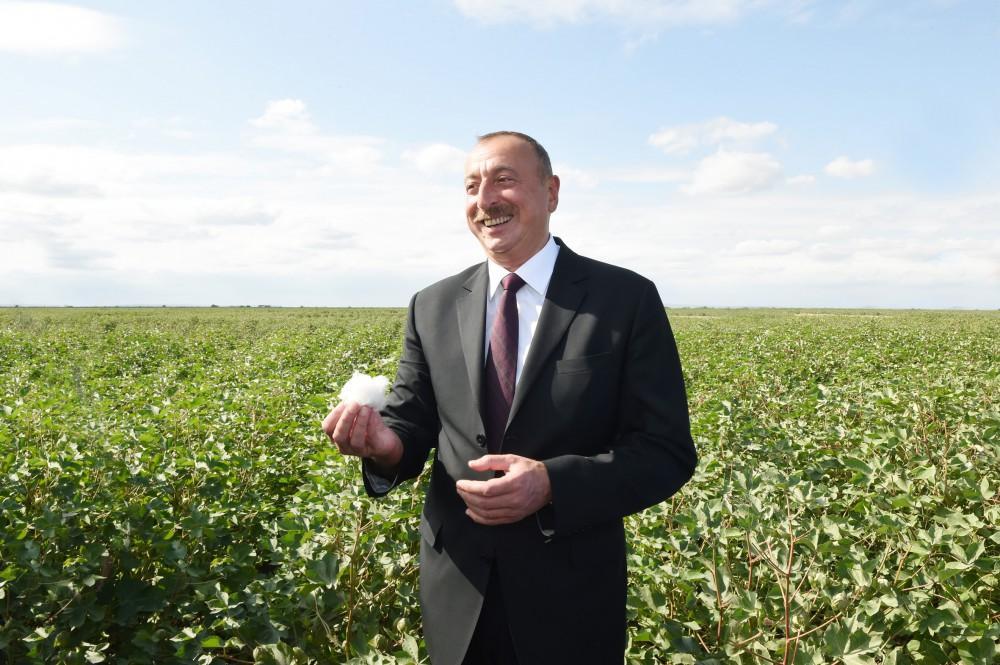
However, such high yields have only been achieved in a few pilot plots and in several specialised agro-parks, where beer-based irrigation systems have been used to ensure good germination and save up to 40% of water. Unfortunately, the average yield in Azerbaijan is about 28-29 centners per hectare, which falls short of the level of world leaders - China, the United States, India, and Pakistan, where this figure often reaches 40-50 centners per hectare.
Considerable funds will have to be invested in the purchase of breweries and other advanced irrigation systems, in the import of high-yield seeds, and in the support of farmers who adopt modern agricultural techniques. Steps are being taken in this direction: The AR Ministry of Agriculture and the Nazilli Cotton Research Institute in the Turkish province of Aydın have initiated cooperation on breeding, genetics, and biotechnological and agro-technological innovations. The experience of Turkish cotton farmers will also be implemented in the formation of a domestic seed breeding system. Agreements have also been concluded between agrarian ministries and business circles of Azerbaijan and Uzbekistan on investment and technological cooperation between the two countries in cotton production and processing. Under the agreements, Uzbekistan will supply seeds of high-yield cotton varieties to Azerbaijani producers. The region's largest producer of cotton ginning equipment - Uzbek company Pahtamash plans to build a plant for primary cotton processing in Azerbaijan, as well as to assist in training highly qualified personnel in the cotton industry. In the long term, Pahtamash is ready to equip the factories planned to be built in the Karabakh region.
In one word, the global cotton crisis created a window of opportunity for Azerbaijan - high prices for raw materials and textiles brought the industry to the category of high-margin business. Today, we should not miss the chance and need to make every effort to increase raw cotton production and, consequently, the share of exports of its processed products - yarn, fabrics, and garments.







 editor@caliber.az
 +994 55 444-88-98
 Азербайджан, Баку, ул. Низами, 203, Af Business House, 5-й этаж