










Iranian crisis, threat of war, and oil Geopolitics drives volatility
Global economic stagnation, coupled with US trade wars with China and the EU, put significant pressure on the world’s major markets in 2025, reinforcing bearish trends in the oil sector. Prices briefly rebounded during the Indo-Pakistani conflict in May and the 12-day Iran–Israel war in June, but those gains proved short-lived. Today, the world once again teeters on the edge of a major confrontation.
On February 6, talks between Iran and the US over Tehran’s nuclear programme began in Oman. With the two sides holding sharply divergent positions, the outcome remains uncertain. Washington has repeatedly urged its citizens to leave Iran immediately, while tankers are departing Iranian ports and transits through the Strait of Hormuz are accelerating. Rising tensions and the looming risk of war are placing further pressure on oil prices.
The experience of the 20th century and the first quarter of the 21st century demonstrates the inseparability of “war” and “oil prices”: conflicts—especially those in the Middle East—have a direct and immediate impact on commodity markets. A case in point was the intense Iran–Israel military conflict from June 13 to 24, 2025. In its final stage, US forces struck Iranian nuclear and other military sites. Amid Tehran’s threats to target US bases and critical infrastructure across the Middle East, and warnings to close the Strait of Hormuz, global markets responded with a sharp spike in oil prices.
However, Iran ultimately confined its strikes to Israeli and Qatari territory. By the end of the conflict, heightened market volatility had subsided, returning oil prices to their previous levels.
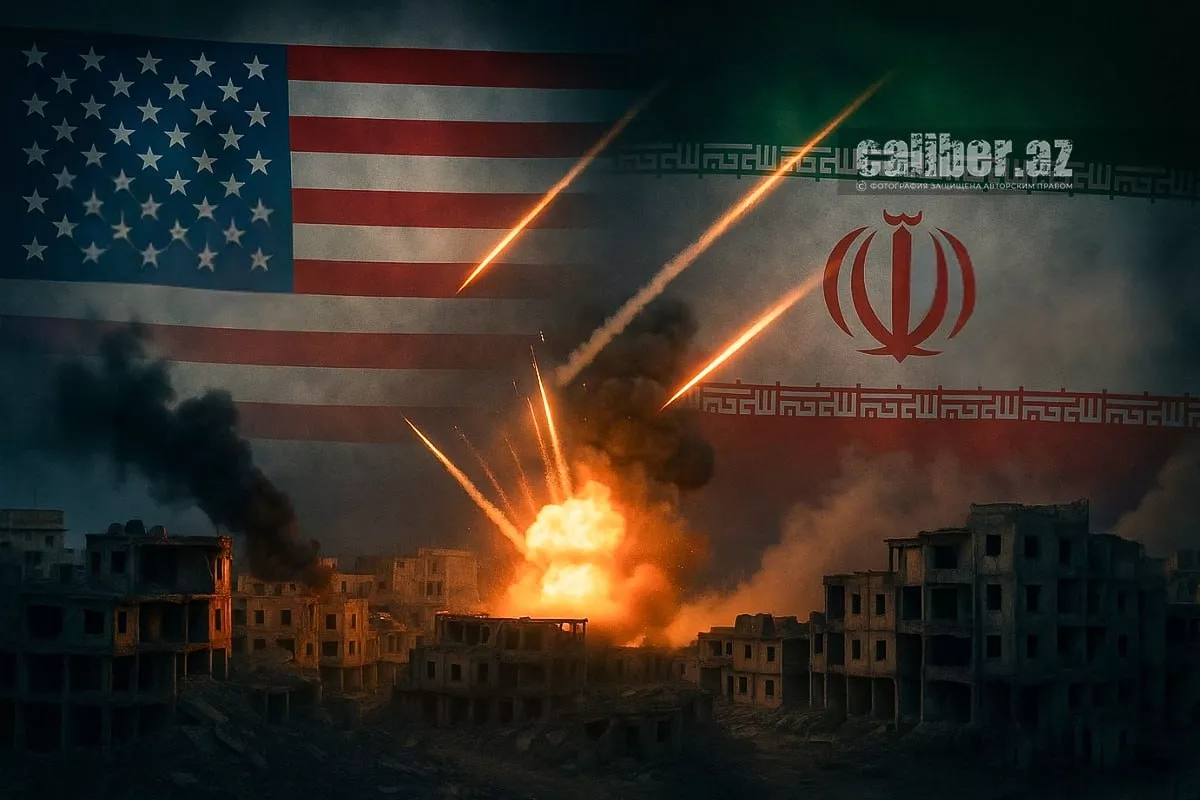
Today, the risk of a serious confrontation between Iran and its Western counterparts has risen again, driven by the unresolved tensions over Tehran’s nuclear programme. According to Reuters, the US–Iran nuclear talks that began on February 6 in Oman could reach a deadlock due to disagreements over the agenda, particularly regarding Iran’s extensive missile programme.
US Secretary of State Marco Rubio has insisted on including discussions on ballistic missile restrictions, Iran’s support for armed groups in the region, and “treatment of their own people.” Iran, however, is willing to focus solely on the nuclear issue during the talks in Muscat.
Some experts warn that if the talks fail, the situation could quickly escalate into a full-scale military confrontation, potentially spreading across the region. With Iran’s substantial arsenal of missiles and armed drones, critical infrastructure—including oil terminals and pipelines—could be targeted, and tanker routes through the Strait of Hormuz and the Red Sea might be blocked, clearly affecting global oil supply and demand.
Tensions are already apparent. Oil tankers are departing Iranian ports, and transit through the Strait of Hormuz has accelerated to unprecedented speeds of 16–17 knots, compared with the usual 11–13 knots. Shipowners are concerned about navigational safety following Tehran’s warnings of possible military exercises in the Persian Gulf. Traffic through the Strait—which accounts for roughly a quarter of global seaborne oil trade—has noticeably declined in recent days. Adding to the pressure, the US has repeatedly urged its citizens to leave Iran immediately.
Investors and market traders are closely monitoring the situation between the US and Iran—the fourth-largest oil producer in OPEC+—as rising tensions continue to influence commodity prices. On February 6, April Brent futures on ICE Futures climbed to $67.92 per barrel after a decline earlier in the week.
Geopolitical uncertainty is compounding broader economic factors affecting the global energy market. Since the start of 2026, key OPEC+ policies have played a major role in shaping oil prices. In January, the eight leading OPEC+ members confirmed their decision to pause production increases in Q1 2026, maintaining oil quotas for February and March at December 2025 levels.
OPEC+ also stated that it would continue to monitor market conditions, noting that any planned gradual increases in output could be paused or cancelled depending on evolving circumstances. The cartel confirmed that up to 1.65 million barrels per day could be returned partially or fully in line with changing market dynamics. At the same time, OPEC+ projects a modest rise in global oil demand: second-quarter demand is expected to reach 105.57 million b/d (20,000 b/d higher than in Q1), while third-quarter demand is projected at 107.05 million b/d.
Meanwhile, Washington, which imposed sanctions on Rosneft and Lukoil last November, aims to sharply limit Russia’s shadow oil exports to China and India through customs tariffs, and to persuade Türkiye to stop such purchases. Additional pressure on Russian energy exports could come from new European sanctions and the potential blocking of Russia’s shadow tanker fleet in the Baltic Sea.
Recently, President Donald Trump stated that Indian Prime Minister Narendra Modi “agreed to stop buying Russian oil” and to increase purchases from the US, Canada, and possibly Venezuela, where Washington effectively orchestrated a government change earlier this year and is preparing to lift restrictions on Venezuelan oil trade. In recent weeks alone, Russian oil supplies have dropped by nearly a third—to 1.3 million b/d—and if further measures are implemented, the reduction in Russian oil exports is likely to affect the market balance and push up demand.

In the current uncertain environment, it is difficult to predict the outcome of the ongoing “bear versus bull” struggle or where global oil prices will settle over the next six months. Nevertheless, according to a recent forecast by the Dutch banking group ING, the average annual Brent price is expected to reach $57 per barrel in 2026, rising to $62 per barrel in 2027.
Meanwhile, analysts at the independent energy research firm Rystad Energy project that Brent will average around $60 per barrel over the next two years. “Geopolitical shocks or changes in OPEC policy could affect the market,” notes Aditya Saraswat, Rystad Energy’s Director for Middle East and North Africa Research. “For example, when the situation in Iran escalates, prices rise temporarily, but then fall again. That is, if events do not directly affect supply chains and demand, prices remain relatively stable.”
Against this backdrop, the Central Bank of Azerbaijan (CBA) offers a slightly more optimistic outlook. Recently presented by CBA Chairman Taleh Kazimov, their forecast anticipates an average oil price of $64 per barrel in 2026, rising to $65 in 2027.
Undoubtedly, Azerbaijan has a clear interest in keeping global oil prices within the range indicated by regulators. Notably, under a conservative scenario that accounts for global risks, the “cut-off price” used to calculate oil revenues in the 2026 state budget was set at $65 per barrel. Overall, Azerbaijan strongly supports OPEC+ policies aimed at preventing the global oil market from sliding toward a price floor.
At the same time, due to the natural depletion of the Azeri–Chirag–Gunashli (ACG) field, which has been in development since the late 1990s, oil production is on a clear downward trend. Forecasts indicate that production in 2026 will reach 27.6 million tonnes, 3.2% below last year’s projected figure; in 2027, it is expected to decline further to 27.1 million tonnes, and by 2028, it could drop to 26.6 million tonnes.
In this context, OPEC+ efforts to restrain production and maintain the supply-demand balance have a stabilising effect on global prices. This is particularly important for Azerbaijan today: while some production volumes are inevitably lost, stable prices help partially offset these reductions and safeguard the country’s oil revenue.







 editor@caliber.az
 +994 55 444-88-98
 Азербайджан, Баку, ул. Низами, 203, Af Business House, 5-й этаж