










Montreux Convention in the crosshairs Power plays around the Straits
On December 2, Turkish foreign policy and security researcher Emir Abbas Gürbüz (a member of the Board of Directors of the Atlantic Treaty Association and head of The Hariciye Centre for Foreign Policy and Security Studies) noted that the “de facto Russian control but de jure Ukrainian territory status of Crimea, Kherson, and the Sea of Azov coastlines will make sovereignty rights at sea inextricable.”
According to him, “The uncertainty of continental shelf boundaries has the potential to disrupt energy projects in the Black Sea. Russia's continued naval presence in the region will make the security of Ukrainian ports, such as Odessa, and the sustainability of vital routes like the grain corridor a constant bargaining chip.”
Against this backdrop, NATO members Romania and Bulgaria “have limited naval power capacity,” making Türkiye a strategically indispensable link for the alliance’s efforts to maintain deterrence in the Black Sea. In this context, the Montreux Convention— the key international treaty regulating passage through the strategic waterways connecting the Mediterranean and the Black Sea—once again plays a significant role in Ankara’s policy.
By closing the Bosporus and Dardanelles to warships during Russia’s war against Ukraine, and thereby preventing escalation in the Black Sea, Ankara has preserved its role as a mediator even amid a frozen conflict. Moreover, “the functionality of security guarantees in the Trump administration plan will hinge on Turkey's control over the Straits and the dialogue it maintains with Russia.” Consequently, “to successfully deter the Kremlin, the West will need the Turkish navy, diplomatic channels, and military infrastructure more than ever.”
On the same day, the Turkish newspaper Cumhuriyet published an article by Ahmet Süha Umar titled “Ukraine Playing with Fire,” which asserts that the United States “undoubtedly views Ukraine’s recent attacks on tankers in the Black Sea as an opportunity to bring the Montreux Convention back into discussion, with a view to drafting a new document involving Washington.”
In any case, according to the author, “there is a high probability that the attacks pursued this very objective.” The article also notes that the subsequent response from the Turkish Ministry of Foreign Affairs may indicate that “the ministry possibly possesses concrete evidence” supporting such an interpretation.
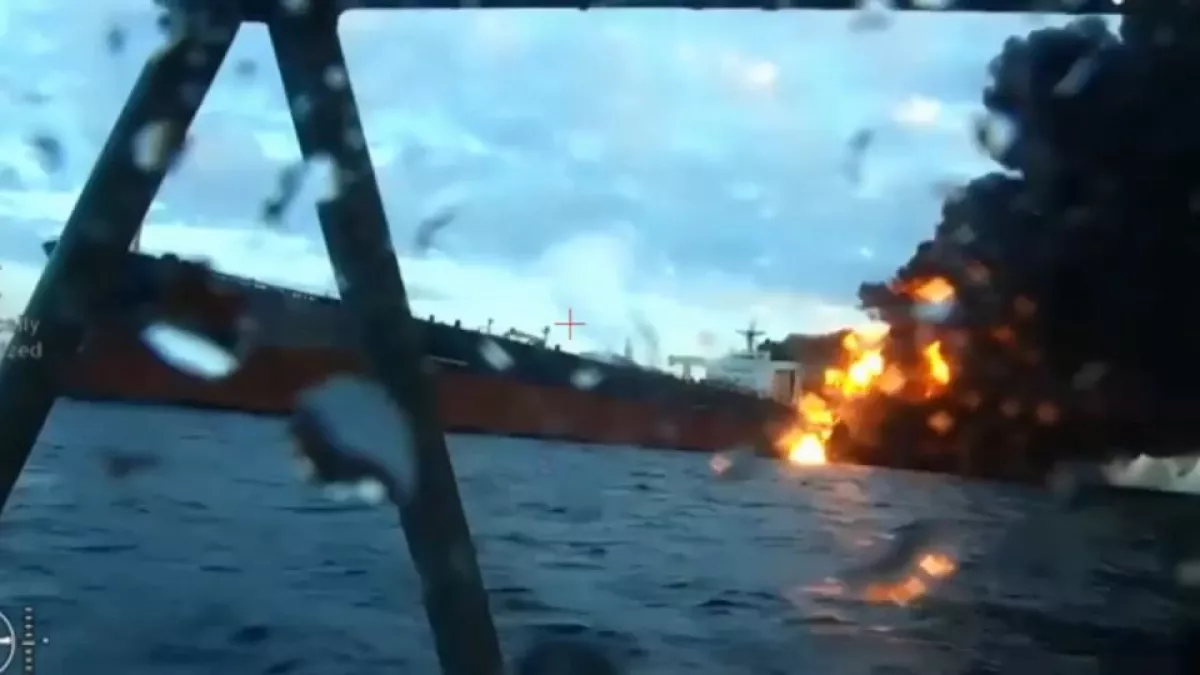
Immediately after Ukraine’s attacks on the Gambian-flagged tankers KAIROS and VIRAT in the Black Sea, Turkish Ministry of Foreign Affairs spokesperson Öncü Keçeli expressed concern over the incidents. He emphasised that the attacks occurred “within our exclusive economic zone (EEZ) in the Black Sea,” creating serious risks to navigation, human lives, property, and the region’s environmental safety. According to him, Ankara is maintaining contacts with the relevant parties to prevent the war from expanding or escalating further in the Black Sea, “as well as to ensure that our country’s economic interests and activities in the region are not harmed.”
In this context, it is important to recall that the 1936 Montreux Convention on the Regime of the Straits (Dardanelles, Bosporus, and the Sea of Marmara) stipulates that if Türkiye is not at war, the Straits must be closed to warships of all belligerents. Meanwhile, civilian vessels of countries without Black Sea access retain the right of free passage in both peacetime and wartime.
According to the aforementioned Cumhuriyet article, Türkiye has so far exercised its authority appropriately, which not only prevented damage to the country from the war but also strengthened trust in Ankara from both Moscow and Kyiv, enabling it to conduct mediatory activities.
According to the article’s author, “this is not the outcome the United States would like to see,” making it “reasonable to assume Washington is pushing and encouraging Kyiv to carry out attacks within Türkiye’s EEZ.” However, he stresses that “it would be unwise for Ukraine to fall for the U.S. trap again and play with fire,” since such attacks “deprive Türkiye of the ability to protect its waters.” This development could potentially turn Ankara against Kyiv. As the article concludes, all parties must take into account “Türkiye’s commitment to upholding the Montreux Convention.”
Overall, the manoeuvring of external powers around the Straits regime has intensified since the start of the Russia-Ukraine war. In June 2022, during a joint meeting of the Political Committee and the Mediterranean and Middle East Special Group of the NATO Parliamentary Assembly, Ankara stated that it had “clearly defined the events in Ukraine as a war, promptly announced compliance with the Montreux Convention, and expressed readiness to fulfil all obligations under the treaty.”
At the same time, Türkiye reaffirmed its firm support for Ukraine’s territorial integrity and independence, noting that “we have strategically defined a natural position.”
In December of the same year, the Turkish delegation to the NATO Parliamentary Assembly drew attention to the pressure “recently exerted on Ankara” by the alliance to “increase its presence in the Black Sea.” In this context, concerns were expressed regarding Türkiye’s strict adherence to the Montreux Convention. It was also noted that Ankara “seeks to maintain a balanced process with regional countries in a way that does not undermine the stability and security of the Black Sea.”
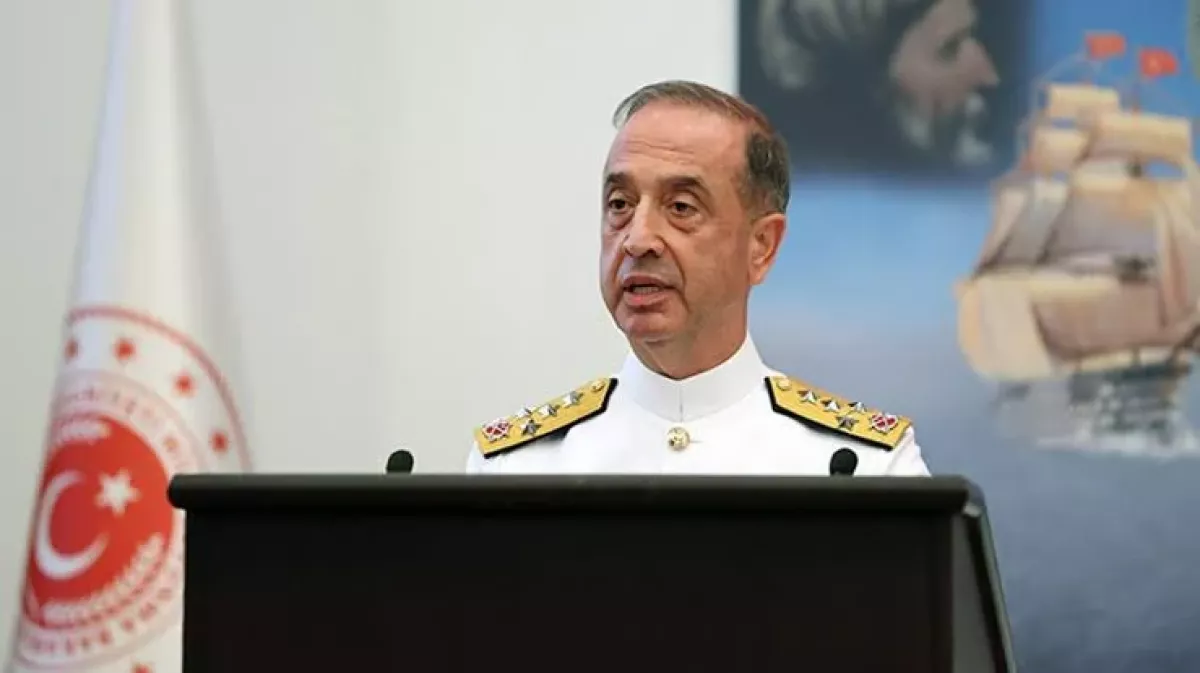
This stance aligns with a statement by Turkish Navy Commander Ercüment Tatlıoğlu in November 2023. He confirmed that Türkiye’s foremost objective is compliance with the Montreux Convention, emphasising that Ankara ensures full security in the Black Sea, which “must not become the Middle East, and we do not wish for any country or NATO to enter the Black Sea.”
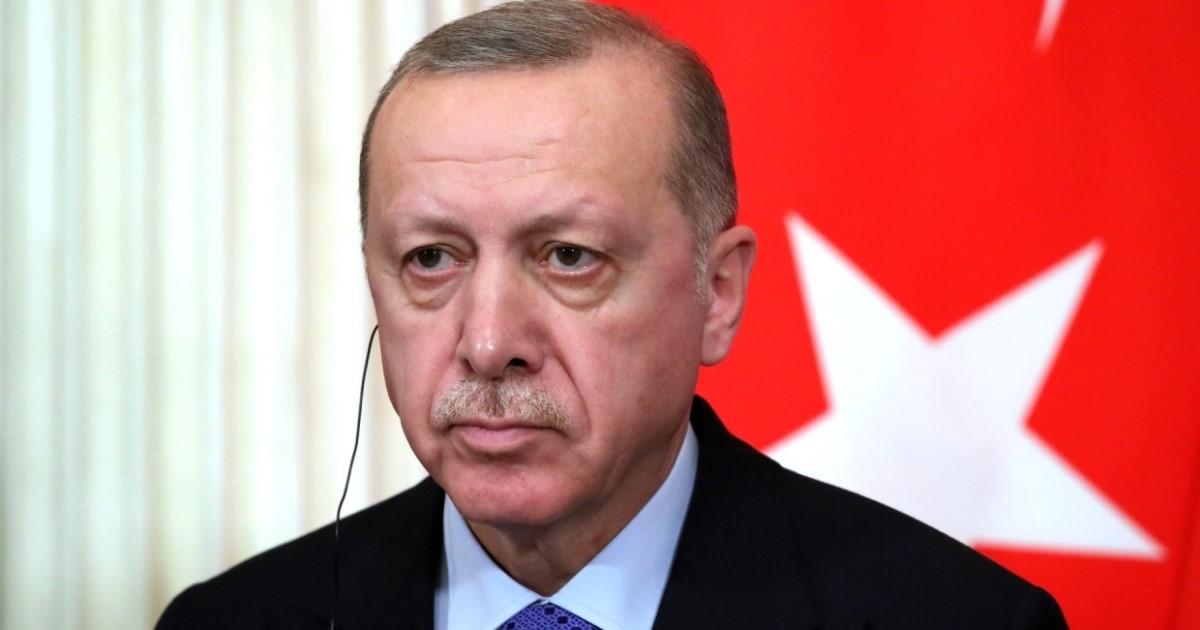
In autumn 2024, Turkish President Recep Tayyip Erdoğan reaffirmed Ankara’s unwavering commitment to strict compliance with the Montreux Convention, stressing Türkiye’s determination to protect its strategic position and status under international law.
On August 1, 2025, when U.S. President Donald Trump announced an order to send two nuclear submarines to “relevant regions” following comments by Russian Security Council Deputy Chairman Dmitry Medvedev, the Turkish newspaper Türkiye noted: “If the U.S. wants to deploy nuclear submarines in the Black Sea to intimidate Russia, it must obtain Türkiye’s permission in accordance with the Montreux Convention.” The publication also cited Turkish experts who argued that Ankara, possessing significant legal authority under the Montreux Convention, “must prioritise its national interests”; therefore, “it is hard to believe that Türkiye would grant such permission.”
Thus, at this historical juncture—alongside Washington’s attempts to push Kyiv and Moscow toward negotiations—external powers will continue seeking to use the Montreux Convention to their advantage. However, as these examples show, Türkiye is firmly and consistently defending its position. It remains to be hoped that common sense prevails over emotional and situational impulses of external actors, preventing the Black Sea from becoming yet another zone of geopolitical turbulence.







 editor@caliber.az
 +994 55 444-88-98
 Азербайджан, Баку, ул. Низами, 203, Af Business House, 5-й этаж