










New US approach, European intrigues, and Belarusian implications Analysis by Limansky
The Belarusian émigré community has fallen out over invitations to a reception with the President of Poland. Meanwhile, one of the recently freed opposition leaders has spoken in favour of lifting sanctions on Minsk. A scandal erupted in the public sphere because, for the New Year’s reception with the Polish president, Sviatlana Tsikhanouskaya’s office pushed only its own people, excluding all rivals. What role, then, is being assigned to the nationalist Belarusian opposition against the backdrop of growing military-political tensions at Belarus’s borders?
“Belwedergate”
On January 13, the New Year’s reception of the “Belarusian diaspora” took place at the Belweder Palace with Polish President Karol Nawrocki. In reality, this was not about Belarusian citizens simply living and working in Poland, but rather about opposition figures.
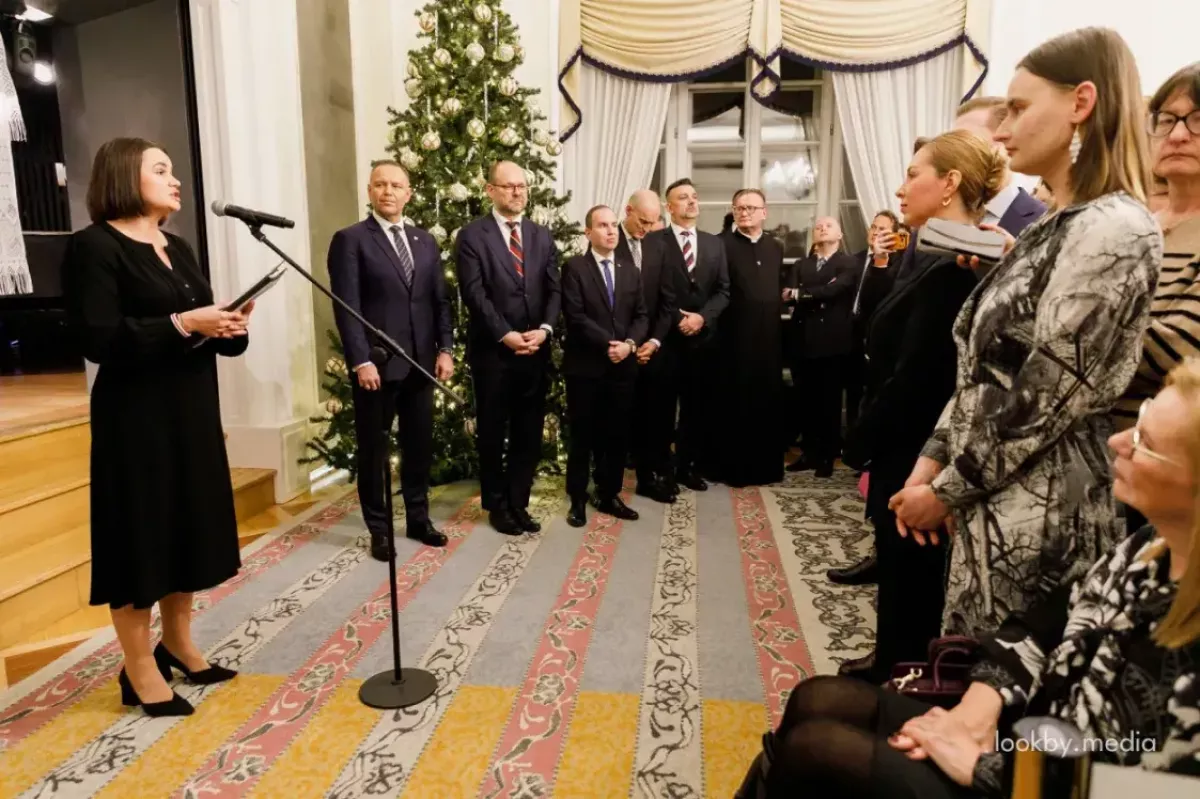
Warsaw has traditionally shown heightened concern for “human rights” in Belarus—partly because Poland receives Western funding for related programmes. For exiled opposition figures, such events serve as a kind of showcase: those who attend can “get noticed” by sponsors and later hope to receive grants.
This time, the office of Sviatlana Tsikhanouskaya’s “transitional united cabinet” included only herself and her close allies on the invitation lists. All other opposition politicians and their circles were excluded from the reception with Karol Nawrocki, effectively playing the role of a political “Cinderella.” Tsikhanouskaya, in this scenario, seemed to take on the role of the “evil stepmother” of the Belarusian opposition.
The final lists excluded former “foreign minister” in the “transitional cabinet” Valery Kovalevsky, who had previously clashed with Tsikhanouskaya; political analyst Pavel Usov, aligned with the patriarch of Belarusian nationalism Zenon Poznyak, known for his hostility toward the “democratic leader”; and the acting director of Belsat TV (recognised as extremist in Belarus) Alexey Dikovitsky, along with many others. While they had appeared on the initial lists, they were removed after censorship by Tsikhanouskaya’s office.
Dikovitsky, in turn, stated that he would secure a spot on the lists “through his own channels.” The filtered-out émigrés dubbed the situation “Belwedergate” and claimed that “Tsikhanouskaya’s office has the same kind of dictatorship as Lukashenko’s.”
What explains this treatment of their own “comrades” by the “United Transitional Cabinet”? Apparently, it comes down to funding cuts. This is happening against the backdrop of escalating global confrontation and rising Western expenditures in other regions, the low effectiveness of the exiled opposition—which has lost real support inside Belarus—and a number of other factors.
Recently, the Lithuanian government even downgraded security at Tsikhanouskaya’s office in Vilnius, and the office itself temporarily suspended operations. In such conditions of “optimisation,” competition among opposition members for Western grants sharply intensifies.
A few days ago, Tsikhanouskaya announced that her office would move to Poland, but on January 19 she denied this, clarifying that only part of the “transitional cabinet” would operate from Poland, while she herself “would be glad to visit Poland more often.” In any case, these manoeuvres clearly indicate a crisis within the opposition—including a financial one.
Even during her meeting with Karol Nawrocki, the “democratic leader” gifted him books by the Polish writer Sergiusz Piasecki. The author’s biography is symbolic: a native of the Brest region, he was a participant in Polish occupation formations and anti-Soviet bands, a smuggler, and an agent of the Polish intelligence in Soviet Belarus. In 1927, he was convicted of banditry in Poland itself. There is something telling in Tsikhanouskaya’s choice of literature.
The release of “comrades” — the start of turmoil within the opposition?
Another factor contributing to confusion in the already fragmented Belarusian opposition was the pardon by Alexander Lukashenko of a group of people convicted for the events of 2020. Following negotiations between Donald Trump’s special envoy John Coale and the Belarusian side, about 150 “political prisoners” were released.
Among them were Maria Kolesnikova, Viktor Babariko, and Sergey Tikhanovsky, who during the 2020 presidential elections played a far more prominent role in the so-called “democratic movement” than Sviatlana Tsikhanouskaya.
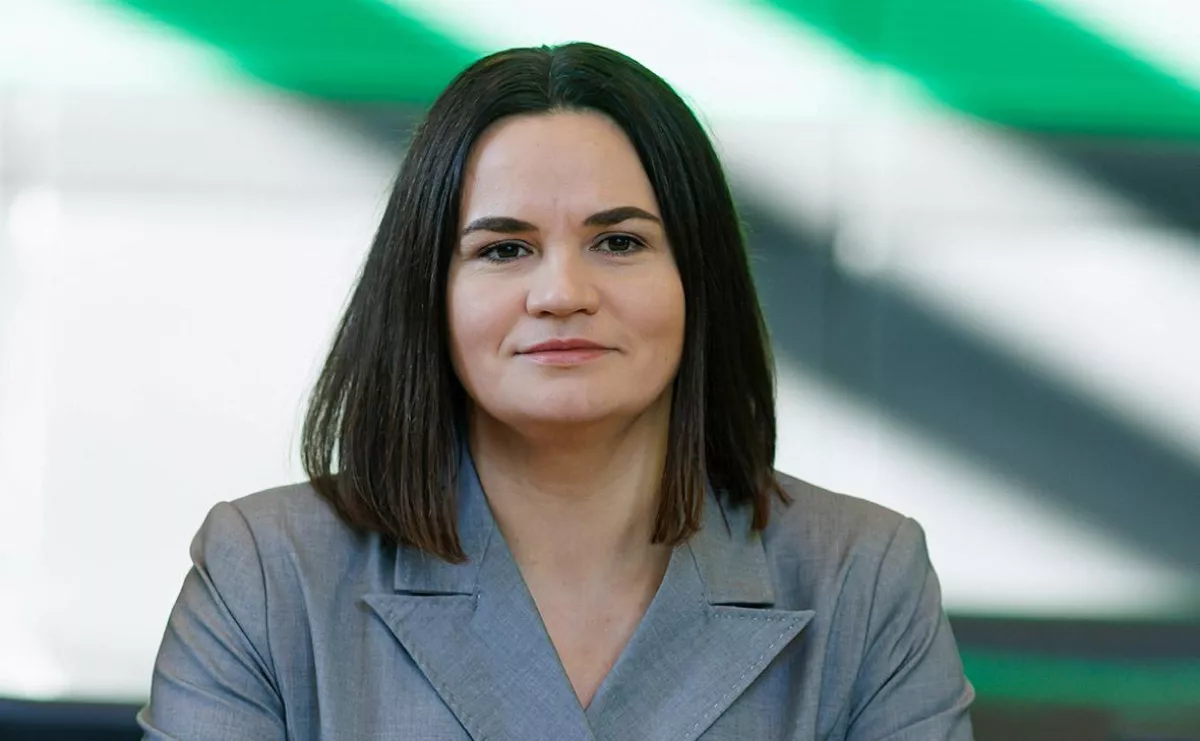
Before 2020, Tsikhanouskaya was an ordinary housewife. She not only had no political experience but also did not work anywhere, living off her entrepreneur husband. Sergey Tikhanovsky—a businessman from Gomel—had likewise not stood out in public life before that: he ran a club business in Belarus and worked as a music video producer in Russia. The situation changed in 2020, when he, having acquired significant financial resources from some source, ran as a candidate for the presidency of Belarus, but was detained on charges of hooliganism. Following this, the Central Election Commission of Belarus made an unusual decision—to allow his wife, Sviatlana Tsikhanouskaya, to run in his place.
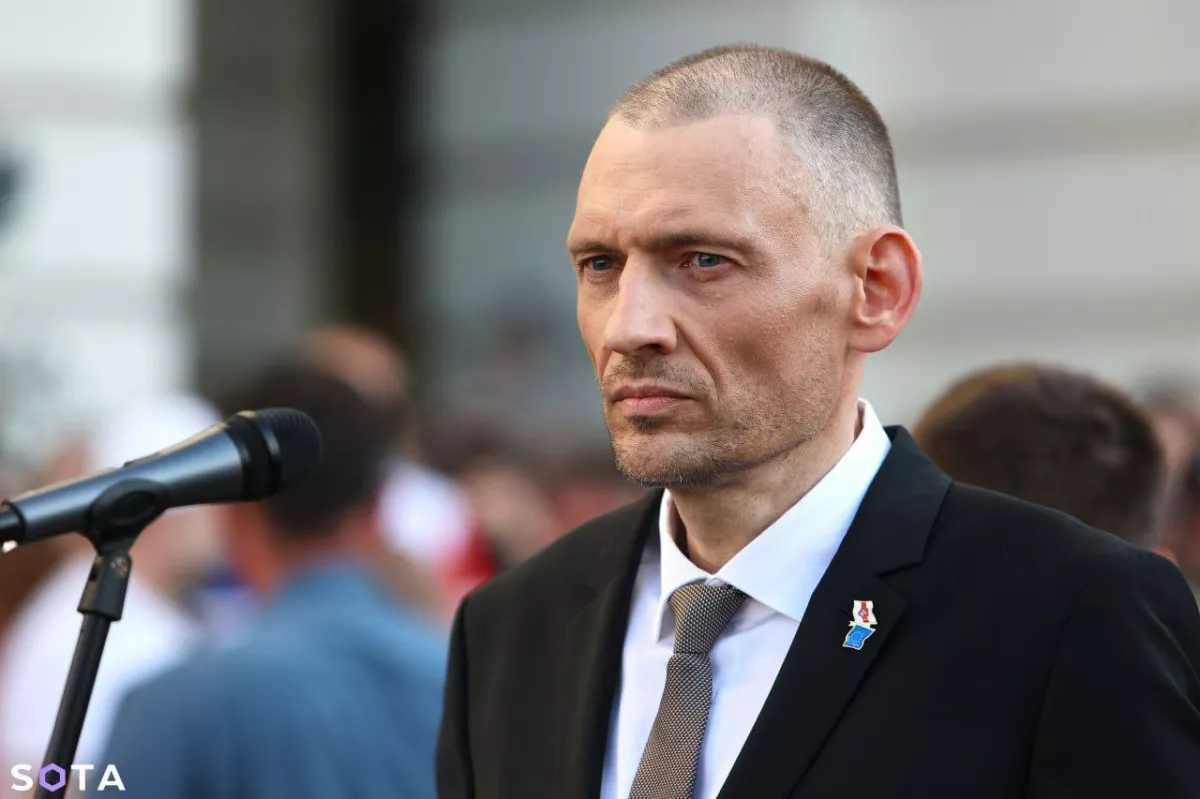
After the pardon, Sergey Tikhanovsky has already made a name for himself with a series of scandalous statements and demands for donations from his supporters. Meanwhile, Tsikhanouskaya’s office—and effectively she herself—is led by Franak Viačorka, a hereditary Belarusian nationalist with extensive connections across various U.S. institutions. For Viačorka and Tsikhanouskaya, the eccentric and unpredictable husband—though his imprisonment ensured their comfortable existence—has today become more of a liability. It is no coincidence that he was quickly sent to the United States “to learn English.”
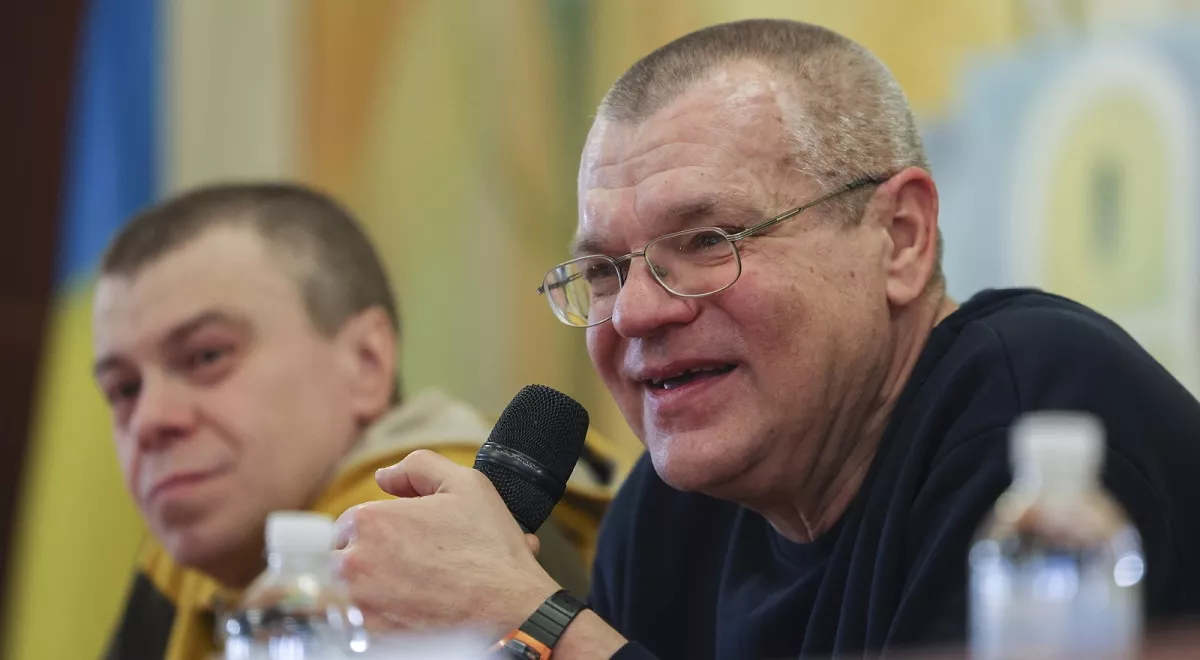
Former presidential candidate and ex-head of Belgazprombank Viktor Babariko, after his release, ended up in Berlin. Maria Kolesnikova—former head of his campaign office and perhaps the most charismatic figure of the 2020 protest movement—also moved to Germany. Unlike Tsikhanouskaya, she did not attend the reception with the Polish president. However, in mid-January, Kolesnikova was received by German President Frank-Walter Steinmeier at his residence, Bellevue Palace.
Kolesnikova graduated from the Stuttgart University of Music in 2007 and worked in Germany for an extended period, including collaborating with German NGOs.
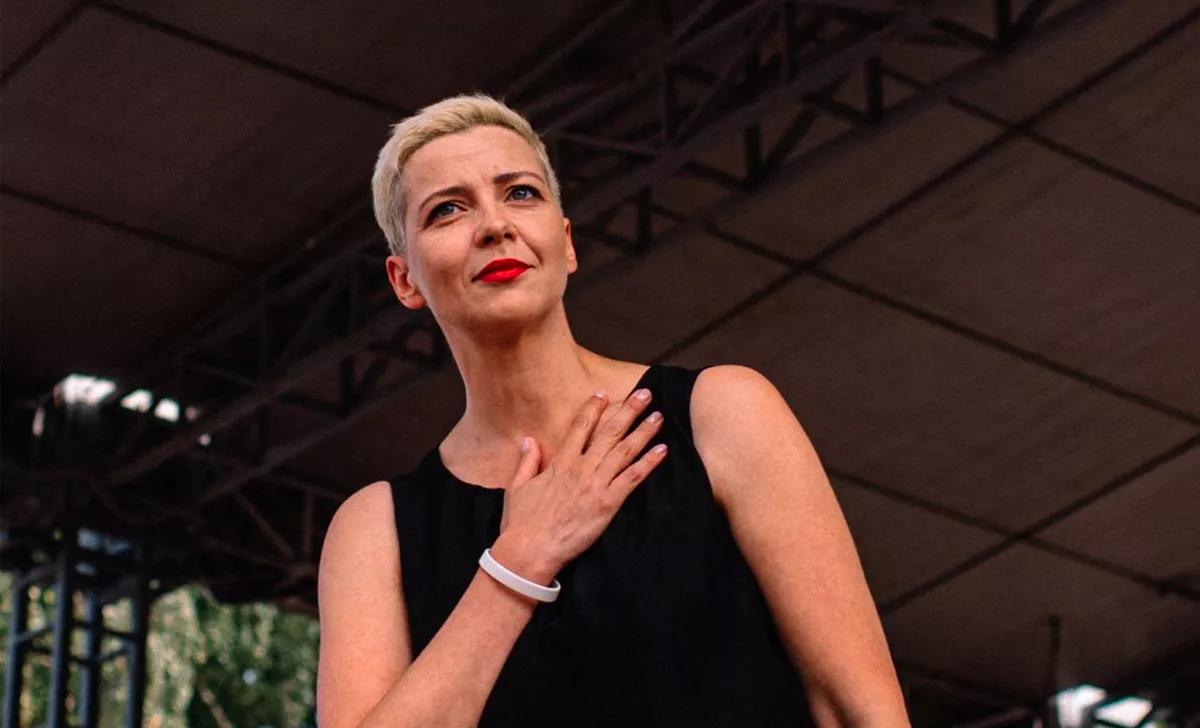
Recently, Maria Kolesnikova gave her first interview since her release to the British publication The Financial Times, which effectively shook the stagnant opposition circles.
“The greater Belarus’s isolation from Europe, the more it is forced closer to Russia. This makes Belarus less safe and less predictable for Europe… But as someone with a European mindset, I do not understand why Europe did not start talking to Lukashenko before the US. It is obvious that Germany, for example, has far more ties with Belarus than the States,” Kolesnikova stated.
She also emphasised that Alexander Lukashenko is a pragmatist and that it is necessary to discuss “humanitarian issues” with him in exchange for a relaxation of sanctions.
Kolesnikova refused to discuss the conditions of her detention but spoke out against sanctions on Belarus, explaining that they hinder the release of prisoners and harm “highly Europeanised” Belarusians.
Separately, Kolesnikova noted that it was Washington that secured her release and that of other detainees, thanking Donald Trump. She stated that her priority is to establish a dialogue between the EU and Minsk and expressed puzzlement that Europe still refuses to engage with Belarus, even after the Americans have done so.
Her phrase, “I am not leaving politics…” sounded as a distinct political signal. Despite Tsikhanouskaya’s visibility, Kolesnikova, by a combination of characteristics, clearly surpasses her and could become a serious competitor.
It is also possible that Viktor Babariko could return to the political scene in the near future with “realistic proposals.” There is a hypothesis that in potential negotiations between the EU and Minsk, one of Brussels’ conditions could be the return of Babariko and Kolesnikova to Belarus, along with the legalisation of their political activities.
Thus, the Kolesnikova–Babariko duo could potentially form a new, conditionally “pro-German” or “softly European” bloc within the Belarusian opposition. In the past, Germany indeed maintained a more moderate approach to Belarus than many other Western countries. Before the sanctions were introduced, Germany had substantial economic interests in Belarus, with German business occupying a leading position in Minsk’s foreign economic partnerships. It is not impossible that certain business circles in Germany would be willing, in one form or another, to return to the Belarusian market.
“Credit where it’s due to Lukashenko…”
It is evident that the new U.S. administration was the first to adopt a more moderate line toward Belarus—and this process continues to gain momentum from Washington.
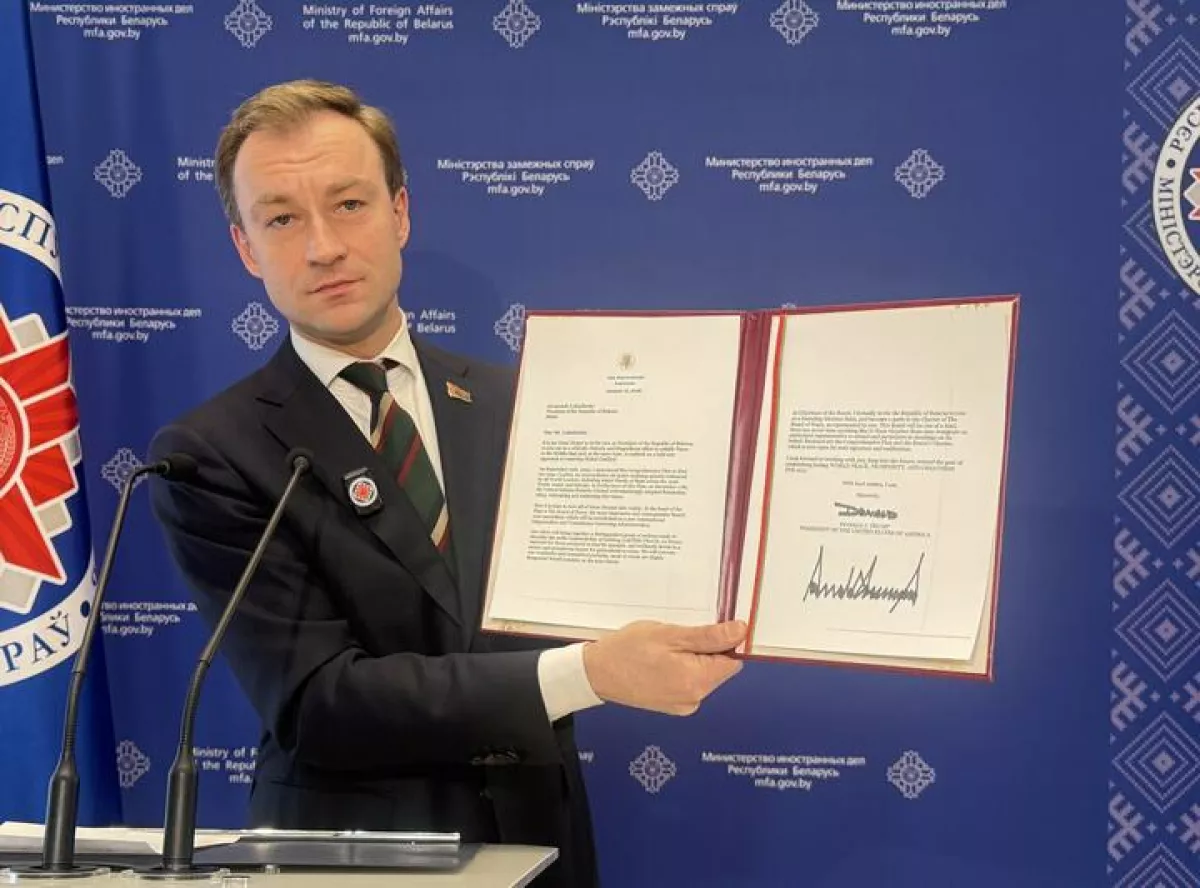
On January 19, Minsk received an invitation to join the “Board of Peace” being created by Donald Trump. Already on January 20, Trump’s special envoy for Belarus, John Coale, told the opposition publication Zerkalo (recognised as extremist in Belarus):
“The United States wants the release of political prisoners, and we are developing normal relations with your country. This is a process that will take time. But the goal is clear: ultimately, to do business with Belarus and reintegrate it into the international community.”
Cole emphasised that the Belarusian leader “deserves credit” for releasing the prisoners. He described the situation as follows:
“Listen, this is the philosophy of Donald Trump’s diplomacy: you build relationships and see where you can move next. That’s exactly what we are doing with Lukashenko. And it’s what President Trump does with everyone. He even corresponds with the Mayor of New York, Zohran Mamdani, who is a socialist. So Trump’s philosophy is simple: if in doubt—communicate.”
At the same time, Trump’s special envoy effectively “brought Tsikhanouskaya’s office down to earth.” Commenting on her claims of supposedly working with him on prisoner releases, Coale stated:
“The United States—that’s who I work for. I don’t know who said that, but I do not consult with any of these people. I consult with the government of Belarus and the U.S. government.”
Radicals versus pragmatism
Such pragmatic approaches have provoked open teeth-grinding among the radical wing of the Belarusian opposition. The moderate message of Maria Kolesnikova has already been sharply criticised by political analyst Alexander Feduta, convicted for preparing a terrorist act against Alexander Lukashenko; blogger Igor Losik, released alongside Kolesnikova; and Andrei Stryzhak, head of the BelAid “Solidarity Fund,” known for a series of scandals and financial schemes.
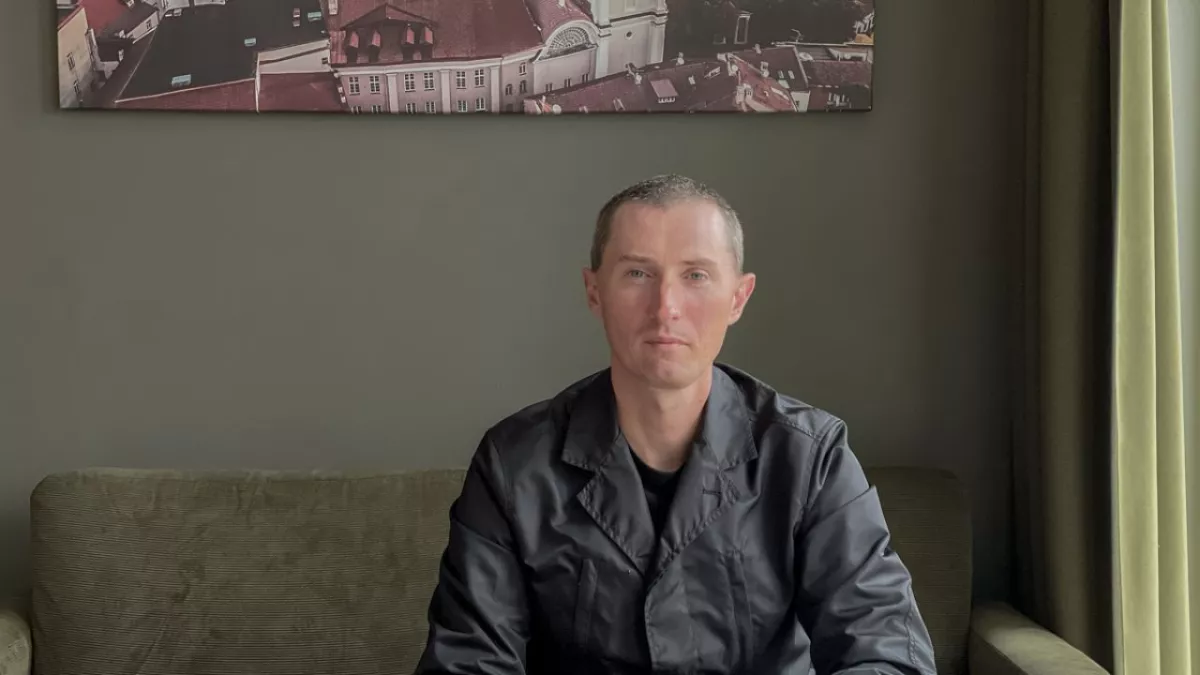
The blogger “Gray Cat,” associated with the “social-democratic” party of Nikolai Statkevich, went so far as to ask: “Masha, are you even one of us?” accusing Kolesnikova of “saving Lukashenko.” At the same time, he criticised Donald Trump’s foreign policy—not only in the Belarusian context but also for supposedly being insufficiently tough on Venezuela.
On the extremist site Salidarnasts, a piece appeared in response to Kolesnikova’s statements claiming that “Euro-Atlantic unity is cracking at the seams.” It emphasised that while America thinks in terms of “profitable trade,” Europe is allegedly “different,” principled in its struggle against “dictatorships.” One is left to ask: is this really the case?
“Unified Europe today is the main stronghold of democracy on the planet,” Salidarnasts declares bluntly. And, apparently, it is precisely this maximally radicalised and ideologised Belarusian opposition that the current EU leadership requires. Political elites in Brussels seem to still see the only means of their own survival in escalating tensions—just like a significant part of the Belarusian opposition, which is directly interested in securing new grants amid another wave of crisis.
Moreover, these figures are effectively calling for war against their own country.
“War is the word that defines Europe today and tomorrow. It is fortunate that even the European, bureaucratised, and slow-moving political class understands this very clearly. However, how effectively Europe is preparing for this future war is a separate, large question,” writes Salidarnasts.
And, apparently, Europe is acting toward Belarus according to a long-practised, Jesuitical scheme. On one hand—“carrots” in the form of talks about negotiations and a reset. On the other—an offensive armoured fist massed at the borders, accompanied ideologically by the radical Belarusian opposition, serving as its auxiliary force.







 editor@caliber.az
 +994 55 444-88-98
 Азербайджан, Баку, ул. Низами, 203, Af Business House, 5-й этаж