










SOCAR’s African investment strategy Azerbaijan’s oil giant goes global
Over the past 15 years, the State Oil Company of Azerbaijan (SOCAR) and its subsidiaries have pursued an ambitious goal: to become one of the world’s leading international oil and gas companies. During this period, SOCAR has invested billions of dollars abroad, with projects spanning Türkiye, Georgia, Israel, and multiple countries across Europe and Asia. These investments extend beyond oil and gas logistics and transportation to include exploration and production, petrochemicals, fuel manufacturing, and the retail sector—covering gas networks and service stations.
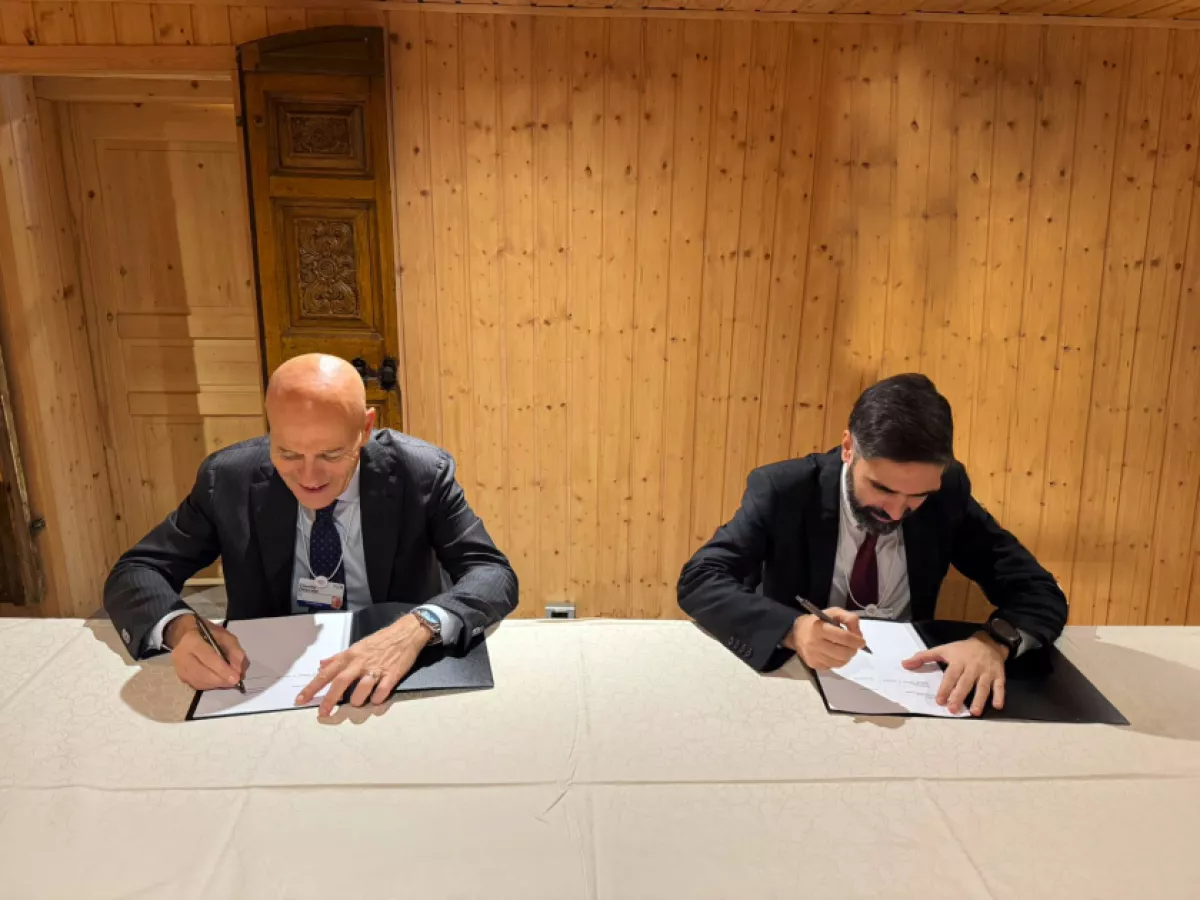
The company’s next step in expanding its global footprint is its involvement in the Baleine oil and gas field in Côte d’Ivoire. SOCAR signed an agreement with Eni S.p.A. to acquire a 10% stake in the project during the World Economic Forum (WEF) in Davos, marking a significant move into the African energy market.
The WEF-26, which opened on January 19 in Davos, Switzerland, proved highly productive for advancing Azerbaijan’s economic interests. A highlight of the forum was the signing of an agreement between SOCAR and Eni S.p.A. for the acquisition of a 10% stake in the Baleine oil and gas field in Côte d’Ivoire.
The agreement, signed by SOCAR President Rovshan Najaf and Eni CEO Claudio Descalzi, gives SOCAR access to Africa’s significant oil and gas resources. It also forms part of a broader programme of strategic cooperation between SOCAR and Eni across multiple segments of the energy sector.
The completion of the transaction and implementation of the agreement are expected to follow approvals from the relevant regulatory authorities and the fulfilment of standard conditions and requirements.
Baleine is considered one of the largest oil and gas fields discovered in West Africa in recent years. The offshore field was discovered in 2021 on the CI-101 block by the Baleine-1x exploration well, located approximately 60 km from the coast. The block is operated by Eni in partnership with the national company Petroci Holding, which holds 90% and 10% stakes, respectively, during the exploration phase. Oil and gas production on the shelf began in August 2023.
The gas produced at Baleine is entirely directed towards meeting the domestic demand of Côte d’Ivoire, which today has a population exceeding 30 million. Currently, in the first and second stages of development, the Baleine field produces over 62,000 barrels of oil and more than 2.1 million cubic meters of gas per day. With the commissioning of the third stage, daily production is expected to reach 150,000 barrels of oil and approximately 5.7 million cubic meters of gas.
Notably, Baleine is the first offshore oil and gas project in Africa with zero emissions. According to Eni’s preliminary estimates, the proven reserves of the field are up to 2.0 billion barrels of oil and about 68 billion cubic meters of associated petroleum gas (APG).
According to Reuters, the agreement with Eni S.p.A. to acquire a stake in the Baleine project marks SOCAR’s entry into the African oil and gas market and fully aligns with the State Oil Company’s strategy for global expansion.
So what is SOCAR’s long-term investment strategy, and how extensive are its capitalisation and geographical reach?
Aiming to become one of the world’s leading international oil and gas companies, SOCAR, alongside expanding exploration, oil and gas production, and transport infrastructure within Azerbaijan, has, through its subsidiaries, invested billions in foreign countries. These investments help diversify risks, mitigate losses from declining domestic oil production, and allow the State Oil Company to optimise its capitalisation by investing in profitable ventures across different regions of the world.

In particular, SOCAR’s assets include a stake in the Petkim Petrokimya Holding petrochemical complex in İzmir, as well as investments in the STAR refinery, the construction of a container terminal in Türkiye, energy facilities, and more. In December last year, SOCAR signed an agreement with the Turkish company Gama Enerji to acquire 100% of the shares of the 870 MW Gama Enerji İç Anadolu power plant, with the deal valued at $225 million. Today, SOCAR’s investments in Türkiye are estimated at around $19 billion. Furthermore, as part of new initiatives in refining, petrochemicals, and the development of gas distribution networks (Kayserigaz, Bursagaz), an additional $7 billion is planned for investment.
Equally significant are SOCAR’s investments in Georgia, including the construction of the Black Sea oil terminal at the port of Kulevi, the establishment of a gas distribution system, and the creation of a retail fuel network. SOCAR’s subsidiary, SOCAR Energy Georgia, ranked first last December among companies attracting the largest volume of foreign direct investment in Georgia, having invested over $1.1 billion in various projects over the past years.
SOCAR’s subsidiaries operate networks of filling stations under the SOCAR brand in several countries across Eastern and Central Europe. In particular, prior to the Russia–Ukraine war, SOCAR Energy Ukraine actively developed retail petrol station networks in Ukraine. Similar projects are being implemented in Romania, Austria, Switzerland, Türkiye, and soon in Italy. In Switzerland, SOCAR had planned to install 100 high-speed electric vehicle charging stations and, in partnership with Swiss energy companies, participate in industrial-scale green hydrogen production.
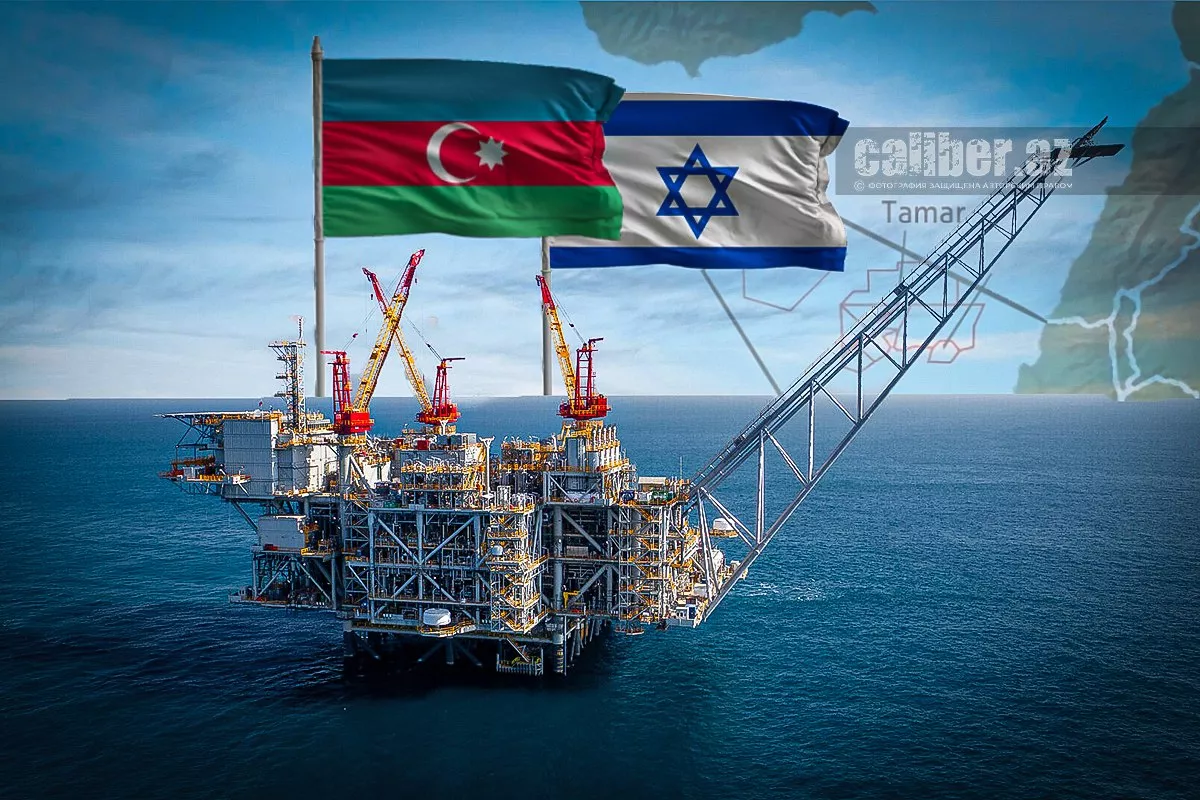
The State Oil Company actively invests in overseas oil and gas projects by acquiring stakes in the upstream sector. For example, in the United Arab Emirates (UAE), SOCAR acquired a 3% stake in the offshore Umm Lulu and SARB fields, operated by ADNOC, marking one of its first upstream investments outside Azerbaijan. This success was further expanded in the Middle East: in January last year, SOCAR signed an agreement with Union Energy to acquire a 10% stake in the Tamar project in Israel, the largest offshore gas field in the Mediterranean, operated by Chevron. In addition, a consortium consisting of SOCAR, BP, and NewMed Energy obtained licenses to conduct gas exploration in Israel’s exclusive economic zone.
Among SOCAR’s successful agreements last year was the signing of a production sharing agreement (PSA) with the Ministry of Energy of Uzbekistan and the national operator Uzbekneftegaz. The agreement covers geological exploration and subsequent hydrocarbon production in investment blocks of the Ustyurt oil and gas region, with total investments in the project estimated at $2 billion.
In September last year, SOCAR also signed an agreement to acquire 99.82% of the shares of the Italian company Italiana Petroli (IP) from API Holding, with the transaction expected to be completed in the first quarter of 2026. Italiana Petroli is one of Italy’s largest integrated downstream platforms, operating thousands of petrol stations across the country, two refineries with an annual capacity of around 10 million tonnes, and a business in bitumen, aviation fuel, and lubricants. It also owns a logistics network covering the entire country.
Overall, with the growth of its overseas capitalisation, SOCAR can today rightfully be regarded as a multinational corporation. Its offices, trading divisions (SOCAR Trading), and other subsidiaries have at various times been established in Georgia, Türkiye, Romania, Austria, Kazakhstan, the United Kingdom, the United States, Iran, the UAE, Germany, Ukraine, Belgium, Switzerland, Singapore, Vietnam, Nigeria, and Russia.
In recent years, Azerbaijan’s trading units have been particularly active in high-potential regions such as the Black Sea and the Mediterranean, as well as Southeast Asia, where they conduct oil transhipment and liquefied natural gas (LNG) swaps. Specifically, SOCAR divisions have invested in gas liquefaction terminals, regasification units, and transnational infrastructure projects, including a framework agreement between Pakistan LNG Limited (PLL) and SOCAR Trading for LNG deliveries to Pakistan.
Moreover, SOCAR has entered the international tanker transport segment: today, three of the company’s largest Aframax crude oil vessels, each with a capacity of 115,000 tonnes, participate in various intermediary operations for the transhipment of liquid hydrocarbons across seas and oceans.







 editor@caliber.az
 +994 55 444-88-98
 Азербайджан, Баку, ул. Низами, 203, Af Business House, 5-й этаж