










Surrounded by “monsters”: Lukashenko puts Belarusian Army on war footing Analysis by Limansky
Belarusian President Alexander Lukashenko has made serious statements about the growing military threat, calling for the defence of Belarusian territory even at the cost of one’s own life.
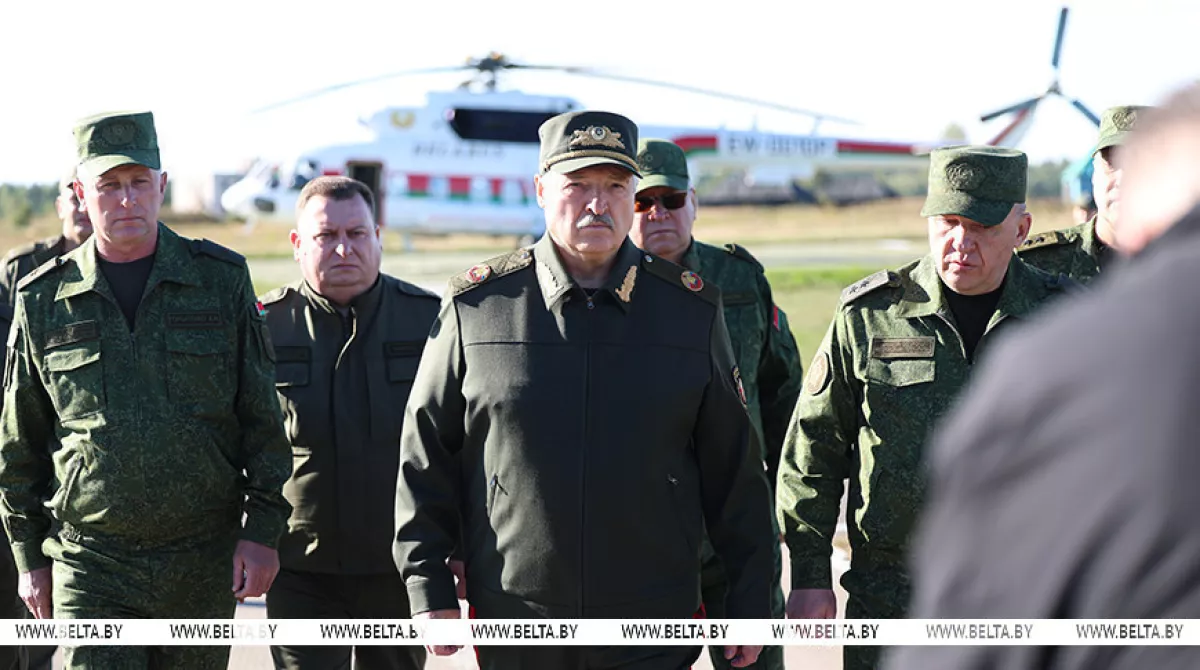
Summing up the results of exercises involving the Belarusian Armed Forces’ signal corps, the Belarusian leader outlined current tasks for modernising the army in line with contemporary requirements. What is changing, and what kind of modernisation is taking place in the Armed Forces of Belarus?
Surrounded by “monsters”
On September 11, at the Obuz-Lesnovsky combined-arms training ground in the Brest Region, Belarusian President Alexander Lukashenko addressed the army’s senior command, saying: “Some are trying to accuse us of supposedly planning to attack someone tomorrow… I repeat once again: we are not going to attack anyone; we are pragmatists. We understand that if we were to attack someone — say, one of our neighbours — it would be tantamount to suicide. We cannot win a conflict with our ‘monsters’, the countries located around our perimeter. So why start a war, if we are being absolutely frank? But we are obliged to defend every centimetre, every millimetre of our land, protect our population and ensure security. That is our task, whatever the cost. Even if it costs us our lives.”
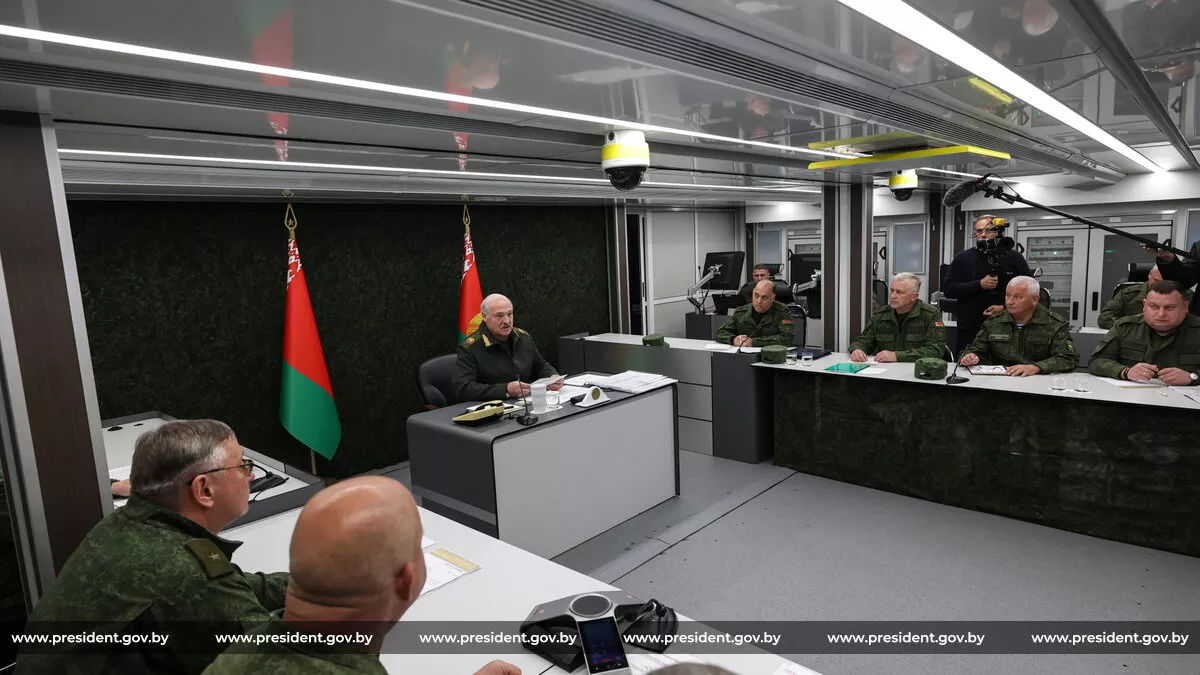
For perhaps the first time, the head of the Belarusian state has placed such clear emphasis on the price that may have to be paid for the freedom and independence of the homeland. “Even if it costs us our lives” — these words were not spoken by chance. Today, the situation unfolding along Belarus’s borders is highly alarming, and tensions continue to rise.
The president noted that military intelligence activities targeting Belarus are being conducted openly, “brazenly”. There are periodic provocations and violations of the republic’s airspace. But most importantly, neighbouring states are spending billions on weapons, forming new strike formations and concentrating them along Belarus’s borders. From a military standpoint, this can mean nothing other than preparations for war. “Therefore, as I once said, we need to prepare openly and honestly for war — in order to prevent it,” the Belarusian leader said.
Falling behind in communications is like death
Against this backdrop, the meeting addressed various aspects of modernising the Belarusian Armed Forces, primarily the establishment of a modern communications system. From September 7 to 11, the Belarusian Armed Forces conducted operational-special exercises involving its signal troops. The drills focused on testing and practising the resilience of modern communications technologies and methods, taking into account the experience of ongoing military conflicts.
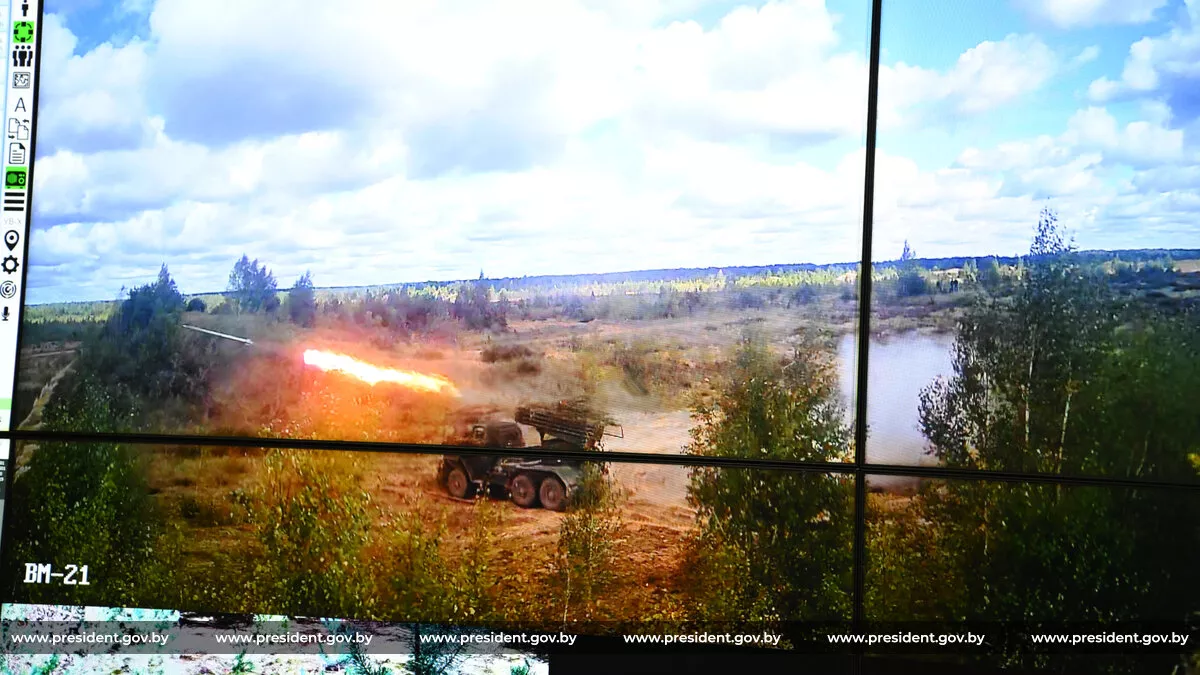
The Commander-in-Chief emphasised the strategic role that the latest communications systems, operational speed and secure communications channels play on the modern battlefield: “At a time when the whole world is rapidly developing information technologies, intelligence capabilities, electronic warfare and jamming systems, falling behind in this area is tantamount to death… We are already quite good at shooting and moving. But in order to shoot and move, we need certain commands…”
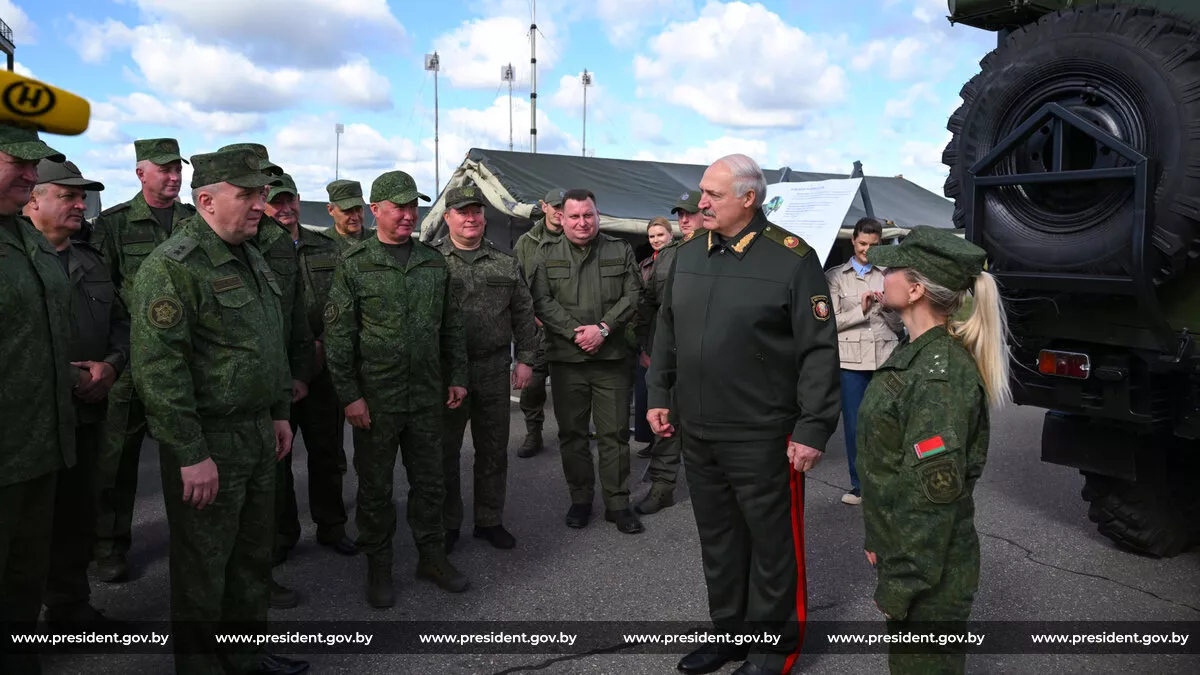
Several years ago, Belarus’s defence industry was tasked with improving communications systems to meet the requirements of modern warfare. Shortly after Alexander Lukashenko arrived at the training ground, Defence Minister Viktor Khrenin reported that the system for commanding and controlling troops had been completely revamped. According to the defence minister, the Belarusian army now has access to state-of-the-art communications systems that it could previously only dream of.
“Let’s see how this task has been carried out. Everything must be honest and objective,” Alexander Lukashenko said.
While at the command and observation post, the head of state was able to personally assess the control of the combat formation of a Special Operations Forces battalion using modern communications and automation systems.
The Belarusian president also stressed that a communications system is needed more broadly to ensure the functioning of state command and control in the event of an armed conflict.
Today, the Belarusian army is equipped with satellite, tropospheric and radio-relay communications stations, mobile telecommunications systems, and command-and-staff vehicles. Several years ago, the Commander-in-Chief personally ordered the supply of space communications equipment to the army. This equipment is domestically produced.
Such technologies already exist, but Lukashenko believes they are still available in insufficient quantities. Following the current meeting, a decision will be made on the timeframe for equipping the Belarusian army with all the latest communications systems.
Both the supply of new models and the modernisation of existing systems are envisaged.
In line with wartime requirements
The meeting in Obuz-Lesnovsky also addressed other aspects of the development of the modern Belarusian army.
“Units are being deployed within the Armed Forces, some of them in accordance with wartime requirements — an artillery brigade, for example,” the Belarusian leader said.
Belarus had for a long time refrained from responding to the provocative steps taken by some neighbouring states, which have significantly increased the size of their armed forces and the number of military formations, while also concentrating them along Belarus’s borders. But the formation of the new 37th Guards Air Assault Brigade in the Gomel Region is now nearing completion. Work is also underway to coordinate the operations of the anti-aircraft missile and rocket artillery regiments, electronic warfare and electronic intelligence units, as well as the command structure of the new Special Operations Forces (SOF) brigade, which is intended to cover the volatile southern flank.
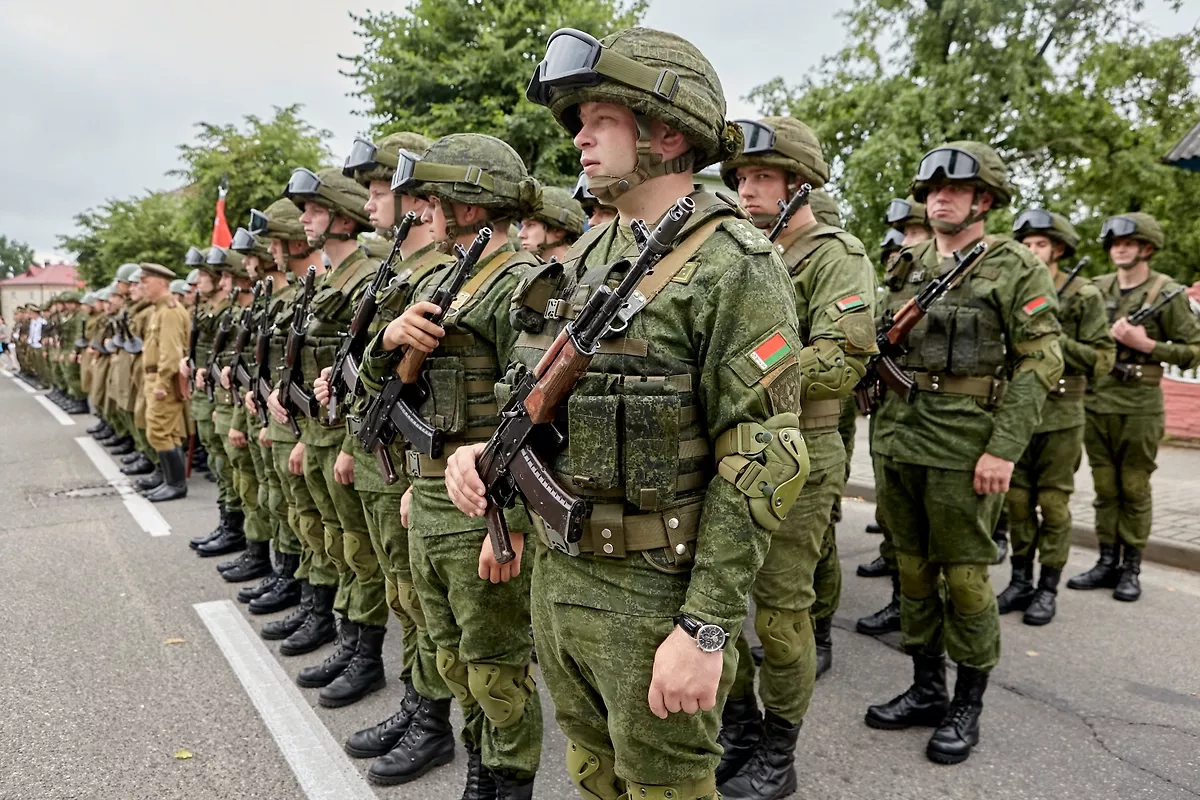
Construction of a military town at the permanent deployment site of the 37th Guards Air Assault Brigade is also progressing rapidly. The new brigade is expected to assume combat duty in 2027.
The Belarusian army also continues its routine training, including exercises with servicemen from friendly countries. Belarusian troops will soon take part in tactical-special exercises in Kazakhstan. This will be followed by joint Belarusian-Chinese military exercises in China, involving Special Operations Forces of the Belarusian Armed Forces.
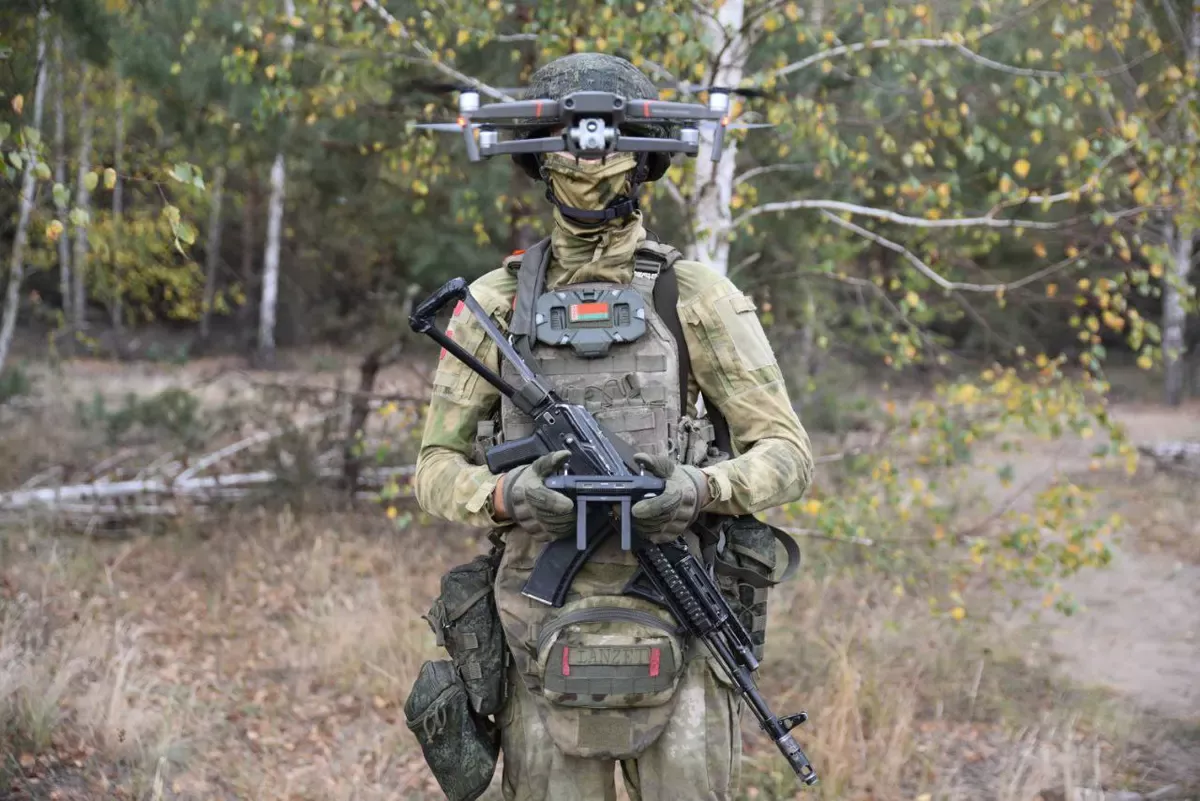
In September, Belarus itself will also host tactical-special exercises with the 147th Anti-Aircraft Missile Regiment, which has been transferred to the Special Operations Forces (SOF), as well as command-and-staff exercises with the 38th Air Assault Brigade. The Special Operations Forces of the Belarusian Armed Forces will also take part in the CSTO’s “Interaction” exercises on Russian territory. After that, the CSTO peacekeeping forces will hold exercises in Belarus.
In the near future, intensive checks of the combat readiness of the entire Belarusian army are expected to continue. The Belarusian leader said: “I have already put it in simple, popular terms: the army needs to be shaken up; the time has come. The entire army. We will check everyone — right down to mobilisation.”
……
At a press conference on September 11, Alexander Lukashenko also shared news that came as a surprise to many. It turns out that his younger son, Nikolai Lukashenko, is also serving in the armed forces.
“The younger son is already serving in the army. Nobody even knew. Viktor [Defence Minister Viktor Khrenin — ed.] called him up. He is serving in the army as he should, like everyone else. He is a lieutenant. I won’t say where, but in the most difficult unit,” Alexander Lukashenko said.
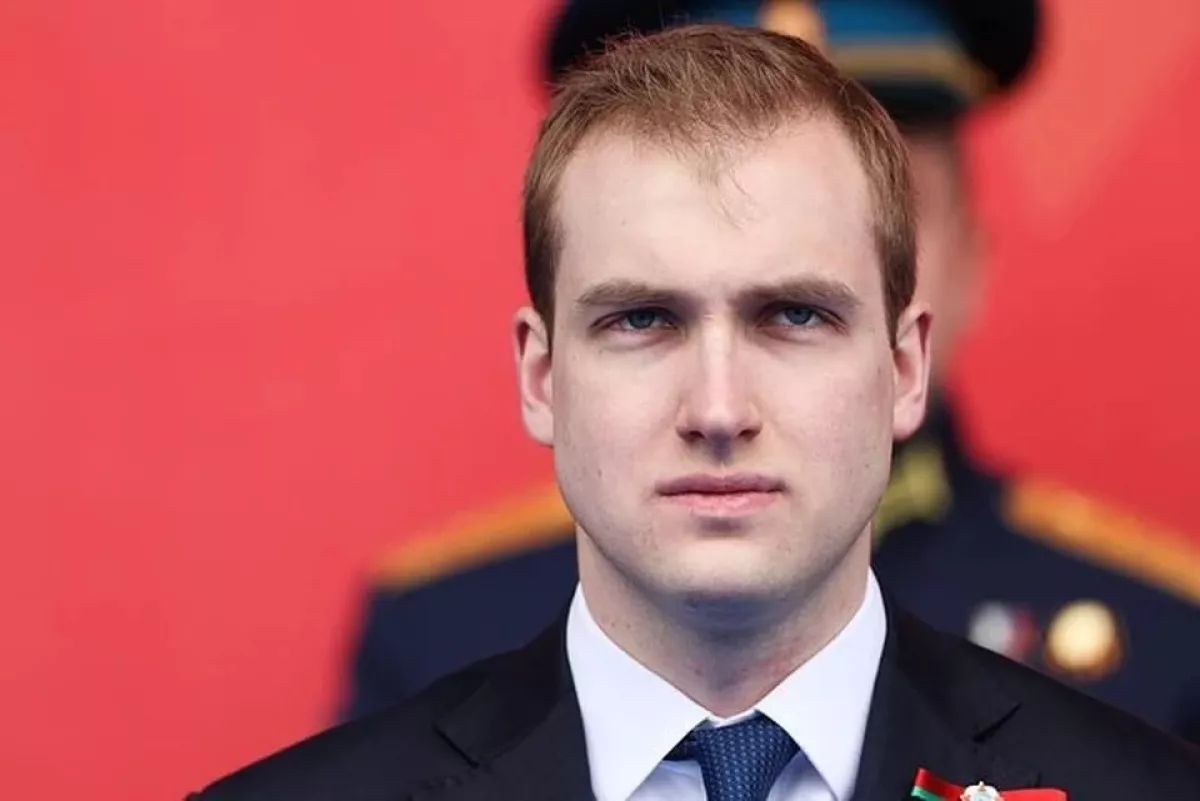
At the same time, outside his military duties, Nikolai Lukashenko continues to pursue biotechnology, which was his field of specialisation at Peking University.
The leitmotif of everything discussed and done at the Obuz-Lesnovsky training ground that day could perhaps be summed up in the words of the Belarusian leader: “And let neither the Poles nor the Lithuanians, nor the Latvians, and certainly not the Ukrainians think that we are going to attack them tomorrow and that this is why we are holding exercises. No. We are preparing for any war in order to prevent it — a simple and clear formula.”







 editor@caliber.az
 +994 55 444-88-98
 Азербайджан, Баку, ул. Низами, 203, Af Business House, 5-й этаж