










The collapse of European myths Moralism crumbles under the weight of money
The arrest in Belgium of former Secretary-General of the European External Action Service (EEAS) Stefano Sannino and former European foreign policy chief, Rector of the College of Europe Federica Mogherini (who was later released), became one of the most high-profile corruption scandals in European politics in recent years. It not only revealed possible misuse of EU funds but also cast doubt on the stability of the entire European bureaucracy, which for many years had presented itself as a model of transparency and integrity.
Federica Mogherini is one of the most prominent political figures in the EU in recent years. She began her career in Italy’s Democratic Party and quickly rose through the ranks, eventually becoming the EU High Representative for Foreign Affairs and Security Policy in 2014, effectively serving as “Europe’s foreign minister.”
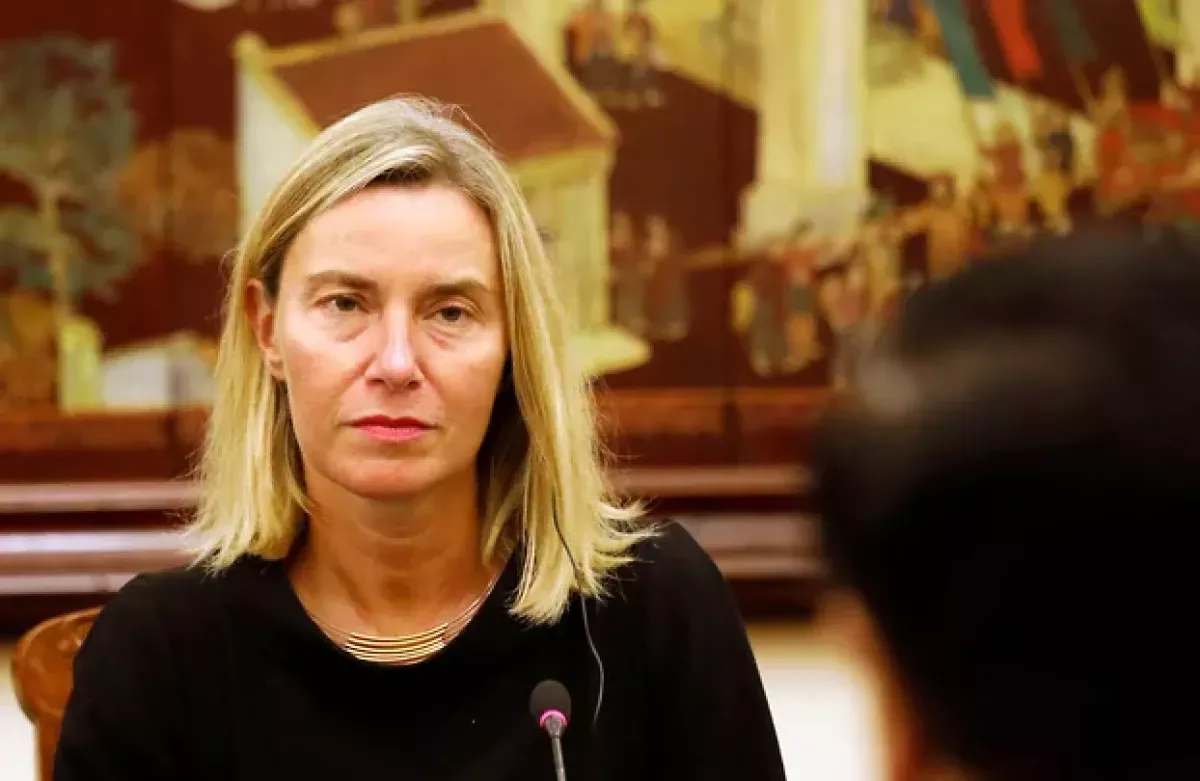
This appointment was the result of a complex political negotiation, pressure from several countries, and her personal ability to build consensus with influential groups within the EU. As the face of European diplomacy, Mogherini participated in negotiations with Iran, oversaw EU policy in the Middle East, and dealt with issues of sanctions and European security. And now, a person with such a political background has found herself at the center of a criminal investigation—a fact that fundamentally changes the perception of the European elite.
According to Belgian media, the investigation is linked to potential fraud in the allocation of funds to the College of Europe, where a prestigious program for training young diplomats was carried out. The scheme, according to investigators, allegedly involved the misuse of European funds, manipulation of budget allocations, and possible “kickbacks.”
And this is not about ordinary officials or some regional administration. Under suspicion is the elite of European diplomacy, which was very keen on lecturing Eastern European countries—including Azerbaijan—about democracy, transparency, the rule of law, and the inadmissibility of corruption.
During discussions on cooperation between the EU and Azerbaijan, Mogherini constantly emphasized that democracy, the rule of law, and respect for human rights were key conditions for partnership, and lamented that in Azerbaijan “the space for civil society and the protection of human rights remains limited.” Yet recent events show a stark contrast between these statements and reality.
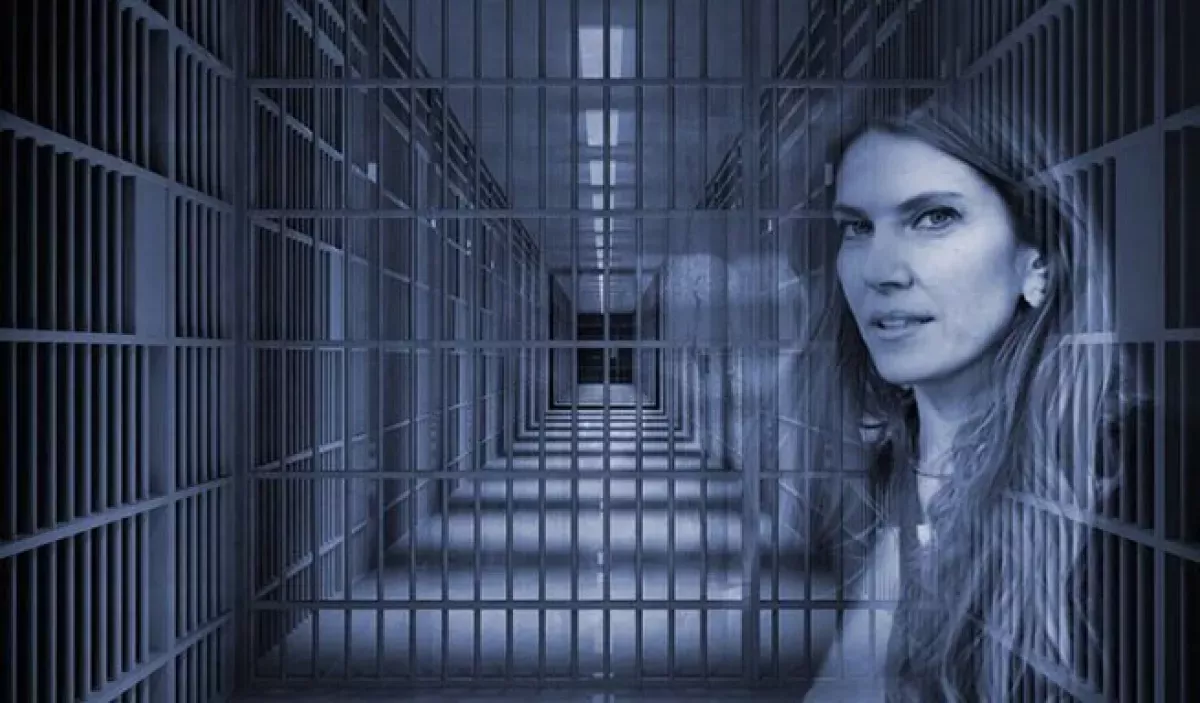
This is by no means the first blow to the EU’s image. One only has to recall the case of former Vice-President of the European Parliament Eva Kaili, in whose house a search uncovered €150,000 in cash, while her father was detained in a luxury Brussels hotel with a suitcase stuffed with cash. Ultimately, she was charged with “participation in a criminal organization, money laundering and corruption.”
And it is evident how this lady collected signatures calling for discussions related to the “situation in Nagorno-Karabakh,” actively lobbied for Armenia’s interests, made anti-Azerbaijani statements, and, in the midst of the 44-day war, demanded that the EU not issue Schengen visas to Azerbaijani citizens holding diplomatic passports.
And now there is a new scandal. And this raises questions. After the start of the Russian-Ukrainian war, the EU allocated an enormous amount of aid to Ukraine—over €187 billion ($218 billion). However, there is one problem: these are “on-paper” figures. The real mechanisms for distributing the funds, the methods of transfer, and oversight of the tranches—all of this occurs within closed bureaucratic structures, which, as it now turns out, are far from flawless.
Can one be certain that hundreds of billions actually reach the intended recipients, and that no “kickbacks” or schemes arise along the way? After all these scandals in the EU, such certainty cannot exist. Especially since corruption scandals involving Ukraine, unfortunately, are no longer news. Questions about the transparency of fund spending have arisen repeatedly, and this was precisely the reason why U.S. President Donald Trump reconsidered American aid policy.
“Biden has authorized more money in this fight than Europe has spent by billions and billions of dollars […] we’ve spent, perhaps, $350 billion. Like taking candy from a baby, that’s what happened. And they’ve spent $100 billion. What a difference that is,” Trump stated.
In a context where even top European officials are implicated in corruption, such statements should serve as a signal for the most thorough international audit. If the EU elite is suspected of participating in fraudulent schemes at the level of educational programs, what can be said about the giant financial flows related to war, arms supplies, and emergency funding? There are no guarantees of honesty here. And today, this raises concern among many political scientists and economists.
So today we are witnessing the collapse of a myth. For decades, a number of politicians and activists have tried to portray European institutions as models of transparency, while countries outside the Western bloc were depicted as states that needed to be “taught” civilized governance. These arguments were actively used to exert pressure on dissenting countries, in particular Azerbaijan, which was criticized by institutions whose representatives are now under investigation. The irony is obvious, especially considering that these accusations were often made with the support of Armenian lobbyists. Accordingly, the moral superiority of the West is a myth that is now falling apart.
Meanwhile, as events in recent years have shown, Azerbaijan is following its own path—successful, independent, and not reliant on politically biased structures, whose leaders, as the facts confirm, often turn out to be ordinary corrupt officials.







 editor@caliber.az
 +994 55 444-88-98
 Азербайджан, Баку, ул. Низами, 203, Af Business House, 5-й этаж