










Ukraine’s frontline realities vs political illusions Between war and words
Ukraine’s potential accession to the EU and NATO remains a central issue on the international agenda. President Volodymyr Zelenskyy addressed the matter directly at a joint press conference with German Chancellor Friedrich Merz, voicing scepticism about proposals for a “limited” form of membership in either organisation.
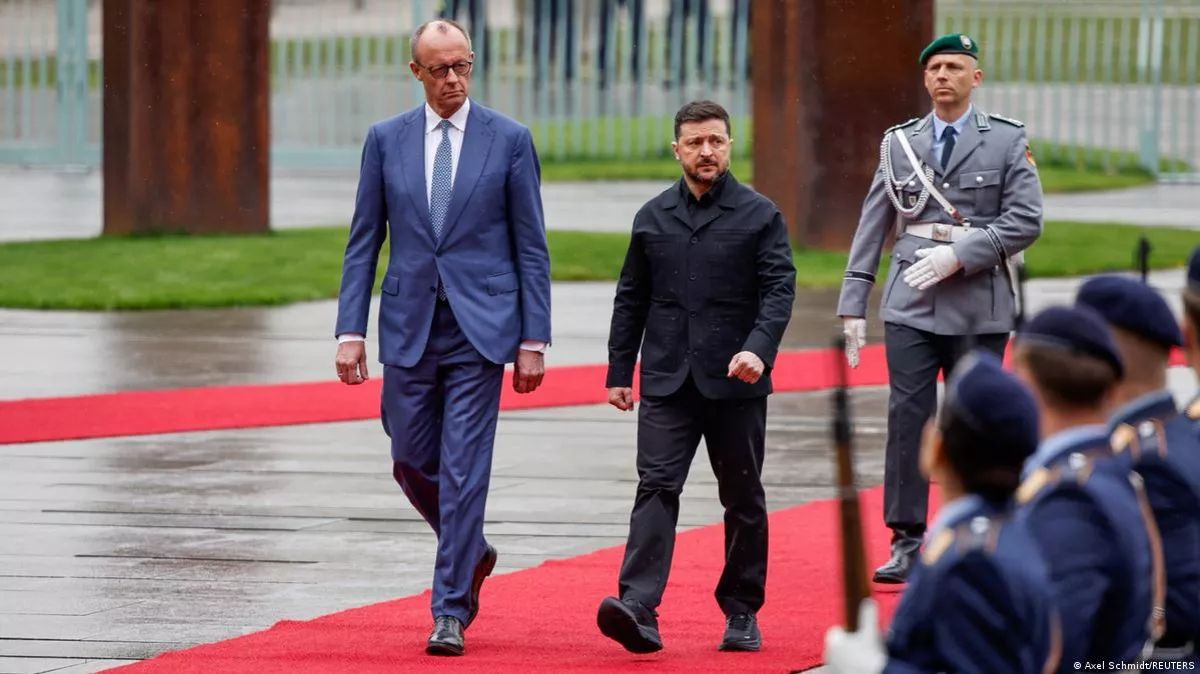
At the briefing, the Ukrainian president also stated that “[...] it is of great importance that Germany remains strong, remains committed, and is truly capable of defending the interests of Europe and Europeans.” In essence, these were words of gratitude addressed to the Federal Republic of Germany for a new large-scale package of defence cooperation with Ukraine totaling €4 billion.
In turn, Defence Minister Mykhailo Fedorov announced on Telegram that the agreements cover strengthening Ukraine’s air defence, developing long-range capabilities, and launching joint drone production. In particular, Germany will finance a contract for several hundred missiles for the Patriot air defence systems, which are expected to significantly enhance the protection of Ukrainian cities and critical infrastructure. In addition, the delivery of 36 IRIS-T launchers is planned to strengthen the multi-layered air defence system.
In this context, a quite logical question arises regarding the timing of the delivery of this weaponry to Ukraine, especially given that Russia continues to carry out strikes on Ukrainian territory. Thus, on April 15, the Russian side launched another massive attack on Ukraine: in particular, the head of the Kyiv Regional Military Administration, Mykola Kalashnyk, stated that production facilities and private homes in the Kyiv region were damaged as a result of the Russian strike, and fires broke out. Fortunately, there were no casualties.
At the same time, the head of the Odesa Regional Military Administration, Oleh Kiper, reported that another drone attack was carried out on the region’s port infrastructure, with fires and damage to warehouse and administrative buildings recorded.
In turn, the head of the Cherkasy Regional Military Administration, Ihor Taburets, said that on the night of April 15, Russian forces carried out a kamikaze drone attack, resulting in at least four people being injured, while the head of the Dnipropetrovsk Regional Military Administration, Oleksandr Hanzha, reported that Russian troops attacked Dnipro, leaving three people injured.
In addition, on the evening of April 14, the Russian army attacked Cherkasy. As reported by Ihor Taburets, an eight-year-old boy was killed in the regional centre, and 12 people were injured. On the same day, as a result of the Russian strike on Dnipro, five people were killed, and at least 25 were injured, 10 of them in serious condition. According to the Ukrainian Prosecutor General’s Office, the Russian side attacked Dnipro with a missile: “The dead and injured are civilians who were travelling on a highway in their own vehicles. Civilian infrastructure and vehicles were damaged.”
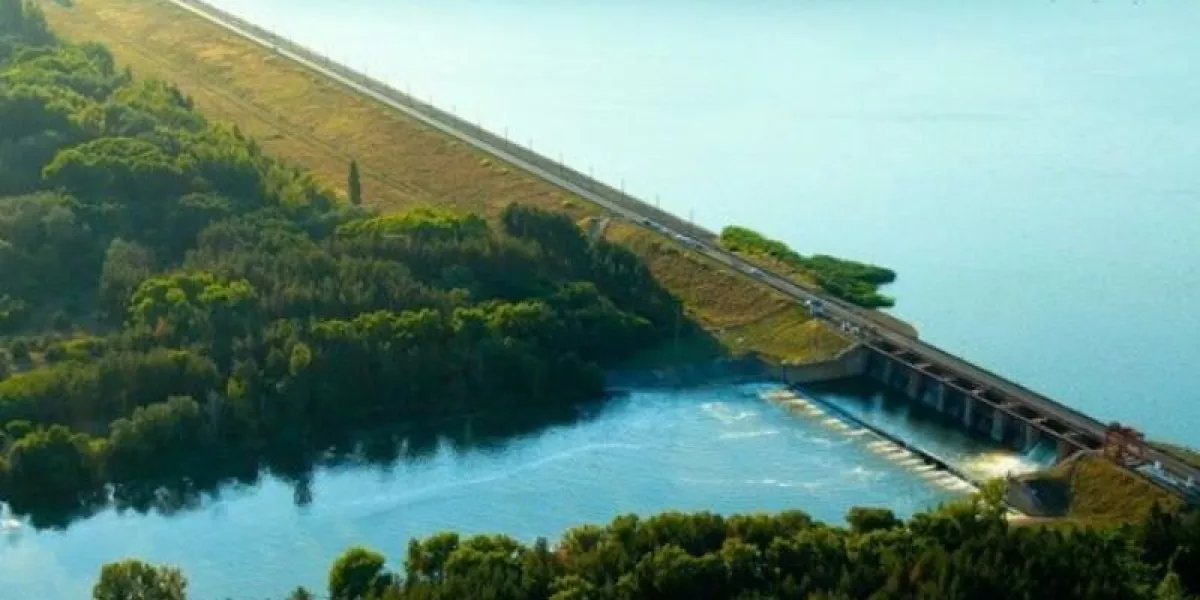
On April 14, Russian forces dropped six guided aerial bombs on a critically important facility — the Pechenihy dam in the Chuhuiv district, as reported by the head of the Kharkiv Regional Military Administration, Oleh Syniehubov, during a national telethon broadcast.
According to the press service of the 16th Army Corps of the Armed Forces of Ukraine, four aerial bombs struck the ground near hydraulic engineering structures, while another two fell into the water. The military emphasised that the timing of the attack appears particularly cynical, as the strike occurred during the spring flood period, when the reservoir contains its maximum volume of water. The destruction of the dam could have caused large-scale flooding of settlements located downstream and serious environmental consequences. Fortunately, this did not happen.
Brief background: the Pechenihy Reservoir has a surface area of 86.2 km², extends 65 km in length and up to 3 km in width. Its depth ranges from 4.4 m to 20 m, and its catchment area is 8,400 km². It was created to supply fresh water to Kharkiv. The dam has repeatedly been targeted over the past year by Russian forces, with attempts made using drones, aerial bombs, and various types of missiles. So far, these have all ended, so to speak, without catastrophic consequences, but the Russian side is clearly not intending to stop such attacks, and if it achieves its stated objective, Kharkiv’s freshwater supply could be put at risk.
On the other hand, according to the analytical project Deep State, Russia is expanding a buffer zone in the Sumy region to 150 square kilometres. Analysts note that, after reconnaissance of weak points along the border, Russian forces began a gradual advance, which partially started from the area near the village of Hrabovske.
Currently, pressure continues in the Myropilske area, where further advances have been observed, along with the expansion of so-called grey and red zones along the border. Ukrainian defence forces are monitoring the situation and attempting to contain the spread of control, but Russian troops are continuing to advance.
In this context, Volodymyr Zelenskyy once again raises the issue of Ukraine’s full membership in the European Union and NATO. This comes after numerous high-profile public statements from both EU and NATO leadership indicating that there are no plans for the rapid or exceptional admission of Ukraine into these organisations.
In particular, Politico again notes that France, Germany, Italy, and the Netherlands oppose Ukraine’s accelerated accession to the EU, as several capitals fear that discussions about enlargement could strengthen right-wing populist forces, trigger difficult internal debates, and revive rhetoric from the era of the “Polish plumber,” when the accession of Eastern European countries was portrayed as a threat to jobs in Western Europe.
According to the publication, these countries insist that Ukraine and Moldova should follow the standard, “merit-based” accession process. The level of scepticism is so strong that the issue of enlargement, which was initially expected to be included in the agenda of the EU summit in Nicosia, is now likely to be excluded from the agenda altogether.
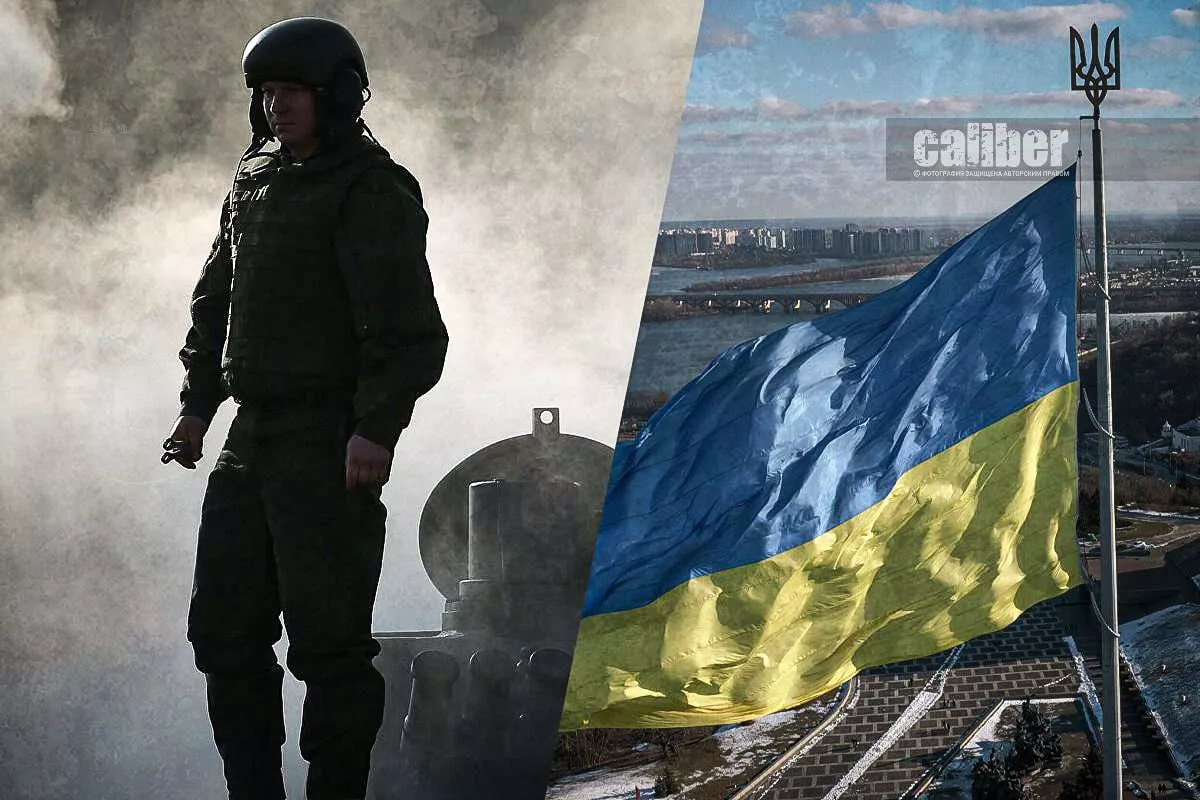
All of this is presumably well known to Volodymyr Zelenskyy as well. And he, it appears, is attempting to shift the information agenda by demanding full membership for Ukraine, while Russia continues to expand its buffer zone, now also in the Sumy region, while simultaneously carrying out strikes in various directions.
More shocking, in light of the ongoing events, are the persistent populist statements made by members of the Verkhovna Rada from the Servant of the People party. This time, MP Yuriy Kamelchuk stood out, stating that “Ukraine can actually defend itself forever. We have experience of fighting Russia not only over the past 12 years, but over the past 300 years.”
Such remarks may appear particularly incongruous coming from a lawmaker who has previously complained about parliamentary fatigue, who has not taken up arms in defence of his country, and who frequently undertakes official trips abroad.
However, these are the current realities in Ukraine, where there is a vast divide between civilians who are losing relatives, loved ones, and ancestral lands, and politicians who engage in rhetoric and repeatedly make populist statements.







 editor@caliber.az
 +994 55 444-88-98
 Азербайджан, Баку, ул. Низами, 203, Af Business House, 5-й этаж