










Winter and the delayed thaw Russia stalls on Azerbaijani airliner case
Among all the significant events related to the South Caucasus region over the past year, two stand out in particular: the peace process between Azerbaijan and Armenia, and the crisis between Moscow and Baku following the downing of an Azerbaijani passenger plane over Grozny. Both processes developed steadily, each in its own tone—the peace process with Armenia on a positive trajectory, and the crisis with Moscow leaning more toward the negative. It is the second of these that deserves a closer look.
A glimmer of hope for the restoration of relations between Russia and Azerbaijan appeared on October 9 at the CIS Summit in Dushanbe. During the meeting with President Ilham Aliyev, President Vladimir Putin stated that “everything that is required in such tragic situations in terms of compensation. A legal assessment will also be given to the actions of all officials.”
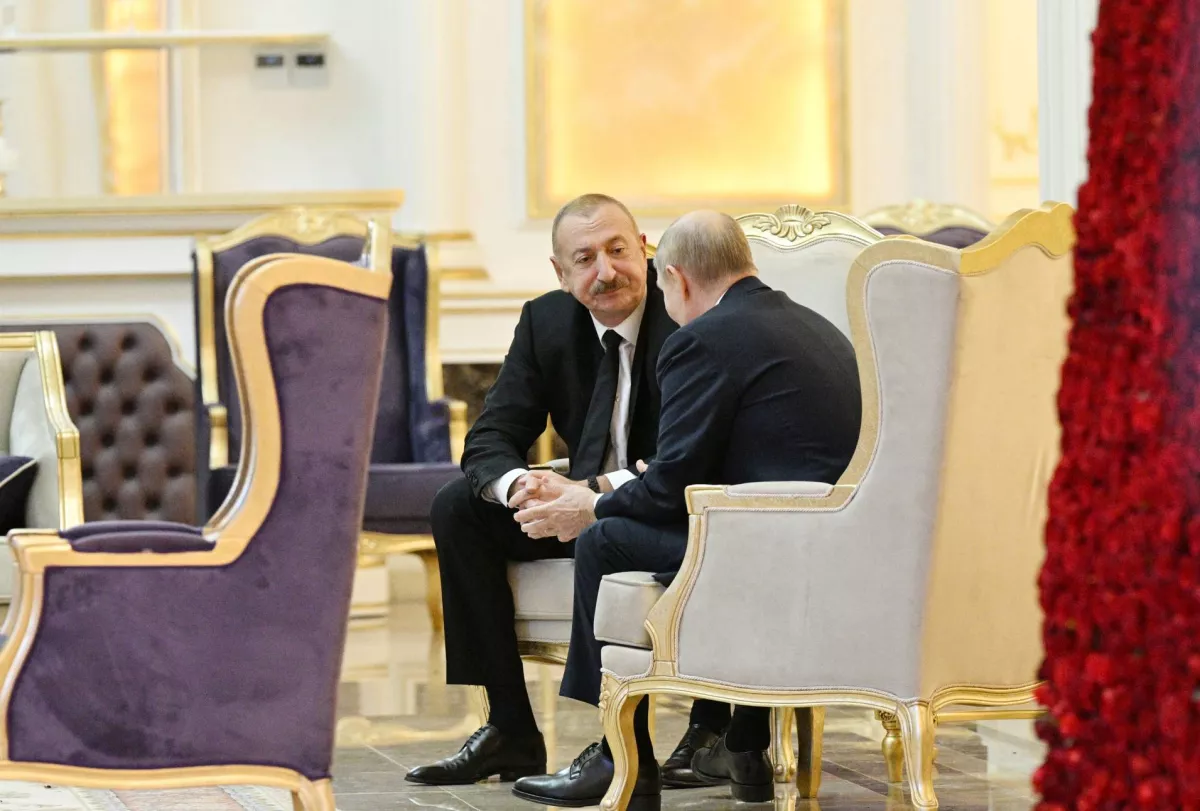
Two and a half months have passed since that meeting, yet Moscow has not taken any of the steps announced by Putin. As Farhad Mammadov, head of the South Caucasus Research Center, noted on his Telegram channel Mneniye-FM, “the anniversary of the tragedy, when the commission investigating the causes of the crash is supposed to conclude its work, is approaching. However, as statements from the Kazakh side indicate, the process is still ongoing, and the Russian side has yet to complete its part of the work.”
Indeed, Azerbaijani society had expected that by the anniversary of the tragedy— December 25—the Russian side would have fulfilled at least part of its own commitments. Even if the investigation has not been fully completed, the main details of the crash are already known—this very fact allowed Putin to acknowledge its causes in October. Some particularly meticulous readers may ask: it is only December 23 today, so why write about this when there are still two days until the anniversary? Perhaps Moscow will announce the implementation of the promised measures precisely on the 25th?
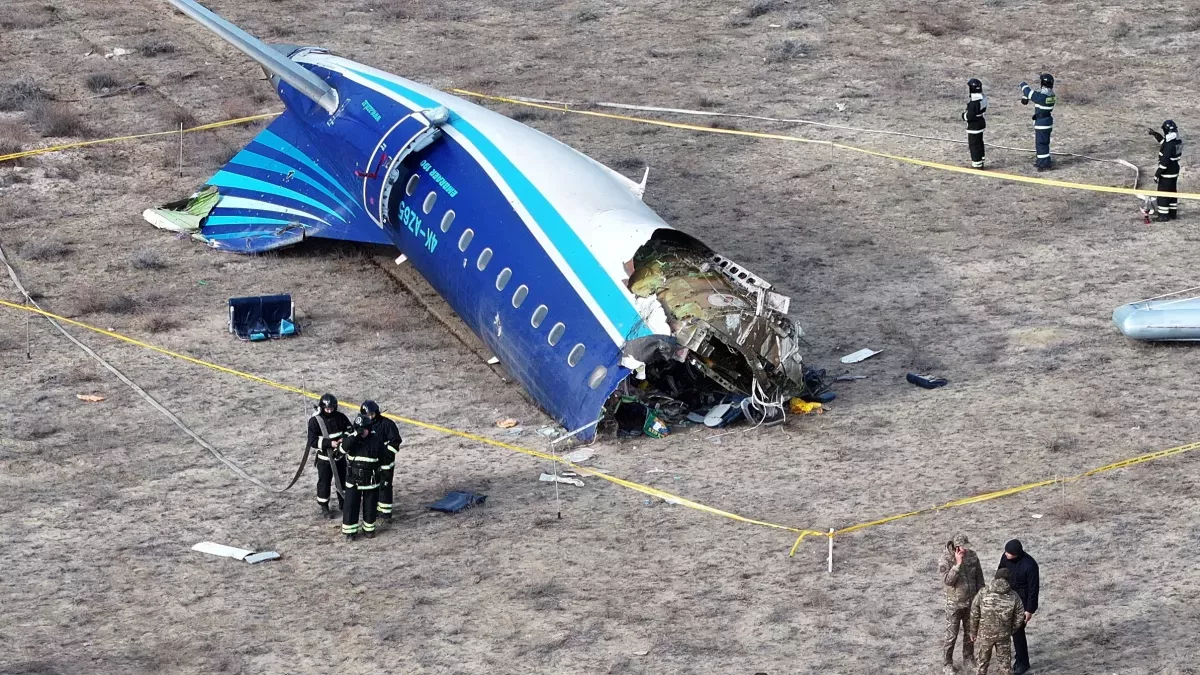
First of all, such pedantry would be inappropriate in itself. But even that is not the main point. What truly matters is that the anniversary of the crash was preceded by an informal CIS summit held on December 22 in Saint Petersburg. It is worth recalling that President Aliyev was en route to this traditional meeting on December 25 last year. However, upon learning of the AZAL plane tragedy, he immediately ordered Flight No. 1 to turn back and return home, holding an emergency meeting right at the airport.
Thus, in accordance with diplomatic protocol, any actions by the Russian side should have been timed to coincide with the informal CIS summit. This would have been a strong signal of the Kremlin’s genuine intention to restore relations and to warmly welcome Ilham Aliyev in the northern capital. However, no actions were taken by Moscow. Naturally, under these circumstances—and given his busy schedule—Ilham Aliyev was unable to travel to Saint Petersburg. However, Baku’s signal of disapproval is directed solely at Moscow; it in no way extends to other CIS partners, with whom Azerbaijan experienced very positive developments in cooperation over the past year.
We deliberately mentioned the peace process between Baku and Yerevan at the beginning of this piece. One does not need great insight to see that there is a tangible connection between these two events—the settlement with Yerevan and the crisis with Moscow, or more precisely, Russia’s delay in taking the necessary steps to acknowledge its responsibility.
By resolving the contradictions related to the Armenian-Azerbaijani conflict, Moscow risks losing a key instrument of conflict management in the region. Armenia, no longer burdened by the Karabakh issue, is increasingly asserting its independence from its former suzerain. If the normalisation process reaches its logical conclusion,Türkiye will no longer be perceived as an existential threat by Armenia. All of these anticipated developments could upend more than two centuries of Russian presence in the South Caucasus.
Meanwhile, Moscow has not given up hope of regaining influence over Yerevan by supporting various opposition movements aligned with the Armenian Church ahead of next summer’s elections in Armenia. However, the unfolding dynamics indicate that the ruling party is successfully withstanding this pressure.
Meanwhile, it is still too early to talk about Russia losing the South Caucasus. If Moscow manages to bring its people to power in Yerevan, Armenia will, in all likelihood, remain a dead end in the region. For now, however, Moscow’s reluctance to properly conclude the case of the downed Azerbaijani airliner suggests more uncertainty about the success of a so-called “Bring Armenia Back” operation. The Kremlin places excessive emphasis on symbolism. Punishing those responsible for the plane’s downing and then losing the South Caucasus would, in its eyes, appear as a double weakness. It seems that, of the two possible outcomes, it is prepared to accept only one—or perhaps neither.
Former empires have their quirks. Azerbaijan, however, must be prepared for relations with Moscow to thaw slowly, until the Kremlin takes the promised steps—regardless of the geopolitical climate outside. Baku expects positive actions from Moscow in this regard, but in their absence, it is ready to defend its rightful position using international mechanisms. Meanwhile, it seems unlikely that high-level visits to Russia should be expected anytime soon.







 editor@caliber.az
 +994 55 444-88-98
 Азербайджан, Баку, ул. Низами, 203, Af Business House, 5-й этаж