










A firm handshake Azerbaijan and the US become strategic partners
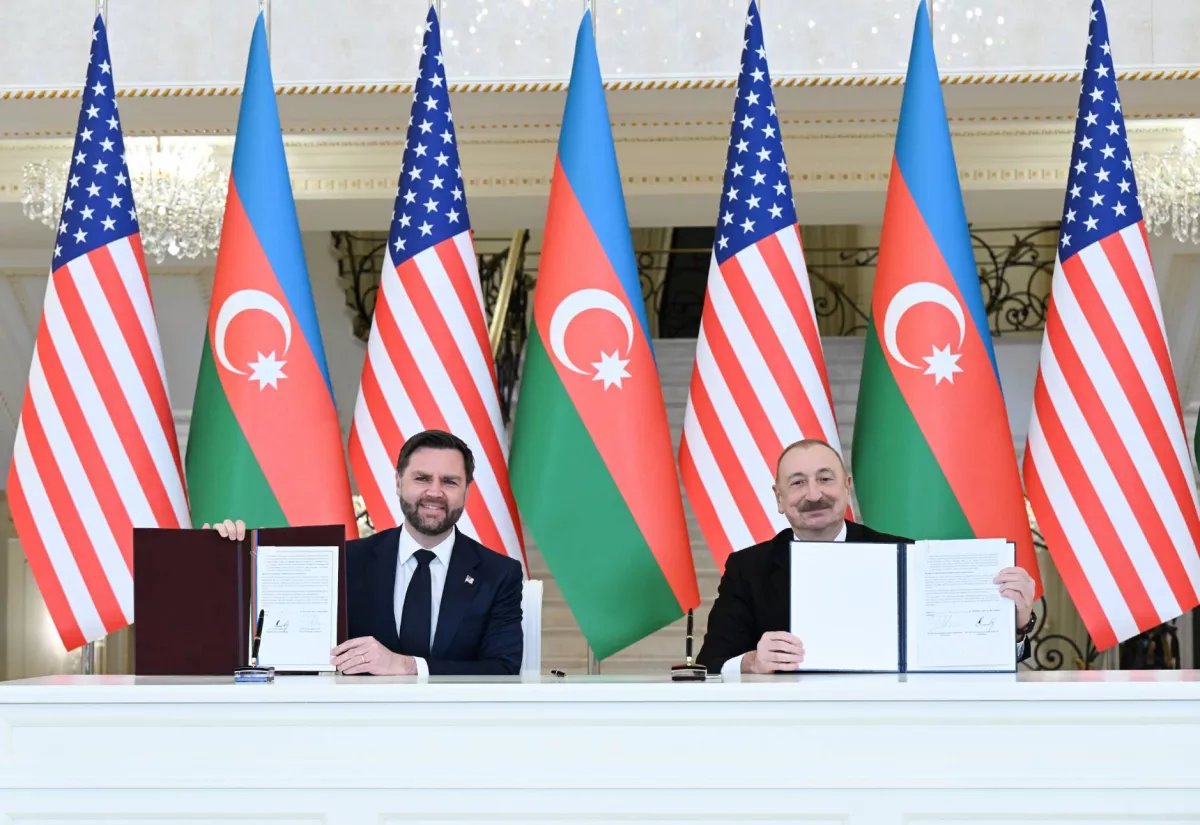
Without exaggeration, one of the key events at the beginning of 2026 was the visit to Baku by U.S. Vice President J.D. Vance, his meeting with President of Azerbaijan Ilham Aliyev, and the signing of a Charter on Strategic Partnership between the two countries. This document is not merely another agreement — it opens a new chapter in the history of Azerbaijani–American relations, elevating them to the level of genuine strategic cooperation. For the first time in history, Azerbaijan–U.S. relations have attained such a high status.
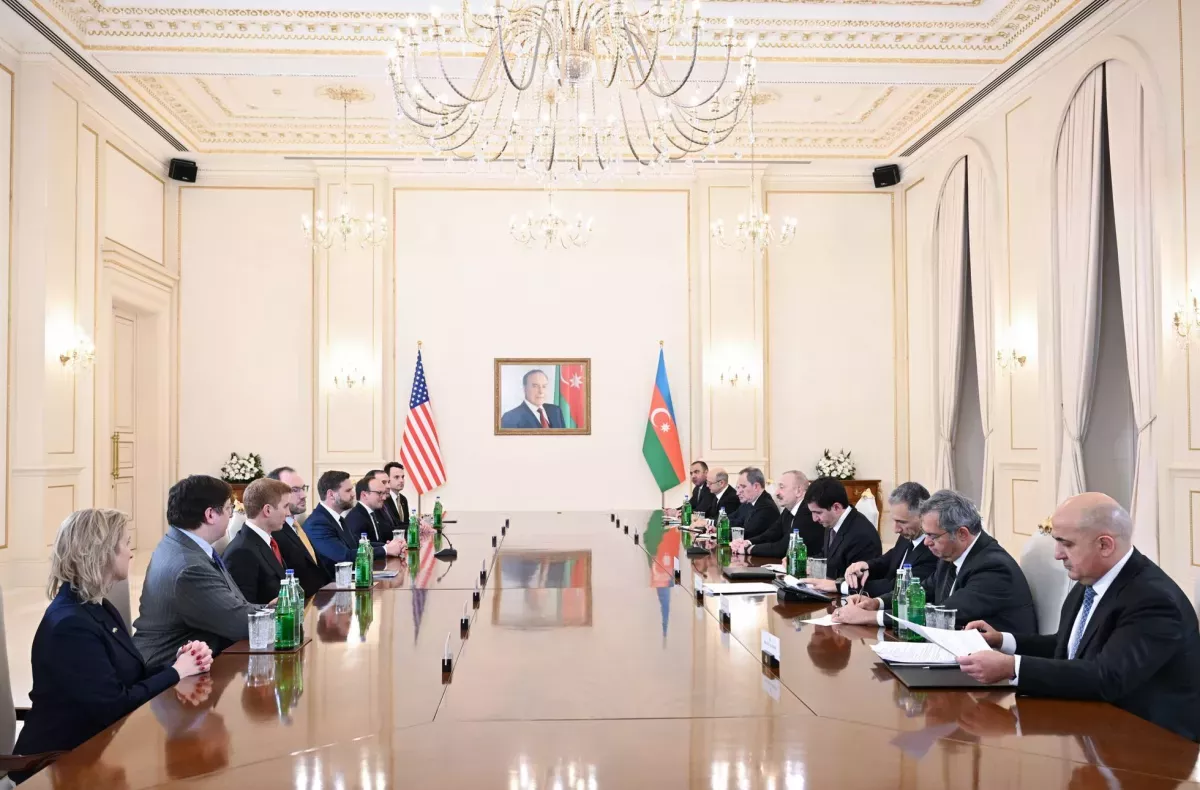
The Charter was prepared in record time — in just six months — in accordance with the Memorandum of Understanding signed by President of Azerbaijan Ilham Aliyev and U.S. President Donald Trump in Washington in August 2025. This fact alone demonstrates the scale of political will and the mutual interest of both sides. It is no coincidence that Ilham Aliyev, during his meeting with Vance ahead of the signing of the Charter, noted: “ Today, our partnership is going to be elevated to a higher level formally, and the scope of activity and interaction between our teams really demonstrates a high level of partnership spirit.”
The Charter has become a symbol of profound trust between Baku and Washington. Its signing coincided with a new phase in global and regional politics — a time when the old frameworks that had kept the South Caucasus under the grip of foreign interests for decades began to crumble. Azerbaijan’s victory in the 44-day war, the full restoration of its sovereignty, and subsequent steps toward peaceful settlement — culminating today in the high-level Washington meeting with the leaders of Azerbaijan, Armenia, and the United States — have decisively reshaped the balance of power. The region is no longer merely a stage for external pressure; it is now becoming a space for equal partnership.
For many years, the development of U.S.–Azerbaijan relations was hindered both by opposition from the Armenian lobby in the United States and by pseudo-ideological positions of previous administrations, particularly Democratic ones, which attempted to replace the real South Caucasus agenda with artificial political constructs.
The return of Trump to the White House marked the end of this era, opening the door to pragmatism and a realistic approach to the region. As Vice President Vance noted during his meeting with Ilham Aliyev: “Unfortunately, the last administration made a lot of mistakes, and one of the mistakes that it made is that it had a very dumb policy towards Azerbaijan. We have corrected that under the President's leadership.”
Contrary to conventional perceptions of U.S. foreign policy, the Charter signed by the two countries does not imply hierarchy or patronage. The document reflects principles of equality, mutual respect, and recognition of Azerbaijan as an independent and influential player in the region.
Notably, J.D. Vance’s visit to Baku was accompanied by a large delegation of American business leaders and representatives of civil society organisations. This underscores that the new chapter in relations is not merely a political gesture, but the launch of concrete projects backed by investments, technology, and tangible interests.
The Strategic Partnership Charter between Azerbaijan and the United States ushers in a new era of cooperation, covering key sectors — from energy and transit to digital technologies and defence. At its core is the idea of regional interconnection: the parties intend to jointly develop transport and energy corridors, as well as modernise infrastructure to enable the free movement of goods, information, and energy.
Special attention is given to the multimodal project “Trump Route for Peace and Prosperity” (TRIPP), designed to connect mainland Azerbaijan with the Nakhchivan Autonomous Republic and serve as a key link in the Trans-Caspian (Middle) Corridor. This large-scale initiative will not only strengthen regional logistics but also reinforce the agreements reached at the Washington Peace Summit.
The Charter also highlights Azerbaijan’s strategic role in ensuring global energy security and its importance as a reliable partner for international investors. Planned initiatives include the development of transport networks, digital communications, civil nuclear energy, and the transit of critical minerals to global markets.
The economic section of the Charter emphasises innovation, investment, and digital transformation. Azerbaijan is strengthening its position as a regional hub for data, trade, finance, and technology, while the United States is prepared to support this progress through joint projects in artificial intelligence, cybersecurity, and space technologies.
The Charter provides for the creation of research platforms, the development of AI data centres, and the exchange of expertise between specialists from both countries. Security occupies a central place on the agenda: the parties intend to expand cooperation in defence, counterterrorism, and the protection of critical infrastructure.
Azerbaijan also receives support for humanitarian initiatives — particularly in demining operations — with U.S. financial and technological resources playing a key role.
The Charter envisages private-sector involvement in joint projects and the establishment of working groups tasked with preparing concrete roadmaps within three months. In this way, the document is not merely a statement of intent but a platform for long-term strategic partnership based on trust, mutual interests, and the pursuit of sustainable peace.
The Azerbaijan–United States Charter is a strategic manifesto of trust, maturity, and shared responsibility. It establishes a new architecture of relations in which Azerbaijan is an equal partner and a co-creator of a new regional reality. The signing of the Charter is a vivid confirmation that Azerbaijan is confidently entering the ranks of those who do not merely follow the global agenda, but help shape it.







 editor@caliber.az
 +994 55 444-88-98
 Азербайджан, Баку, ул. Низами, 203, Af Business House, 5-й этаж