










Baku’s strategic breakthrough From 2008 to 2026
Eighteen years – that is the span of time separating the visits of U.S. vice presidents to Baku, which have come to symbolise two completely different eras in Azerbaijani-American relations.
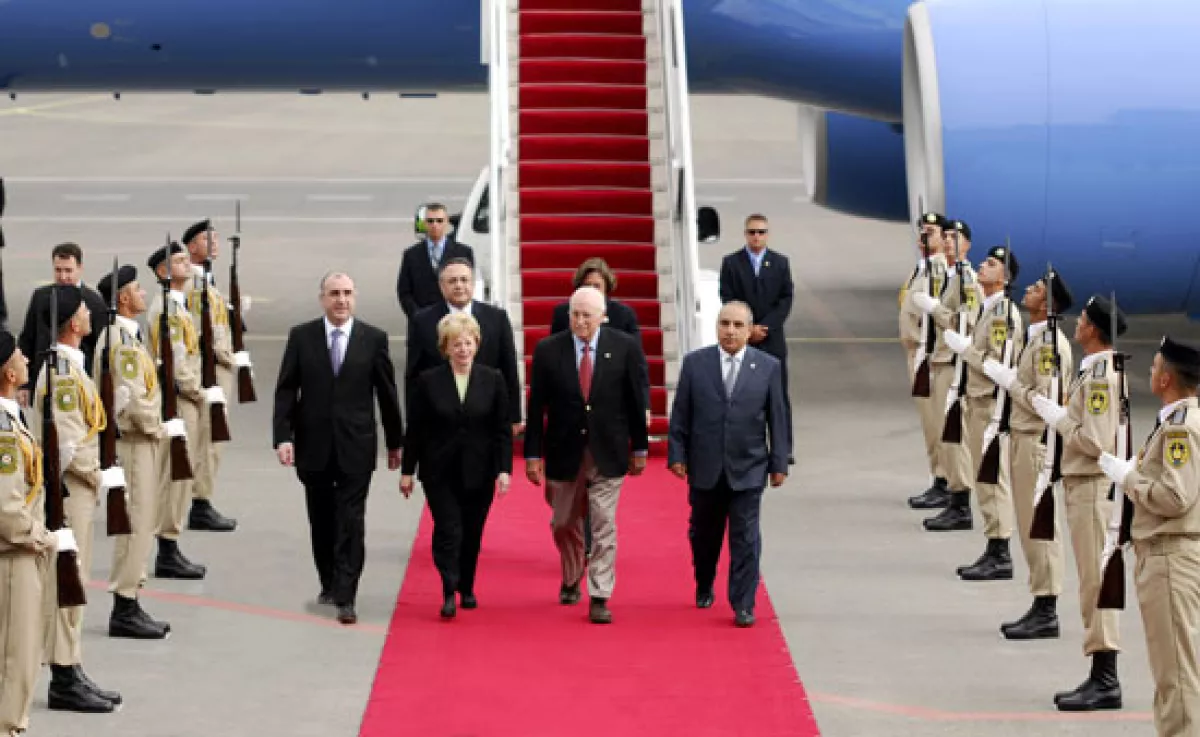
On September 3, 2008, Vice President Dick Cheney visited Azerbaijan on a working trip. His meeting with President Ilham Aliyev took place against the backdrop of the recently concluded Russia–Georgia war, at a time when the South Caucasus was at the epicentre of geopolitical tension. Cheney’s visit was primarily political and diplomatic in nature, and no strategic agreements or major bilateral treaties were signed. Baku received a political signal that was important, yet limited in its practical significance.
Eighteen years later, a truly historic milestone was achieved in Baku: President Aliyev and U.S. Vice President J.D. Vance signed the Charter on Strategic Partnership, formalising a new era in bilateral relations.
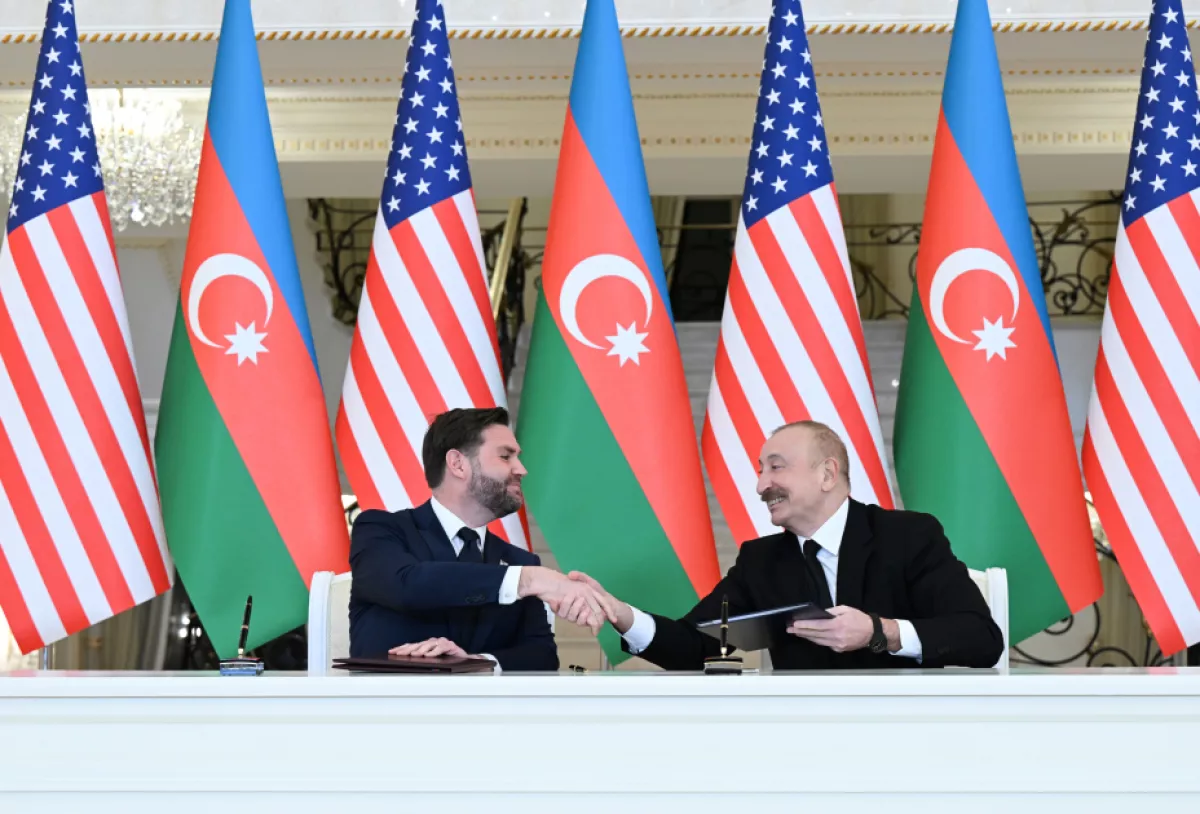
This comprehensive document formalises the parties’ intention to expand defence and military-technical cooperation, including the supply of defence products. It also places special emphasis on combating terrorism, jointly countering transnational threats, developing cybersecurity, and protecting critical infrastructure. In effect, it lays the groundwork for a long-term security partnership architecture.
Moreover, the Charter effectively reopens the discussion on the full repeal of the unjust Section 907 of the Freedom Support Act, which for decades restricted U.S. assistance to Azerbaijan. In today’s new geopolitical context, it appears as a relic of a period when White House administrations deliberately pursued anti-Azerbaijani policies in favour of Armenia, undermining Baku’s just position.
The signed document also provides for cooperation in the space sector and the development of digital infrastructure. This includes the creation of data centres, the advancement of artificial intelligence technologies with private-sector participation, and the establishment of a modern cyber ecosystem.
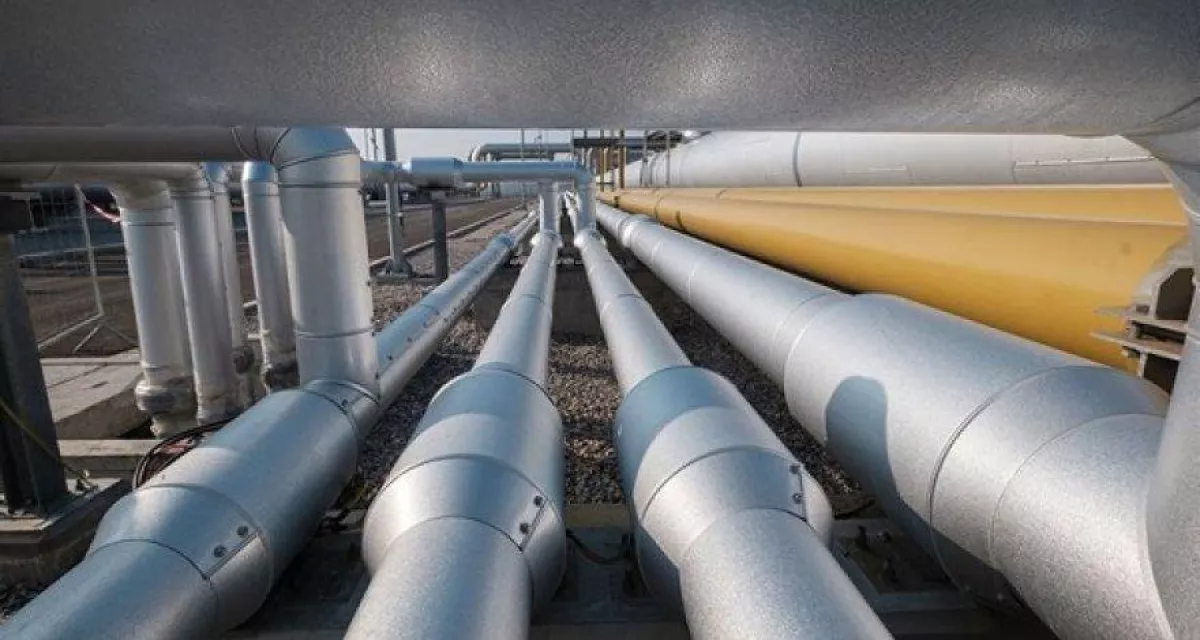
The defence and political dimensions of this new reality are built on the foundation of large-scale infrastructure and energy projects that Azerbaijan has implemented over the past two decades. A key element in the region’s energy transformation was the Baku–Tbilisi–Ceyhan (BTC) pipeline, which connected the Caspian to the Mediterranean and provided a direct route for Azerbaijani oil to global markets, bypassing traditional transit corridors.
This logic continued with the Southern Gas Corridor – a network of main pipelines including TANAP and TAP – which has turned Azerbaijan into one of Europe’s major suppliers of natural gas.
In particular, since late 2020, Italy has become a key recipient of Azerbaijani gas, and the recent start of deliveries to Austria and Germany symbolises new opportunities: the total number of importing countries has reached 16, of which 11 receive gas on a regular basis. Looking ahead, the Czech Republic may also join this list, as the logistics make such a scenario economically feasible.

The energy projects have been accompanied by the development of transport infrastructure: the Baku–Tbilisi–Kars railway has linked the South Caucasus with Türkiye and, further, with the European rail network. Meanwhile, the Baku International Sea Trade Port in Alat has become a crucial hub for cargo transit between Central Asia and Europe.
Particularly significant in this context is the Trans-Caspian International Transport Route (the Middle Corridor). In a climate of geopolitical turbulence, this artery offers an alternative to traditional routes, becoming a strategic bridge connecting the European, Eurasian, and Indo-Pacific economic systems.
Within this framework, the TRIPP initiative—focused on expanding transit, trade, and investment opportunities between Europe and Central Asia—also attracts special attention. For Washington, supporting such initiatives strengthens its economic presence in Eurasia without direct confrontation, leveraging infrastructure integration and private investment.
Today, Azerbaijan is a victorious country, having restored its territorial integrity on its own despite pressure from major global players. It is the largest economy in the South Caucasus and serves as a regional hub for energy, transport, and logistics. Comparing the situation in 2008 with the present reality, it becomes clear that back then, Baku was simply one partner among many, whereas today, the Azerbaijani state is a system-forming element in the Eurasian architecture.
Thus, the signing of the Charter is a recognition of Azerbaijan’s new role in the emerging global configuration—a confirmation that the country is an indispensable actor at the crossroads of Europe, Central Asia, and the Middle East. If eighteen years ago, Azerbaijan was receiving political signals, today it is setting the strategic agenda. And this, ultimately, is the main outcome of the journey it has undertaken.







 editor@caliber.az
 +994 55 444-88-98
 Азербайджан, Баку, ул. Низами, 203, Af Business House, 5-й этаж