










Belarus preserves the memory of an Azerbaijani hero Analysis by Limansky
On July 3, Belarus celebrated its Independence Day. The date commemorates the liberation of Minsk from Nazi occupation. During that distant summer of 1944, soldiers of many nationalities fought to free Belarus from Nazism, and among them were numerous natives of Azerbaijan.
Remained in the ranks
For many years after the war, one of the most recognisable participants in the annual liberation parades in the Belarusian town of Hlusk was a man wearing a traditional Caucasian papakha hat and burka, with the Gold Star of a Hero gleaming on his chest. He was Najafgulu Radzhabali oglu Rafiyev, an Azerbaijani native of the city of Ordubad, a Hero of the Soviet Union whose name has been immortalised in Belarus. He was born in 1915 (according to some sources, in 1912) into the family of a silk factory craftsman.
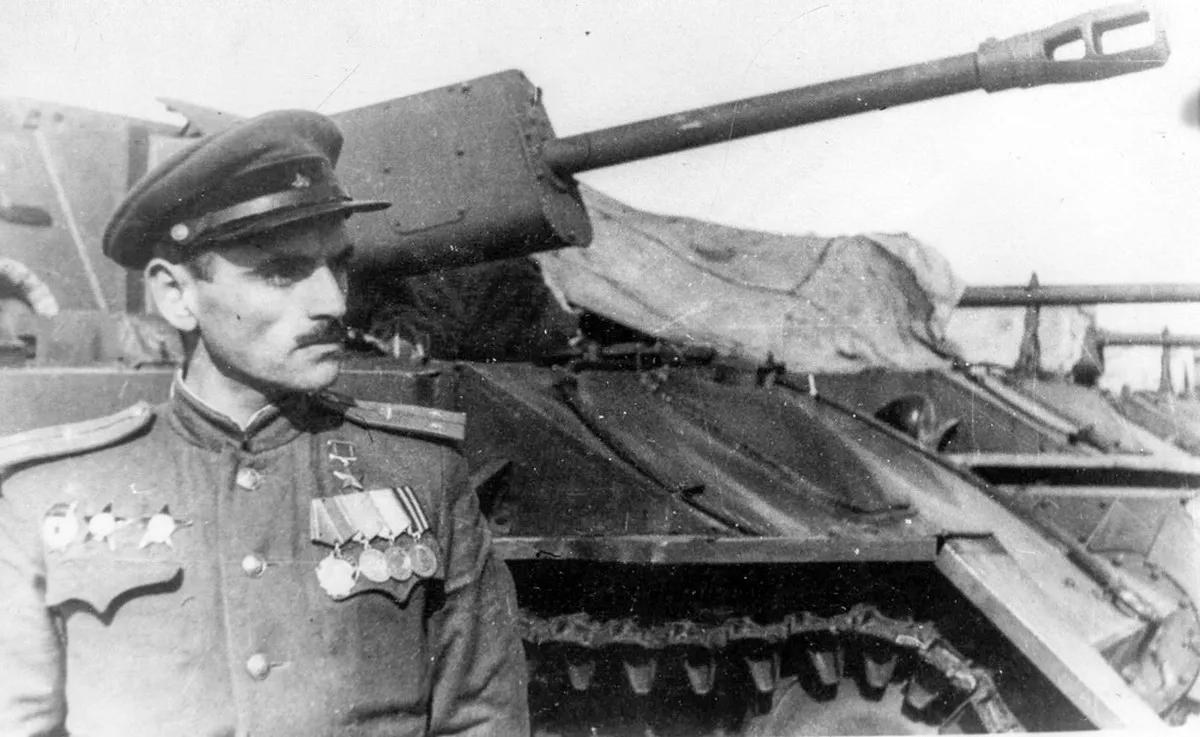
According to the recollections of Najafgulu Rafiyev's nephew, the hero's grandfather, Rafi, was renowned locally for his extraordinary strength. He was said to have carried a calf ("dana") across a river on his shoulders, earning him the nickname "Dana Rafi" ("Rafi the Calf Carrier").
Najafgulu was always eager to learn and enrolled in the Railway Technical College in Baku. However, after the early death of his parents, he was forced to abandon his studies at the workers' faculty in order to support his younger brothers and sisters. He took on a wide variety of jobs to provide for the family. A keen sportsman with a fearless spirit, he also became one of the first people in Nakhchivan to complete a parachute jump from an altitude of more than 1,000 meters.
In 1935, Rafiyev was drafted into the Red Army, where he served in the armoured forces. After completing his mandatory military service, he chose to remain in the army and graduated from the Leningrad Red Banner Armoured Command Advanced Training Courses. He went on to serve in several military units, including the 77th Azerbaijan Red Banner Mountain Rifle Division in Baku.
Najafgulu Rafiyev was serving in Ukraine when the war began, as a member of the 72nd Tank Regiment stationed in Kremenets. On June 26, the command of the Southwestern Front launched a hastily assembled armoured strike force, composed of several mechanised corps, against the rapidly advancing Wehrmacht. Although the Soviet counteroffensive initially achieved success, the tank units were soon forced to withdraw due to a lack of support. Nevertheless, the operation accomplished its primary objective—it prevented the encirclement of Soviet forces retreating under the pressure of the enemy's superior strength.
During the fierce fighting near Kremenets, Rafiyev was wounded in the head. According to family tradition, while waiting for medical treatment, he began singing a song in Azerbaijani. To his astonishment, his voice was recognised by his own brother, Jalil Rafiyev, who unexpectedly emerged and provided first aid to the wounded officer. After receiving treatment, Najafgulu Rafiyev returned to the front and continued fighting.
In a single battle near Poltava, the tank crews under Rafiyev's command knocked out two heavy German tanks, disabled six artillery pieces, and eliminated more than 50 German soldiers.
Later, in the Rostov Region, Najafgulu Rafiyev was wounded once again but refused to leave the battlefield. His tank crew destroyed three German tanks, eight artillery guns, a mortar, and 85 Nazi troops. At the beginning of the war, high military decorations were awarded sparingly, yet Rafiyev's exceptional bravery earned him the Order of the Red Star.
The courageous tank commander continued fighting in the North Caucasus.
In the summer of 1942, the 140th Independent Tank Brigade, to which Rafiyev had been assigned, underwent formation and combat training in Sumgayit, Azerbaijan. The brigade was equipped in part with American tanks supplied under the Lend-Lease program through Iran. Rafiyev himself fought for an extended period in the M4A2 Sherman medium tank. At the time, Baku was not only the Soviet Union's principal supplier of oil for fuel production but also a vital port through which Allied military aid was delivered.
In January 1943, the 140th Independent Tank Brigade took part in the fierce fighting to liberate the Stavropol Territory. That same year, Rafiyev joined the All-Union Communist Party (Bolsheviks). In July 1943, he was promoted to the rank of Junior Lieutenant, and just a month later he received a second Order of the Red Star in recognition of his outstanding service. By then, the fearless tank officer had already survived one severe wound and two lighter combat injuries.
Unstoppable on the offensive
After the Wehrmacht's offensive momentum had been decisively broken, the Red Army launched its campaign to liberate Belarus. In June 1944, it began the strategic offensive known as Operation Bagration. A powerful German force was concentrated around Babruysk, along the Dnieper and Berezina rivers, defending the approaches to Baranovichi, Brest, and Minsk. Opposing it was the 1st Belorussian Front, commanded by Konstantin Rokossovsky.
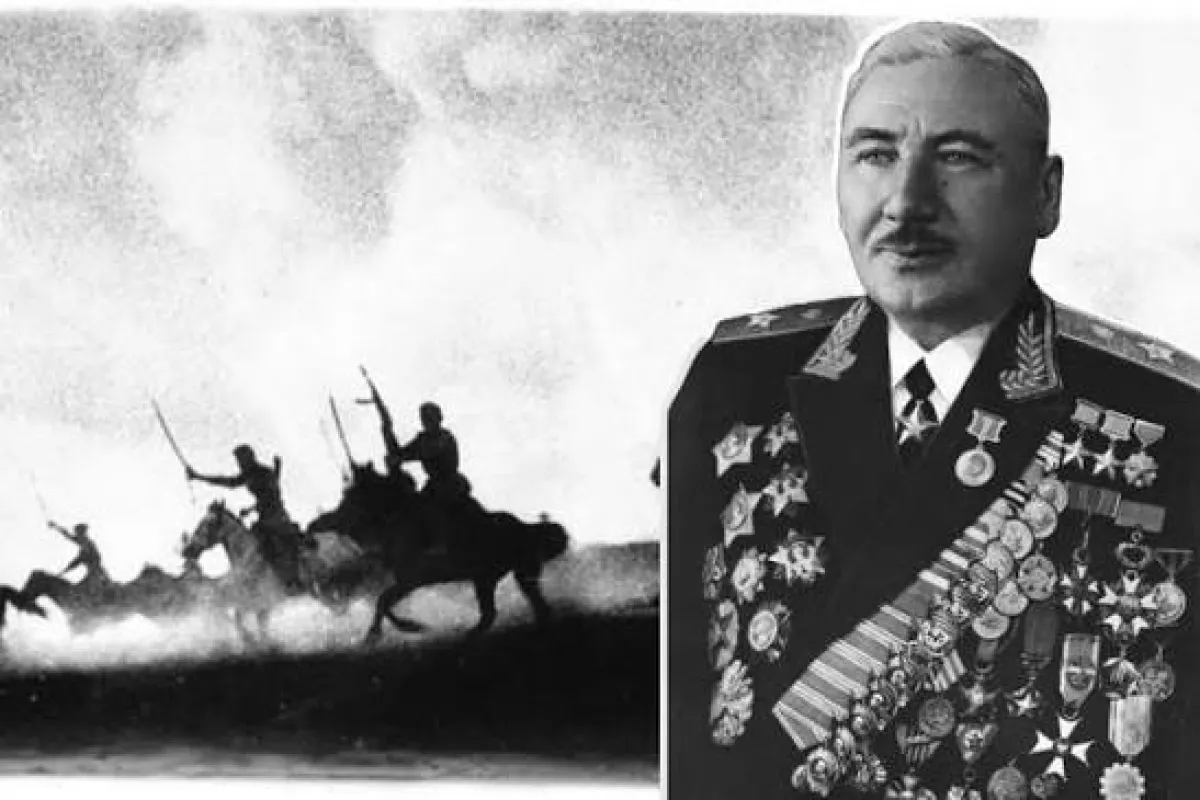
On the very first day of the offensive, June 24, the rifle and tank formations of Pavel Batov's 65th Army broke through the Wehrmacht's forward defensive positions. The Germans were taken completely by surprise when Soviet tanks successfully crossed the marshes—an achievement made possible by the engineering units of the 1st Belorussian Front, which had rapidly constructed makeshift roadways across the swampy terrain.
The following day, June 25, 1944, Issa Pliyev's Cavalry-Mechanized Group was committed to the breakthrough, exploiting the gap in the German defences.
Although cavalry might have seemed obsolete by then, this campaign demonstrated its continued effectiveness. Operating alongside tanks, cavalry units conducted rapid raids deep behind enemy lines, cutting off German garrisons and disrupting their communications. The commander of the Cavalry-Mechanized Group, Issa Pliyev, as well as Semyon Krivoshein, commander of the 1st Mechanised Corps within the group, were exceptionally familiar with the forested and marshy terrain of Belarus. Before the war, both had served in the 6th Chongar Cavalry Division in Gomel. Among the formations advancing into the operational rear was the 37th Tank Brigade, where Junior Lieutenant Najafgulu Rafiyev commanded a tank platoon.
Near the village of Zelenkovichi, Rafiyev's tank crews encountered intense enemy fire. A direct assault on the German positions would have resulted in heavy casualties and the loss of valuable armoured vehicles. Yet the mission had to be accomplished at any cost. Rafiyev therefore led his platoon around the enemy's flank and struck from the rear. The surprise manoeuvre shattered the German defences, allowing the brigade to continue its advance.
Rafiyev's tank platoon employed the same flanking tactic near the Belarusian village of Moiseyevka. The sudden appearance of Soviet tanks behind German lines caused panic among the defenders. Soviet troops captured a German staff bus containing important military documents. During the engagement, Rafiyev personally destroyed two military trucks, an anti-tank gun, and 12 enemy soldiers. In another battle near the village of Selishchi, his tank crews crushed an anti-tank battery with a combination of cannon fire and their tracks, while eliminating up to 30 German troops.
During these battles, the company commander was seriously wounded, and Junior Lieutenant Najafgulu Rafiyev assumed command directly on the battlefield.
Meanwhile, the operation to encircle the German forces in the Babruysk area was unfolding. Rafiyev's tank units drove relentlessly forward. On June 26, after advancing 45 kilometres, they made a swift dash to cut the Babruysk–Hlusk highway. There, a German general who refused to surrender was killed, and more than 20 military vehicles were captured. Most importantly, the operation severed the enemy's principal route of retreat. The following day, Rafiyev's tank crews also cut the Babruysk–Slutsk highway. As a result, a major grouping of the German Army Group Centre was encircled, with large numbers of troops killed or taken prisoner in what became known as the Babruysk Pocket.
On June 30, Issa Pliyev's Cavalry-Mechanized Group reached Slutsk. Two cavalry divisions and the 1st Mechanised Corps launched a three-pronged assault on the city. Fierce street fighting followed. The Germans counterattacked desperately and began forcing the cavalry units back. At the critical moment, however, artillery from the 28th Army came to the rescue, bringing their guns forward for direct fire against enemy positions. By midnight, Slutsk had been liberated.
That same day, the commander of the 3rd Tank Regiment, Colonel Livshits, recommended Najafgulu Rafiyev for his third Order of the Red Star.
On July 2, the tank crews commanded by Junior Lieutenant Najafgulu Rafiyev advanced 30 kilometres in a single day. They overran an enemy infantry battalion in a rapid assault and entered the village of Romanovo (now Lenino, in the Slutsk District).
Before retreating, the occupying forces had rounded up all the village's residents—primarily elderly people, women, and children—and locked them inside a building. For two days, they remained imprisoned, expecting certain death, most likely by fire. Many were said to have turned grey during those harrowing hours. Then, a Soviet tank burst into Romanovo, and a lean junior lieutenant with a black moustache jumped down from its armour. With tears in their eyes, the liberated villagers rushed to embrace the tank crews and their Azerbaijani commander.
The Cavalry-Mechanized Group under Issa Pliyev, together with the 65th and 48th Armies, then launched fierce battles for Baranovichi. The Wehrmacht concentrated all available reserves in an attempt to hold the city, but its efforts failed. On July 8, Rafiyev's tank company was the first to break into Baranovichi. The liberation of this major railway hub paved the way for the 1st Belorussian Front's continued successful advance westward.
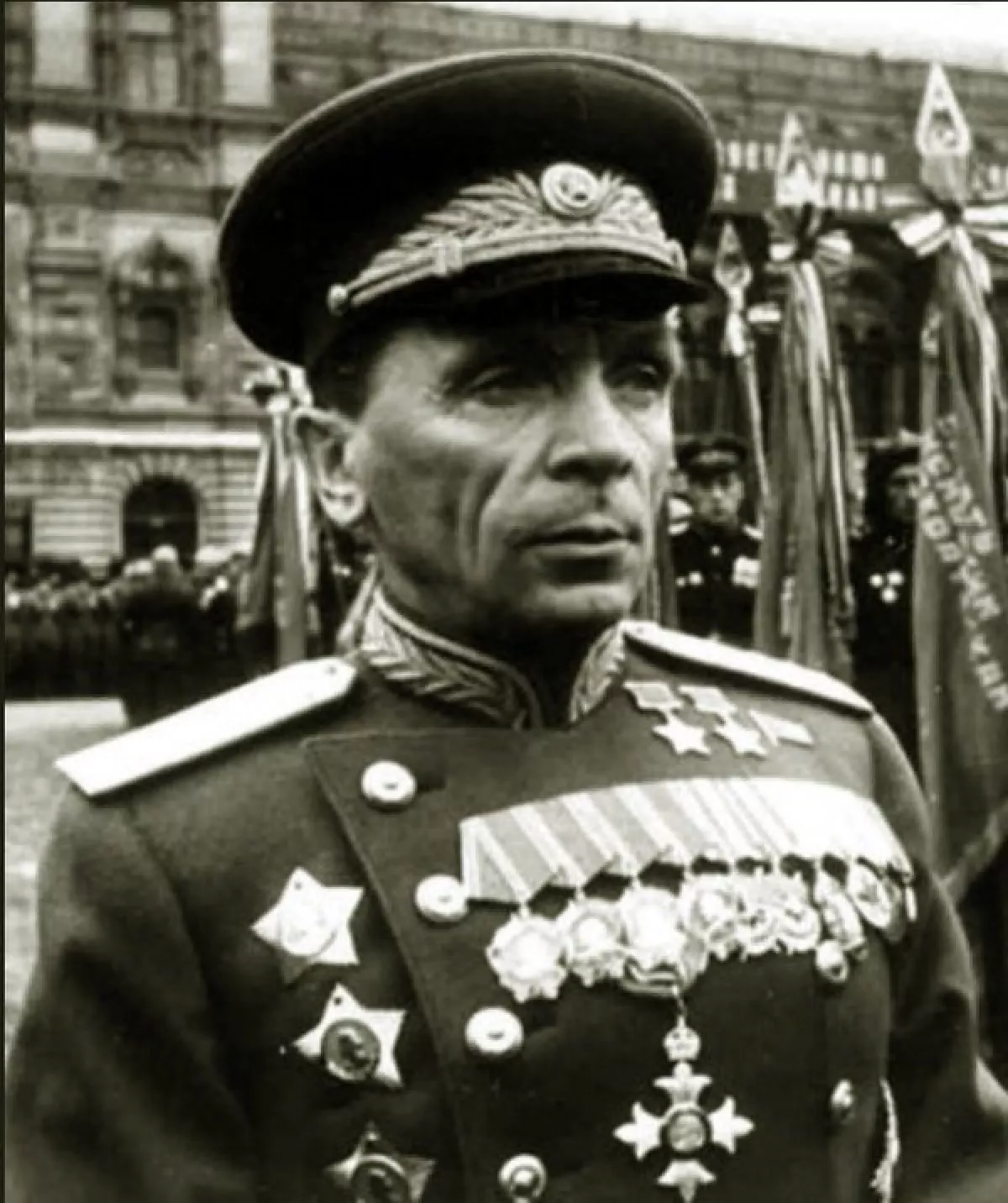
"Twenty days had passed since the launch of Operation Bagration," Army General Pavel Batov recalled in his memoirs. "The German Army Group Centre had been crushed. Stavka's plan had been fulfilled. Following the destruction of the 9th Army, the main forces of the German 4th Army were also encircled. The enemy's losses were enormous. On our front alone, more than 100,000 German soldiers and officers were killed or wounded."
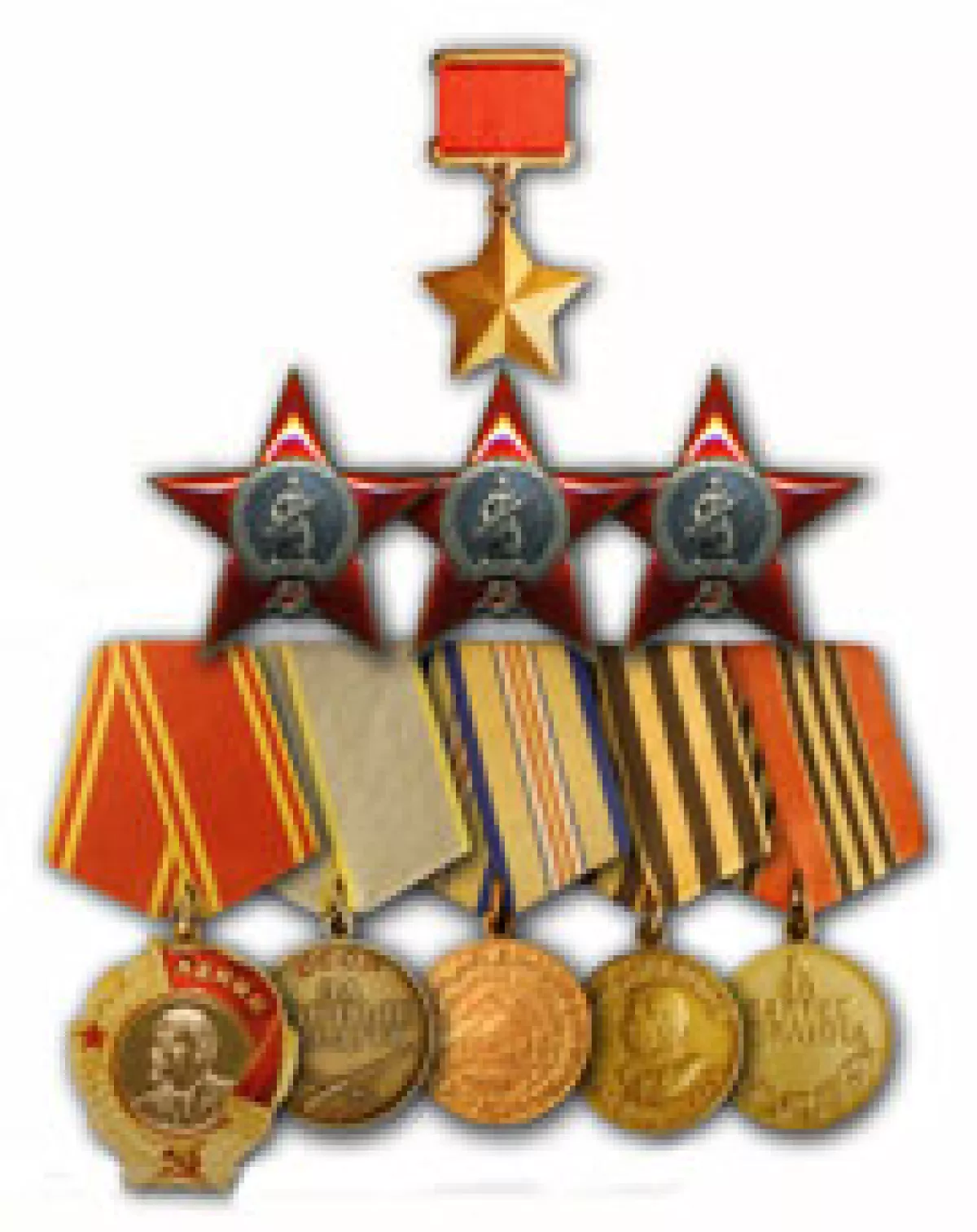
For the courage and heroism he displayed during the liberation of Belarus, Najafgulu Rafiyev was awarded the title of Hero of the Soviet Union on September 28, 1944, receiving the Gold Star medal and the Order of Lenin.
In memory of the hero
After the war, Najafgulu Rafiyev continued his military career. In 1945, he graduated from the Higher School of Armoured Officers, and in 1951 from the Higher School of Self-Propelled Artillery Officers. He retired from active service in 1956 with the rank of Major.
Rafiyev passed away in 1970 and was laid to rest at the Alley of Honour in Baku. In his hometown of Ordubad, a bust has been erected in his honour, and one of the city's streets bears his name.
The memory of the Azerbaijani hero is also preserved in Belarus. In 1969, Najafgulu Rafiyev was named an Honorary Citizen of Hlusk. Streets in Minsk and Baranovichi are named after him, a monument to him stands in the Belarusian capital, and Secondary School No. 170 in Minsk proudly bears the name of Hero of the Soviet Union Najafgulu Rafiyev.
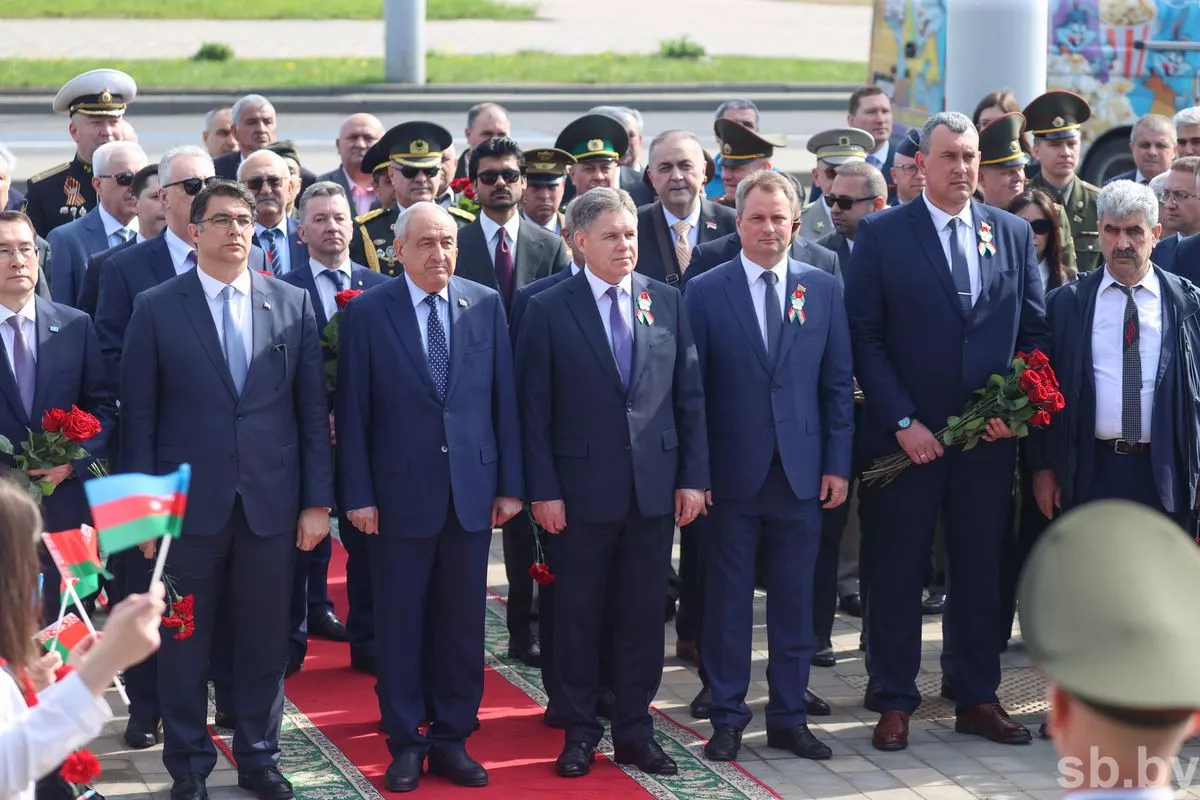
On May 9, 2026, a memorial rally was held at the Najafgulu Rafiyev Monument in Minsk. The event was attended by Maharram Aliyev, Ambassador Extraordinary and Plenipotentiary of Azerbaijan to Belarus; Pavel Utyupin, Deputy Minister of Foreign Affairs of Belarus; Igor Petrishenko, First Deputy Secretary General of the Commonwealth of Independent States (CIS); heads and staff of diplomatic missions; and representatives of Secondary School No. 170, which bears the name of Hero of the Soviet Union Najafgulu Rafiyev.
Twelve servicemen from Azerbaijan were awarded the title of Hero of the Soviet Union and the Gold Star medal for their role in the liberation of Belarus.
Tamara Pavlova, Chair of the Minsk Association of Veterans and Pensioners, was among the residents of Lenino who, together with her mother, were rescued by Rafiyev's tank crews. According to Tamara Ivanovna, her mother maintained a lifelong correspondence with the distinguished son of the Azerbaijani people, Najafgulu Rafiyev, and after his death continued exchanging letters with his widow.







 editor@caliber.az
 +994 55 444-88-98
 Азербайджан, Баку, ул. Низами, 203, Af Business House, 5-й этаж