










Belarus strengthens its presence in Global South From Myanmar’s sapphires to Omani ports and Algerian deserts
Following his visit to Kyrgyzstan, the President of Belarus travelled to Myanmar, Oman, and Algeria. What could possibly connect Minsk with these countries of the “far arc”?
A tree of luck for Belarus and Myanmar
On November 27, after participating in the CSTO summit in Bishkek, the Belarusian leader embarked on an official visit to Myanmar. At the airport in the capital, Naypyidaw, Lukashenko received the most ceremonial welcome: the Prime Minister, Nyo Saw, along with other officials, greeted him at the plane, a guard of honour was assembled, national music played, and traditional dances were performed.
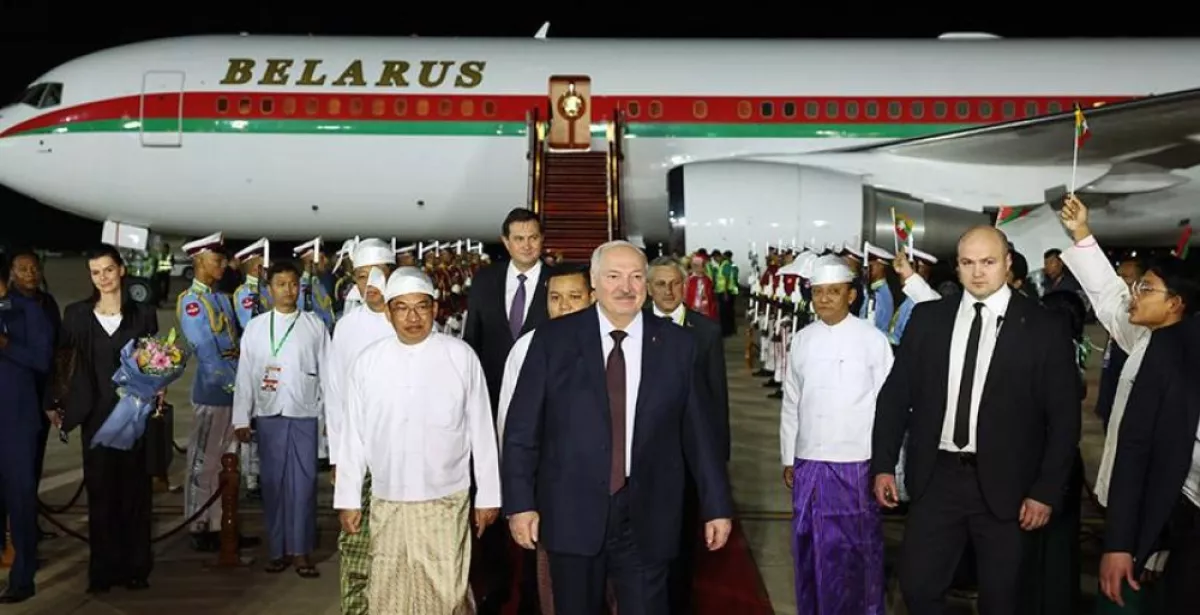
As he passed rows of Myanmar children waving flags, Lukashenko warmly embraced several “pioneers” by the shoulders. This marked the first official visit of the Belarusian head of state to the country.
In March 2025, Belarus supported Myanmar following a devastating earthquake that claimed around 1,600 lives. Rescue teams from the Ministry of Emergency Situations and 20 tons of humanitarian aid were sent.
On the eve of the visit to Yangon, a Belarus–Myanmar business forum took place, attended by the Belarusian Foreign Minister, ministers of industry and healthcare from both countries, and representatives of major companies. The forum concluded with the signing of contracts worth approximately $9 million.
According to the agreements reached, Myanmar will purchase 400 Belarusian tractors of models 451, 522, and 820, along with maintenance services. An assembly plant for Belarusian tractors will be established in the country. In addition, supplies of pharmaceutical, agricultural, and textile products are planned.
Belarusian dairy products are already actively entering the local market. In the future, the launch of baby food, canned meat, flour, and pasta products is expected. Discussions also covered the training of Myanmar students in Belarusian medical universities.
Belarusian jewellers are showing growing interest in Myanmar’s deposits of precious stones — sapphires, emeralds, and other minerals. In addition, the country has reserves of rare-earth metals.
On November 28, official talks were held in Naypyidaw in both a narrow and an expanded format. Belarusian President Alexander Lukashenko and Myanmar’s Acting President and Chairman of the National Defence and Security Council, Min Aung Hlaing, discussed cooperation in the fields of economy, new technologies, agriculture, the military-industrial complex, food security, and humanitarian projects.
Min Aung Hlaing also requested Belarus’s support for Myanmar’s bid to join the SCO and BRICS, as well as to elevate its status in the EAEU to that of a partner country.
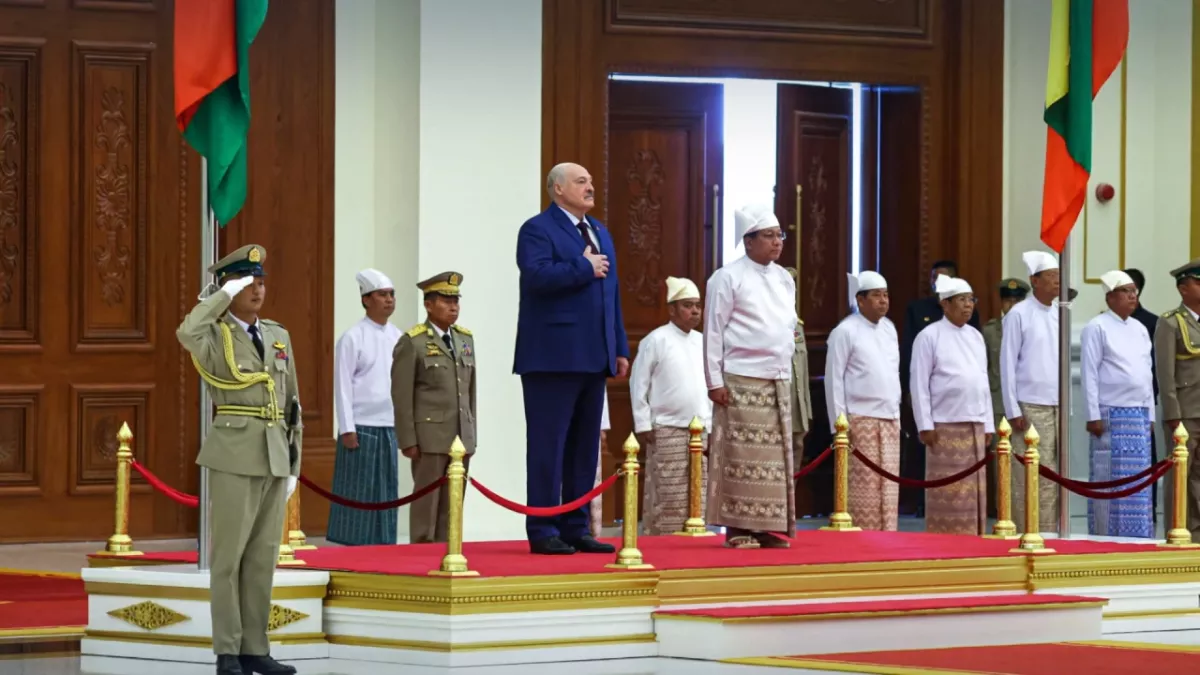
As a result of the talks, a roadmap for cooperation between the two countries for 2026–2028 was signed, along with 28 other documents. Among them was an agreement on the abolition of visas between Belarus and Myanmar.
“Come to Belarus, see for yourselves, choose, make your decisions. Everything Myanmar needs and everything we can do for Myanmar, we will certainly do,” said Alexander Lukashenko.
Today, Myanmar faces rising interethnic tensions and growing separatism, which is why the talks paid special attention to security cooperation. “Your people, your country, have a great future — believe my experience. You need to solve only one problem: ensure stability in society,” emphasized the Belarusian president, noting that Belarusian society itself is currently united.
Like Belarus, Myanmar is under Western sanctions. As a result, the presence of Western corporations in its market is limited, while Chinese businesses operate there with extreme caution. Against this backdrop, Belarusian producers have the opportunity to fill the resulting market gaps. An additional advantage is the similarity of economic models: in Myanmar, as in Belarus and China, state-owned enterprises hold strong positions, making the local economy more manageable and predictable for partners.
Experts believe that under these circumstances, a potential strategic triangle — “Minsk–Beijing–Naypyidaw” — is taking shape, capable of enhancing cooperation in industry, logistics, security, and humanitarian fields.
The official visit of the Belarusian leader also effectively broke Myanmar’s international isolation. At the same time, Alexander Lukashenko sent a clear signal regarding his stance on Western sanctions and his willingness to pursue an independent foreign policy aimed at strengthening a multipolar world.
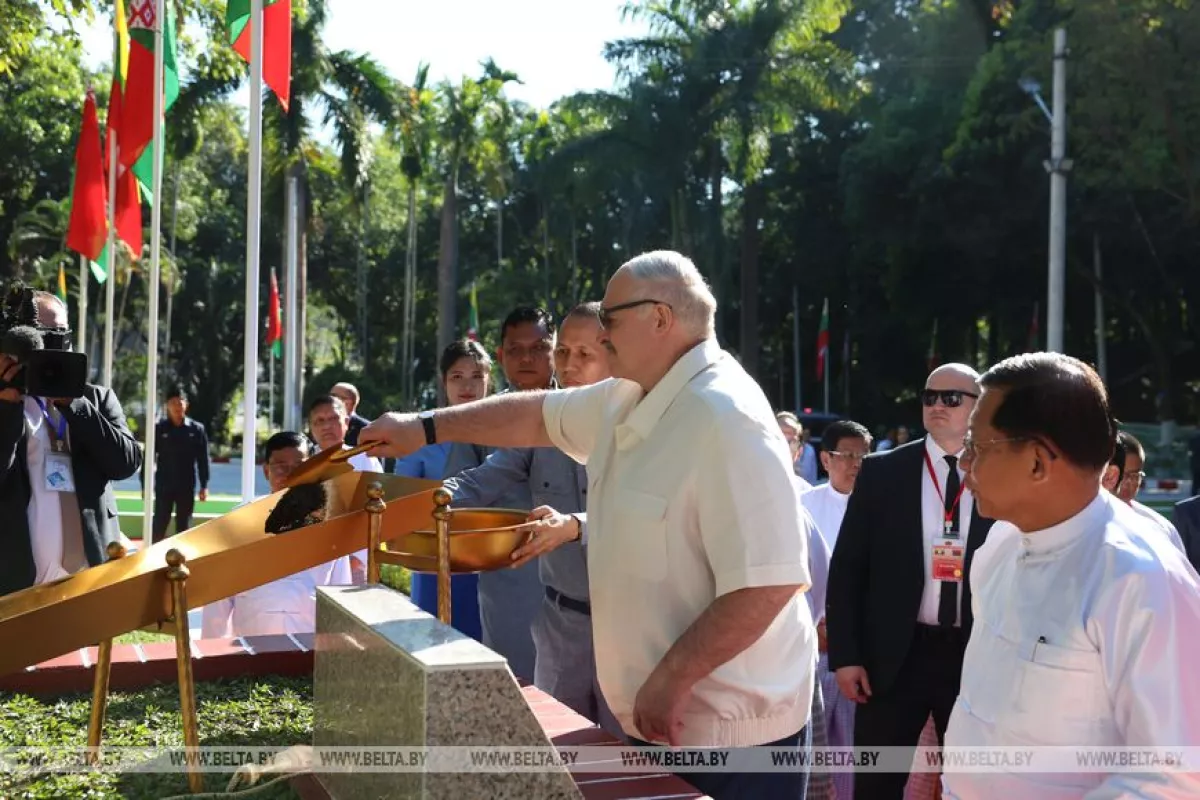
At the conclusion of the visit, Alexander Lukashenko and Min Aung Hlaing planted a “tree of luck” in the National Botanical Garden. Naypyidaw also gained a Minsk Street — a symbolic reminder that Belarus is now “reaching” the Indian Ocean.
Minsk–Muscat: the logic of stability
From Myanmar, Alexander Lukashenko proceeded on a working visit to Oman. On December 1, the President of Belarus met with the Sultan of Oman. The talks took place at the Sultan’s residence — a format considered the highest level of trust in diplomacy.
The Belarus–Oman roadmap for cooperation was signed quite recently, in October 2025, in Minsk. During the current talks, the parties discussed in detail the progress of its implementation. Cooperation covers investments, industry, agriculture, and food security. According to the President’s press secretary, Natalya Eismont, Lukashenko noted after the meeting: “We can produce a lot, and in Oman, they know how to sell.”
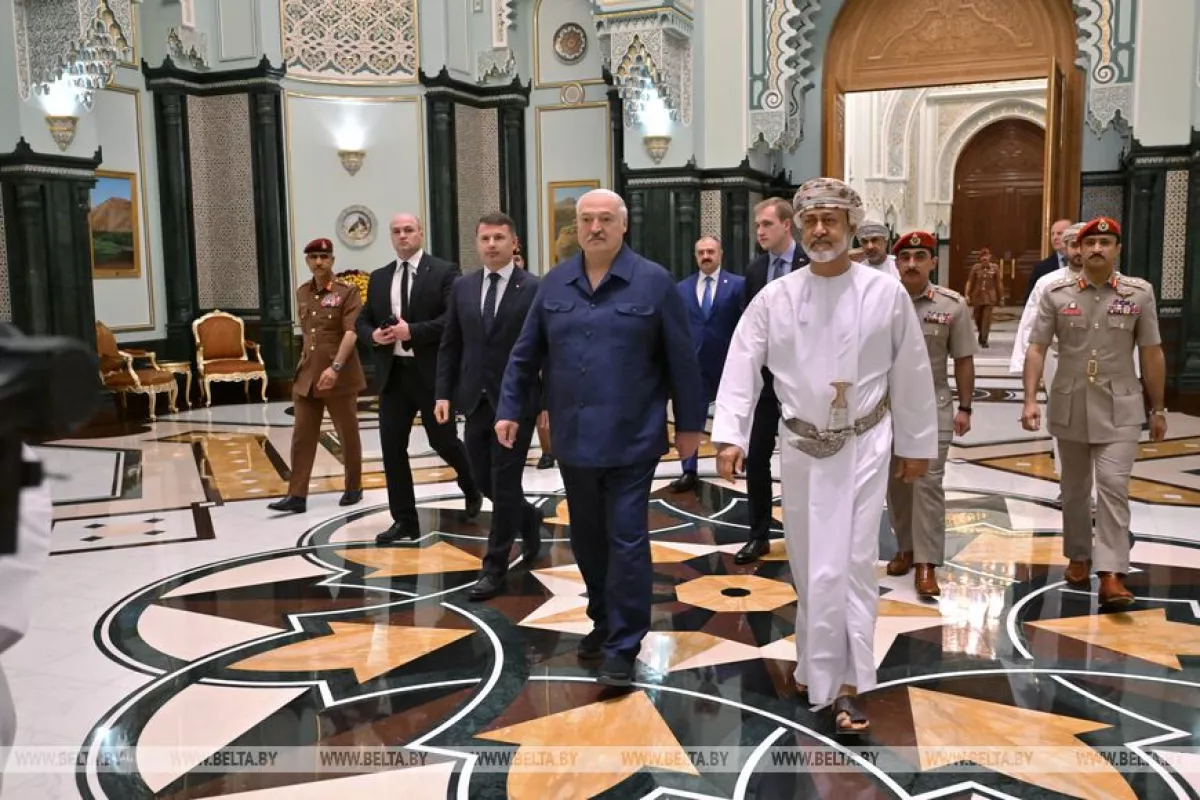
Oman expressed its readiness to invest $1.5 billion in a major project in Belarus — the construction of a pulp and paper mill. The Sultanate is also considering investments in the production of complex fertilisers. Other industrial initiatives were on the agenda, including cooperation with MAZ and the Amkodor holding. Prospects in the tourism sector were discussed, along with the need to accelerate interaction, driven by the realities of a complex international environment. A decision was made to establish a joint Belarus–Oman investment fund.
Oman is actively diversifying its economy, which was previously largely dependent on oil and gas. The country is developing its own industry, making Belarusian technologies — including IT — and manufacturing experience particularly valuable for the Sultanate. Belarusian fertilisers are also important for Oman’s food security. In turn, Oman serves as a key transit hub between Asia and Africa. The Sultan had previously proposed creating a Belarusian product centre in the Sohar Free Economic Zone. In Muscat, Belarus is seen as a potential logistics hub for supplies to Europe, while Minsk could represent Omani trade interests in the region.
A visa-free regime is already in place between the two countries, and Belarusian tourists can fly to Oman directly. During the talks, the opening of an additional Minsk–Muscat flight was also discussed.
Belarus and Oman are also brought together by a shared focus on peace, stability, and the rejection of expansionist ambitions — an important value foundation for deepening cooperation.
A North African hub
From December 2–3, Alexander Lukashenko’s “major Eastern trip” continued in Algeria. Notably, the visit took place just a month after its announcement, at the initiative of the Algerian side.
At a meeting on cooperation with African countries held in Minsk on October 30, Lukashenko described the “Black Continent” as a market of the future for Belarus. He recalled that 30 years ago, few predicted China’s rapid growth, yet Belarus was among the first to develop close economic ties with Beijing. Looking ahead, Africa, according to Lukashenko, could play the same role for Belarus that China plays today.
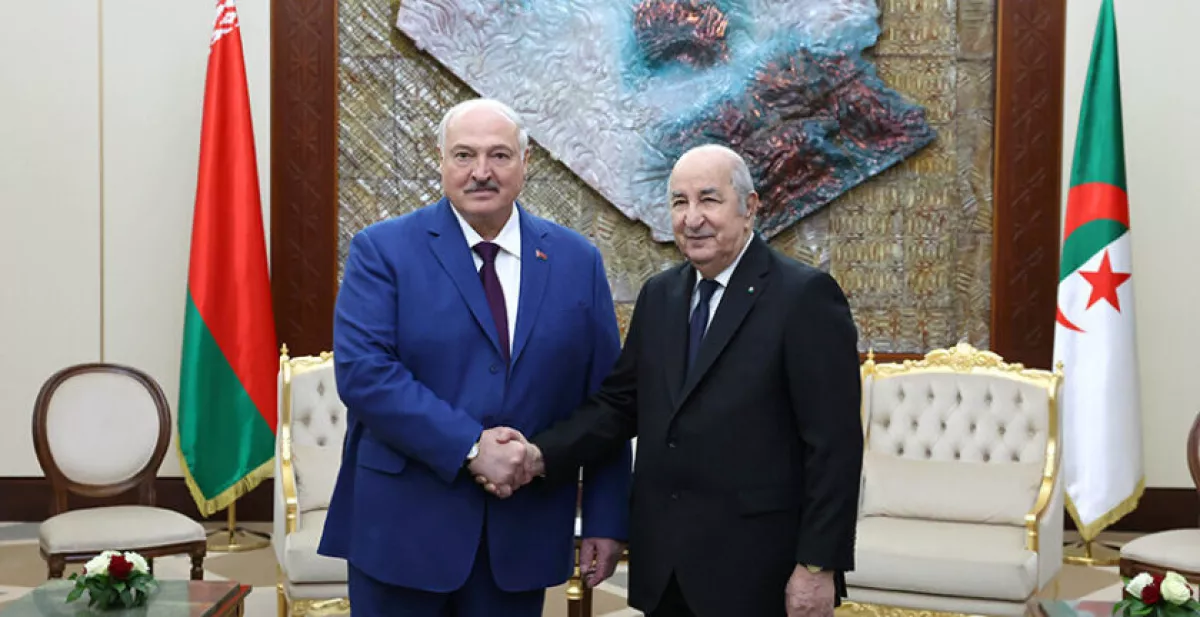
In 2024, Belarusian exports to Africa reached $650 million, and the president set a target to increase this figure to $1 billion. Algeria is seen as a potential logistics hub for Belarus across the entire African continent.
On December 2, Alexander Lukashenko held meetings with the Speaker of the National People’s Assembly, Ibrahim Boughali, and Prime Minister Aymen Benabderrahmane. On December 3, talks took place at the El-Mouradia Palace with Algerian President Abdelmadjid Tebboune — in both a narrow and expanded format. Belarus expressed its readiness to transfer technologies in mechanical engineering, petrochemicals, the chemical industry, agriculture, and IT.
Given Algeria’s desert climate, food security is a particularly pressing issue. Belarus stated its readiness to expand exports of dairy products — including powdered milk worth around $1.5 million — and to begin direct shipments of halal meat products. Until now, Belarusian goods primarily reached Algeria through intermediaries, and moving to direct supplies will significantly reduce the final price. Projects for joint food production, including baby food aimed at Africa’s vast market, are also being considered.
Algeria has also shown interest in Belarusian pharmaceutical products.
The talks covered cooperation in large-scale desert greening, the creation of grain drying and storage complexes, and the supply of road construction equipment. The Amkodor Holding expressed its readiness to engage in joint production of such complexes. Belarusian MTZ tractor assembly operations already exist in Algeria, and the parties are preparing new industrial cooperation projects. In the future, assembly lines for Belarusian MAZ trucks and passenger buses may also be established in the country. Bobruiskagromash is considering deploying joint production of agricultural machinery as well.
In 2024, Belarus–Algeria trade reached $49 million — a sixteen-fold increase compared to 2023. However, according to Lukashenko, the potential for bilateral trade is much higher and must be significantly expanded.
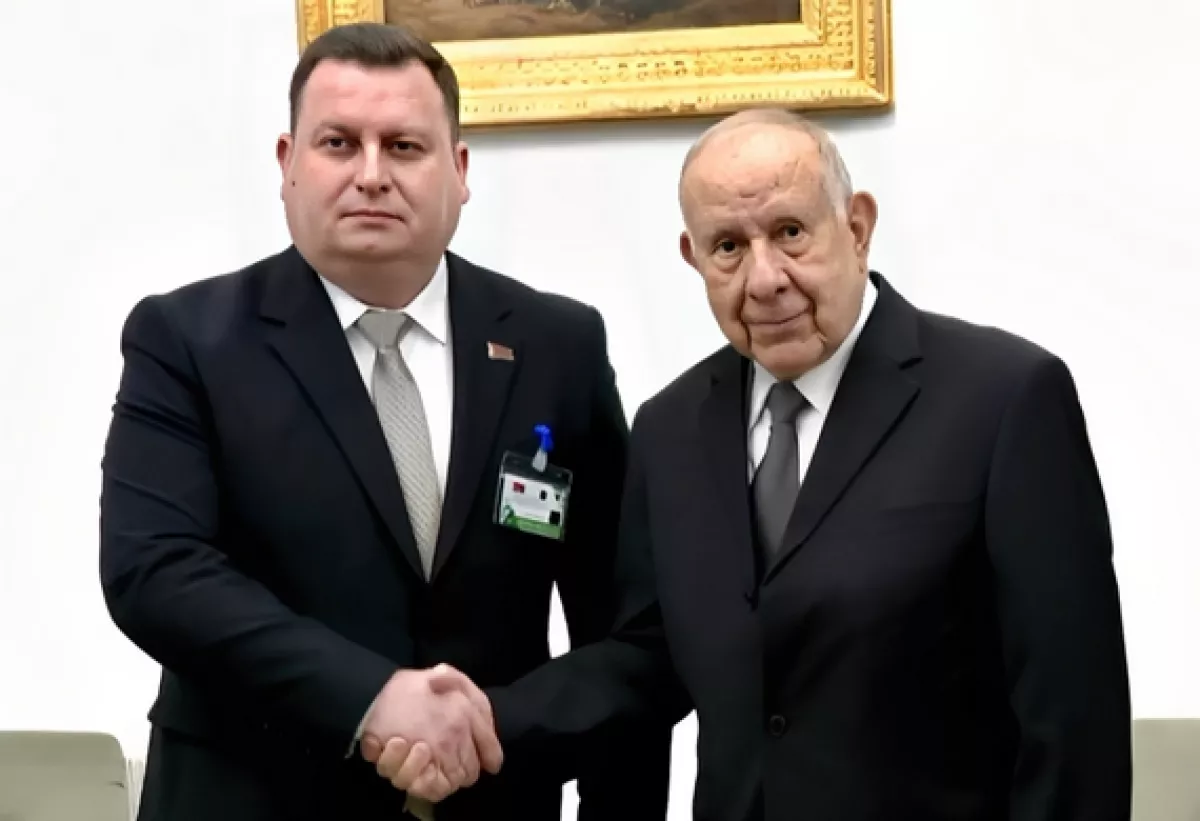
The Belarusian delegation also included Dmitry Pantus, Chairman of the State Military-Industrial Committee. He held talks with General Said Chengriha, Chief of the General Staff of Algeria’s National People’s Army. An agreement on military-technical cooperation was signed, and a joint commission to coordinate in this area will be established soon. According to Pantus, the Algerian side is interested in hosting production of certain types of defence products on its territory.
During the visit, Lukashenko also visited the National Museum of Martyrs and laid a wreath at the memorial for those who died in the national liberation war against France.
Keeping pace with the progressive march of history
From Algeria, the Belarusian president returned to Oman, where he held a series of discussions, culminating in a final meeting with the Sultan of Oman on December 6.
Minsk approaches the markets of the Global South differently from the imperial powers of the past — and from some powers today — which aimed to extract natural resources cheaply and sell their goods at high prices. Unlike neocolonial models, Belarus believes that cooperation should bring real benefits to people. Therefore, Belarus develops not only trade but also transfers technology, trains local specialists, and creates jobs. Minsk chooses partners among those who “see the world through the same eyes” — sharing a commitment to UN principles, respect for sovereignty, and non-interference in internal affairs.
Diversifying foreign economic ties directly strengthens Belarus’s own independence. Western sanctions imposed after 2020, contrary to their initiators’ expectations, did not weaken the country. On the contrary, in 2023 Belarusian exports reached a record $40 billion. Who ultimately suffered more — the “bourgeois” — is a rhetorical question. A significant role in the growth of Belarusian exports was also played by the expansion into the “far arc.”
However, this is not just about national interests. Minsk has long and consistently pursued a strategic course toward a multipolar world. This is not mere rhetoric but an objectively emerging reality. Economies of the Global South are growing based on modern productive forces and are capable of rapid development. The problem for Western opponents of Belarus and other sovereign states is that, driven by neocolonial ambitions, they are hopelessly trying to slow the progressive march of history.







 editor@caliber.az
 +994 55 444-88-98
 Азербайджан, Баку, ул. Низами, 203, Af Business House, 5-й этаж