










Cautious China and the alliance that never was Analysis by Shereshevskiy
Discussions about the emergence of a Russia–China–Iran military-political bloc often create the impression that a full-fledged military alliance is taking shape. The facts, however, tell a different story. Despite their strategic rapprochement, Moscow, Beijing, and Tehran have no mutual collective defence commitments, and each continues to be guided primarily by its own economic and geopolitical interests.
The main flaw in the arguments of those who claim that such a bloc already exists is that they underestimate the importance of economic factors, which directly shape political decision-making.
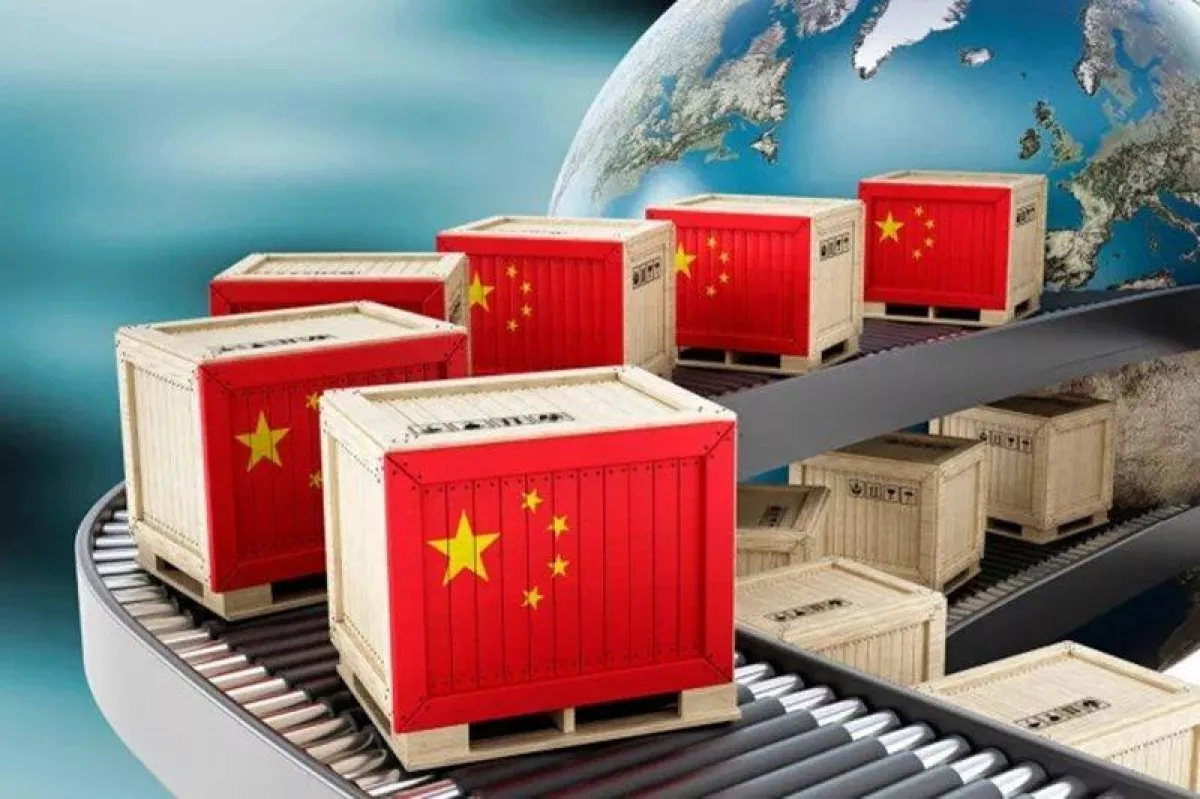
China is the world's manufacturing powerhouse, heavily export-oriented and strongly dependent on the affluent markets of the United States, Western Europe, and Japan, which absorb the lion's share of Chinese exports. Without access to these markets, the Chinese economy would risk slipping into recession. This factor goes a long way toward explaining Beijing's position.
In 2025, China's trade turnover with the United States amounted to approximately $600 billion, while its trade with the countries of Europe, including the United Kingdom, reached about $1 trillion. By comparison, China's trade with Russia stood at around $230 billion, and with Iran at just $10 billion.
China is the world's largest holder of foreign exchange reserves, with total reserves amounting to approximately $3.44 trillion. According to expert estimates, the share of dollar-denominated assets in these reserves ranges between 55 per cent and 60 per cent, equivalent to roughly $1.8–2 trillion. The remainder consists of other major global currencies (the euro, the pound sterling, and the yen) as well as gold. At the same time, around 56 per cent of global trade is conducted in U.S. dollars (down from approximately 78 per cent previously). There are also other estimates, including higher figures.
“The United States has a massive external debt, the servicing of which is becoming increasingly costly. However, it is still too early to write off the dollar. Although there is indeed a global trend toward expanding trade in other currencies, the yuan, in particular, is emerging as a rising star, which causes irritation in the United States. At the same time, China itself is interested in preserving the dollar as one of the world's leading currencies, since a significant portion of its reserves — around $3 trillion — is invested in U.S. government bonds,” notes economist Natig Jafarli.
For these reasons, the claim that already established blocs of states exist — resembling those of the world wars of the 20th century — remains highly questionable.
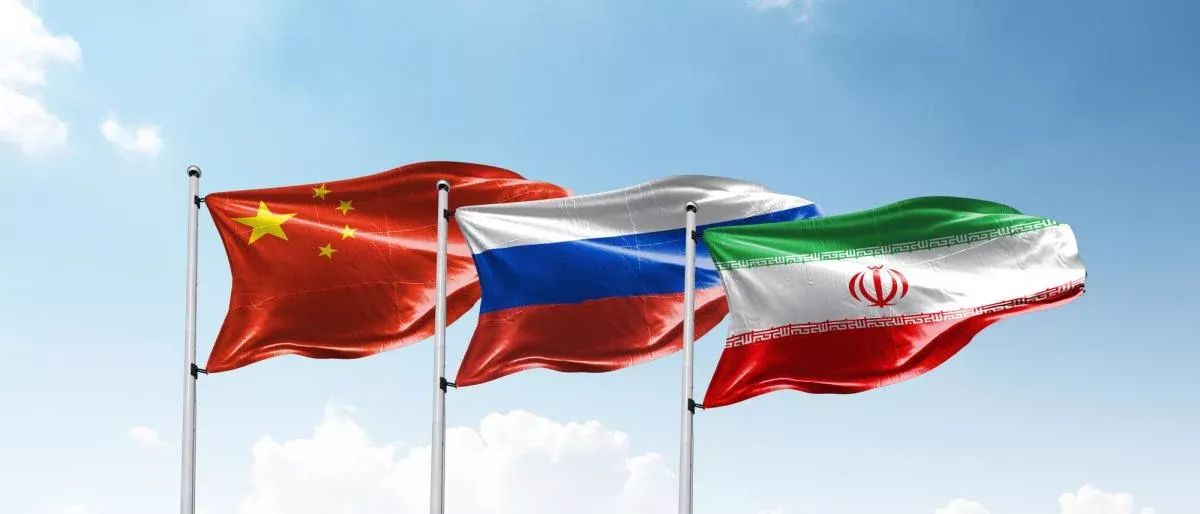
What is taking place can more accurately be described as the military-political rapprochement of China with Russia and Iran. An axis of global powers interested in revising the U.S.-led global order and the dominance of the NATO bloc is indeed taking shape; however, this process is moving very slowly. The main reason is that China, the most powerful country in this potential axis, is acting with extreme caution. Beijing does not want to lose access to European and American markets, nor the assets it has invested in dollar- and euro-denominated holdings. China, which keeps a significant portion of its reserves in U.S. and European securities, is currently not interested in a direct confrontation with them.
This issue is linked not only to external factors but also to domestic ones. In several key regions of China, population density is exceptionally high. On the one hand, this represents a major advantage for economic development; on the other, it could become a serious challenge in the event of an economic downturn.
In such densely populated areas, any protest movement triggered by economic hardships could quickly spread across a significant part of the country, expanding in waves.

China’s export-oriented province of Guangdong is home to approximately 130 million people, with its GDP reaching around $2 trillion. If Chinese exports were blocked by the United States or European countries, businesses could be forced to shut down. This could trigger a large-scale wave of strikes and working-class protests, creating a serious challenge for the authorities.
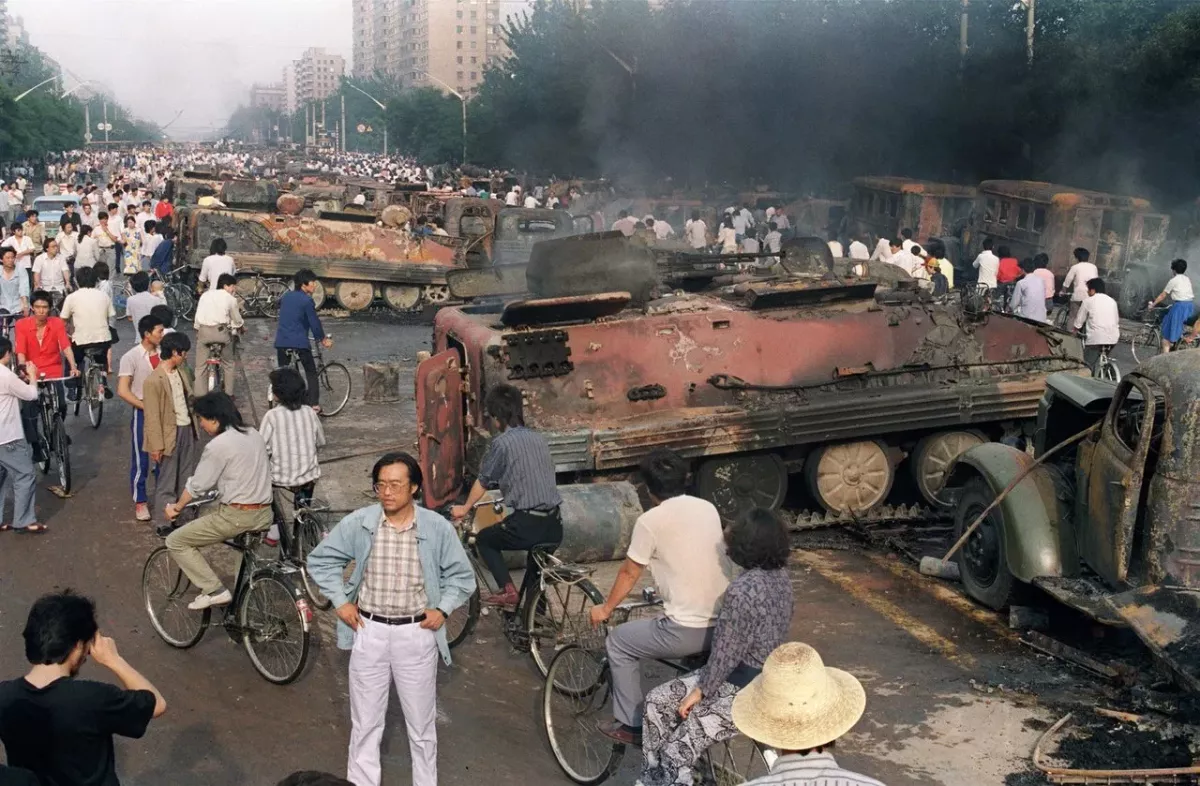
China has already experienced numerous instances of such unrest in the past — from the 1989 Tiananmen Square protests, when the Beijing Workers' Autonomous Federation challenged the Communist Party of China’s government and sought to establish workers’ control over enterprises, to major strikes in the 21st century driven by economic demands. Therefore, maintaining high rates of economic growth is of exceptional importance for China’s leadership.
One of the leading contemporary economists, Branko Milanović, describes the Chinese model as a “system of political capitalism.” This means that the legitimacy of Communist Party rule is based primarily on strong economic growth, which allows for a gradual improvement in the living standards of the majority of the population. It is unlikely that China’s leadership will abandon this model in the foreseeable future.
China is quite comfortable with a situation in which the United States and Europe are preoccupied with the events surrounding Ukraine and are unable to concentrate their main efforts on containing Beijing’s economic and military rise. Beijing views the situation in the Middle East in a similar way. A potential war in the Persian Gulf between the United States and Iran would be a real gift for China, as it would divert Washington’s attention from its strategic rivalry with the PRC and prevent it from focusing resources on the Asia-Pacific region. Moreover, such a scenario would not prevent China itself from calling for peace, thereby shaping the image of a stable, responsible, and peace-loving power.
It is also true that, under the pressure of U.S. sanctions, ties within the Beijing–Moscow–Tehran coalition are gradually strengthening. It cannot be ruled out that, in the future, this axis could evolve into a full-fledged defence alliance and enter into collective confrontation with NATO. For instance, such a scenario could emerge if China attempts to retake control of Taiwan by force — an island Beijing considers a breakaway province — and the United States intervenes on Taiwan’s side. In that case, the world could face extremely serious transformations.
Nevertheless, caution is required when assessing these developments. The contemporary international environment differs significantly from the eras of the First and Second World Wars, when fully established military-political blocs already existed and were directly engaged in armed conflict with one another.







 editor@caliber.az
 +994 55 444-88-98
 Азербайджан, Баку, ул. Низами, 203, Af Business House, 5-й этаж