










Georgia holds its line with Europe: Is Paris already backing down? Analysis by Serhey Bohdan
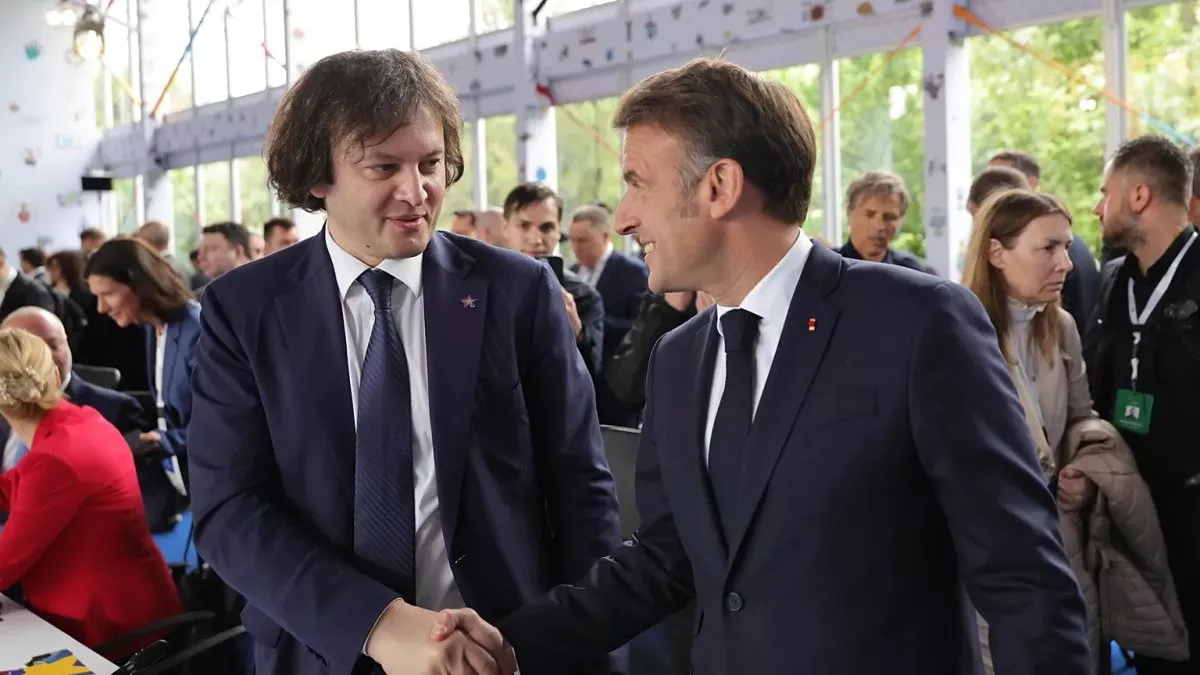
Swallowing his pride, French President Emmanuel Macron received a Georgian delegation led by Prime Minister Irakli Kobakhidze this week. Yet less than two years ago, he was futilely calling on the Georgian people to rise up against the Georgian Dream government — a government that demanded fair treatment and respect for its country from the EU, something the EU had denied to Eastern European and Balkan countries. And now Georgia is achieving its first successes on this front, changing the model of European integration for non-Western countries.
Georgia’s “Revolution of Dignity”
The official pretext for the visit to Paris by a high-level Georgian delegation comprising Prime Minister Irakli Kobakhidze, Foreign Minister Maka Botchorishvili, Defence Minister Irakli Chikovani and Head of the Government Administration Levan Zhorzholiani was the International Space Summit held on Wednesday and Thursday. However, the visit itself took place at the personal invitation of President Macron.
This made the visit historic, even though the European press paid little attention to it despite its significance. The matter was genuinely sensitive for the EU. In recent years, Western attacks on the Georgian government had continued unabated, with extremist elements within the European political establishment, including Macron, seeking to declare it illegitimate and boycott it. The argument was that the Georgian leadership was not following the line dictated by Brussels and European capitals. European liberal leaders had grown accustomed to lecturing and admonishing Eastern Europeans while openly supporting even “Maidans”.
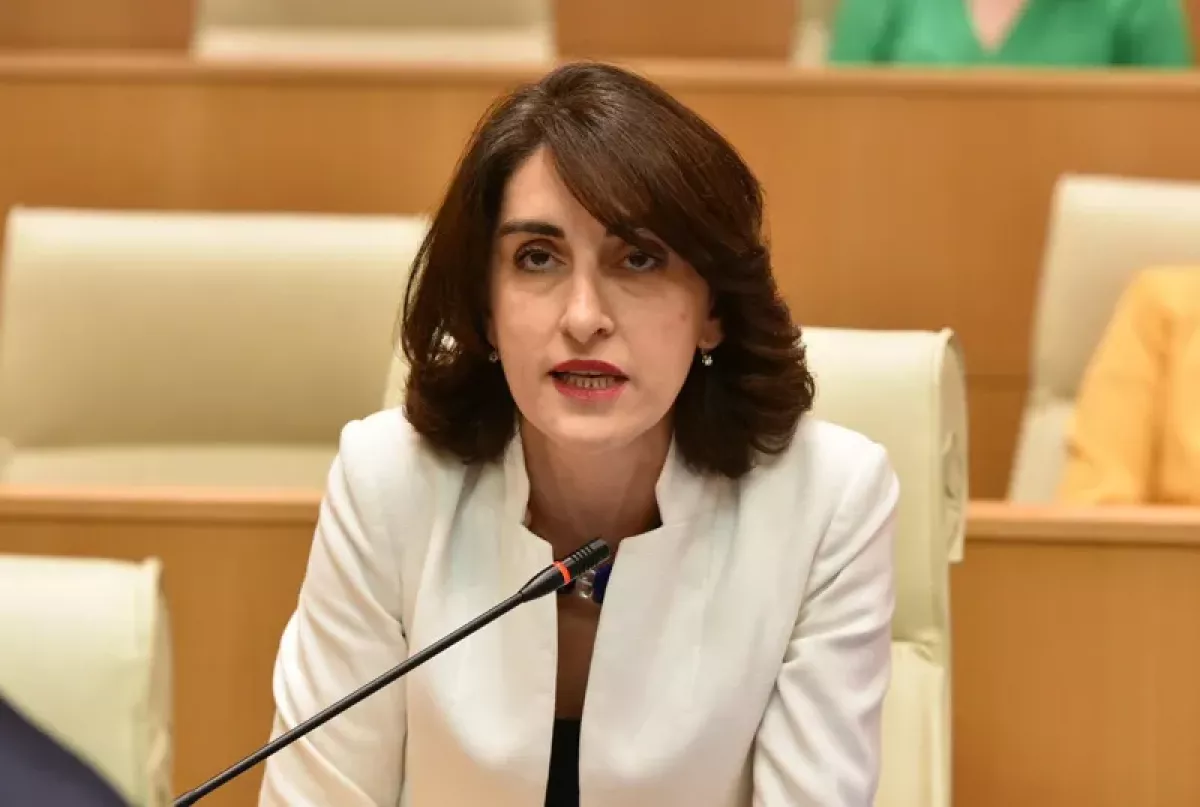
In response, Botchorishvili reasonably responded back in 2023: “We want membership in the European Union to protect Georgian identity, dignity, Georgian sovereignty and the freedom of future generations of Georgia, not to stand in the corner.”
The Georgian leadership’s position has not changed. Moreover, it is evolving into a programme that has every chance of winning the support of many countries beyond the original core of the “old EU”. Ahead of his visit to Europe earlier this week, Georgian Parliament Speaker Shalva Papuashvili set out the country’s leadership’s political credo at a press conference: “Escalation with Russia is not in our national interests. Escalation between Georgia and Russia may be in the interests of Germany or Lithuania, but it is not in our interests. Forgive us, but our interests come before theirs.”
In effect, he suggested that those who want to engage in conflict and war should do so themselves rather than through others. Unfortunately, after decades of new “crusades” for human rights and other forms of ideological madness used to cloak the imperial policies of both East and West, even this elementary idea looks like a break with conventional thinking. Yet it can help break the countless chains of escalation that are driving the world towards war.
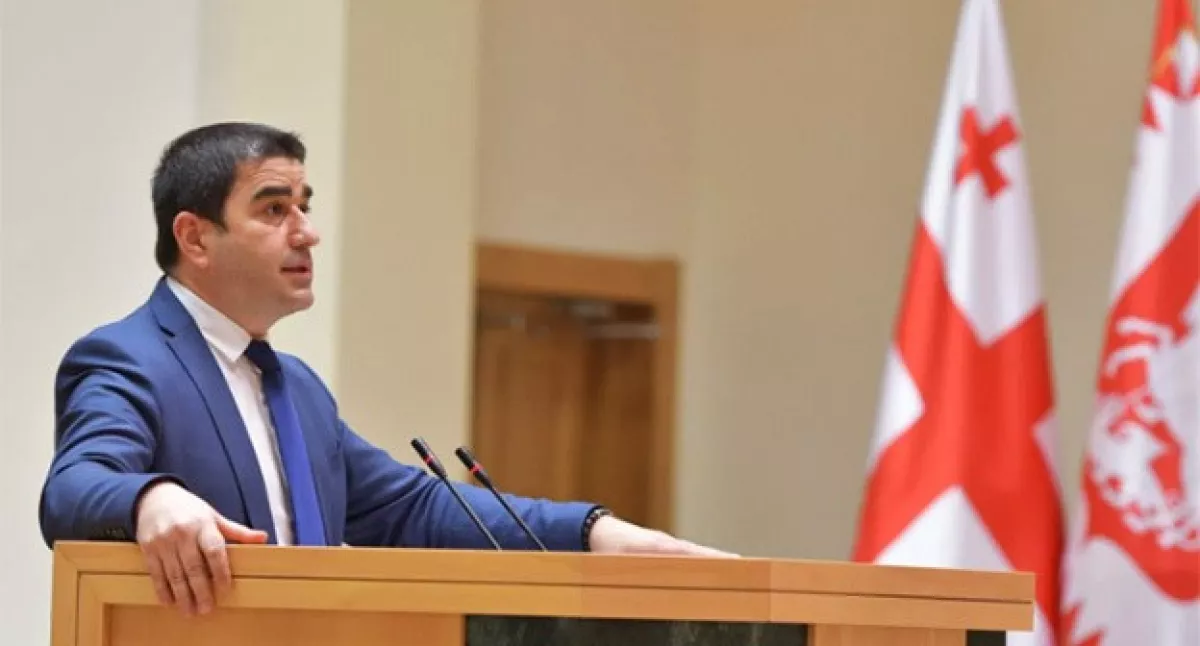
Papuashvili’s remarks were clearly a reaction to yet another attempt to draw Georgia into the conflict in Eastern Europe, the details of which will probably emerge later. But indirect signs suggest that he was referring to something specific rather than simply naming random countries. Lithuania, known for its staunchly anti-Russian stance, backed EU sanctions against Georgian officials together with Estonia, while its current foreign minister has called on the EU to sever all contacts with Tbilisi. Lithuania has also stepped up its activity in Armenia in recent months, just as Yerevan is considering a tougher line towards Russia, including the possible introduction of visa requirements.
Germany, judging by its militarisation and unprecedented rapprochement with Ukraine, is also seeking to assume a leading role in the confrontation with Russia. In this context, it is entirely conceivable that these two countries may have made yet more attempts to push Georgia towards war with Russia. At the same time, of course, neither country has entered such a war at present, nor does either appear prepared to do so for now, although both are preparing for a war later this decade. In other words, this is about wanting “to pull chestnuts out of the fire with someone else's hands.”
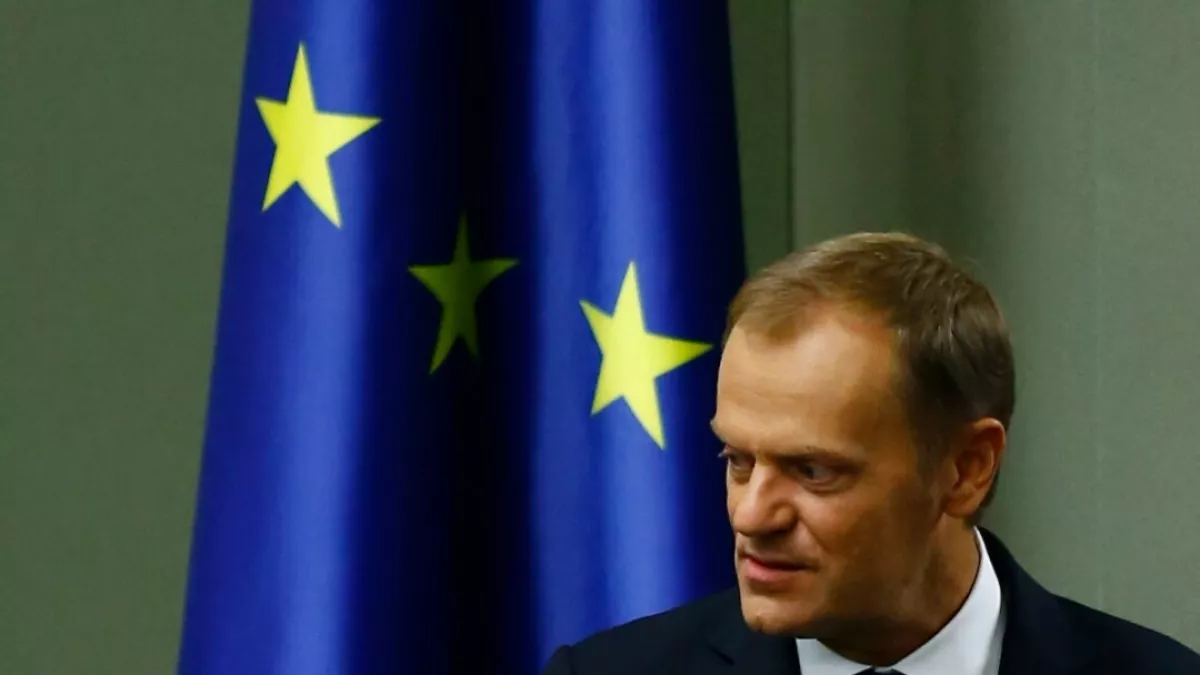
Why does the EU need this? To weaken Russia at the cost of Ukrainian and other non-EU casualties, and then come to peace negotiations from a position of strength, effectively pushing the countries that actually fought in the war out of meaningful participation and deciding the post-war settlement of the region and the wider world without them. Europe’s interest is clear: to secure even more favourable access to Russian resources than it had before the war, above all energy resources. As Polish Prime Minister and former President of the European Council Donald Tusk lamented: “There is nothing to debate. We can consign dreams of competing with China or the United States to the realm of fairy tales if energy prices remain at their current levels. The European Union can no longer afford to be naïve, not for a single day.”
Only Georgians can restore the territorial integrity
But why should Georgia itself go to war with Russia? To restore its territorial integrity? Yet no one in history has ever succeeded in restoring territorial integrity by internationalising such issues and handing them over even to the friendliest great powers. Ukraine’s experience over more than a decade has provided an especially clear lesson in how not to do this. Azerbaijan’s experience showed how it should be done — without bellicose hysteria or reliance on the assistance of superpowers, but through steadfast pursuit of the goal based on strategic patience and years of preparation.
Some may object that Azerbaijan was confronted by Armenia (although Armenia was supported at various times by France, Russia and the United States), whereas Georgia has to deal with Russia. But there are several nuances that allow for a more optimistic assessment of the prospects for restoring Georgia’s territorial integrity.
Let us begin with the fact that Moscow has never incorporated the separatist entities into the Russian Federation. That is significant. In much the same way, Russia did not annex the separatist entities in eastern Ukraine for a long time after 2014.
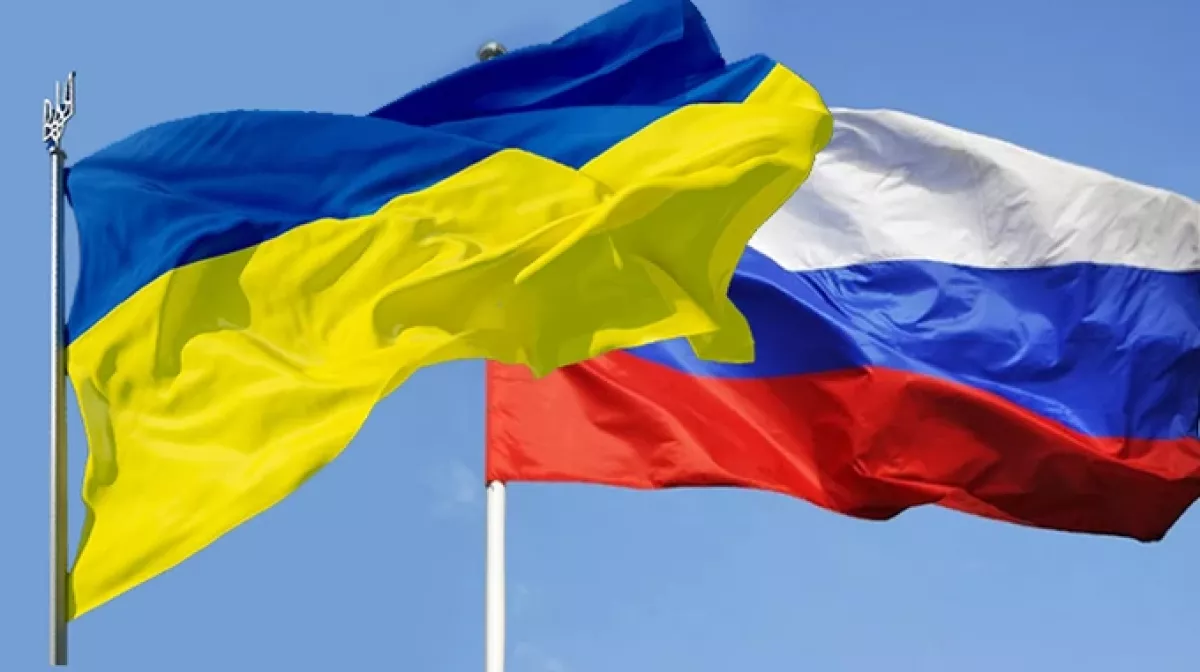
There is now considerable evidence that, before 2022, Moscow was prepared to agree to the dissolution of the separatist entities supported by the Russian authorities and the restoration of Kyiv’s authority over the region, provided that those areas were granted a degree of self-government and Ukraine itself enshrined its neutrality. The deal did not materialise because these issues fell into the hands of Western politicians who claimed to be concerned about Ukraine’s fate but instead began exploiting them for their own purposes. Meanwhile, such an arrangement could have allowed an independent country, free from both the West and the East, to be rebuilt and, at some stage, could have opened the way to raising the issue of restoring the remaining territories.
This was not the only such case in Russian policy. A similar situation existed with regard to the Transnistrian separatists. Plans to restore Moldovan sovereignty over the Transnistrian region took on concrete shape in the 2000s — and, in effect, the main concession Moscow demanded was neutrality. Moreover, there was even a precedent for such a deal, which the Kremlin honoured. It concerned Georgia itself: Tbilisi peacefully restored its sovereignty over Adjara when Moscow removed Aslan Abashidze from Batumi in 2004.
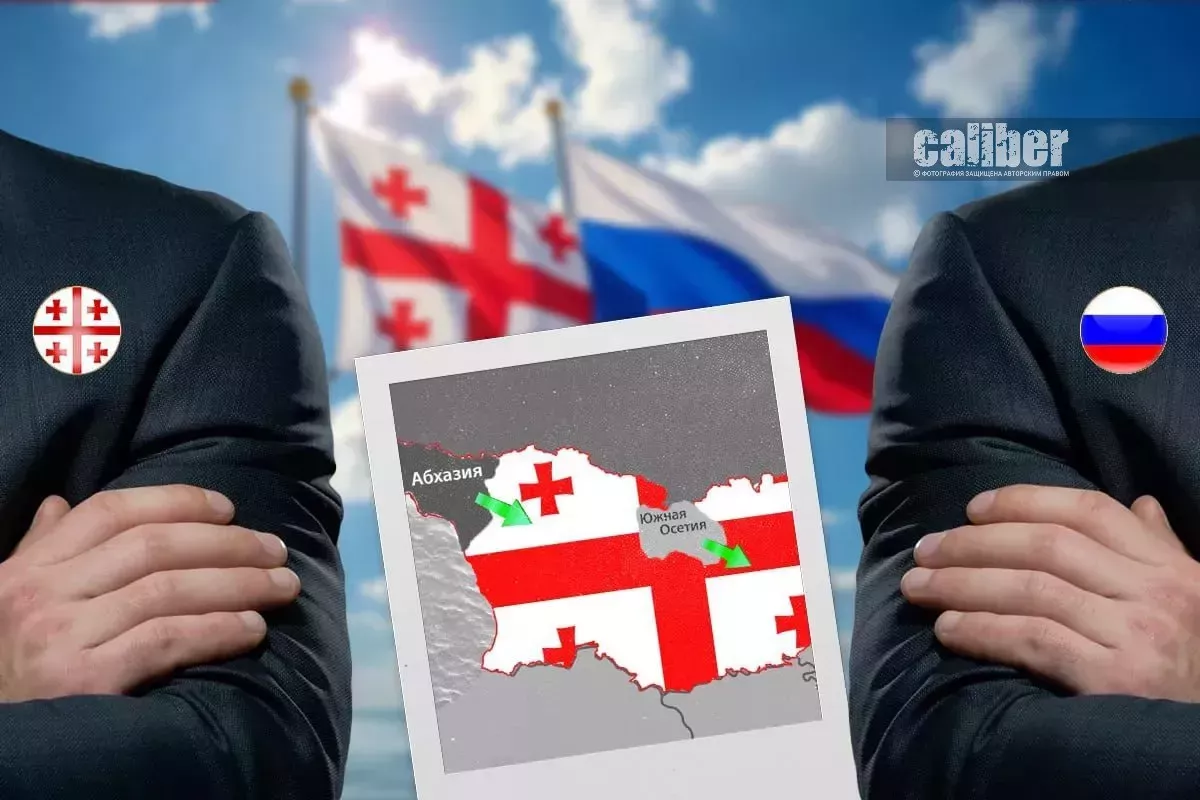
The two separatist entities currently existing on Georgian territory have long since become a chronic and seemingly incurable headache for Moscow, a situation compounded by their inherent lack of viability, since they did not emerge through historical development but as a result of manoeuvring by the Kremlin during the perestroika era, when Gorbachev began courting local separatists in an attempt to undermine the authority of the leaders of Soviet republics whom he disliked. Abkhazia and South Ossetia, separated from Georgia, are a burden on the Russian budget and have turned into zones of questionable security and widespread criminality. Attempts to secure their international recognition have yielded virtually no results, and the Kremlin itself has effectively abandoned the effort.
In other words, restoring Georgia’s territorial integrity requires something else, not joining a world war. What is needed is the Georgian people’s persistent commitment to this goal, embodied in a strong Georgian state led by responsible and patriotic politicians, with a dynamic economy, a conscious society and a powerful army. This is precisely what the current Georgian government is working to build. It has already achieved considerable progress in building a state that defends the interests of its people in relations with both East and West. Euro-liberal regimes have repeatedly come up against the limits of this Georgian policy.
The collapse of the EU intervention
It all started modestly, with the Georgian Dream party’s critical approach to the country’s foreign relations. The previous political course, which emerged from the ranks of a comprador civil society and political activists and was linked to Soros-backed and other similar organisations, initially reformed the country at the direction of external allies and then, after losing the war, encouraged the West to exploit Georgia’s national tragedy associated with the loss of Abkhazia and South Ossetia. The result was a real threat of Georgia becoming a free-for-all for external powers, in which Georgians themselves would have little say.
An important step towards restoring the country’s full sovereignty came in May 2024 with the adoption of the Law on Transparency of Foreign Influence, modelled on a similar US act. This triggered a campaign of hypocritical pressure on Tbilisi from the EU and the United States, which at the time were led by allies of the Euro-liberals from the Democratic Party. Georgians were made to understand that laws regulating foreign influence over politics and NGOs were appropriate for “white Western democracies”, but not for other countries. This appeared absurd, since the law was equally necessary to counter illicit Russian influence, but that, too, was of no interest to the EU officials. The law undermined the EU’s main mechanism for expansion — and a Maidan was launched, during which EU diplomats shielded the opposition from accountability for widespread violations of the law and violence against its opponents and law-enforcement officers.
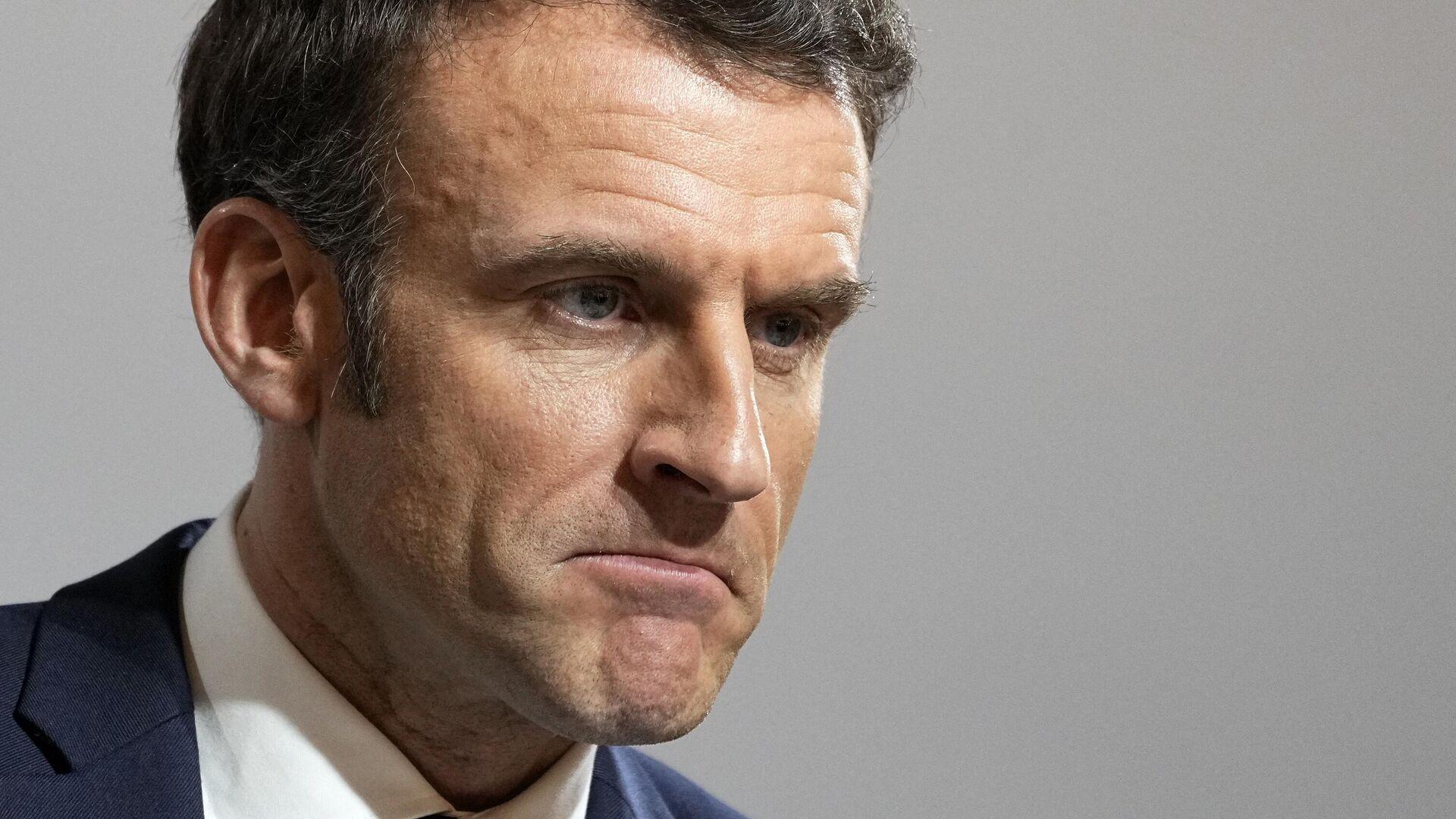
It went so far that on December 13, 2024, French President Emmanuel Macron harshly criticised the actions of Georgia’s ruling party, accused its leadership of betraying the European course and openly backed participants in the pro-European protests.
To put an end to Europe’s blackmail, on November 28, 2024 the Georgian government announced a moratorium until 2028 — by which time the governments in Germany and France are likely to have changed — on opening accession talks with the European Union and refused EU budget grants. This demonstrated its determination to defend the country’s sovereignty rather than be tempted by the EU budget’s “jar of jam and packet of biscuits”. The move was particularly significant given that Georgia had been granted EU candidate status just a year earlier.
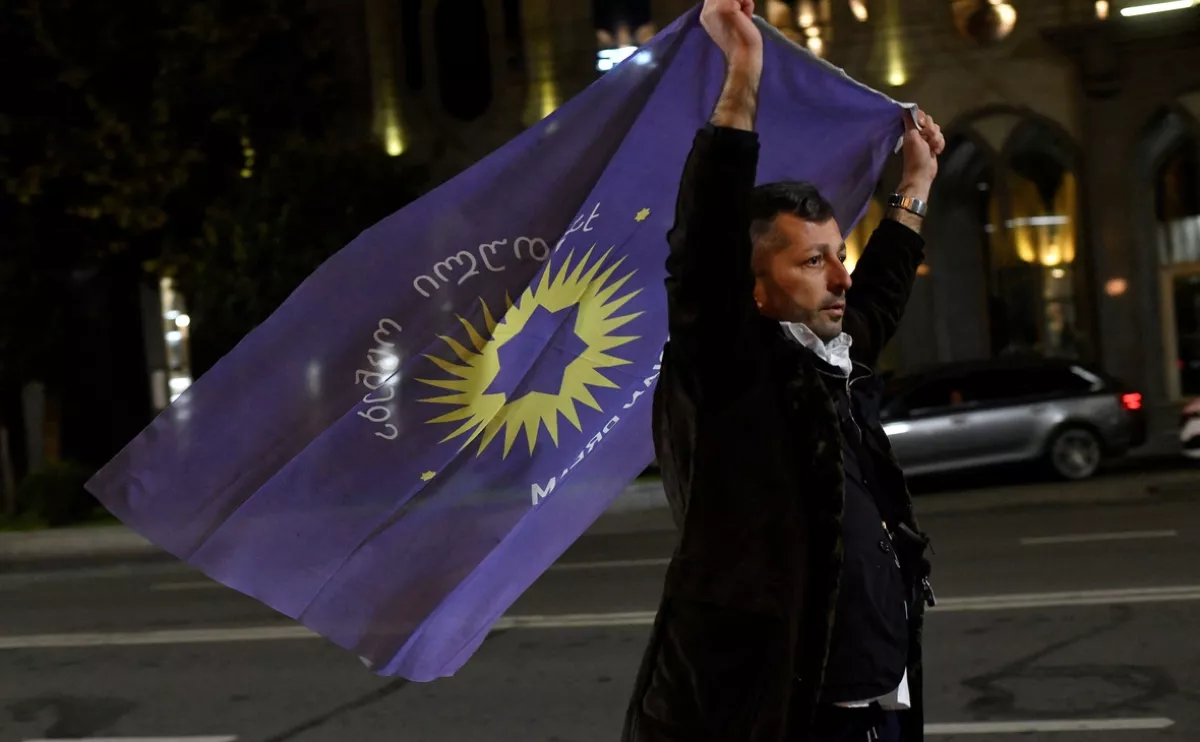
And the Georgian people appreciated the government’s principled stance. In the October 2024 parliamentary elections, held amid constant street provocations by the opposition, external pressure on Tbilisi from the EU and the Biden administration, and threats to strip Georgia of visa-free travel with the EU — a privilege that is truly sacred to the comprador liberal opposition — voters once again backed Georgian Dream, which secured 54 per cent. The opposition was routed despite EU support: Saakashvili’s supporters received 10 per cent, while the Coalition for Change, led by his godson Nika Gvaramia, won 11 per cent.
The Georgian state stabilised and strengthened its capacity to pursue an independent policy. Soon after the tentacles of the financial octopus with which Western “democratisers” had ensnared and poisoned Georgian politics were cut off, Georgia’s pro-EU opposition began to disintegrate. Without external funding, activists immediately stopped staging Maidan-style protests. This year brought the final chapter in the whole story. As local analysts note, “the ‘Opposition Alliance’ created in March 2026 collapsed in August without having achieved anything of particular significance.” Small wonder: one of its leaders, Nika Gvaramia, effectively put forward a strategy of war against the Georgian state this summer, encapsulated in the formula: “Protests inside the country, sanctions outside.”
Amid the lack of progress and the opposition’s continuing financial starvation, it became embroiled in infighting. Paradoxically, the hysteria in the West also subsided. The EU stopped threatening new sanctions against the ruling Georgian Dream party, and external funding for the opposition through NGOs naturally declined.
Stop the vivisection of Eastern Europe
Having defended its own territory, Georgia’s leadership is now taking its fight for justice for Georgia — and indeed for all of Eastern Europe — into the territory of its opponent: the Brussels-based EU leadership and the Euro-liberal regimes that created it.
This week, Papuashvili said what responsible politicians in all the countries of the “new Europe” should have said long ago: “If they want us to become members of the European Union, they must change their policies. Otherwise, it is impossible. Under this policy, we cannot become members of the European Union — an EU whose foreign policy is incomprehensible and which no one respects any more on the international stage.” He stressed that Georgia has an interest in seeing a strong and fair EU, but that the Brussels bureaucracy is working against the interests of the EU itself.
In other words, a more independent policy is already allowing Tbilisi to call for a reassessment of the entire paradigm of European integration for the countries of the so-called “new Europe”. If “old Europe” — the countries of the western and southern parts of the continent — integrated into the EU on the basis of treaties and consensus, European integration for the countries of Eastern Europe and the Balkans has so far been directive in nature on all matters of substance. They have effectively been forced into a Procrustean bed, with all the consequences that entails.
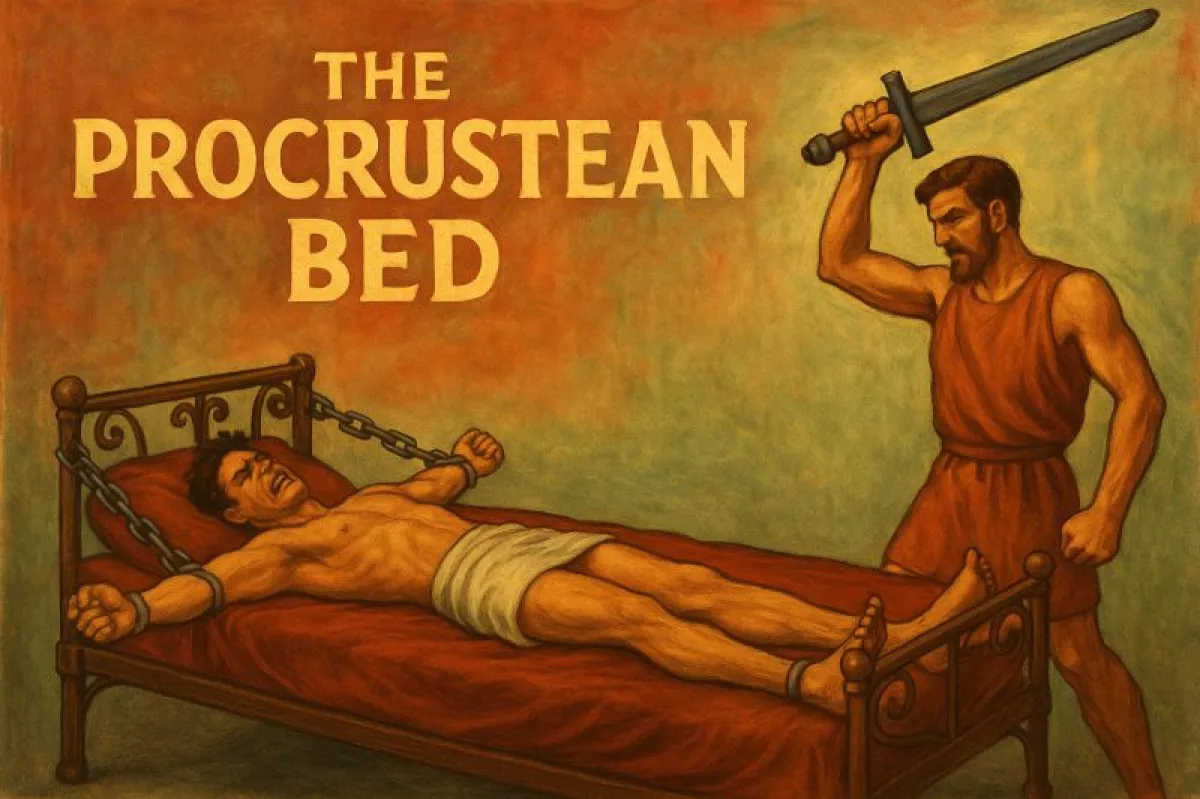
The ancient Greek legend of the mad robber Procrustes, who forced travellers onto his bed and cut off any limbs that extended beyond its edges, naturally comes to mind here as an allegory for Eastern European integration into the EU, with its insistence on compliance with the “Copenhagen criteria” and so forth.
After all, for decades now, the countries of “new Europe”, upon joining the EU, have been forced to sacrifice their most pressing interests in favour of rules that sometimes run counter even to the EU’s own interests. One example is the closure of the Ignalina Nuclear Power Plant in Lithuania, which left the entire EU Baltic region chronically short of energy and dependent on external supplies. Had this not coincided with a parallel decline in industrial production and a shrinking population as a result of mass emigration to Western countries in search of work, we would have seen a picture in the Baltic states more reminiscent of the developing world, complete with blackouts and the smoke of generators.
This is just one example of the destructive nature of the economic standards imposed by Brussels, something that can easily be demonstrated through simple arithmetic. There are countless others. In neighbouring Latvia, for instance, EU accession brought an equally serious catastrophe upon what had been a respectable fishing fleet. In many such cases, it cannot even be said that the EU itself gained anything from these measures, except perhaps individual corporations and countries. The Union as a whole was left with nothing but a bleak legacy of problems.
The consequences of the standards imposed by Brussels in foreign policy and defence are more difficult to assess. But it is telling that at Friday’s summit, the countries of the “Visegrád Four” opposed EU measures that would lead to higher fuel and electricity prices. In simple terms, they opposed the consequences of further escalation with Russia. And this was done even by Poland and the Czech Republic, which have consistently supported the EU’s confrontational policy towards Russia. In Germany, calculations made in recent days put the cost to the country’s budget alone of abandoning Russian hydrocarbons at €50.4 billion — roughly the equivalent of four new missile programmes. Consumers and businesses, meanwhile, have suffered enormous losses as well. The issue is not even that these countries had to abandon Russian energy supplies in line with the EU’s overall policy, but that no alternative was ever found.
In other words, the leaders of these countries are acknowledging the destructive nature of EU policy, confirming what the Georgian government has long been saying. As we can see, Tbilisi is not merely sticking to its guns; it is moving on the right side of history. If the EU has a future, it lies in the reforms that Georgian leaders are calling for.







 editor@caliber.az
 +994 55 444-88-98
 Азербайджан, Баку, ул. Низами, 203, Af Business House, 5-й этаж